
A buyer asks an AI assistant for the best options in your category. Your pages rank well in conventional search, yet your brand is missing from the answer. That gap is why rank tracking alone no longer tells the whole story. Google AI Overviews, ChatGPT, Gemini, Perplexity, and other answer engines can mention competitors, cite third-party pages, or omit you entirely.
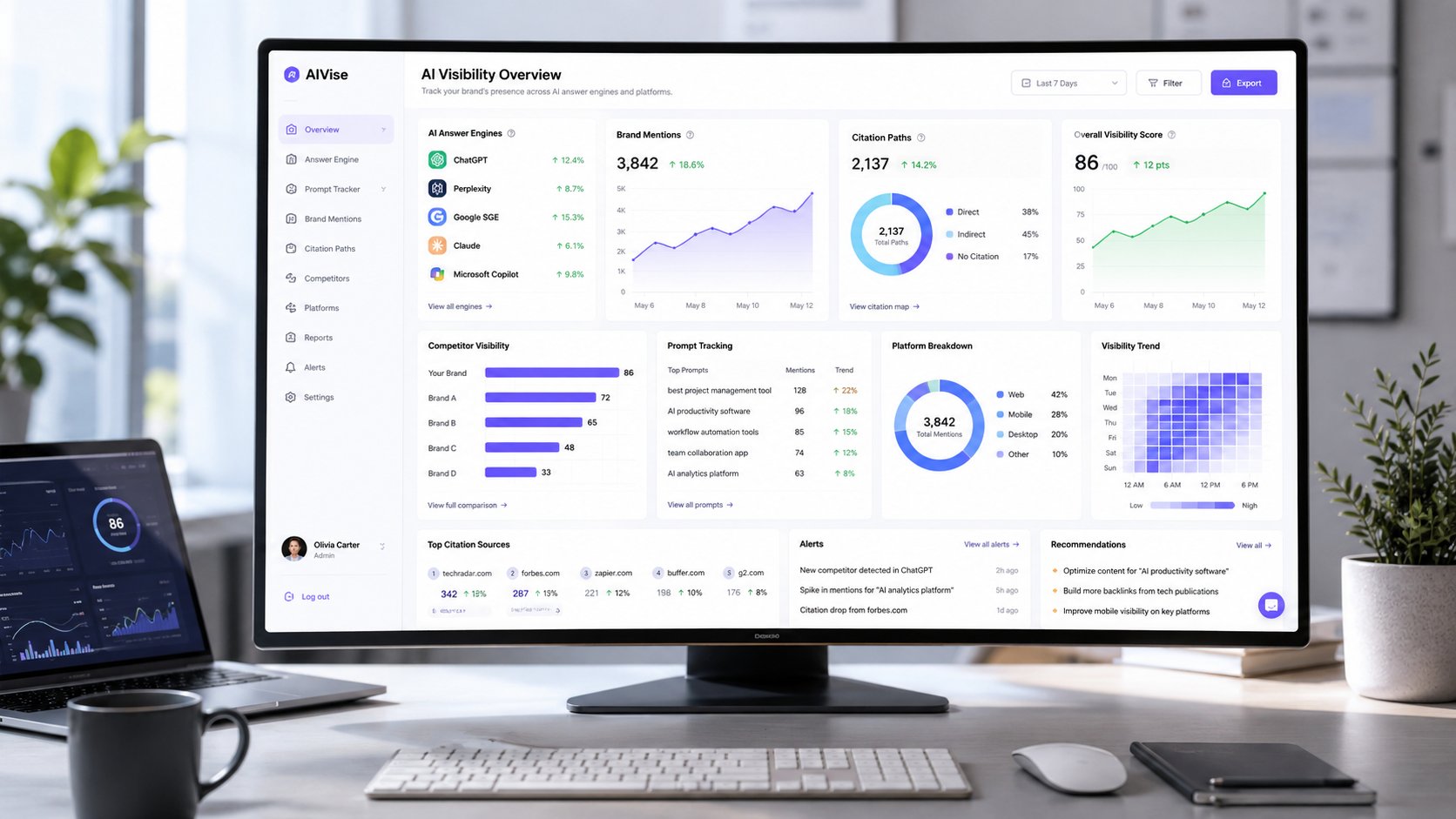
This list sorts the top generative engine optimization platforms for AI by what they are built for: dedicated AI visibility tracking, SEO suites with AI add-ons, enterprise platforms, and Google-focused AI Overviews monitors. Each entry gives a short practical take, honest limitations, public pricing signals where available, and one sensible first step. I'm not treating visibility scores as fixed rankings either. AI answers vary by model, market, date, browsing state, and prompt wording, so a useful platform needs archives and repeatable measurement.
1. Llumo
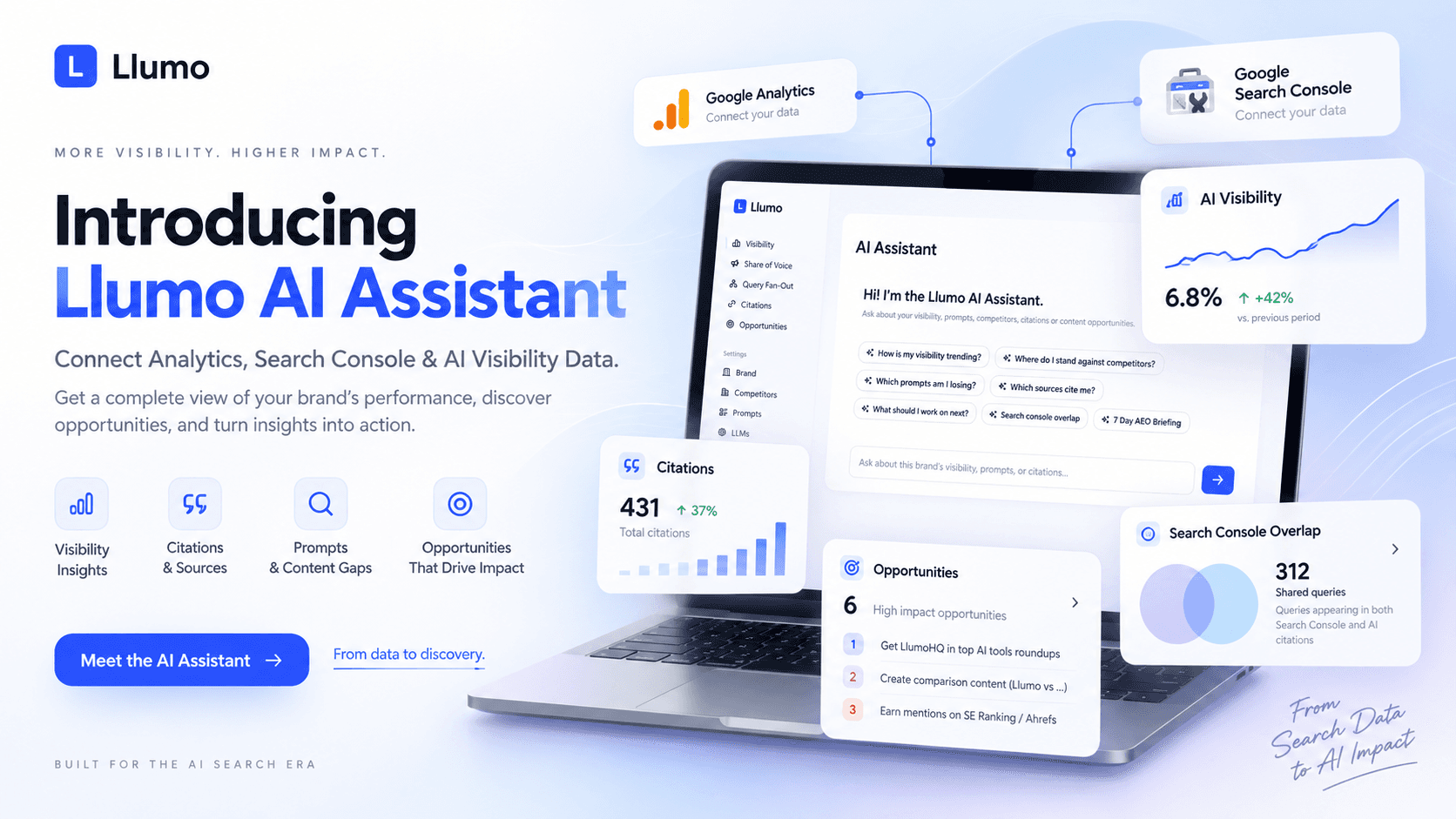
A client asks why competitors keep showing up in AI answers while their own pages rarely get cited. That is the job Llumo is built for. It is a dedicated Answer Engine Optimization across multiple AI surfaces tracker, not a broader SEO suite with an AI tab added later. It monitors mentions, citations, share of voice, competitors, and trend changes across ChatGPT, Gemini, Perplexity, Copilot, and Google AI Overviews. The useful unit is the prompt. You can inspect the answer itself, see which brands were mentioned, and check which pages or domains were cited.
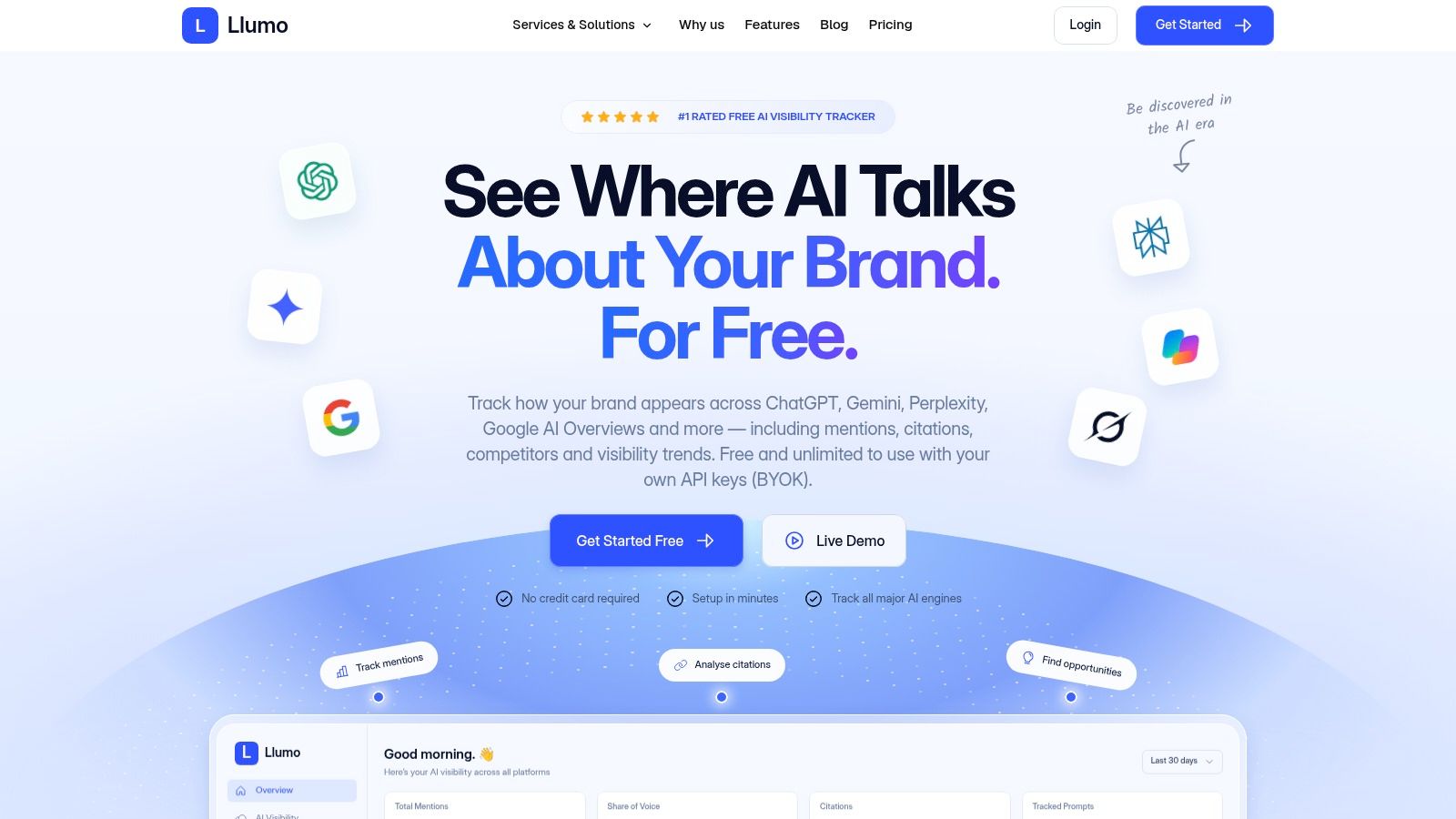
The practical advantage: Llumo separates “the model mentioned us” from “the model cited a page we control,” which leads to much better content and digital PR decisions.
Where Llumo earns its place
Llumo stands out on pricing and product shape. It offers a free core platform with a bring-your-own-keys approach, so teams can pay model providers directly instead of absorbing an extra software markup on every request. If you are running large prompt sets, that pricing model is easier to forecast than bundled AI credits. Teams that do not want to manage provider billing can still choose managed PAYG or subscription options.
It also records query fan-out, the related searches an AI system runs while assembling an answer. That matters in practice because the final citation often comes from a side query rather than the original prompt. Google describes AI features and the underlying retrieval behavior in Google's documentation on AI features. For anyone diagnosing why a competitor got cited, that extra layer is useful.
The day-to-day workflow is stronger than a simple visibility score. Response archives, citation analysis, tagging, dashboards, competitive trends, and opportunity discovery help turn monitoring into an action list. You can spot a missing citation, review the source an answer engine used for a competitor, then decide whether the fix is a content rewrite, a better supporting page, or digital PR.
What to check before choosing it
The trade-off is setup and variable usage cost. Llumo itself can be inexpensive, but heavy monitoring still depends on the models, APIs, scraping routes, and response volume you choose. OpenAI's pricing structure is a useful example of why costs can move around, since input, cached input, and output tokens are billed separately.
Bring-your-own-keys also means accepting some technical work and some model volatility. Providers change access, interfaces, and browsing behavior. Agencies and larger teams may still like that flexibility, especially with hosted instances, custom branding, API or MCP access, unlimited projects, daily backups, and usage analytics.
Best first step: Connect one provider, build a fixed prompt set around commercial questions, then compare mentions, citations, and competitor share of voice before you widen coverage.
Website: Llumo
2. Ahrefs Brand Radar
Ahrefs Brand Radar fits teams that already use Ahrefs and want AI visibility beside familiar search, content, and link data. It tracks how brands appear across ChatGPT, Gemini, Perplexity, Copilot, Grok, Claude, and Google AI Overviews, with competitive benchmarking, custom prompts, historical trends, and share-of-voice reporting.

The advantage is context. A visibility change is easier to interpret when you can compare it with brand mentions, search demand, content coverage, YouTube, Reddit, and other datasets in the same broader workflow. Teams that already live in Ahrefs won't need to teach everyone a completely new reporting environment.
The limitation is that the exact pricing for the AI visibility product isn't prominently public and it's positioned as an add-on within Ahrefs. Its modeled datasets also need interpretation. A modeled prompt corpus can reveal useful patterns at scale, but it isn't identical to sending the same live prompt to every model at the same time. That distinction matters when a client asks why a dashboard score doesn't match a manual check.
Ahrefs provides a free checker and strong documentation, which makes initial exploration straightforward. For a closer comparison of the cost and workflow trade-offs, this Ahrefs Brand Radar alternative guide is useful.
Best first step: Use Brand Radar on a small competitor set, then compare its modeled trends with a manually archived prompt sample before treating the score as a reporting KPI.
Website: Ahrefs Brand Radar
3. Surfer AI Tracker
Surfer's AI Tracker makes sense for content teams that want to connect prompt-level visibility with the work they already do in Surfer's content environment. It monitors mentions and citations in answers from major language models, with dashboards for competitors, sources, prompt management, volatility, and fan-out queries.

The strongest part is the source audit. When a competitor appears in an answer, you can investigate which domains influenced the response instead of jumping straight to “write more content.” That's a better starting point for deciding whether the gap belongs to your site, an independent review page, a publication, or a community source.
Surfer is also useful when you don't want to buy the full content suite just to access AI tracking. Its familiar interface should reduce onboarding for editorial and SEO teams, and the prompt-level view keeps the work tied to real buyer questions rather than abstract visibility grades.
The trade-off is pricing transparency. AI Tracker pricing isn't prominently public, so agencies and smaller teams need to confirm what's included, how many prompts are covered, and whether refresh cadence changes by plan. Google AI Overviews coverage is also evolving, so teams focused heavily on Google should test the depth of that monitoring rather than assume cross-LLM coverage means equal coverage everywhere.
Best first step: Add prompts from your existing content briefs, then review the cited sources for prompts where your pages rank well but your brand still doesn't appear.
Website: Surfer
4. SE Ranking AI Search Toolkit
SE Ranking is an SEO suite first, with an AI Search add-on for teams that want conventional rank tracking, audits, backlinks, content tools, and AI visibility in one workflow. The toolkit covers Google AI Overviews, Google AI Mode, ChatGPT, and Perplexity, while reporting brand mentions, citations, and sentiment.
That combination is the main reason to shortlist it. An SMB or agency doesn't necessarily need a separate AEO platform if the same team is already managing site audits, keyword positions, backlinks, and content updates. The AI add-on can put answer-engine findings next to the SEO tasks that will act on them.
SE Ranking also provides clearer add-on capacity and API guidance than many tools in this category. That helps with budgeting, although AI tracking still needs its own allocation. The important question isn't only the subscription price. It's how many prompts, engines, markets, and refreshes your team needs each month.
The downside is depth. It's a practical mid-market choice, but enterprise teams with complex governance, large data pipelines, or extensive model controls may find the AI layer less developed than a specialist or enterprise suite. It also takes discipline to avoid blending an organic position with an AI answer appearance as if they were the same kind of ranking.
Best first step: Run the add-on alongside your existing tracked keywords, but create a separate prompt group for comparison and recommendation queries.
Website: SE Ranking
5. Advanced Web Ranking AI Search
Advanced Web Ranking is a strong fit for agencies that need AI search tracking inside a mature rank-tracking and reporting workflow. It covers Google AI Overviews and AI Mode, alongside ChatGPT, Perplexity, Gemini, and Claude, and adds citation rank, share of voice, scheduling, exports, APIs, and MCP connectivity.
The agency value is in reporting control. Unlimited users and projects make it easier to involve account managers, analysts, and clients without treating every viewer as a separate cost decision. Scheduled reports and export automation are more useful than flashy AI wording when you're responsible for recurring client deliverables.
Its AIO Citation Rank and brand-intelligence views also help bridge traditional SERP reporting and answer visibility. That said, the setup can take time. Advanced configuration is powerful, but a new user may need to learn how refresh cadence, keyword sets, markets, and AI surfaces interact.
There can also be trade-offs between weekly and daily refresh options in some setups. That's not a minor detail. A daily view is useful for volatile launches or reputation monitoring, while a weekly view may be enough for a stable content program and easier on operational budgets.
Best first step: Build one client report showing organic position, AI Overview appearance, and cited URL separately so stakeholders don't mistake one metric for another.
Website: Advanced Web Ranking
6. Conductor AI Search Performance
Conductor's AI Search Performance module is designed for larger organizations that want generative visibility connected to enterprise SEO, content analytics, and business intelligence. It tracks mentions, citations, sentiment, share of model, and competitive performance across ChatGPT, Perplexity, and Google AI Overviews.
The useful distinction is topic-level reporting. Instead of showing only whether a brand appeared, Conductor can organize prompts by market, language, model, and topic. That structure works for global teams where a single aggregate score hides important differences between regions and product lines.
Its data API and ChatGPT integration also support teams that want to move insights into existing dashboards. Enterprise security and data controls are part of the appeal, especially when multiple departments need access to the same measurement system without creating disconnected prompt spreadsheets.
The weakness is fit, not capability. Smaller teams may pay for governance and workflow depth they won't use. Pricing is custom and not public, so a realistic evaluation needs a clear prompt volume, market list, integration requirement, and user model before sales conversations become meaningful.
A good enterprise test: Ask for the raw response archive and citation fields, not just a summary visibility score.
Conductor also shouldn't be judged only on model count. A smaller set of well-controlled prompts can be more useful than broad but poorly segmented monitoring. If the organization can't assign an owner to each visibility gap, the platform may become another reporting layer instead of an operating tool.
Best first step: Give Conductor one topic cluster, one market, and one BI destination, then test whether the output supports an actual content or reputation decision.
Website: Conductor
7. BrightEdge AI Catalyst
BrightEdge combines enterprise SEO with AI search monitoring through AI Catalyst and its Generative Parser. It focuses on Google AI Overviews, ChatGPT, and Perplexity, while connecting generative search findings with the wider BrightEdge platform.
The Generative Parser is the main reason enterprise SEO teams consider BrightEdge. It's built to detect AI search elements and patterns, giving analysts a way to study how generative features appear across search results rather than treating them as a simple yes-or-no flag. BrightEdge's research and education materials also help large organizations build internal understanding around AI search changes.
The platform works best when traditional SEO governance is already established. Teams can bring AI visibility into existing workflows, reporting, and optimization programs instead of creating a disconnected experiment. That's helpful for organizations with many markets, brands, stakeholders, and approval layers.
The cost is complexity. Enterprise onboarding takes effort, and pricing is custom and not public. A small SEO team may find the platform too heavy if it only needs prompt-level monitoring across a handful of commercial questions. It's also important to ask how much of the desired ChatGPT and Perplexity coverage is included in the specific package being proposed.
Best first step: Ask BrightEdge to demonstrate one high-value query from discovery through cited-source analysis, recommendation, and content action.
Website: BrightEdge
8. seoClarity AI Overviews Tracking
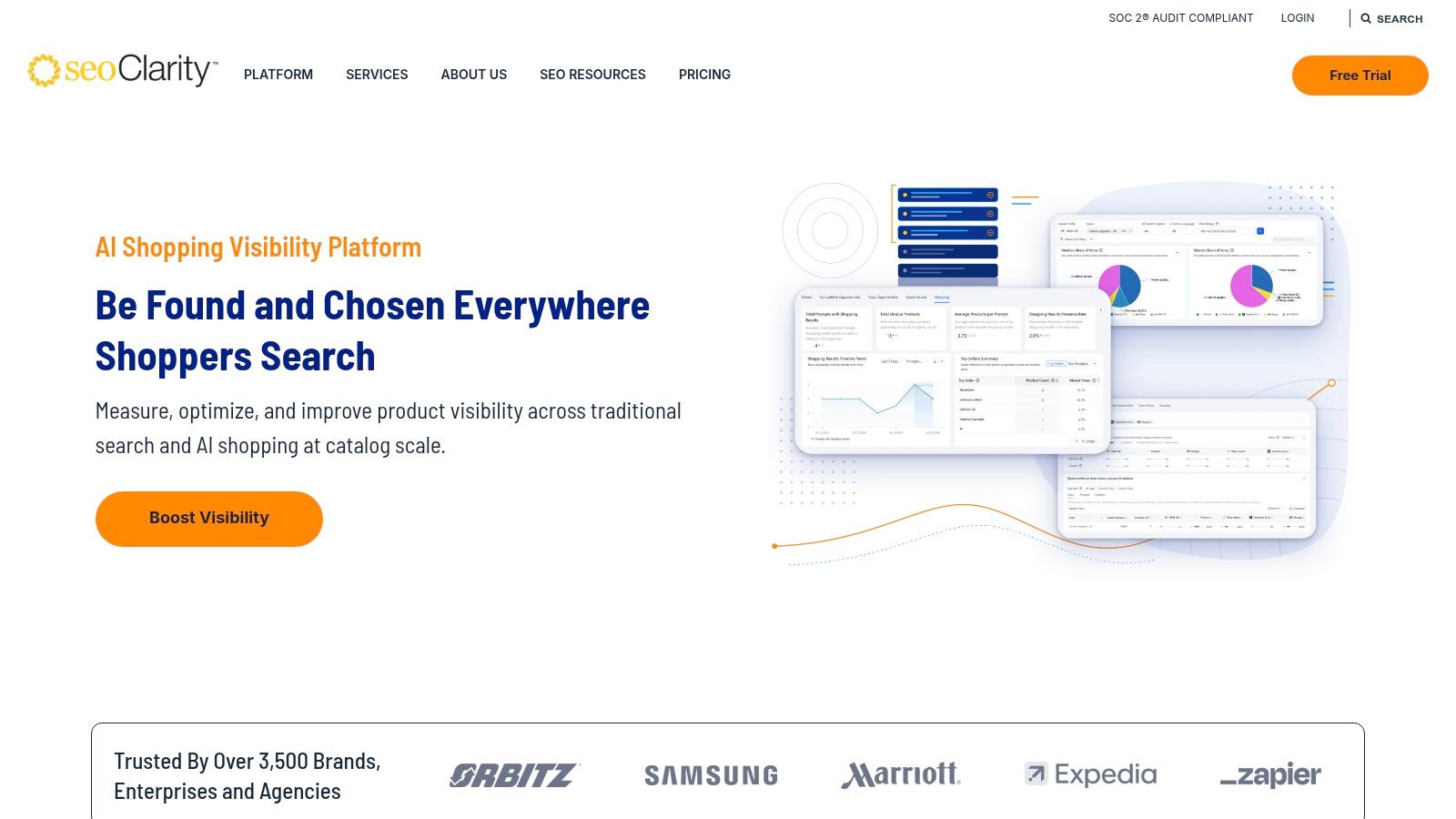
seoClarity is primarily a large-scale enterprise SEO platform, and its AI Overviews tracking reflects that heritage. It monitors which tracked keywords trigger AI Overviews and connects those findings with forecasting, on-page optimization, and broader SEO strategy.
This is a good choice when Google is the main AI search surface and the organization already manages a large keyword portfolio. The value isn't in pretending that an AI Overview is a normal rank. It's in identifying where the feature appears, how it affects the SERP, and which pages need better coverage or structure.
The platform's history with pre-AIO monitoring gives enterprise teams useful continuity. A long-running dataset can help separate a new search feature from an older change in keyword behavior, though you still need to inspect the underlying SERP and citation rules before drawing conclusions.
The trade-off is module complexity. Pricing and packaging can be difficult to understand without a specific use case, and public materials appear primarily Google-centric. If your program depends on ChatGPT, Gemini, or Perplexity, verify those requirements separately instead of assuming an enterprise SEO platform covers every conversational engine.
For a wider look at how teams compare Google-focused monitoring products, this guide to AI Overview tracking tools provides useful evaluation context.
Best first step: Start with the keywords that already drive commercial value, then compare AIO presence with the cited pages you control.
Website: seoClarity
9. SISTRIX AI Overviews Tracking
SISTRIX is the straightforward option for teams that care primarily about Google AI Overviews at country and domain level. It provides historical visibility trends, API endpoints, and integration with SISTRIX's established visibility metrics.
The appeal is data continuity. If your team already uses SISTRIX for organic visibility, adding AI Overview appearance trends can make it easier to see whether a domain's search presence is changing as Google adds generative features. Country-level monitoring is especially useful for international SEO teams that don't want to rely on one market as a proxy for every other market.
The API is another practical strength. Analysts can pull AIO data into internal dashboards, ETL pipelines, or scheduled reporting without making the product itself the only place stakeholders can view the result. That matters when SEO data needs to sit beside sales, content, and market intelligence.
SISTRIX is less suitable for a full multi-model GEO program. It's primarily Google-focused, and it gives less prescriptive guidance on what content, outreach, or entity work should happen next than a dedicated AEO platform. You'll need your own process for turning a missing appearance into an action plan.
Best first step: Use SISTRIX to identify the markets and domains with the largest AIO visibility changes, then inspect the underlying pages before planning updates.
Website: SISTRIX
10. Similarweb Rank Tracker
Similarweb's Rank Tracker, through Rank Ranger, is aimed at teams that want Google AI Overview data within a broader competitive traffic intelligence stack. It detects which tracked keywords trigger AI Overviews and reports SERP feature positions with device and geographic segmentation.
The product is strongest when market context matters as much as page-level SEO. Similarweb's wider intelligence environment can help connect search-surface changes with competitive research, market movement, and reporting for larger organizations. Device and geo controls are useful because an AI Overview seen on one device or in one location shouldn't automatically be treated as universal.
The API also gives data teams a route into programmatic reporting. That's helpful for agencies and enterprise teams that want to combine rank tracking, SERP features, and market intelligence in one internal view.
The limitation is focus. This is primarily a Google AI Overviews monitor, not a multi-LLM answer-engine tracker. If buyers in your category use ChatGPT, Gemini, or Perplexity heavily, you'll need a separate measurement layer. Pricing is usually handled through sales and can be premium, so the business case should include the value of the wider Similarweb stack rather than only the AIO feature.
This enterprise rank tracker comparison is useful when you're deciding whether Similarweb's broader intelligence justifies choosing it over a specialist tracker.
Best first step: Segment your tracked keywords by device and market, then verify whether the AIO signal changes your content or competitive reporting decisions.
Website: Similarweb Rank Tracker
Top 10 Generative Engine Optimization Platforms, Comparison
Product | Core features | UX (Quality) | Pricing / Value | Target audience | Unique selling points |
|---|---|---|---|---|---|
🏆 Llumo | Multi‑model tracking, per‑prompt visibility, citations, query fan‑out, opportunity discovery | ★★★★★ | 💰 BYOK, no Llumo license fee; pay provider costs (low TCO) | 👥 SEO/content teams, agencies, brands | ✨ BYOK + no usage markup; dedicated hosted instance; prompt archives |
Ahrefs Brand Radar (AI Visibility) | Cross‑platform visibility, custom prompts, Ahrefs dataset context | ★★★★☆ | 💰 Add‑on within Ahrefs; pricing opaque | 👥 Teams already using Ahrefs, agencies | ✨ Deep Ahrefs data + familiar workflow |
Surfer (AI Tracker) | Prompt tracking, citation capture, fan‑out queries, content integration | ★★★★ | 💰 Paid feature; pricing not prominent | 👥 Content‑driven SEO teams | ✨ Integrates with Surfer content suite for actioning insights |
SE Ranking (AI Search Toolkit) | AI results tracking, brand mentions, dashboards, SEO toolset | ★★★★ | 💰 Transparent add‑on pricing; SMB‑friendly | 👥 SMBs, agencies | ✨ Unified SEO + AEO workflow; clear pricing guidance |
Advanced Web Ranking (AI Search & Brand Intelligence) | Multi‑engine visibility, AIO citation rank, robust reporting & APIs | ★★★★ | 💰 Competitive for agencies; flexible tiers | 👥 Agencies handling large keyword volumes | ✨ Unlimited users/projects; strong reporting automation |
Conductor (AI Search Performance) | Topic/market share, prompt tracking, BI APIs, enterprise security | ★★★★☆ | 💰 Enterprise/custom pricing | 👥 Large enterprise content teams | ✨ Enterprise governance + BI/ChatGPT integrations |
BrightEdge (AI Catalyst) | Cross‑engine AI visibility, Generative Parser, enterprise SEO suite | ★★★★ | 💰 Custom/high ACV (enterprise) | 👥 Large organizations, enterprise SEO | ✨ Proprietary Generative Parser for AIO patterns |
seoClarity (AI Overviews Tracking) | AIO presence tracking, forecasting, on‑page optimization at scale | ★★★★ | 💰 Complex/moduleed pricing (enterprise) | 👥 Enterprise SEO teams | ✨ Scalable AIO monitoring + strategic guidance |
SISTRIX (AI Overviews Tracking) | Global Google AIO monitoring, domain trends, API endpoints | ★★★★ | 💰 Country‑scale pricing; reliable dataset | 👥 GEO‑focused teams, international SEO | ✨ Strong Google AIO coverage + API for ETL/dashboards |
Similarweb Rank Tracker (Rank Ranger) | AIO detection across keywords, device/geo segmentation, API | ★★★★ | 💰 Premium / sales‑based pricing | 👥 Teams needing traffic intelligence + AIO context | ✨ Integrates AIO with Similarweb market & traffic data |
Pick the Tool Your Team Will Actually Check Each Week
The best platform isn't the one with the longest model list. It's the one your team can use to answer practical questions repeatedly: Which commercial prompts mention us? Which competitors are gaining share of voice? Which sources are being cited? Did a content update change the answer, or did the model just vary?
Start by shortlisting two or three tools based on team size, reporting needs, and operating preference. A lean team that wants multi-model prompt archives may prefer a dedicated tracker such as Llumo. An SEO team already invested in Ahrefs, Surfer, SE Ranking, Advanced Web Ranking, BrightEdge, Conductor, seoClarity, SISTRIX, or Similarweb may get more value from adding AI visibility to an existing workflow. Don't buy enterprise governance if nobody needs it, and don't force a Google-only monitor to answer a multi-model question.
Run a two-week test using the same buyer prompts across the engines you care about. Keep the prompt wording fixed, record the market and language, timestamp every response, and save the cited URLs. Google explains that query fan-out can send related searches across subtopics and sources, so a platform that exposes those expansions gives you more diagnostic information than one that only reports the final answer. Google's AI feature documentation is a useful reference for understanding why the final response can conceal the underlying research path.
During the trial, separate four outcomes: brand mention, recommendation, citation, and citation to a page you control. That distinction matters in zero-click environments. Pew Research Center found that users clicked a traditional result on 8% of visits when an AI Overview appeared, compared with 15% when one didn't, and only about 1% clicked a link inside the Overview. The same analysis found that 88% of AI Overviews cited at least three sources. Pew's analysis of Google AI Overviews makes the business point clearly: a citation can influence consideration without producing a direct visit.
Connect the visibility data to analytics and CRM where possible. Track branded search lift, assisted conversions, qualified leads, direct traffic, and product or support outcomes separately from raw mentions. AI-mediated research is becoming normal. A survey of 5,000 consumers across the United States, United Kingdom, Canada, and Australia found that 47% were likely to use generative AI tools to research purchases, while 60% of existing GenAI users expected their usage to increase within six months. The Attest consumer adoption report supports investing in repeatable baselines rather than one-off manual checks.
Finally, confirm provider costs against your own prompt volume. BYOK products make the underlying expense visible, while bundled tools may make budgeting simpler but less transparent. OpenAI's published pricing separates input, cached-input, and output tokens, so response monitoring costs depend on how prompts and answers are generated. Don't treat an unlisted price as a number you can budget around. Treat it as a sales question about prompt limits, refresh cadence, markets, model coverage, API access, retention, and support.
Llumo gives teams a dedicated way to measure AI mentions, citations, share of voice, competitors, and query fan-out across ChatGPT, Gemini, Perplexity, Copilot, and Google AI Overviews. If you want to compare answer-engine visibility without paying a software license fee for the core platform, visit Llumo and start with the buyer prompts your team already tracks.