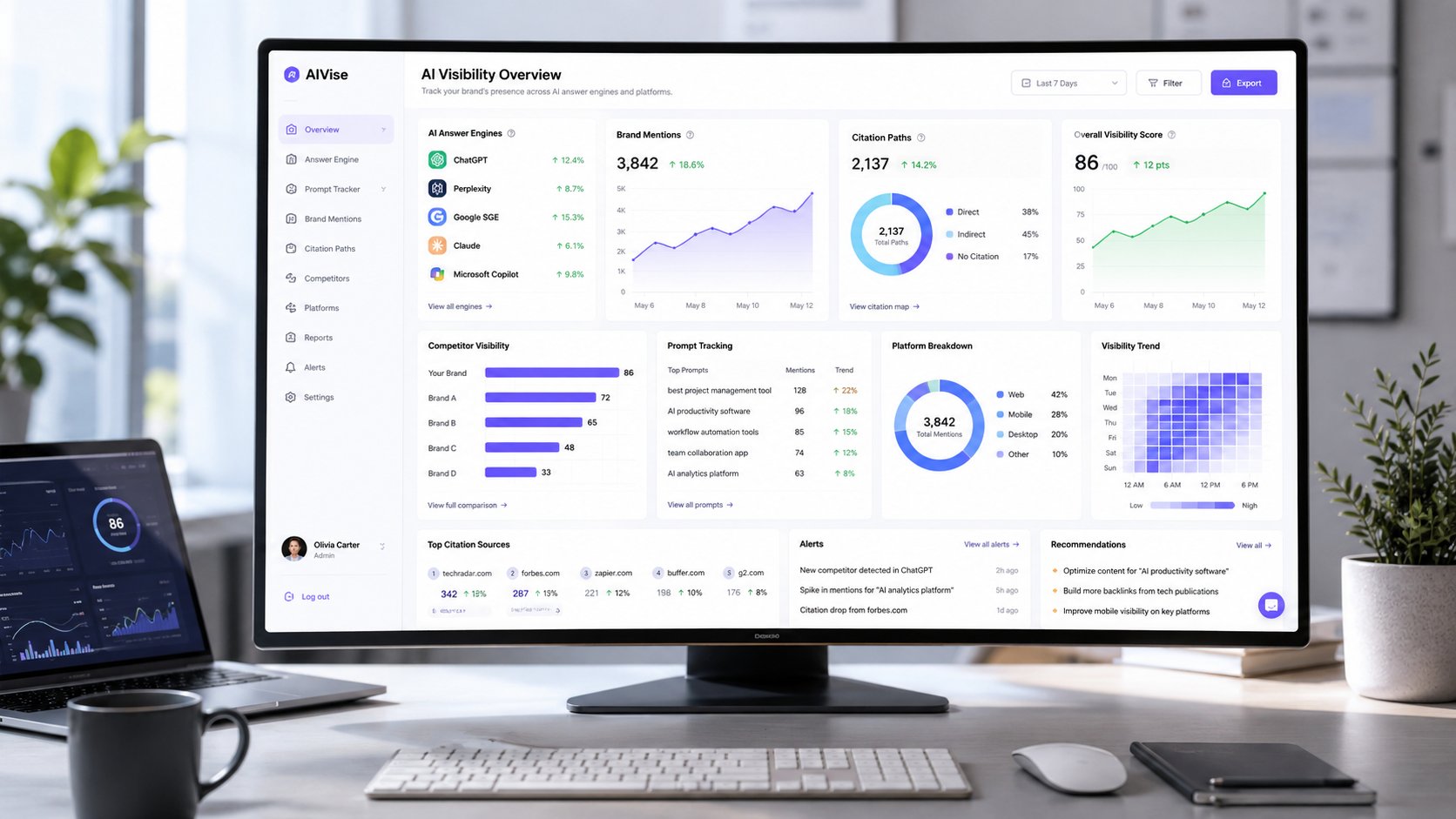

AI visibility isn't just another brand mention. A conventional monitoring platform can tell you that someone discussed your company, but it can't necessarily show which model mentioned you, which prompt produced the answer, which pages were cited, or whether competitors appeared beside you. Those are different signals, and combining them into one “brand health” number can hide the actions your SEO, content, and PR teams need to take.
The right Ahrefs Brand Radar alternative depends on your measurement architecture. Do you need prompt-level response archives, citation discovery, query fan-out, share of voice across answer engines, or broader monitoring across news, social, reviews, and video? This roundup compares seven options by data source, measurement depth, implementation fit, and operational trade-offs. Llumo is the most direct fit when the goal is dedicated AEO measurement, while the other platforms make more sense when AI visibility is only one layer of a wider listening or media-intelligence workflow.
1. Llumo
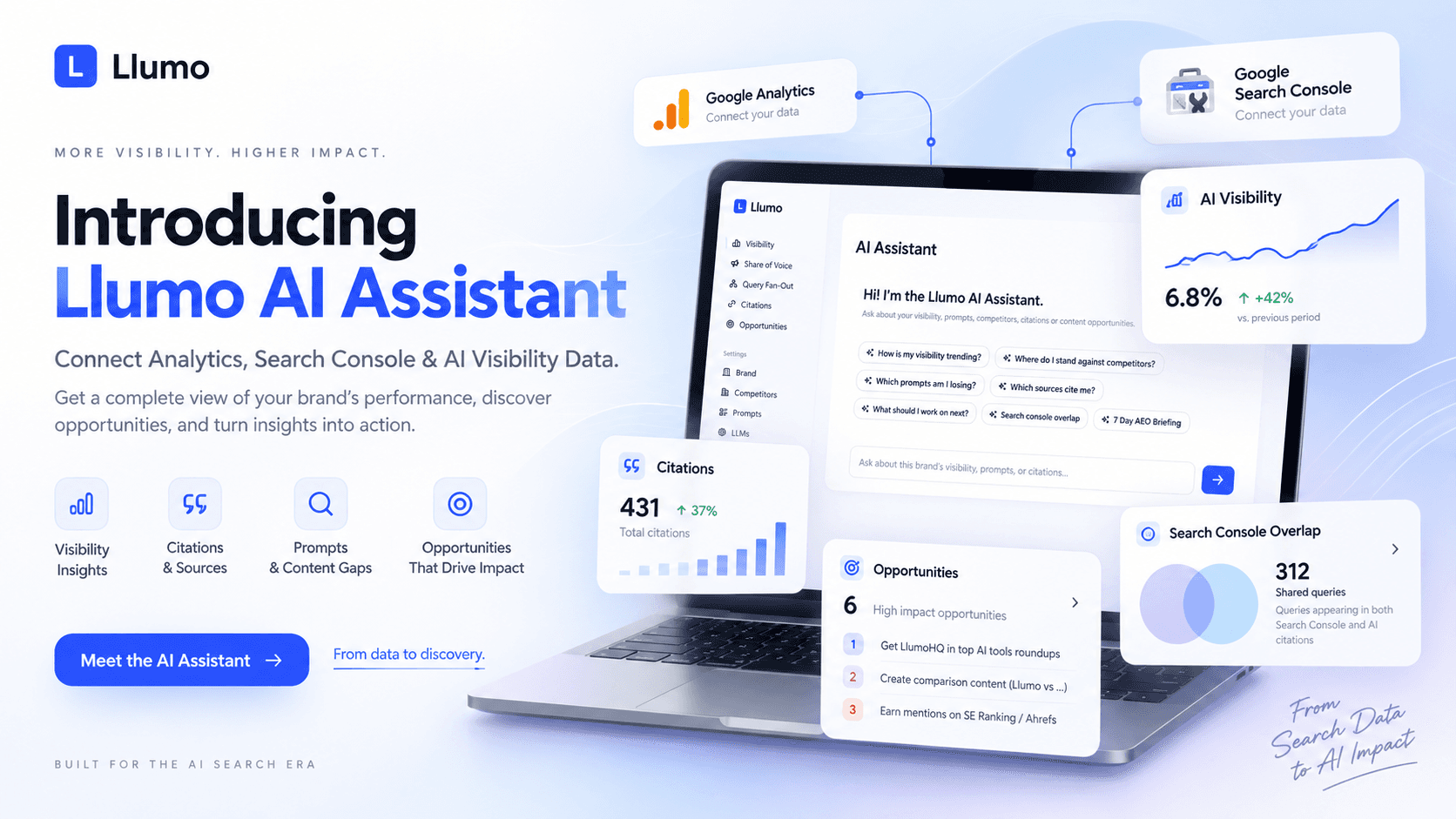
Llumo targets teams measuring how answer engines describe and cite a brand, rather than just counting open-web mentions. It records visibility by prompt, competitor share of voice, citation domains, cited pages, and response history across ChatGPT, Gemini, Perplexity, Copilot, Claude, and Google AI Overviews. Coverage beyond the common four surfaces also includes Claude, Grok, and DeepSeek, which helps teams compare model-specific visibility instead of treating every answer engine as one channel.
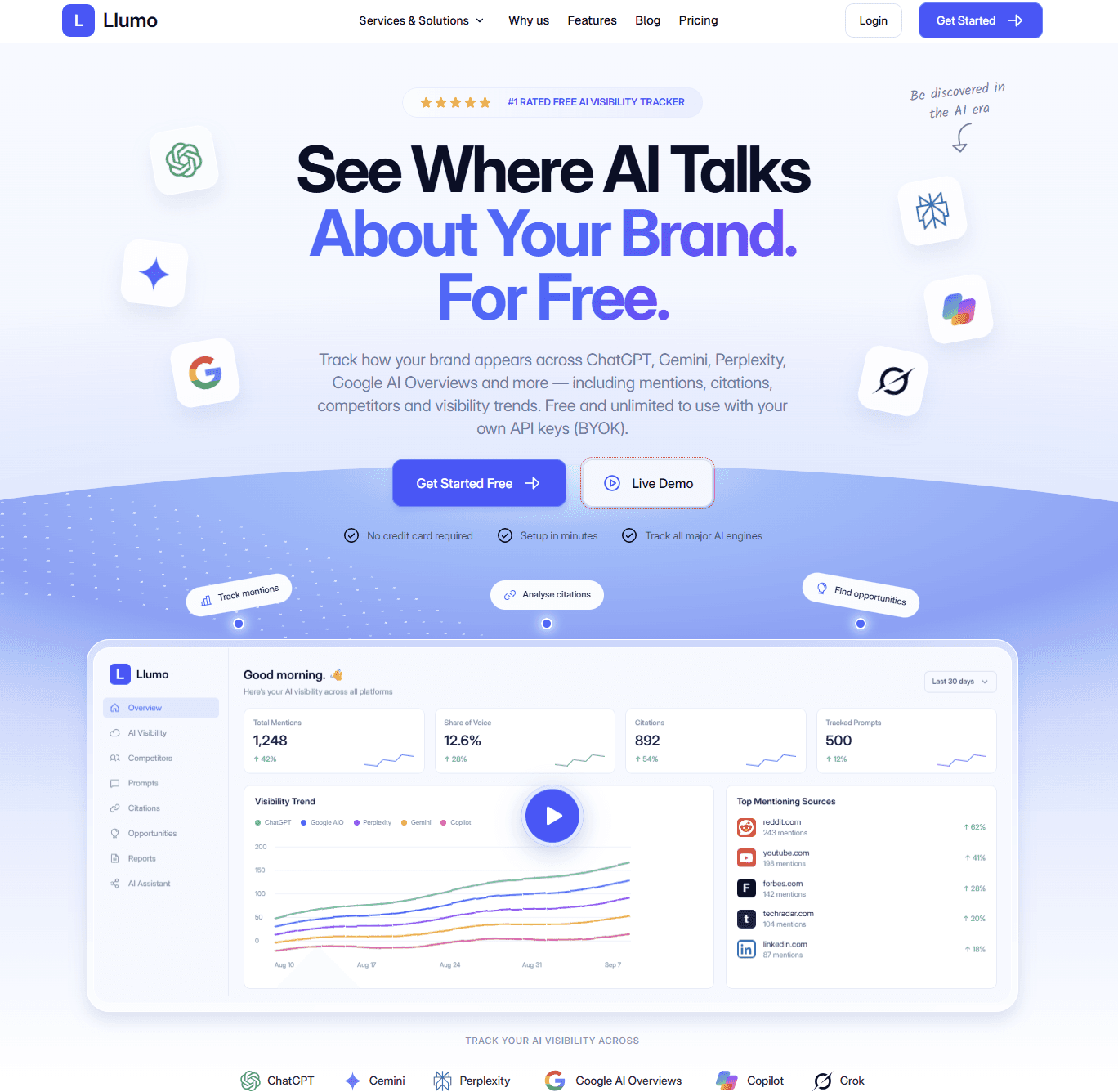
The key measurement split is what the model said versus why it may have said it. Llumo archives prompt-level responses, tags and filters prompt sets, records query fan-out, and identifies new or lost citations across domains and pages. An SEO or AEO team can then connect a finding to an action, such as revising a comparison page, publishing a missing explainer, or pursuing a third-party reference that repeatedly appears in answers.
Where Llumo fits best
Llumo fits brands, agencies, and growth teams building a repeatable AEO process. Teams can compare share of voice across selected competitors and markets, then use trend lines to distinguish a persistent change from one unusual response. Focused trackers for Google AI Overviews and ChatGPT support investigations into particular answer surfaces.
The bring-your-own-API model changes the operating workload. Customers connect provider keys, pay underlying provider costs directly, and avoid Llumo usage markups. Llumo supports unlimited projects and prompts at the platform level, while consumption still follows provider quotas and budgets. This structure can make billing easier to inspect, but the team must manage keys, permissions, provider invoices, and variable response costs.
Practical rule: Choose Llumo when each visibility change should lead to a prompt, citation, content, or outreach decision.
The hosted option provides a dedicated instance on a custom subdomain, custom branding, automatic updates, daily backups, usage analytics, priority support, and the option to combine tracking with managed AEO audits and execution. Public product pages describe the platform and usage approach, but do not publish fixed subscription fees or extensive customer testimonials and third-party endorsements. Before rollout, buyers should confirm provider costs, model access, permissions, and reporting requirements.
Pros
Measurement depth: Per-prompt visibility, share of voice, query fan-out, response archives, and citation analysis.
Model breadth: Common answer engines plus Claude, Grok, and DeepSeek.
Cost control: Provider keys and direct billing avoid platform usage markups.
Agency fit: Unlimited projects, custom branding, hosted environments, and priority support.
Main limitation: API-key management creates operational work, and total costs vary with usage.
Explore Llumo's AI visibility platform
2. Brandwatch
Brandwatch suits teams that define brand visibility through the wider public conversation, not only AI-generated answers. It collects social posts, forum discussions, blogs, news, reviews, and video-site data, creating a broad source layer for reputation work, consumer research, campaign analysis, and competitive listening. Enterprise analysts can also combine public discussion with proprietary text through APIs.
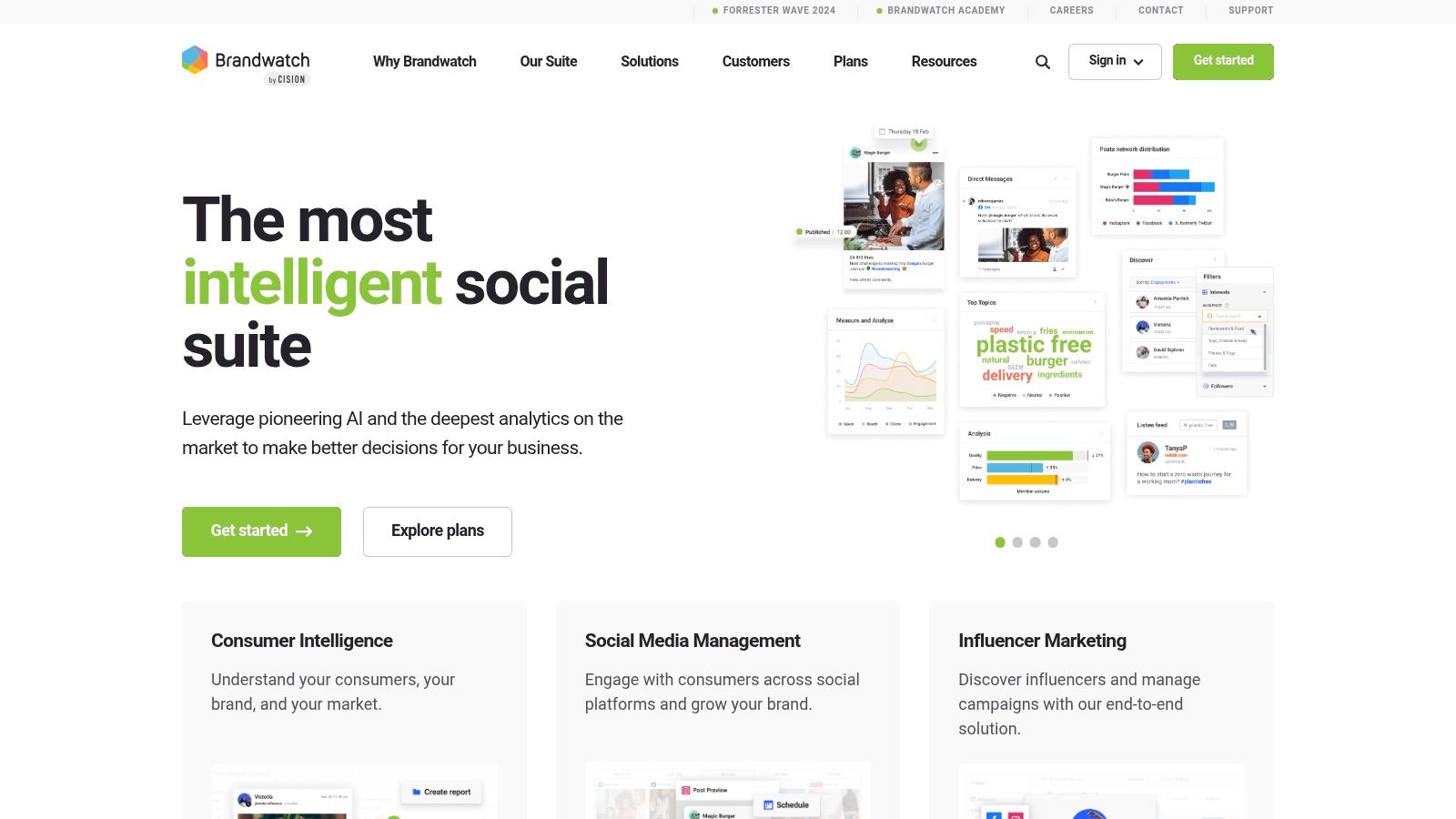
Query design and segmentation are the platform's practical strengths. Boolean searches can separate product mentions from support complaints, competitor comparisons, campaign references, and category discussions. Custom dashboards and exports help brand, communications, and executive teams work from the same evidence.
Brandwatch maps public conversation, while an AEO platform traces how models represent a brand. It can confirm that references exist across monitored sources, but teams seeking model-by-model responses, query fan-out, cited AI pages, and prompt archives need a separate answer-engine layer. The right choice depends on the measurement question: conversation volume and context call for listening data, while citation and prompt analysis require model-level tracking.
The Data Upload API adds value for enterprise research. Analysts can combine customer research, survey language, and public discussion in one reporting environment, then use a separate AEO platform to test whether those themes appear in AI answers.
Read this guide to brand monitoring for AI results before deciding which measurement layer should anchor the stack.
A practical fit: Enterprise social listening, historical analysis, advanced queries, and bespoke reporting.
Plan for: Quote-based pricing and a level of setup that may exceed the needs of teams seeking lightweight alerts or a small prompt library.
3. Talkwalker
Talkwalker is a useful Ahrefs Brand Radar alternative when visual exposure carries information that text monitoring misses. Its image and video recognition can identify logos, objects, and scenes, helping teams measure sponsorships, review brand safety, and assess campaigns where a company appears without a written mention.
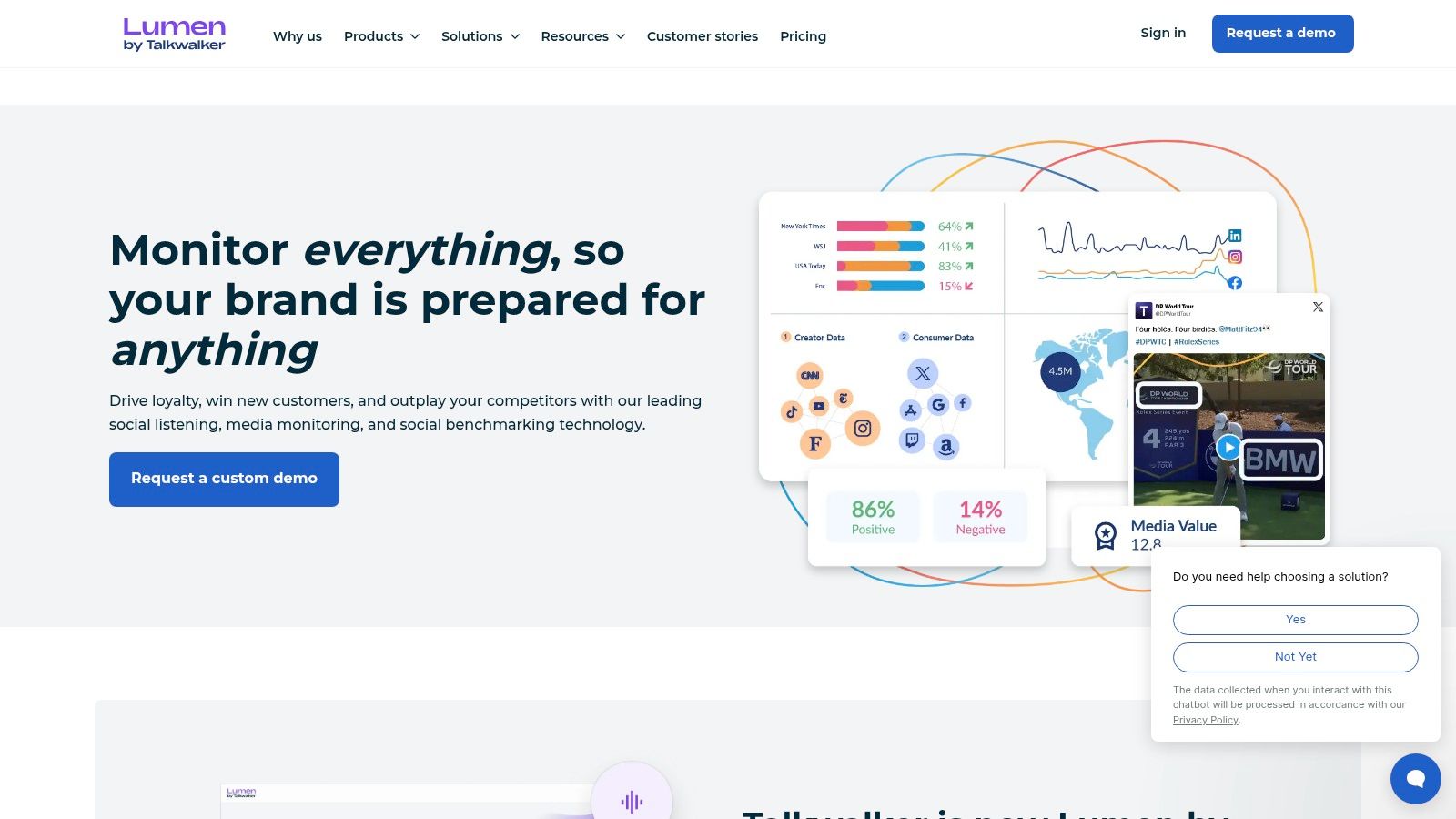
Its measurement layer sits around media signals. Teams can investigate whether a logo appeared in a video, find where a visual trend spiked, and connect unusual attention to related media activity. An AEO tracker measures a different layer, including which prompts produce a recommendation, how models describe the brand, and which pages they cite. Talkwalker can show the surrounding exposure, but it does not explain how an answer engine assembled its response.
AI-assisted insights, anomaly detection, alerts, customizable dashboards, and an analytics API support enterprise reporting. Communications teams can examine sudden peaks alongside visual or editorial activity, while BI teams can route selected data into existing reporting systems instead of working from one fixed dashboard.
The practical limitation is implementation weight. Talkwalker suits organizations that need governed access, recurring reports, enablement, and complex analytics across multiple teams. A small SEO group tracking commercial prompts and cited domains may find that setup unnecessary.
Use the layers together when the workflow requires both context and attribution. Talkwalker surfaces where the brand appears across media. A dedicated AEO platform shows how answer engines assemble those signals into responses, which sources they cite, and where coverage may influence visibility.
A practical fit: Multimedia detection, sponsorship analysis, visual brand exposure, and enterprise alerting.
Plan for: Quote-based pricing and a more involved implementation than basic monitoring requires.
4. Meltwater
Meltwater is designed for media intelligence, making it a practical fit for PR and communications teams that monitor editorial coverage, broadcast, podcasts, social channels, and web discussion in one workflow. Its strongest use case is connecting a product launch or reputation issue to the wider public conversation, rather than treating AI visibility as an isolated SEO metric.

Custom dashboards, alerts, analytics modules, implementation support, customer success, and published service-level commitments suit larger communications operations. A PR team can track a launch across news outlets and social discussion, identify the sources driving attention, and produce recurring leadership reports. Communications, corporate affairs, and media relations teams will usually find this workflow more natural than an SEO-first platform.
Meltwater surfaces editorial coverage and public discussion. Pair it with a dedicated AEO tracker to connect those signals to prompt-level model outputs. The two systems answer different measurement questions: Meltwater shows where the brand is being discussed and which media sources are active, while an AEO platform can expose the prompt archive, model comparison, query fan-out, and citation opportunity workflow needed for execution.
A useful workflow starts with a Meltwater alert for a new industry article or podcast episode. The SEO team can then test whether that source appears in model responses, supports citations for priority prompts, or changes competitor visibility. The guide to AI visibility trackers for SEO and marketing agencies explains how this answer-engine layer differs from media monitoring.
Operational fit: PR teams, corporate communications, editorial monitoring, and combined news and social reporting.
Budget and setup: Meltwater does not publish a rate card. Contracts require custom scoping, and extra modules or geographic coverage can raise the total cost.
5. Brand24
Brand24 offers a more approachable route for small and mid-sized teams that need social listening and web monitoring without building an enterprise analytics program. It tracks mentions across social platforms, news, blogs, forums, reviews, podcasts, newsletters, and other sources, with real-time alerts, sentiment, reach, and presence scoring.
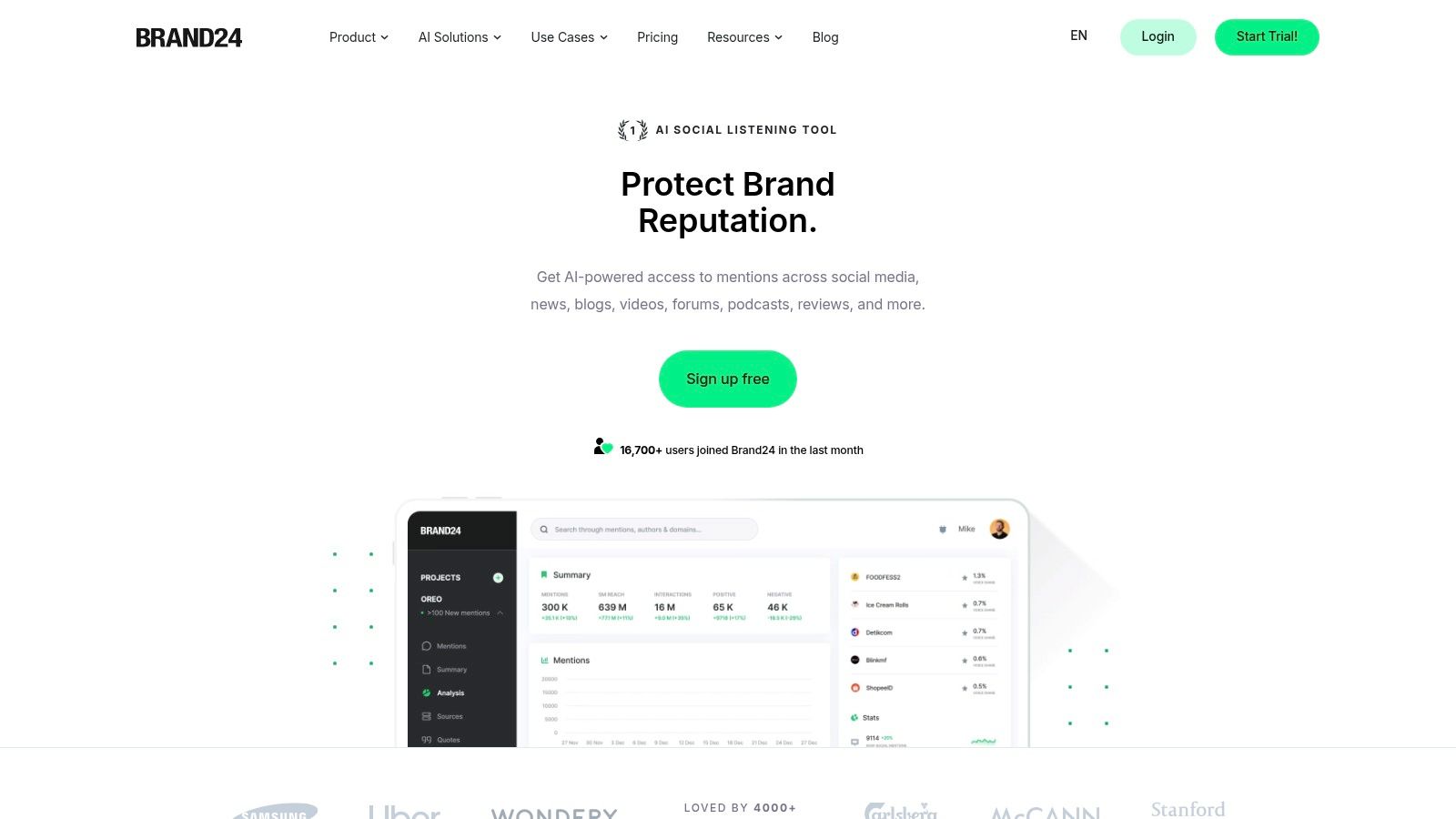
The product is practical for a marketing manager who needs to know when a brand or competitor appears in a public conversation. Topic analysis, insight summaries, and spike detection reduce the manual work involved in scanning every result. An optional AI Visibility module extends the product toward exposure in major AI platforms, which makes Brand24 more relevant to teams beginning to investigate answer-engine presence.
The important qualification is that an add-on visibility module isn't automatically equivalent to dedicated AEO measurement. Before switching, verify whether the workflow exposes individual prompts, raw responses, cited pages, model-specific changes, and competitor share of voice at the level your team needs. A mention alert can tell you that exposure happened. It may not tell you what content or outreach action could improve the next answer.
Brand24's transparent plan structure and trial availability make evaluation easier than quote-only enterprise suites. That matters for teams that want to test monitoring with a defined keyword set before committing to a wider rollout. The main scaling issue is quota management. Keyword and mention limits can force plan upgrades as the brand, market, or competitor set expands, while AI-related add-ons can raise the final cost.
Best for: SMB monitoring, real-time alerts, sentiment, and simple cross-channel reporting.
Trade-offs: Usage quotas and add-ons need close attention, especially when the team expands from basic mention tracking into AI visibility.
6. Mention
Mention is built for listening operations. It monitors web pages, news, forums, reviews, and major social channels, then organizes findings through alerts, dashboards, sentiment views, share-of-voice reports, competitor benchmarks, and collaboration features.
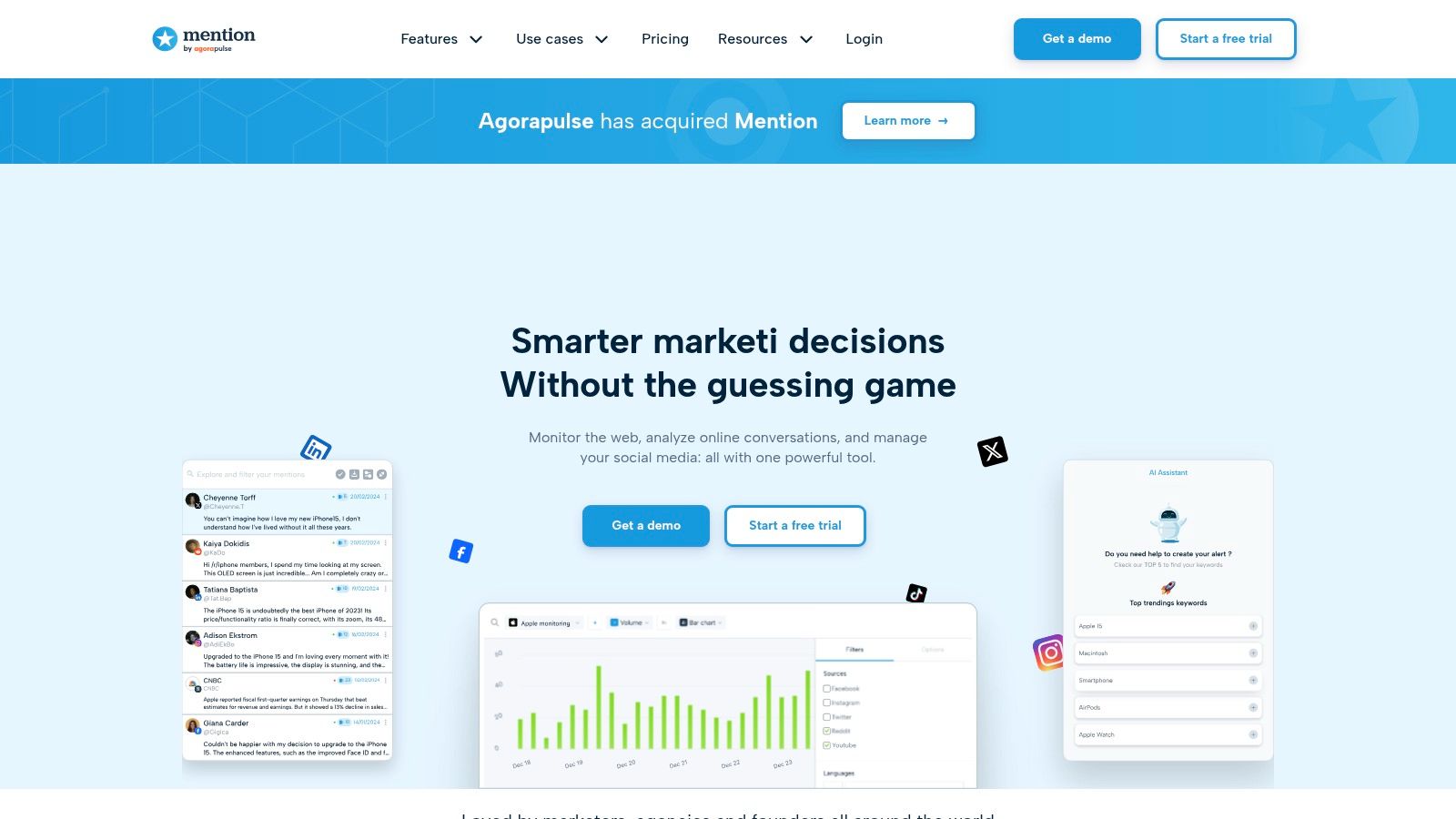
Its practical strength is workflow control. A marketer can assign a mention to a colleague, send alerts through Slack or Zapier, and manage competitor monitoring in the same workspace. Integration with Agorapulse also connects listening with publishing and response tasks, which suits teams that need to act on public conversations quickly.
For AI visibility, the measurement layer is narrower. Mention can show where discussion occurs and how public sentiment changes, while a dedicated AEO tracker examines prompts, model outputs, answer-engine visibility, and cited URLs. Mention does not necessarily identify which engine produced an answer, show how a fixed prompt changed, or expose the page cited within generated text. Teams evaluating an Ahrefs Brand Radar alternative should therefore match the product to the signal they need to measure.
A small agency could use Mention to monitor several brands, spot emerging conversations, and assign follow-up work. That creates a reliable baseline for public discussion, but deeper historical access and full API availability are add-ons rather than standard capabilities. Company-plan pricing also requires a demo to confirm which features and entitlements apply.
Use Mention when the operating need is real-time listening, collaboration, competitor benchmarking, and integrations. Pair it with specialized AI visibility software when the workflow must connect brand conversations with prompt-level model outputs and citation changes. The main cost considerations are quote-based company pricing and possible additions for historical or API requirements.
7. BuzzSumo Monitoring
BuzzSumo Monitoring is built around content discovery and PR workflows. It tracks brand, competitor, keyword, content, journalist, and backlink alerts, allowing a team to connect a new mention with the article, author, and wider topic behind it.
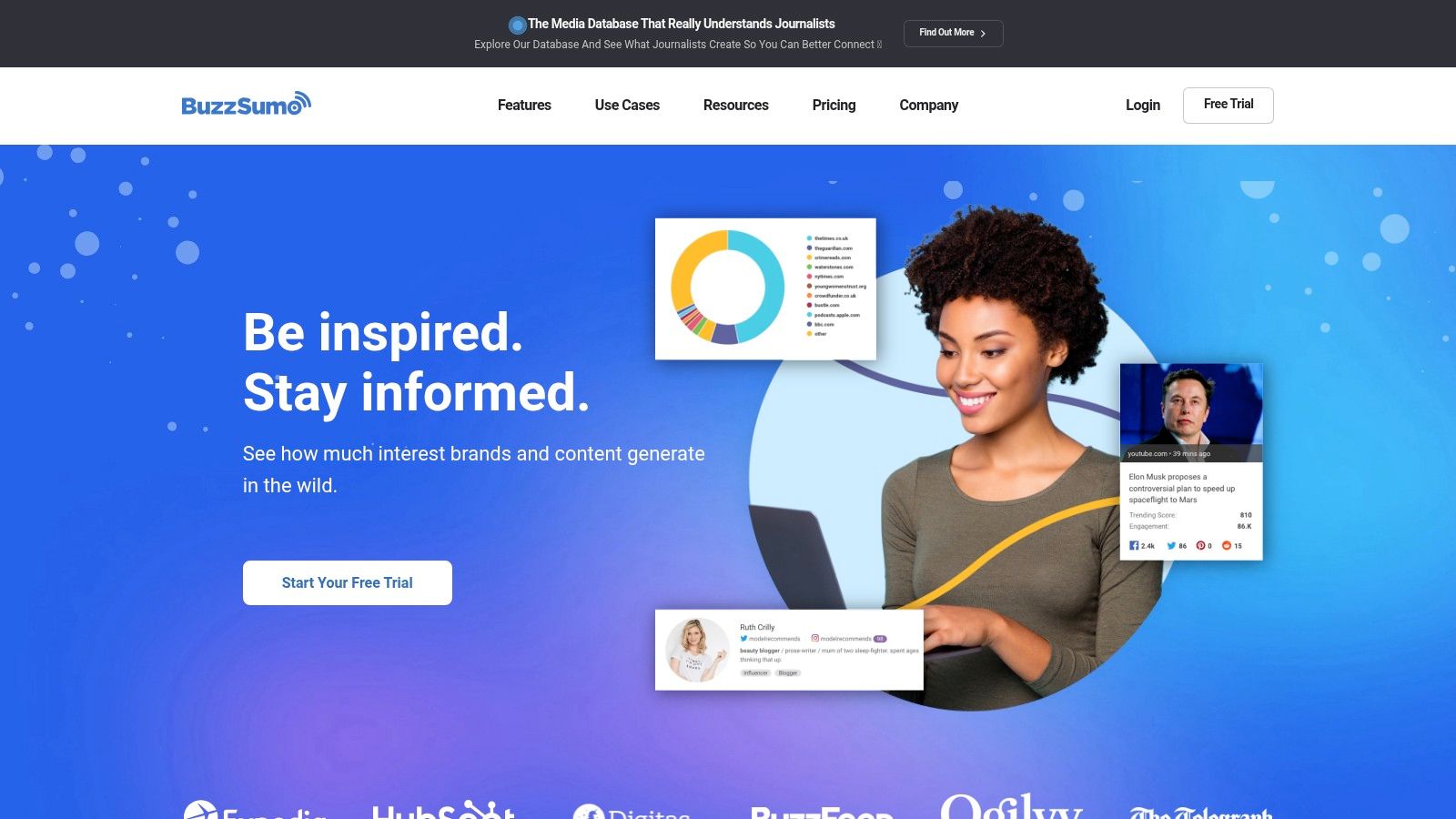
Filters for language and social engagement thresholds help narrow the feed. Email, Slack, and RSS delivery place alerts in existing workflows, so teams can identify new links, discussion threads, and fast-growing content before scheduled research uncovers them.
The useful measurement layer is context. After finding a brand mention, researchers can examine which articles attract discussion, which journalists cover the category, and which competitor pages earn attention. That connection supports content planning and outreach better than an isolated notification feed.
For AI visibility work, BuzzSumo supplies surrounding content signals rather than prompt-level model output. It can reveal the publications, links, and topics shaping a brand's presence, while a dedicated AEO tracker measures controlled prompts, answer-engine responses, and cited URLs across systems such as ChatGPT, Gemini, Perplexity, or Google AI Overviews. Teams can therefore use BuzzSumo to surface content and journalist opportunities, then add a dedicated AEO tracker when they need to connect those signals to model outputs. A practical shortlist of top Answer Engine Optimization software can help define that second measurement layer.
Check pricing and limits at checkout before migration. Confirm the alert types, historical access, delivery options, and research allowances that the workflow requires, since the available configuration can affect implementation.
Use BuzzSumo for content intelligence, journalist research, backlink discovery, and lightweight monitoring. Enterprise suites generally provide greater sentiment depth and historical listening, while prompt-level AI tracking requires a separate measurement system.
Ahrefs Brand Radar Alternatives, 7-Tool Comparison
Product | Implementation Complexity 🔄 | Resource Requirements ⚡ | Expected Outcomes 📊 | Ideal Use Cases 💡 | Key Advantages ⭐ |
|---|---|---|---|---|---|
Llumo | Moderate, requires managing provider API keys and billing | Low software overhead but ongoing provider API costs; technical ops | High, per-prompt citation visibility and prioritized AEO opportunities | AEO monitoring for brands/agencies tracking citations across LLMs | Cross-model, per-prompt visibility; BYO-API pricing; deep citation/query analytics |
Brandwatch | High, enterprise onboarding and complex query setup | High, large data ingestion, storage and enterprise budget | High, deep historical and channel insights for decision‑making | Large enterprises needing broad social and web research | Extensive source coverage, advanced Boolean queries, enterprise APIs |
Talkwalker | High, multimedia models and AI-assisted pipelines to configure | High, image/video recognition compute and enterprise spend | High, multimedia exposure detection and trend/anomaly alerts | Visual brand safety, sponsorships and multimedia analytics | Strong image/video recognition; anomaly detection; AI insights |
Meltwater | Moderate–High, contracted implementations and service SLAs | High, custom contracts, modules and customer success resources | High, combined editorial + social intelligence with enterprise reporting | PR teams needing news + social monitoring with SLAs | Multi-channel monitoring including broadcast/podcasts; customer success & SLAs |
Brand24 | Low, SMB-friendly setup and quick deployment | Low–Moderate, transparent plans; add-ons may increase cost | Moderate, real-time alerts, sentiment and spike detection | Small/mid-size teams wanting affordable, real-time monitoring | Transparent pricing, easy to use, optional AI Visibility module |
Mention | Low–Moderate, simple alerts; advanced features via add-ons | Moderate, plan limits; company plans quoted separately | Moderate, broad coverage with collaboration and share‑of‑voice | Teams focused on listening workflows and collaboration | Real-time alerts, team assignments, broad source tracking |
BuzzSumo (Monitoring) | Low, straightforward alert and dashboard setup | Low–Moderate, subscription tiers; pricing visible at checkout | Moderate, content discovery plus monitoring and backlink alerts | Content/PR teams needing discovery, journalist tracking and alerts | Combines monitoring with content/influencer research and backlink alerts |
Choose the Measurement Layer You Actually Need
The best Ahrefs Brand Radar alternative isn't the platform with the longest feature list. It's the one that captures the evidence your team can act on. If the priority is prompt-level visibility, cross-model comparison, citation evidence, query fan-out, response archives, and AEO workflows, Llumo is the clearest fit. It measures the answer itself, the sources behind it, the competitors included, and the changes that occur across monitored prompts.
Brandwatch, Talkwalker, and Meltwater belong in a different category. They're stronger choices when the business needs broad enterprise listening, media intelligence, visual detection, broadcast coverage, social analysis, or governed reporting across communications teams. They can supply valuable surrounding context, but they shouldn't be expected to provide the same model-specific answer and citation detail as a dedicated AEO platform.
Brand24, Mention, and BuzzSumo are more focused monitoring and research choices. Brand24 suits smaller teams that want accessible alerts and an optional AI visibility layer. Mention is useful for listening workflows, collaboration, and response management. BuzzSumo connects monitoring with content, journalist, and backlink research. Each can work well when the team's central question is public discussion, content activity, or outreach opportunity rather than full answer-engine observability.
Google's expansion of AI Overviews to more than 1 billion users in over 100 countries by May 2024 shows why this measurement layer matters at scale. Google's Brand Radar information also separates Search Demand and Web Visibility reporting and uses a 90-day reporting window, reinforcing that teams need longitudinal tracking rather than a one-time audit. Ahrefs' help documentation records Web Visibility data going back to 2013 and Search Demand data going back to 2015, which helps explain why Brand Radar appeals to teams that value historical context.
Implement the system in a controlled sequence:
Define a fixed prompt set: Group prompts by product, problem, competitor, market, and buying stage.
Choose target models: Include the answer engines your customers use, then add emerging surfaces when coverage supports a meaningful decision.
Separate mentions from citations: Record whether a model named the brand, linked to a source, or used a third-party page as evidence.
Archive responses: Keep the full answer, prompt, date, model, cited pages, and competitor appearances together.
Review trends consistently: Compare the same prompt groups over time instead of treating isolated outputs as rankings.
Connect findings to action: Assign content updates, digital PR, technical fixes, or messaging changes to specific visibility gaps.
That architecture keeps tools in their proper roles. Broad monitoring explains the surrounding conversation, content intelligence reveals opportunities, and dedicated AEO measurement shows how answer engines translate those signals into recommendations.
Llumo gives SEO and marketing teams per-prompt visibility, competitor share of voice, query fan-out logs, response archives, and citation analysis across major answer engines, including ChatGPT, Gemini, Perplexity, Claude, Copilot, and Google AI Overviews. If you need an Ahrefs Brand Radar alternative built around evidence you can turn into content and outreach actions, visit Llumo and evaluate the platform against your own prompt set.