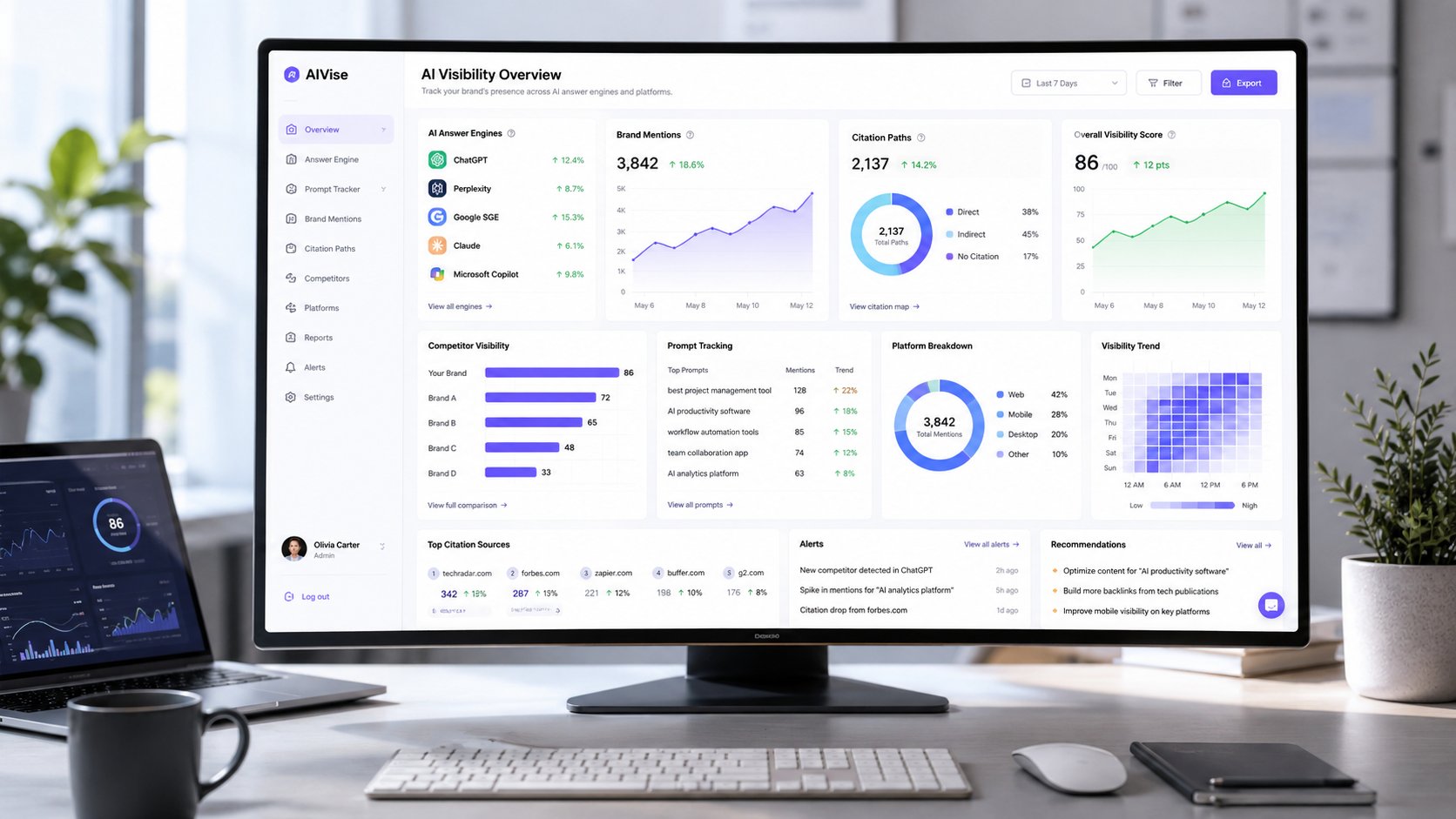

Traditional rank tracking can tell you where a page appears in Google, but it can't fully explain how ChatGPT, Perplexity, Gemini, or Google AI Overviews describe your brand. Answer engine optimization requires a wider view, including mentions, citations, prompt coverage, AI Overview visibility, source history, integrations, and competitive share of voice.
That difference matters because AI systems can cite pages that don't appear near the top of conventional search results. One study found that 60% of URLs cited across major AI answer engines didn't rank in the top 20 organic results for the same query (Digital Authority). A conventional SEO suite may show you strong rankings while missing the sources shaping the answer itself.
The ten platforms below cover two distinct camps. Specialist trackers focus on prompt-level responses and citation evidence, while established SEO suites connect AI visibility to keywords, backlinks, technical audits, and reporting. Pricing details appear only where supplied. Llumo stands apart as the bring-your-own-API-key option, giving teams direct control over response-based provider costs rather than adding a platform usage markup.
1. Llumo
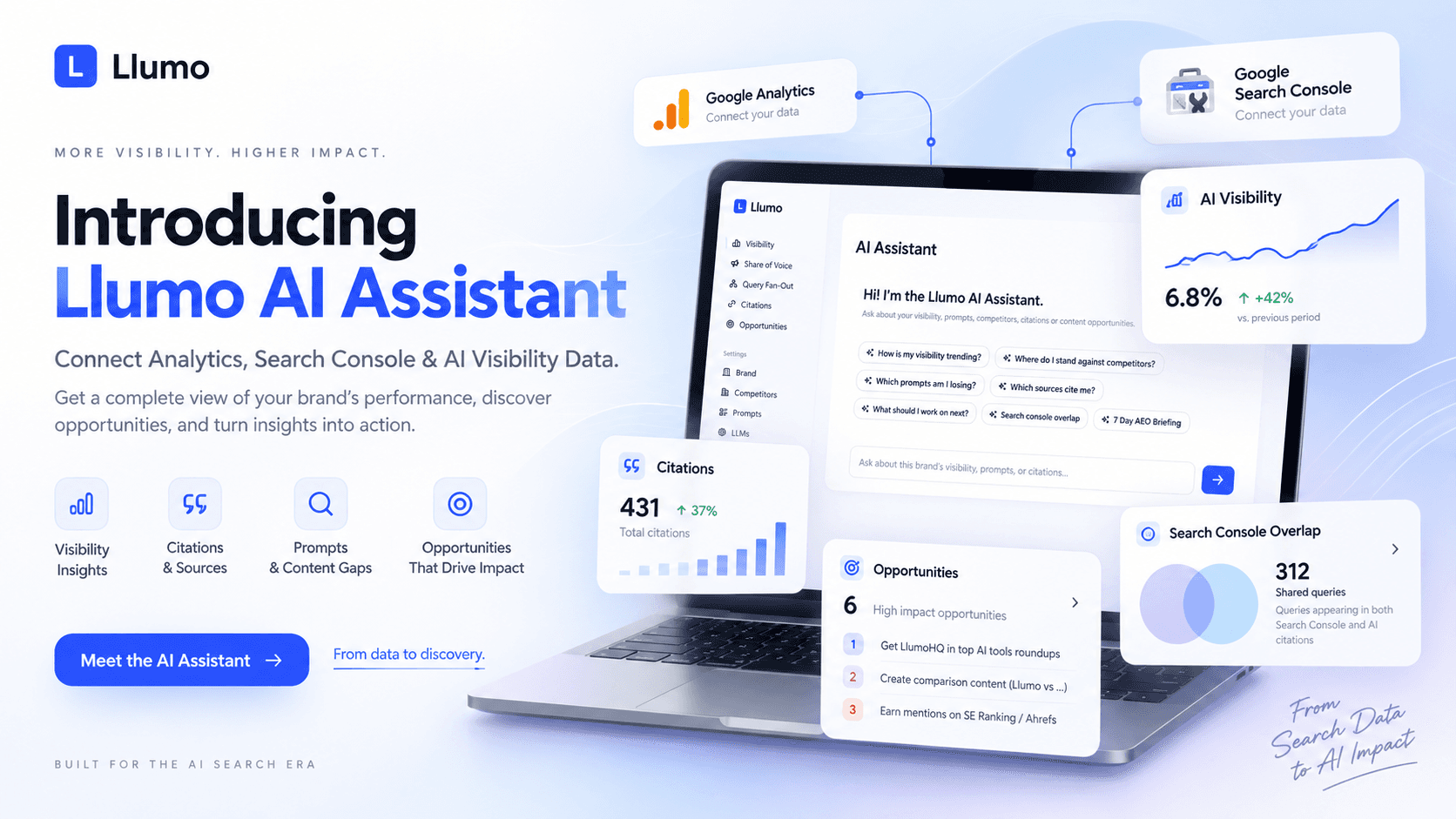
Llumo is the strongest fit here for teams that want AEO measurement to resemble an operating system, not another isolated visibility score. It tracks how ChatGPT, Claude, Gemini, Grok, Mistral, DeepSeek, Perplexity, Copilot, and Google AI Overviews mention and cite a brand. It keeps the evidence attached to the prompt, so you can see the response, the brands included, and the sources used.
The platform measures per-prompt visibility, share of voice, citation sources, competitor trends, new and lost references, and page-level citation activity. Its query fan-out logging exposes the searches and expansions an AI system uses behind an answer. That's useful when a broad user question produces a chain of narrower retrieval queries that your standard keyword set never captured.
Where Llumo earns its place
Llumo's workflow moves from observation to action. It archives prompt-level responses, lets teams search, tag, and filter prompts, and prioritizes opportunities such as content updates, new pages, and brand-mention outreach by expected impact. That's a better setup than handing a content team a dashboard and asking them to guess what to do next.
Practical rule: Don't judge an AEO platform by its visibility score alone. Ask whether it can show the exact response, cited page, model, prompt, and recommended action behind the score.
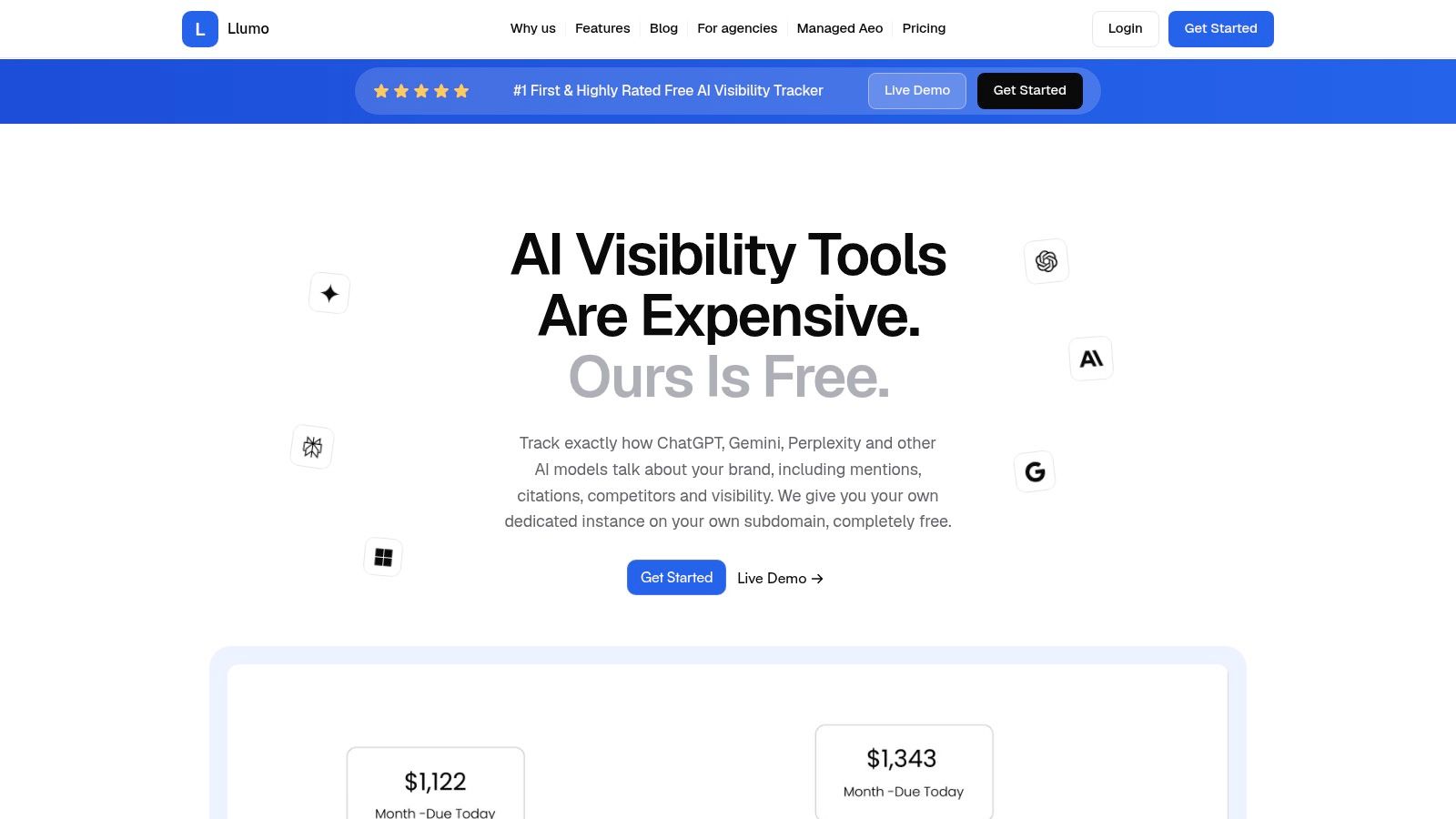
The pricing model is unusual. Llumo has no core software license fee. Customers connect their own provider API keys and pay providers directly, with no Llumo usage markup. The platform supports unlimited projects and prompts, scales to thousands of responses without forced enterprise tiers, and can run on a dedicated customer subdomain with custom branding, automatic updates, daily backups, and priority support.
That flexibility comes with responsibility. Your team manages API keys, provider quotas, and the underlying response costs, so implementation requires more setup than a conventional all-inclusive SaaS subscription. Public pricing, customer testimonials, awards, and third-party certifications aren't listed in the supplied materials, which procurement teams may need to address during evaluation.
Llumo also offers dedicated Google AI Overviews and ChatGPT trackers, plus managed AEO services covering audits, recommendations, and execution. For agencies, growth teams, and brands comparing visibility across multiple models, its main advantage is the combination of cross-model evidence, actionable opportunity discovery, and direct billing control.
2. BrightEdge
BrightEdge makes sense when AEO needs to live inside a large, established SEO program. Its AI search capabilities detect Google AI Overviews, identify whether a brand is mentioned or cited, and extend visibility tracking across ChatGPT, Perplexity, Gemini, and Google AI Mode. Teams can compare AI-search visibility with the keyword, content, and competitive data they already use.
The platform's Generative Parser and AI research functions are useful for understanding AI Overview presence and citation patterns over time. Instant checks provide a faster diagnostic when a team wants to know whether a page or brand has earned a place in an AI result without building a separate manual review process.
The enterprise trade-off
BrightEdge's strength is integration depth. Large SEO departments can connect AI-search findings to existing content planning, reporting, and competitive workflows instead of creating another measurement island. Continuous research updates also help teams keep prioritization tied to changing search surfaces.
The downside is fit. BrightEdge is enterprise-focused, and smaller teams may pay for a level of dataset depth, governance, and workflow complexity they won't use. Pricing is opaque and requires a sales conversation, so buyers should define expected markets, prompts, users, and reporting needs before requesting a proposal.
One practical limitation is that BrightEdge works best as a unified SEO and AI-search platform, not necessarily as the most granular citation investigation tool. If your main question is “Which exact page did this model cite for this prompt, and what changed between responses?”, a specialist platform may provide a cleaner workflow.
For organizations with substantial SEO infrastructure, BrightEdge is a credible choice. For a lean content team that mainly needs prompt-level monitoring and source archives, it may feel heavier than necessary.
A useful companion read is this guide to AI visibility trackers for SEO and marketing agencies, especially when you're deciding whether an enterprise suite or specialist tracker better matches the operating model.
3. Conductor
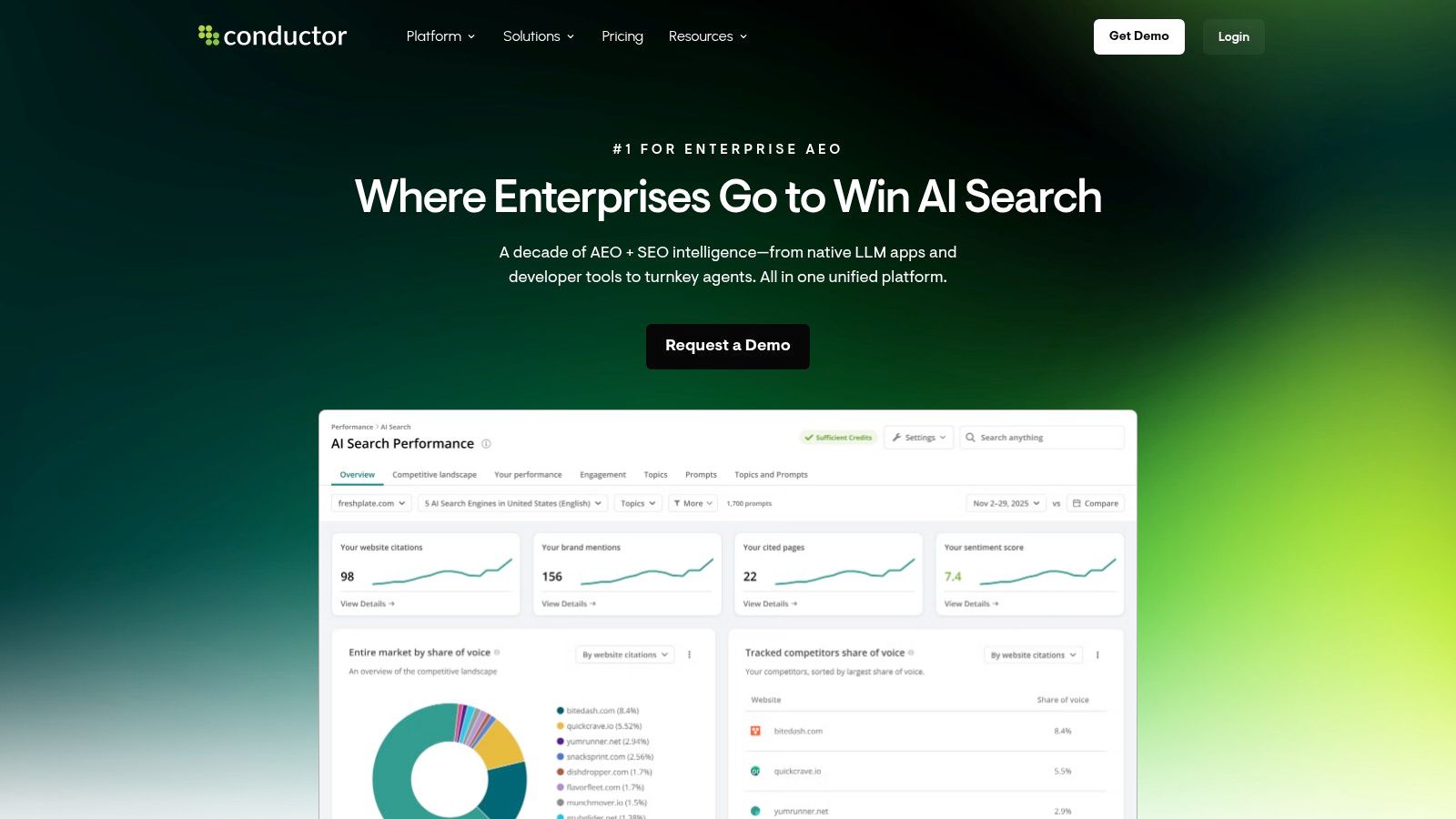
Conductor is built for organizations that want AI visibility connected to business reporting rather than treated as an experimental marketing metric. Its AI Search Performance reporting covers mentions, citations, sentiment, and competitive share of voice across ChatGPT, Perplexity, Google AI Overviews, Google AI Mode, and other supported surfaces.
The central appeal is the link between visibility data and business impact. Conductor helps teams connect AI-search insights to content workflows and ROI measurement, which matters when executives want to know whether an increase in answer-engine presence changed pipeline, engagement, or another business outcome.
Integrations are the selling point
Conductor also supports integrations and MCP or API capabilities for feeding AI visibility data into internal systems. That makes it more suitable for organizations with established analytics, reporting, or marketing operations infrastructure. A data team can treat the platform as a source for broader workflows instead of relying entirely on manual dashboard reviews.
The trade-off is implementation weight. Enterprise-first products often require stakeholder alignment across SEO, content, analytics, and procurement. Smaller teams may find that the integration promise creates more work than value if they only need a straightforward view of mentions and citations.
Coverage can also vary by model. Support for some engines, including Claude and Grok, may lag behind specialist platforms, so buyers should validate the exact model list and refresh behavior that applies to their account. Don't assume that a broad “AI search” label means equal depth across every engine.
Conductor suits a mature SEO organization that needs to explain AI visibility in commercial terms. It's less compelling for a small team that wants a lightweight tracker, rapid setup, and detailed prompt archives without a broader enterprise reporting program.
4. Semrush
Semrush is the practical choice for teams that already run keyword research, backlink analysis, site audits, and reporting in its ecosystem. Its AI Overview monitoring adds emerging AI-search visibility to a mature SEO workflow, allowing marketers to compare classic search performance with visibility in AI-generated results.
The appeal isn't novelty. It's consolidation. SEO managers can keep their existing keyword and content processes while adding AI Overview reporting rather than asking the organization to adopt an entirely separate platform.
Useful breadth, limited AEO specialization
Semrush offers a broad SEO toolkit that includes keywords, backlinks, technical audits, competitive research, and reporting. Enterprise options expand AI Overview reporting and can provide broader prompt or engine coverage, although availability varies by plan.
That plan dependency is the main buying consideration. Advanced AI visibility capabilities are often tied to higher-tier or enterprise packages, so teams should confirm the precise feature set before assuming their current subscription includes the required monitoring. The platform is also less granular than specialist AEO trackers when the job is detailed AI Overview citation analysis.
Semrush works well when the first AEO requirement is “add AI visibility to the SEO system we already use.” It's not necessarily the best fit when the central workflow starts with thousands of prompt-level responses, query fan-outs, citation archives, and source-level opportunity prioritization.
A useful starting point is this guide to answer engine optimisation, which helps clarify where conventional SEO measurement ends and answer-engine monitoring begins.
The best suite is often the one your team can operate consistently, but convenience shouldn't hide gaps in citation evidence.
If your SEO team already trusts Semrush and needs an integrated reporting layer, it deserves serious consideration. If AI answers are becoming a dedicated growth channel, compare its depth against a specialist tracker before making it the entire AEO stack.
5. SISTRIX
SISTRIX brings strong SERP analytics heritage to AI search through AI Overviews tracking, Prompt Tracking, and an API for programmatic access. It reports which domains appear as citations in Google AI Overviews across countries and extends prompt monitoring to ChatGPT, Perplexity, and Google AI Mode.
The country-level perspective is valuable for international teams. A brand may have stable visibility in one market and weak citation presence in another, while a general dashboard can flatten those differences. SISTRIX lets teams inspect AI Overview presence and cited domains with the same analytical mindset they already apply to search visibility.
A beta layer with a familiar foundation
SISTRIX's AI and chatbot capabilities have been rolled out in beta and continue to expand. That gives existing customers a relatively low-friction way to test AI tracking, but it also means feature maturity can vary by module. Buyers should confirm which functions are stable, which are still developing, and what API access covers.
Its AI Tracker API is useful for teams building internal monitoring or pulling results into custom reporting. Programmatic access can matter more than a polished dashboard when an agency needs to standardize outputs across brands.
The limitation is depth at larger scale. SISTRIX is still primarily an SEO analytics platform with AI modules layered in, so it may not offer the same dedicated AEO workflow depth as a platform built around response archives, citation opportunity discovery, or cross-model competitive analysis.
SISTRIX is a sensible pick for an SEO-led team that values international SERP data and wants to add AI visibility without abandoning its existing platform. It's less suitable when AEO is the primary operating discipline and traditional rankings are secondary.
6. SE Ranking
SE Ranking gives SEO teams a practical way to add AI-search monitoring without replacing their existing platform. Its AI Overviews Tracker checks whether an Overview appears, identifies cited sources and domains, and reports organic to AI overlap at the keyword level. That signal is useful for prioritization. A page may rank well in organic search while receiving no citation in the AI answer, pointing analysts toward structural, topical, or authority improvements.
The platform also tracks ChatGPT, Gemini, Perplexity, and Google AI Mode alongside rank tracking, audits, and reporting. That combination suits teams that want one operating view across conventional and AI search. Its scope and workflow can be compared with other AEO tracking tools before deciding whether specialist coverage is needed.
A practical self-serve option
SE Ranking's self-serve approach and 14-day free trial lower the barrier for smaller teams evaluating AEO workflows. Setup is easier when the team starts with a defined keyword set, and the reporting will feel familiar to anyone already managing rank tracking.
The trade-off appears at scale. API access and higher volumes require upper-tier plans, while broader LLM coverage may lag behind specialist AEO products. Teams should confirm which models, query volumes, and reporting outputs their workflow requires before standardizing on the platform.
SE Ranking fits agencies and in-house SEO teams making AEO part of an established process. It can help them find organic-to-AI gaps, monitor cited domains, and explain AI Overview presence without the implementation burden of a heavyweight enterprise system.
Teams that need detailed cross-model response archives, query fan-out logging, or coverage across less common engines may need a specialist alongside it. For keyword-level prioritization and a conventional SEO foundation, SE Ranking offers a clear starting point.
7. Authoritas
Authoritas takes a close-to-the-SERP approach. Its AI Overview detection works with tracked keywords, historical SERP screenshots, and a “capture the full AIO” mode that expands summaries and records links and citations that might otherwise remain hidden. That makes it useful for teams trying to understand what a user sees, not just whether an AI Overview exists.
The full capture approach is the differentiator. It can include hidden elements and right-rail references, giving analysts a more complete record of the answer surface. Historical screenshots also support before-and-after comparisons when Google changes the composition or visibility of an AI Overview.
Built for forensic SERP analysis
Authoritas suits SEO teams that already care about visual SERP context, fold position, and historical evidence. Its standard modules cover rank tracking, research, and reporting, so AI Overview data sits beside traditional search analysis rather than in a separate specialist environment.
The trade-off is commercial and operational. Pricing and full feature access often require sales-assisted scoping, and enterprise-scale use may need higher-tier or custom setup. That can slow down evaluation for a smaller team that wants to start immediately.
Authoritas also focuses more on Google's AI Overview surface than on broad multi-model answer-engine measurement. If your work includes ChatGPT, Claude, Gemini, Grok, or Perplexity prompts, confirm whether the coverage you need exists before treating the platform as a complete AEO solution.
For agencies and SEO departments investigating AI Overview layout, citation visibility, and SERP displacement, Authoritas is a strong specialist choice. For broad answer-engine share of voice and prompt-level competitive monitoring, its focus is narrower.
8. Nozzle
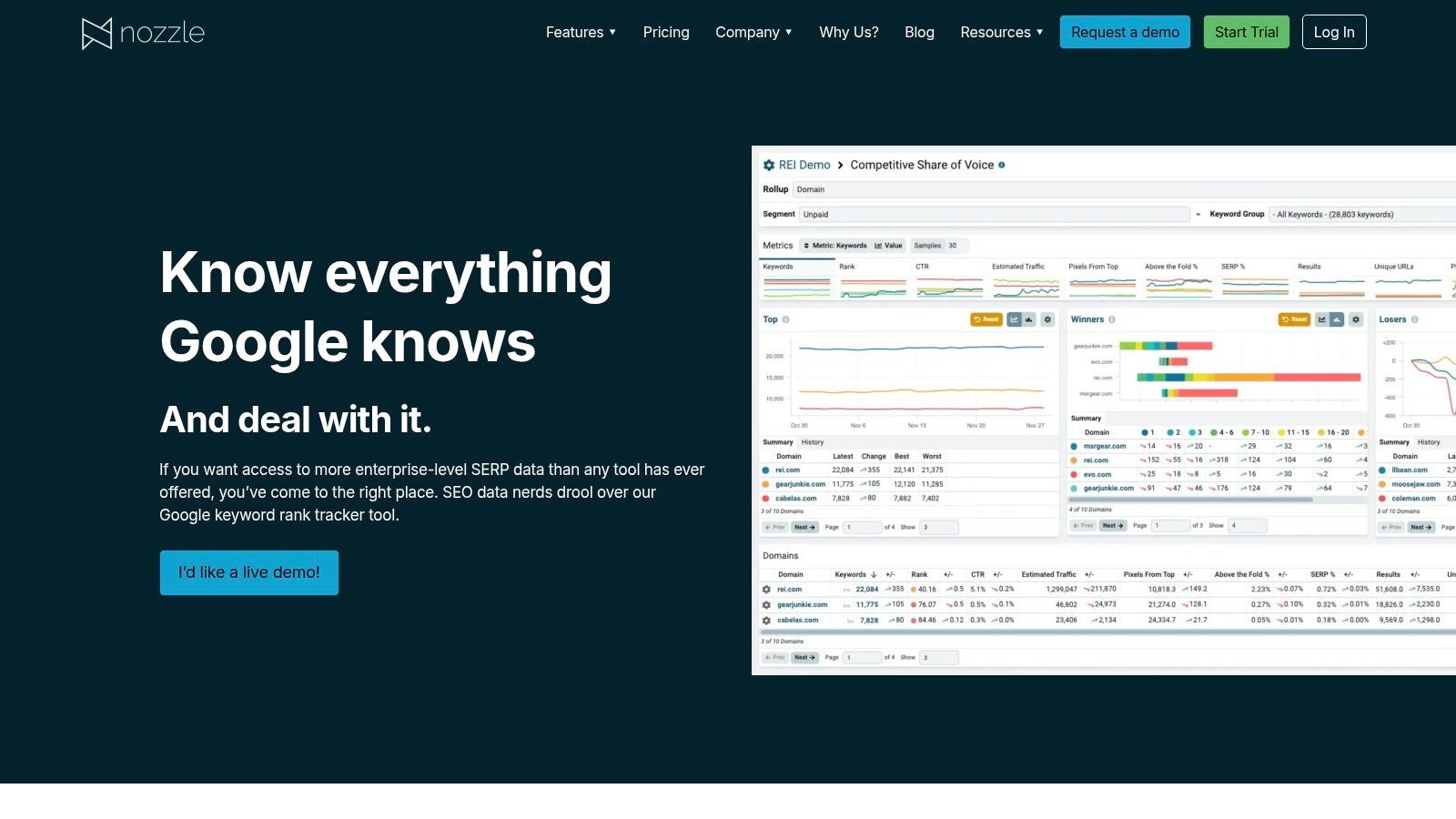
Nozzle is a SERP telemetry platform, not a dedicated AEO suite. That distinction is important. Its value comes from showing exactly how AI Overviews change the search results page, using granular metrics such as Pixels from Top, Base Rank, adjusted rank, and above-the-fold percentage.
For teams investigating lost clicks or reduced organic prominence, this context can be more useful than a generic AI visibility score. Nozzle helps establish where an AI Overview appears, how much visual space it occupies, and how traditional listings move around it.
Strong diagnostics, lighter AEO workflows
Nozzle supports configurable scheduling from hourly to monthly, detailed dashboards, an API, and BigQuery export. Those controls suit technical SEO teams, analysts, and agencies managing large keyword sets or building custom reporting systems. Its documented process for monitoring AI Overviews as a SERP feature type adds methodological clarity.
The weakness is that Nozzle's AEO signals remain part of broader SERP tracking. It doesn't provide the same purpose-built workflow for cross-model prompts, response archives, citation source analysis, or opportunity prioritization that a specialist platform does.
Advanced metrics also bring a learning curve. New users may need time to understand why pixel position, base rank, and adjusted rank answer different questions. That isn't a defect, but it affects implementation effort and training.
Nozzle is the right choice when the business question is, “How is the AI Overview changing the visibility and click environment around our tracked keywords?” It's not the right primary tool when the question is, “Which answer engines mention us, which pages do they cite, and what content should we create next?”
9. SEO PowerSuite
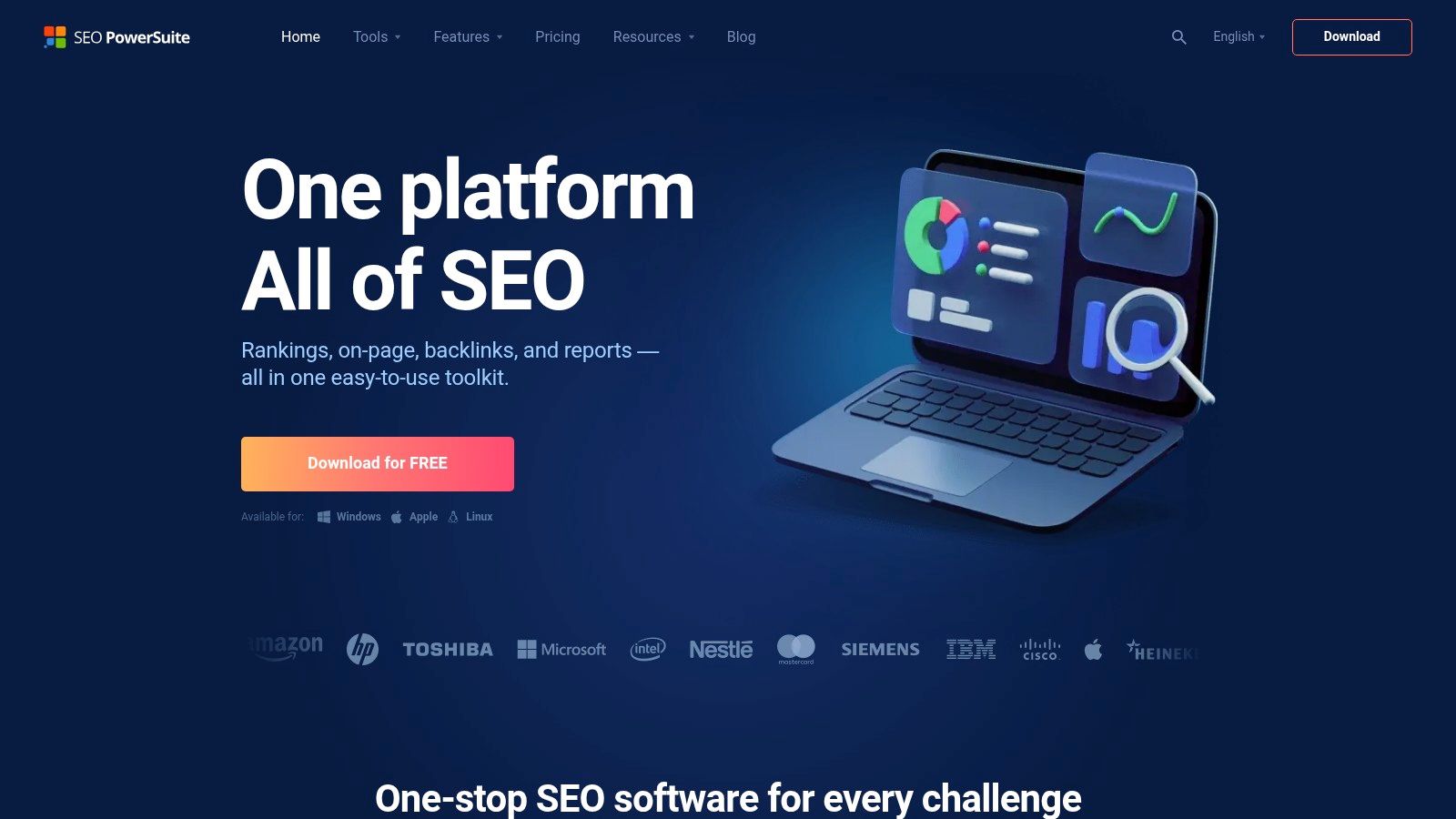
SEO PowerSuite remains attractive to agencies, freelancers, and in-house teams that prefer desktop software and license-style purchasing. Rank Tracker now includes Google AI Overviews tracking, allowing users to inspect AIO presence and impact beside conventional ranking data.
The broader suite includes site auditing, backlink analysis, and outreach tools under one license. That makes it useful for practitioners who want to keep keyword, technical, link, and AI Overview work in a single desktop workflow rather than paying for several cloud subscriptions.
Economical, but less collaborative
The main advantage is cost control. One-time or annual license pricing can be cheaper than comparable SaaS at scale, especially for a solo consultant or small agency already comfortable with desktop tools. Offline workflows may also appeal to teams that don't need constant browser-based collaboration.
The compromise is cloud-scale operation. Desktop software can limit automated monitoring, shared access, centralized governance, and live collaboration across distributed teams. Those constraints matter more as the number of clients, users, locations, and reporting cycles grows.
SEO PowerSuite's AIO feature depth also trails enterprise AEO platforms. It can show presence and impact within Rank Tracker, but it isn't designed around a broad prompt library, multi-model citation graph, or response-level opportunity workflow.
**A desktop tool is a good bargain only if the team can live with its operating model. Lower subscription cost won't help if analysts spend their time exporting, syncing, and reconciling files.
SEO PowerSuite is a sensible budget choice for traditional SEO practitioners adding Google AI Overview monitoring. It's less suitable for a distributed enterprise team that needs always-on, multi-engine, API-connected AEO measurement.
10. ZipTie
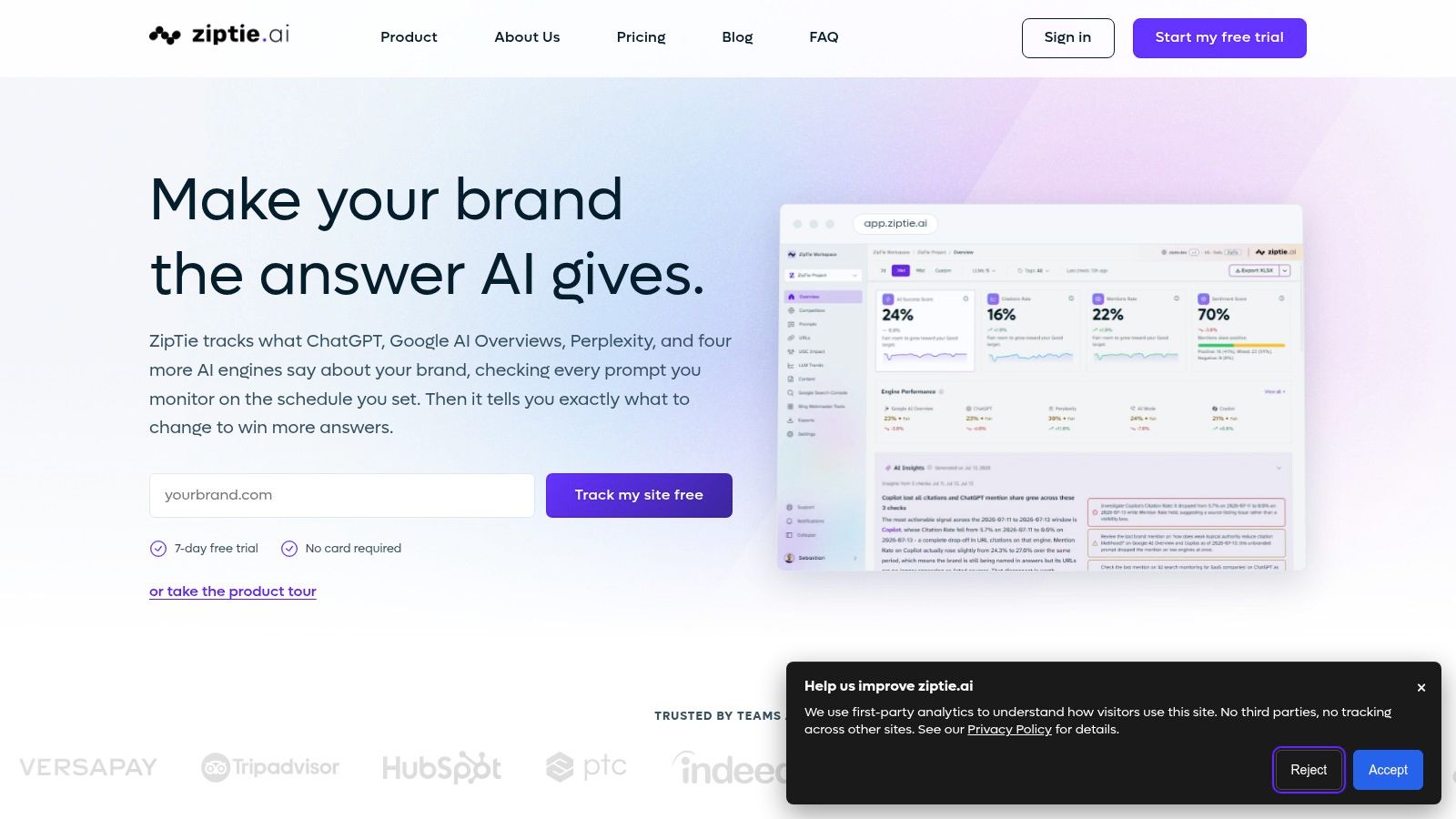
ZipTie is built around AI-search visibility rather than traditional SERP rankings. It lets teams choose which engines to monitor, including ChatGPT, Google AI Overviews and AI Mode, Perplexity, Copilot, Bing AI Overview, and Gemini. Monitoring covers mentions, citations, sentiment, and competitor visibility, with configurable prompts and cadence.
The usage-based pricing approach is its clearest commercial differentiator. Teams pay according to the prompts and engines they monitor, which can be more appropriate than buying a broad SEO suite when the AEO program has a clearly defined scope.
Flexible coverage with specialist trade-offs
ZipTie also includes AI Overview state and overlap indicators, historical trend reporting, and API or MCP add-ons for programmatic integrations. Those features suit teams building AEO into internal agents, analytics pipelines, or client reporting.
The platform is newer than the established SEO suites, so buyers should evaluate engine-specific depth rather than relying on the total model list. Coverage and feature maturity can vary by engine and project scale, and many teams will still need a conventional SEO tool for technical audits, backlinks, and organic rankings.
ZipTie works well for a marketing or analytics team that wants a focused AI-search tracker with flexible consumption. It's especially worth considering when prompt and engine volume needs to vary by project instead of fitting a fixed, all-inclusive subscription.
Its limitation is scope. A specialist tracker can provide better answer-engine focus, but it won't automatically replace the content, technical SEO, and authority workflows already handled elsewhere.
Top 10 Answer Engine Optimization Tools Comparison
Tool | Core features ✨ | Unique strengths ✨🏆 | Target audience 👥 | Quality & Pricing ★ / 💰 |
|---|---|---|---|---|
Llumo 🏆 | Multi‑model tracking, per‑prompt visibility, citation & prompt archives | ✨ BYO API keys (no license/markup); dedicated hosted subdomain; opportunity discovery | 👥 SEO/AEO teams, agencies, growth teams | ★★★★★, 💰 No platform fee, pay provider APIs |
BrightEdge | AI Overview detection, cross‑surface tracking, generative parser | Enterprise dataset + integrated SEO→AI workflows | 👥 Enterprise SEO & marketing teams | ★★★★, 💰Opaque enterprise pricing (contact sales) |
Conductor | AI Search Performance, citations, share‑of‑voice, integrations | Links AI visibility to ROI; programmatic access | 👥 Enterprise content/SEO & analytics teams | ★★★★, 💰Enterprise pricing |
Semrush | AI Overview monitoring + full SEO toolkit (keywords, backlinks, audits) | Mature ecosystem; broad integrations | 👥 In‑house SEO, content teams, agencies | ★★★★, 💰AI depth tied to higher plans |
SISTRIX | AI Overviews tracking, prompt tracking (beta), API | Strong SERP analytics heritage; regional AIO tracking | 👥 EMEA SEO teams, analysts | ★★★, 💰Modular pricing; feature rollouts in beta |
SE Ranking | AI Overviews Tracker, organic–AI overlap, rank tracking | Self‑serve plans, 14‑day trial; practical overlap metrics | 👥 Small teams, freelancers, agencies | ★★★, 💰Affordable self‑serve tiers |
Authoritas | AI Overview detection, full AIO capture, SERP screenshots | Captures hidden/expanded citations; historical SERP visuals | 👥 Agencies & enterprise SEO teams | ★★★, 💰Sales‑assisted / higher‑tier pricing |
Nozzle | Granular SERP telemetry, scheduling, API & BigQuery export | Fine‑grained SERP context to diagnose AIO click impact | 👥 Data teams, large keyword programs | ★★★★, 💰SaaS pricing; strong scale/export options |
SEO PowerSuite | Google AI Overviews in Rank Tracker + desktop SEO suite | One‑time/annual license; budget‑friendly offline workflows | 👥 Agencies, freelancers, teams preferring desktop | ★★★, 💰One‑time/annual license (cost‑effective) |
ZipTie | Multi‑engine monitoring, configurable prompts, API/MCP | Purpose‑built AEO focus; usage‑based pricing by prompts/engines | 👥 AEO‑focused teams needing flexible usage | ★★★, 💰Usage‑based pricing; flexible monitoring options |
Choose the Platform That Matches Your AEO Workflow
There isn't one universal winner among the top answer engine optimization software options. The right choice depends on whether your team needs a better SEO suite, a specialist visibility tracker, a forensic Google AI Overview monitor, or an operational system that connects prompts and citations to content work.
Smaller teams should start with implementation friction. SE Ranking is a practical self-serve option for keyword-level AI Overview and organic-overlap analysis. SEO PowerSuite suits freelancers and agencies that prefer desktop workflows and annual licensing. ZipTie is worth considering when the team wants configurable AI-engine monitoring with usage-based billing. These tools won't provide identical model coverage or workflow depth, so define the first business question before comparing feature lists.
Established SEO teams may prefer to extend an existing platform. Semrush brings AI Overview reporting into a broad ecosystem of keywords, backlinks, audits, and reporting. SISTRIX is appealing for SEO analysts who care about international SERP intelligence and API access. SE Ranking offers a lower-friction route for teams that want practical AI-search signals beside established rank tracking.
Enterprise organizations should weigh capability against ownership. BrightEdge and Conductor can connect AI visibility to wider SEO, content, analytics, and governance programs, but both require more deliberate implementation than a self-serve specialist. Sales-assisted pricing means buyers should prepare a clear scope covering markets, prompts, users, refresh cadence, integrations, and reporting requirements.
Llumo is the strongest recommendation for teams that need cross-model prompt monitoring, citation evidence, competitive trends, query fan-out data, and prioritized opportunities in one AEO workflow. Its BYO-API-key model means customers pay providers directly and avoid Llumo usage markups, but they also take responsibility for API keys, quotas, and response budgets. That trade-off is attractive when cost transparency and response-based control matter more than a bundled subscription.
The data itself should shape your buying criteria. AI citation sources can sit well outside conventional rankings, and one study found that 60% of cited URLs were not in the top 20 organic results for matching searches (Digital Authority's AI visibility study). Google AI Overview sources can also change between repeated searches, with one analysis reporting at least one source change for 52% of keywords (Position Digital's citation analysis). That makes response history, source evidence, and repeated prompt tracking more valuable than a single blended score.
Before signing, check:
Engine coverage: Does the platform monitor the answer engines your customers use, including the exact Google AI surfaces that matter?
Prompt volume: Can you define, tag, search, and expand prompts without losing visibility into what was queried?
Citation evidence: Does the tool preserve cited domains, pages, response text, and source history?
Exports and integrations: Are API, MCP, BigQuery, dashboards, or reporting connectors available at the plan you need?
Pricing transparency: Do you understand the cost of projects, prompts, refreshes, seats, and provider usage?
API ownership: Who owns the keys, quotas, billing relationship, and usage controls?
Team collaboration: Can SEO, content, PR, growth, analytics, and agency stakeholders work from the same evidence?
First workflow: What will improve first, content refreshes, citation outreach, competitive research, AI Overview diagnosis, or executive reporting?
Choose the platform that supports that first workflow without creating a second measurement problem. AEO software becomes valuable when someone can move from “we aren't showing up” to a documented prompt, a specific missing source, an assigned action, and a later response that shows whether the work changed anything.
Llumo gives SEO, content, growth, and agency teams cross-model visibility into brand mentions, citations, share of voice, competitor trends, and the query expansions behind AI answers. If you want response-based cost control through your own provider API keys, visit Llumo and see how its AEO tracking and opportunity workflows fit your measurement program.