
A colleague sends you a paper with a proud citation count and uses it to support a recommendation. You open the cited literature and find a different story. Some papers support the original finding, others mention it in passing, and a few cite it because they disagree. The count was real, but it didn't answer the question you had.
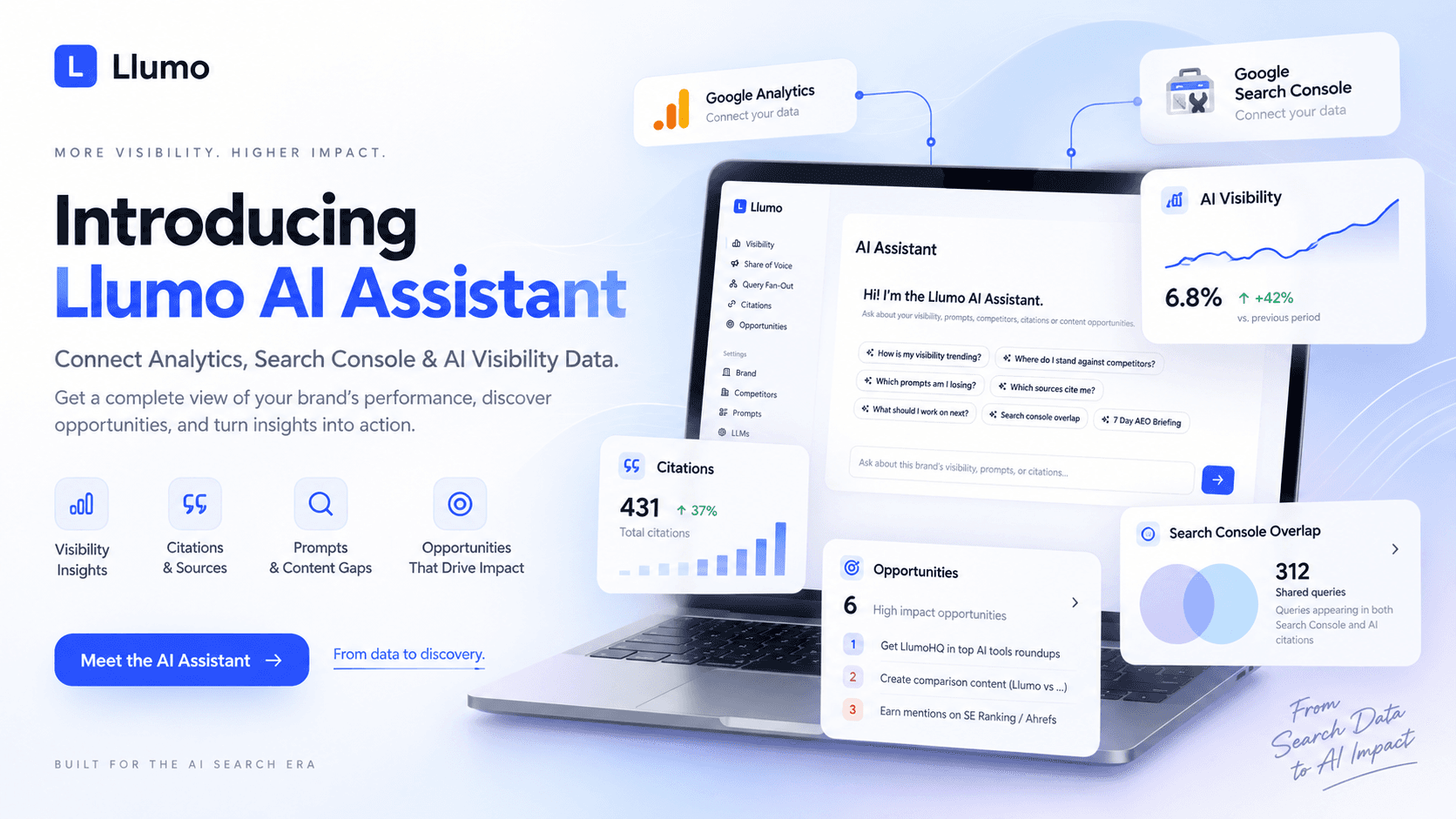
That's the problem with choosing citation analysis tools by reputation alone. They differ in coverage, data quality, cost, and purpose. One is useful for checking a single paper. Another is better for mapping a field. A third can show how later authors frame a claim. None of the academic indexes, on their own, shows which sources AI answer engines use when they mention a brand or answer a customer question. That's where a platform such as Llumo fits.
The tools below are grouped by the question they answer. I've included the limits that matter in practice, because a broad discovery index isn't automatically suitable for formal evaluation, and a strong bibliometric map isn't an AI visibility report.
1. Google Scholar
Google Scholar remains the quickest place to start when you need a rough answer to a simple question: has this paper, author, or topic attracted attention? It's free, familiar, and broad enough to surface journal articles, theses, conference papers, books, repositories, and other material that curated indexes may miss.
For a single paper, the “Cited by” link gives you a fast list of later references. Related articles help expand a search, while author profiles provide citation counts, h-index, and i10-index figures. Alerts can notify you when new work cites a paper or author. That combination makes Scholar useful during early scoping, especially when you don't yet know the field's terminology.
The trade-off is trust and consistency. Google doesn't offer an official public API, and its records can include duplicates, incomplete metadata, non-journal items, and other noise. Citation counts can also include self-citations and shouldn't be treated as a formal assessment without checking the underlying records.
Where Scholar works best
Use Google Scholar for:
Initial discovery: Find a broad set of papers before moving into a more controlled database.
Author checks: Get a quick view of an author's visible citation footprint.
Citation alerts: Monitor whether new work is appearing around a paper or topic.
Grey literature: Locate theses, reports, and repository copies that other indexes may overlook.
Practical rule: Treat Google Scholar as a broad signal and discovery layer, not as the only source for a high-stakes benchmark.
Its biggest strength is speed. Its biggest weakness is that the same breadth makes comparisons harder. If you need reproducible coverage, carefully normalized records, or defensible field-level benchmarking, you'll probably need another tool alongside it.
2. Semantic Scholar
A paper can look prominent because it has accumulated citations, yet a quick count rarely explains its role in a field. Semantic Scholar is designed for a more focused question: which papers appear influential in a fast-moving literature, and why might they deserve attention? Its search uses AI-assisted relevance signals, while citation views add context to connections between papers.
For first-pass screening, the interface surfaces citation velocity, influence scores, and “highly influential” citation flags. Short TL;DR summaries and highlighted passages can reduce the reading load when a result set is large. They are triage aids, not substitutes for the abstract or full paper.
The API is the practical differentiator for research teams. It exposes paper, author, and citation-relationship data, allowing analysts to build dashboards, internal search services, or lightweight citation pipelines without exporting records by hand for every project.
I use Semantic Scholar in three situations:
Vetting one paper: Review its citation relationships and influence signals before investing time in the full text.
Screening a field: Use summaries and highlights to decide which papers merit closer reading.
Building a workflow: Pull paper, author, and citation data through the public API.
Coverage varies across fields. Paywalled or poorly indexed material may appear late or be absent, and the platform is not intended for the documented evaluation procedures associated with Web of Science or Scopus. Its influence score should therefore support judgment, not replace a defined assessment method.
For AEO research, that boundary matters. Semantic Scholar can show which academic papers attract attention, but it does not establish whether a citation supports or challenges a claim, nor which sources AI answer engines cite in their responses. Academic indexes stop short of that visibility work. A platform such as Llumo addresses the separate question of how sources appear in AI-generated answers.
3. The Lens
Patent scouts and technology-transfer teams need a different index. The Lens connects scholarly works with patents, answering a practical question: how do research findings move into inventions and commercial activity? That makes it useful for technology scouting, prior-art research, and research commercialisation analysis.
Start with a paper, patent, or patent family, then follow citations in either direction. The platform supports analysis charts, saved queries, collections, and exports, so an exploratory search can become a repeatable research task. Linking a publication to later patent activity can also reveal how an idea moved from scientific work into application.
The free interface lowers the access barrier found in some institutional indexes. Advanced exports, APIs, bulk data, and institutional features may require paid access. Treat the public interface as an entry point, not as unlimited enterprise access.
Where The Lens earns its place
Use The Lens for:
Patent-to-paper links: Connect findings with inventions and patent families.
Network exploration: Trace citations across scholarly and patent records.
Research collections: Save queries and group records for later review.
Early-stage scouting: Map a topic before committing to a subscription index.
Its main constraint is normalization. Coverage, deduplication, and document relationships may differ from subscription databases. If a benchmark depends on complete field coverage or tightly controlled institutional reporting, compare the results with another source before publishing.
The Lens also has a clear boundary for AEO work. It can show scholarly and patent relationships, but it does not show which sources AI answer engines cite in generated responses. A platform such as Llumo addresses that separate visibility question. A materials-science team tracing publications that fed into a competitor's patent filings will get a more relevant starting point here than from a publication-only index.
4. OpenAlex
A recurring bibliometrics project needs more than a one-off citation count. OpenAlex lets analysts ask: can I build a repeatable citation analysis without keeping the workflow inside a proprietary interface? Its open scholarly graph connects works, authors, venues, institutions, concepts, and citation relationships.
The REST API and data dump support custom dashboards, topic maps, institutional analysis, and large-scale bibliometric work. Analysts can combine citation records with author affiliations, venues, concepts, and institutions, then rerun the same process as the project changes.
The trade-off is technical effort. With engineering support, a data analyst can import records, resolve duplicates, apply field filters, and calculate indicators for a specific project. That flexibility suits teams that need repeatable outputs rather than a polished screen for occasional searches.
OpenAlex works best as a foundation for analysis. It does not provide every decision for you. You must understand API calls, data modeling, entity matching, and the assumptions behind each indicator. Poor filters or transformations can produce misleading results, even when the underlying records are useful.
Choose OpenAlex when:
Custom analysis matters: Your questions do not fit a standard dashboard.
Reproducibility matters: Another analyst should be able to inspect the code and data steps.
Scale matters: Manual exports cannot support the size or frequency of the work.
Budget matters: Open infrastructure suits the project better than a closed database contract.
The right test is the question you need answered. OpenAlex can show scholarly influence and relationships between sources. It cannot show whether an AI answer engine cites your company pages. That requires response-level visibility from the engines themselves, which is where an AI visibility platform such as Llumo covers a different part of the workflow.
5. Dimensions
Institutions and funders rarely assess citations alone. Dimensions is organised around the wider question: how do publications, citations, funding, patents, datasets, clinical trials, and policy connections fit together? Its research graph extends beyond paper-to-paper relationships, helping strategy teams and analysts examine how research moves through related systems.
The free product includes citation indicators and Altmetric Attention Scores. Paid analytics and API access support custom citation networks, benchmarking, and links between papers, funders, grants, patents, and policy documents. Entity linking is the main differentiator. A publication can be examined within a broader research and innovation context rather than as an isolated record.
Advanced work requires the Dimensions Search Language, or DSL. Teams should budget time to learn how queries, entities, and joins behave before relying on repeatable results. The free interface works well for exploration, but it may not meet every institutional reporting requirement.
A wider view, with more setup
Dimensions fits projects where a citation count needs funding, innovation, or policy context. It is less practical for checking one paper quickly, where Google Scholar or Semantic Scholar will usually get you moving faster.
Research intelligence and competitive intelligence also require different workflows. A team comparing vendors, markets, and evidence sources may need a separate process, so a guide to competitive intelligence platforms can sit alongside an academic citation stack.
Choose Dimensions when the question involves relationships between research and the systems around it. Academic indexes still cannot show which sources AI answer engines cite for a commercial query. An AI visibility platform such as Llumo covers that response-level gap.
6. Web of Science
Web of Science is designed for a more demanding question: what does a curated, longitudinal citation record show about a field, institution, journal, or author? Its Core Collection is widely used for research evaluation, benchmarking, citation navigation, and historical analysis.
The platform supports forward and backward citation links, times-cited counts, saved searches, alerts, and author or organization disambiguation. Its integrations with Web of Science and InCites APIs support data work beyond the interface. Related products also provide journal-level metrics such as Journal Impact Factor.
The appeal is curation. Coverage notes and selection policies give institutions a clearer basis for explaining what is included and why. That matters when a result will inform a review, funding decision, promotion process, or formal report.
The institutional trade-off
Web of Science generally requires institutional access. Coverage also differs from Scopus, Dimensions, and open indexes, so matching a result across sources may require reconciliation. A paper can have different visible citation counts depending on the database, publication types, time window, and regional coverage.
I'd choose Web of Science when provenance and historical consistency matter more than convenience. I wouldn't assume it represents the entire research world. Curated coverage is a strength, but it's still a defined collection with defined boundaries.
For AI visibility work, Web of Science stops at scholarly influence. It won't show whether a product page, review site, or documentation URL appears in an AI-generated answer. That's a different measurement problem.
7. Scopus
Scopus is the practical alternative when you need broad multidisciplinary coverage with strong author and affiliation analysis. It includes citation tracking, author profiles, affiliation data, h-index and benchmarking features, advanced filters, subject categories, and APIs for programmatic retrieval.
Its scale is part of the story. Scopus launched in 2004 with approximately 27 million publication records, covering material from 1966 through 2004. By 2020, it had grown to more than 76 million records, with coverage extending from publications dated as early as 1788 through 2019, an increase of more than 49 million records, or over 180%, compared with the launch-era collection. Those figures come from the review of Scopus as a bibliometric data source.
The practical lesson is not that a larger database automatically produces a better answer. Coverage periods, publication types, disciplinary citation habits, regional representation, and indexing rules affect comparisons.
Where Scopus earns its subscription
Scopus works well for:
Author and institution profiling: Explore affiliations, output, and citation relationships.
Multidisciplinary analysis: Compare activity across subject areas in one environment.
Programmatic work: Use APIs when manual exports become too slow.
Benchmarking: Build reports with a documented database and defined coverage.
Subscription access is required, and list prices aren't publicly displayed in a simple way. Citation counts also differ from other indexes. Before presenting a number as a fact about influence, record which database produced it.
For teams doing competitor or market research, Scopus is only one layer. A competitor link analysis workflow answers a different question by examining how websites reference one another, rather than how academic publications cite research.
8. scite
Raw citation counts stay silent on the question due diligence cares about: what did later authors do with this claim? scite's Smart Citations classify citation contexts as supporting, contrasting, or mentioning. Citation statements let you inspect the wording around each reference.
That makes scite useful when vetting a single paper. A heavily cited study may have introduced a method, become a standard reference, or attracted sustained criticism. The surrounding passage helps you judge whether it supports the point you plan to make.
Search, dashboards, alerts, integrations, and API or agent connections extend that review into monitoring. Teams can track important papers without opening every citation manually.
Read the sentence, then assess the label
scite's classification depends on available full text and the quality of its underlying corpus. Treat a “supporting” label as a prompt for inspection; the final verdict still comes from reading the cited passage yourself and checking it against your research question.
The same discipline applies to AI-generated answers. A response may include a genuine URL while overstating the source. A review of citation-attributed claims in AI-generated mental-health literature found that 43.5% of claims were accurate, while 18.3% had major errors, 18.3% had minor errors, and 19.8% were fabricated, according to the study on citation fidelity.
For a practical walkthrough, see reading the citations behind an AI answer. scite is well suited to evidence audits inside academic literature. AEO teams need the same scrutiny, but they must collect sources and responses from AI answer engines rather than rely only on academic citation indexes.
9. VOSviewer
VOSviewer is for the visual question: what does the structure of a research field look like when you map its papers, authors, keywords, or citation relationships? It's free desktop software for constructing and exploring bibliometric networks.
You can create co-citation, bibliographic coupling, co-authorship, and keyword maps. Network and density views make clusters easier to explain in reports, presentations, and publications. Overlay maps can also show how topics or groups sit within a wider field.
The software itself isn't a database. It relies on exports from sources such as Scopus, Web of Science, Dimensions, or OpenAlex. That separation is important because the map inherits the coverage and metadata decisions of the source you use.
Strong visuals, manual preparation
VOSviewer works best when you already have a clean export and a clear mapping question. It's less convenient when you need an end-to-end search, normalization, and reporting workflow in one place.
Expect to spend time preparing data. Author names, keywords, institutions, and document identifiers may need cleaning before the visual result becomes meaningful. The interface is approachable once you understand the concepts, but the workflow still has a learning curve.
I'd use VOSviewer to explain a field, identify clusters, or show relationships to a research audience. I wouldn't use it to monitor whether AI engines cite a website. A beautiful academic network map can coexist with zero visibility in AI answers.
10. PlumX Metrics
Formal citations often arrive late. PlumX Metrics tracks earlier signals around a research output, including downloads, saves, captures, mentions, and social activity. It also aggregates citations and usage at the individual artifact level.
The platform groups these measures into five categories, including Citations and Usage. Embeddable widgets and dashboards can support repository pages, institutional reporting, and public research profiles. Its separation of metric types makes the source of each signal easier to inspect than a single blended score.
A dataset may be downloaded repeatedly, a paper saved by researchers, or a finding discussed publicly before later work cites it. That timing makes PlumX useful for spotting attention that a citation index will record only after formal publication and reuse.
Use attention signals carefully
PlumX fits best within the Elsevier ecosystem and institutional reporting workflows. Standalone pricing is not presented clearly, and social activity can rise or disappear quickly. Treat these measures as context, not as a stable quality score.
Pair PlumX with a conventional citation index. Citations help indicate scholarly reuse, while usage and mentions reveal other forms of attention. The distinction matters in AEO work too. A page may attract discussion without appearing in an AI answer, while an AI system may cite a page with little visible social activity. Academic altmetrics cannot show that relationship, so AI responses require separate collection and analysis.
A dataset downloaded thousands of times before its companion paper earns its first citation is the gap PlumX covers, and the signal an academic index misses.
Top 10 Citation Analysis Tools Comparison
Platform | Core features | Quality (★) | Pricing / Value (💰) | Target (👥) | Key strengths (✨ / 🏆) |
|---|---|---|---|---|---|
Google Scholar | Per‑paper citations, author h‑index, alerts | ★★★★ | 💰 Free | 👥 General researchers, quick checks | ✨ Ubiquitous discovery, fast alerts |
Semantic Scholar | AI summaries, influence scores, public API | ★★★★☆ | 💰 Free + API access | 👥 Researchers, devs building pipelines | ✨ TL;DRs & influence signals |
The Lens | Works + patents, forward/back citation network | ★★★★ | 💰 Free core (some paid exports) | 👥 Innovation analysts, patent teams | ✨ Patent↔paper linkage, interactive maps |
OpenAlex | Open scholarly graph, REST API & dumps | ★★★★☆ | 💰 Open + usage credits | 👥 Engineers, data teams | ✨ Modern open API, large graph |
Dimensions | Publications, grants, patents, altmetrics | ★★★★ | 💰 Freemium → paid analytics | 👥 Institutions, funders, analysts | ✨ Cross‑domain funding → research links |
Web of Science | Curated citation index, alerts, APIs | ★★★★★ | 💰 Institutional subscription | 👥 Universities, evaluators, librarians | 🏆 High curation & longitudinal coverage |
Scopus | Broad abstracts, author profiles, APIs | ★★★★☆ | 💰 Subscription (institutional) | 👥 Institutions, bibliometric teams | ✨ Wide coverage & robust profiling |
scite | Citation‑context classification (support/contrast) | ★★★★ | 💰 Paid tiers | 👥 Evidence reviewers, researchers | ✨ Claim‑level citation quality |
VOSviewer | Desktop network & density visualizations | ★★★★ | 💰 Free | 👥 Bibliometric analysts, academics | ✨ Publication‑quality network visuals |
PlumX Metrics | Altmetrics: usage, captures, mentions, citations | ★★★★ | 💰 Elsevier‑integrated pricing | 👥 Repositories, institutional reporting | ✨ Consolidated altmetric categories & widgets |
Match the Tool to the Question You Are Asking
Start with the question, not the brand name on the dashboard. If you're checking whether a paper is worth reading, Google Scholar gives you a fast first pass, while Semantic Scholar adds influence and citation-context signals. If you're tracing research into patents, The Lens is more suitable. If you need a custom pipeline, OpenAlex gives your technical team more control than a fixed interface.
For institutional benchmarking, Web of Science and Scopus are the more natural starting points. They provide defined indexes, author and organization tools, and established routes into formal reporting. Dimensions becomes more useful when grants, patents, datasets, clinical trials, or policy connections matter alongside publications.
The workflow usually becomes clearer when you split it into stages:
Quick check: Start with Google Scholar or Semantic Scholar.
Custom analysis: Use OpenAlex, then build the metrics and filters you need.
Institutional evaluation: Compare Web of Science and Scopus against your field and reporting requirements.
Research and innovation mapping: Choose The Lens or Dimensions.
Citation quality: Add scite when you need to know whether later authors support, challenge, or merely mention a source.
Network communication: Use VOSviewer to turn prepared records into maps.
Broader attention: Add PlumX when usage, captures, and mentions matter beyond formal citations.
Keep the database context attached to every result. Citation counts aren't interchangeable across indexes. Scopus's history shows why scale matters, but it also shows why analysts must record the index, time window, document population, and coverage rules behind a number. The history of Web of Science as a research data source makes the same broader point: citation analysis concerns relationships between sources and the works that reference them, not just a pile of document totals.
There's another boundary that matters for SEO and AEO teams. Academic citation tools measure scholarly influence. They don't measure whether ChatGPT, Gemini, Perplexity, Copilot, or Google AI Overviews cite your brand, domain, or product pages. Google describes AI features as part of Search and says generated answers can surface links that help users verify information and discover pages. Its guidance on AI features in Search also keeps crawlability and indexability relevant.
That still doesn't make an academic index an AI visibility tracker. A Pew Research analysis found that 88% of Google AI summaries cited three or more sources, with Wikipedia, YouTube, and Reddit among frequently cited sources in both AI summaries and conventional results. The Pew analysis of links in AI summaries shows why an AI citation report should capture every linked source, not only the first one.
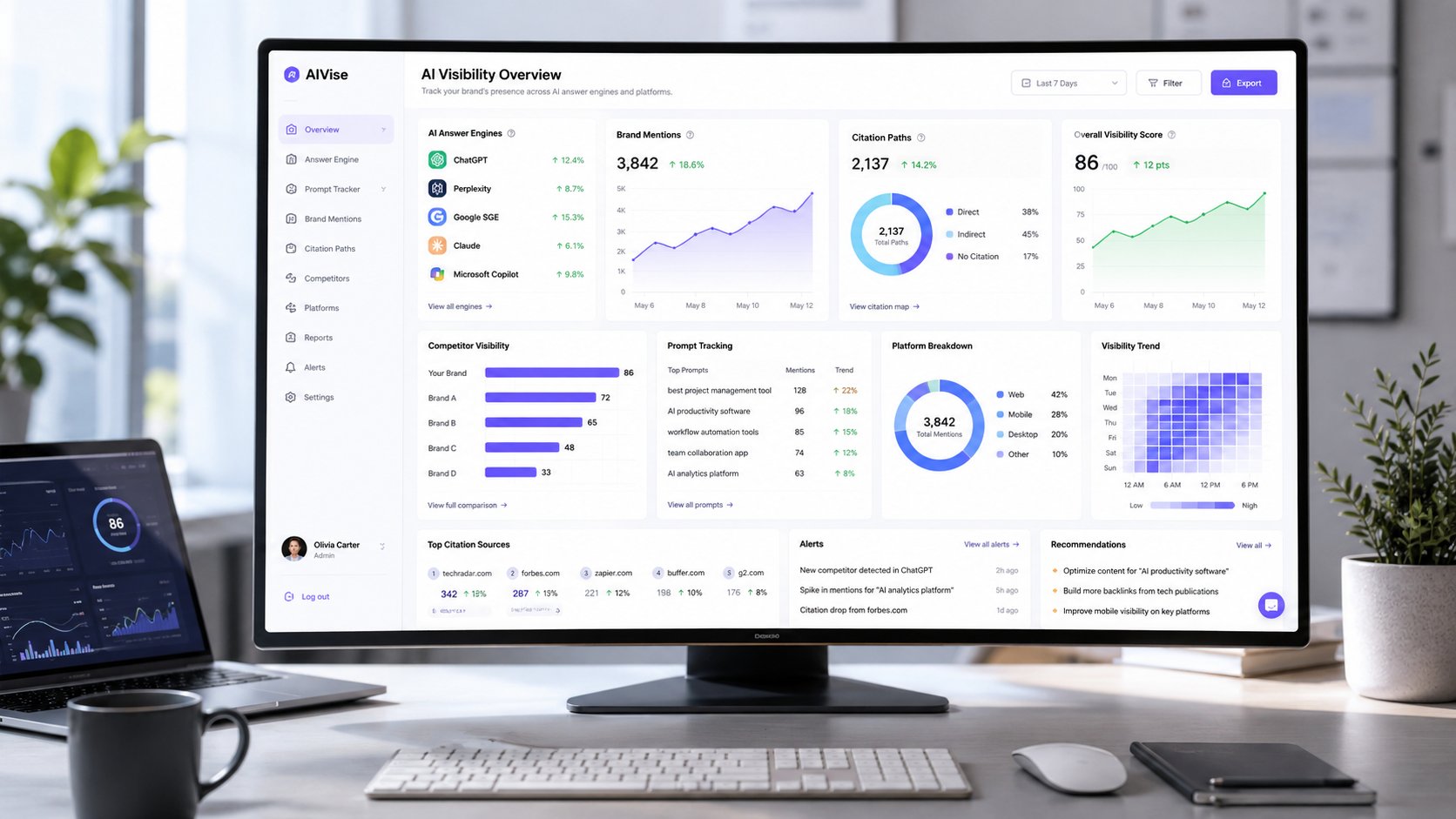
For that job, pair academic tools with an AI visibility platform such as Llumo. Llumo tracks citations across domains and pages in AI answers, keeps prompt-level response archives, and reports visibility, share of voice, competitors, and new or lost references across monitored prompts. Test two or three tools on one real question before paying for a subscription. The right choice becomes obvious when you compare the records, sources, workflow friction, and answer quality against work your team does.
Llumo shows which AI answer engines mention your brand, which pages they cite, and where competitors appear instead. It connects citation analysis with prompt-level visibility, share of voice, and source trends across monitored AI surfaces. Visit Llumo to see how it can fit alongside your existing research and SEO workflow.