
The most popular advice about how to appear in AI Overviews is also the least useful: just rank in the top ten and add schema. Traditional SEO still matters, but a blue-link position doesn't guarantee that Google will use your page in an AI-generated answer. The work has shifted from chasing one ranking to making your content useful across a whole chain of related questions, then checking whether AI systems mention and cite it.
Google introduced AI Overviews in the United States in May 2024 and expanded availability internationally in August. By October 28, 2024, Google said the feature was reaching more than 100 countries and territories and would serve more than 1 billion users globally each month. By May 20, 2025, availability had expanded to more than 200 countries and territories and over 40 languages, according to Google's update on AI Overviews. That reach makes AI visibility a practical search concern, not a novelty reserved for experimental queries.
Rethinking Search Visibility for AI Answers
A top organic ranking is still valuable, but it isn't a reliable proxy for inclusion in an AI Overview. The evidence is inconsistent in a way that should change how you report performance. An analysis of 1.9 million citations from 1 million AI Overviews found that 76.1% of cited pages ranked in Google's top 10. A later analysis of 4 million cited URLs reported that only 38% ranked in the same-query top 10, while 31.0% ranked beyond position 100 (Ahrefs analysis of search rankings and AI citations).
Those findings aren't contradictory so much as they are a warning about methodology. One measurement may focus on a narrower citation set, while another captures a broader source pool and different query relationships. Either way, ranking for the literal query doesn't tell you whether your page answers the subquestions Google uses to construct its response.
Practical rule: Treat organic ranking as an eligibility signal, not a citation guarantee.
Traditional rank tracking also hides geographic and linguistic differences. Google says AI Overviews now operate across more than 200 countries and territories and over 40 languages, so a page that appears in an English-language result in one market may not be selected for an equivalent query elsewhere. Search systems may choose different supporting sources based on local intent, language quality, entities, regulations, and available evidence.
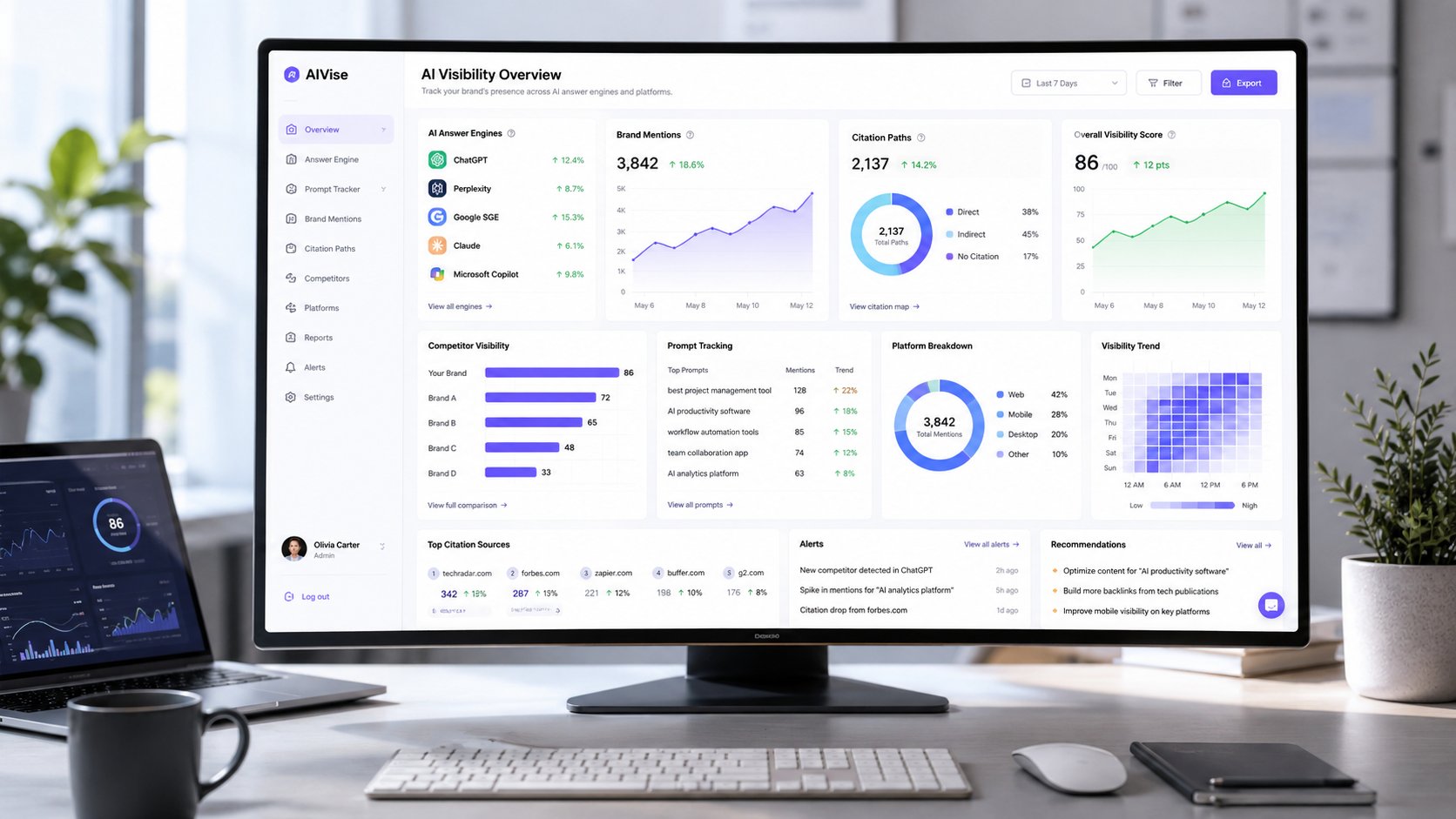
Track the prompt, not just the position
A useful visibility record should include:
The exact prompt: Store the wording, language, country, device context, and date.
The answer status: Record whether an AI Overview appeared and whether your brand was mentioned.
The citation source: Capture the cited domain, URL, and the passage that supported the answer.
The competing sources: Note which brands appear repeatedly for the same question family.
The query expansion: Log related questions and subtopics generated around the original prompt.
This changes the optimization question. Instead of asking, “Why am I not ranking first?”, ask, “Which part of the answer is supplied by another source, and what evidence would make my page more useful for that subtopic?”
Google's AI Overviews synthesize information and display selected supporting sources. A brand can therefore hold the strongest traditional result and still lose exposure if another page provides clearer definitions, better comparisons, stronger first-hand evidence, or more complete coverage of the generated follow-up questions.
Targeting Complex and Question-Based Queries
Simple keyword targeting misses much of the opportunity because AI summaries are especially common around detailed questions. A Pew Research Center analysis found that summaries appeared on 60% of searches beginning with question words, while users clicked a traditional search-result link in only 8% of visits when a summary appeared (Pew Research Center's analysis of Google searches and AI summaries).
That behavior creates a difficult trade-off. A citation can put your brand inside the answer, but the answer may satisfy the user before they visit your site. Optimizing only for sessions and click-through rate can make a successful visibility program look weak in analytics.
Start with the question a buyer or customer typically asks, then write the direct answer near the top of the page. Follow it with the reasoning, conditions, examples, limitations, and evidence. A page about selecting an analytics platform, for example, shouldn't stop at “What is an AI visibility tool?” It should also address how citation tracking works, what counts as a mention, how regional results differ, and which metrics remain useful when clicks fall.

Make passages easy to extract
AI systems need usable evidence, not just a page that sounds authoritative. Give important claims a clear heading, place the answer in a concise passage, and then explain the nuance below it. Use descriptive headings, short paragraphs, tables where comparisons matter, and internal links that clarify how supporting pages relate to the main topic.
Avoid burying the answer beneath a long personal introduction. A reader may appreciate the context, but an answer engine needs to identify the relevant statement quickly and connect it to the query.
A strong page usually combines:
A direct definition: Explain the concept in plain language.
A decision framework: Show which option fits which situation.
Supporting evidence: Link claims to authoritative documentation or original research.
Boundaries: State what the recommendation doesn't cover.
Follow-up answers: Address the next questions a careful reader would ask.
The video below provides another visual way to think about structuring content for AI answers.
The goal isn't to write for a machine at the expense of people. Clear structure helps both. It also protects against a common failure mode, producing a page that contains every related keyword but never gives a confident answer to the original question.
Optimizing Content for Query Fan-Out
Query fan-out is where many AI visibility programs either become useful or fall apart. Google may take one prompt and explore related entities, constraints, comparisons, definitions, and follow-up intents before assembling an answer. If your page answers only the exact wording of the original query, another source may supply the missing pieces.
An independent audit of 55,393 Google searches found that nearly 65% of question-form searches generated an overview, compared with 9.5% of other searches. Activation increased to 38.7% for searches containing six or more words, according to Washington University's audit of AI Overview citations and claims.
Use a two-layer audit
First, establish traditional search eligibility. Check whether the target page can be crawled, indexed, and understood. Review intent alignment, heading structure, internal links, canonical signals, page accessibility, and whether the page gives a complete answer rather than a collection of loosely related phrases.
Then build the fan-out layer:
Write the primary prompt. Use the wording your audience uses, not only an abbreviated keyword.
Collect generated subquestions. Record questions about cost, alternatives, limitations, setup, safety, compatibility, and outcomes.
Group the subtopics. Separate questions that belong on the same page from questions that deserve their own guides.
Map current coverage. Mark each subtopic as answered clearly, answered weakly, or missing.
Add evidence. Strengthen weak passages with product documentation, original observations, transparent methodology, or authoritative sources.
Link the cluster. Connect the main guide to focused pages and link those pages back when they help the reader.
For a deeper explanation of this process, see query fan-out and its role in AI search.
Publish for the whole conversation
Don't force every related question into one oversized article. A page about “how to appear in AI Overviews” can explain the core process, while separate pages cover prompt tracking, citation loss, structured data, and content refreshes. That structure gives each page a clear purpose and creates a connected evidence base.
The strongest opportunity often sits in the missing subtopic. If competitors answer the primary question but ignore regional differences, implementation constraints, or the evidence behind a recommendation, that gap may become the page your site owns.
Using Structured Data as Supporting Infrastructure
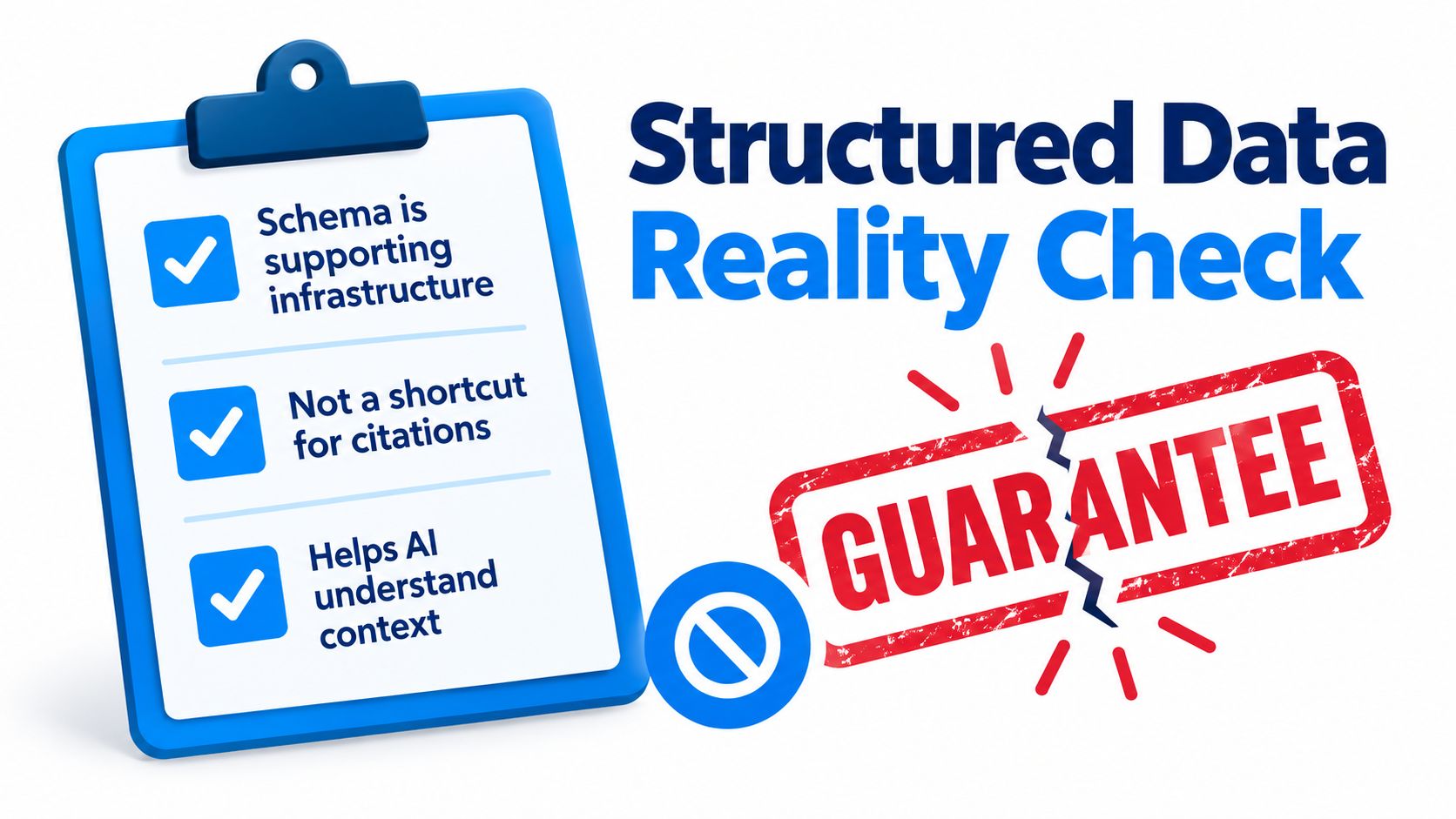
Schema is useful, but it isn't a shortcut into an AI Overview. Google's documentation states that no special schema.org markup is required for AI features and cautions against overfocusing on structured data instead of improving the underlying content's evidence and specificity (Google's guidance on AI features and Search).
That distinction matters because implementation work can feel productive while leaving the core weakness untouched. A page may have accurate Article, Product, Organization, or Breadcrumb markup and still fail to earn citations because it lacks original evidence, clear answers, topical depth, or a trustworthy author.
Follow the right sequence
Begin with technical fundamentals. Confirm that important pages are indexable, accessible to crawlers, internally linked, and free from accidental restrictions. Then add applicable structured data, making sure every marked-up field is visible on the page and reflects the content accurately.
Only after that should you evaluate whether the page itself deserves to be used as evidence. Review:
Specificity: Does the page answer the exact question and its likely constraints?
Evidence: Can a reader verify the important claims?
Experience: Does the author demonstrate relevant practical knowledge?
Coverage: Are the connected subtopics handled directly or linked to useful supporting pages?
Clarity: Can an answer engine extract a concise passage without losing the meaning?
FAQ or HowTo markup shouldn't be added merely to manufacture eligibility. Markup can clarify context, but it won't compensate for vague copy or unsupported recommendations.
The implementation test: If removing the schema would make the page impossible to understand, the page structure probably needs work.
Measure markup without fooling yourself
Treat structured data as an experiment, not a promise. Create comparable page groups, record citation rate and cited-prompt share before implementation, then compare results over the same period after the change. Track lost citations too, because changes in query mix, geography, answer eligibility, and competing sources can create apparent gains unrelated to markup.
This approach keeps technical SEO in its proper role. It supports discovery and interpretation, while authoritative evidence and concise answer passages do the persuasive work.

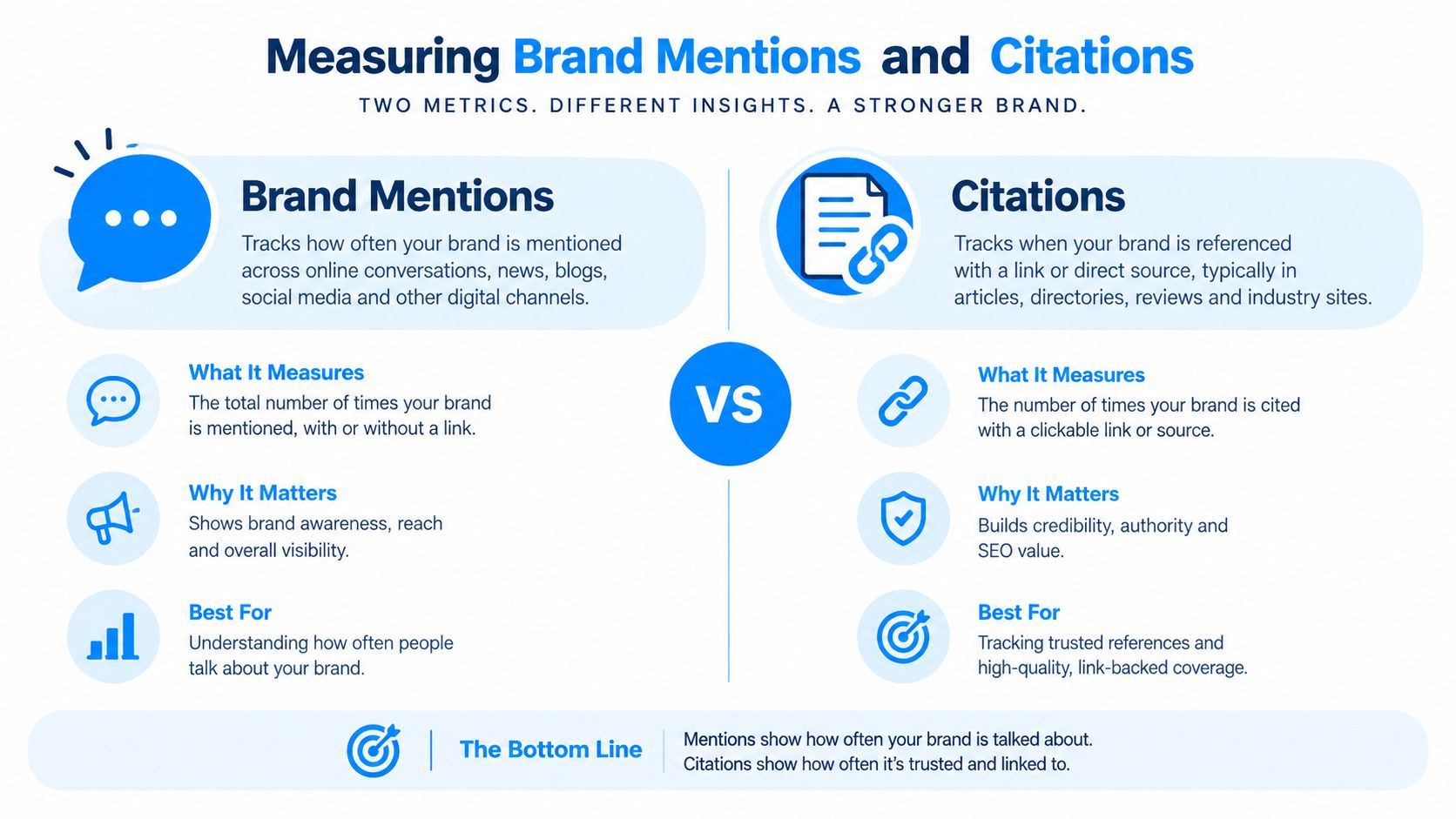
Measuring Brand Mentions and Citations
AI visibility changes what success looks like. A linked citation is valuable because it can send a qualified visitor to the source page. An unlinked brand mention can still influence recognition, consideration, and the perceived authority of a company, particularly when the answer satisfies the user's intent without requiring another visit.
A browsing-panel study found that only about 1% of visits to pages containing AI Overviews resulted in clicks to cited sources, making impression and citation tracking useful alongside traditional analytics (the browsing-panel study on AI Overviews and cited-source clicks). That result doesn't make traffic irrelevant. It means traffic is only one part of the measurement picture.
Build a prompt-level scorecard
For every tracked prompt, record the following:
Signal | What it tells you |
|---|---|
Brand mention | Whether the answer names your company, product, or site |
Citation | Whether the answer links to a page or domain you control |
Citation passage | Which claim or section earned the reference |
Competitor presence | Which alternatives appear in the same answer |
Answer visibility | Whether the prompt generated an AI answer at all |
Market context | How the result changes by language, region, or search surface |
This scorecard separates two outcomes that teams often combine. A page might be cited frequently but attract few visits because the answer is complete. Another page might receive fewer citations but generate stronger referral traffic because users need more detail after reading the summary.
Connect measurement to action
Mention data can reveal a brand awareness problem. Citation data can reveal a content or authority problem. If an answer names your company but cites a competitor's comparison page, your next move may be to improve the comparison content, not publish another general awareness article.
Citation loss is equally useful. When a previously cited URL disappears, compare the new source with your page. Look for clearer definitions, more recent evidence, stronger first-hand detail, or coverage of a subquestion your page ignored.
Tracking brand mentions in AI search is most useful when it connects visibility to specific editorial and digital PR tasks. The report should answer what changed, which prompts changed, which sources replaced you, and what someone on the team should do next.
Building an Ongoing AEO Tracking Workflow
AI visibility isn't a page-level checkbox. A citation can appear for one prompt, disappear for another, and vary across countries or languages. The workflow needs to capture those changes without turning every report into a manual screenshot exercise.
Start with a prompt library organised by customer stage and intent. Keep commercial comparisons separate from educational questions, product troubleshooting, category definitions, and branded prompts. Add tags for market, language, product line, competitor set, and content owner.
Run a repeatable review cycle
A practical routine looks like this:
Review prompt changes: Check new mentions, lost mentions, new citations, and replaced citations.
Inspect the source pages: Compare your page with the URLs that now support the answer.
Classify the gap: Decide whether the issue is technical, editorial, evidential, reputational, or market-specific.
Assign one action: Create a content update, a new supporting page, an internal-link task, or a digital PR opportunity.
Recheck the prompt: Archive the response and compare future results against the same wording and market.
Suppose a software brand appears in answers about selecting an AI visibility platform but is absent from questions about citation sources. The prompt data points to a content gap. The team could publish a focused guide on citation analysis, link it from the broader category page, and support the topic with documentation or original observations.
If the brand is mentioned but another domain is cited, the task is different. Review the competing page's evidence and format, then improve the relevant passage or pursue a credible external mention that supports the same topic. This is more precise than publishing another broad article and hoping it gets picked up.
Use benchmarks that survive algorithm changes
Keep a baseline for each prompt, including the answer presence, brand position within the response, citation URLs, and competitor appearances. Don't judge the program from one model or one national Google result. Compare the same prompt families across relevant AI surfaces and markets, then separate genuine visibility changes from changes in answer eligibility.
A platform such as Llumo can centralise per-prompt visibility, share of voice, competitor trends, citation sources, response archives, and query fan-out data across AI answer engines, including Google AI Overviews. It also supports prompt tagging and filtering, which makes a recurring review process easier to manage than disconnected screenshots and rank reports.
For a focused approach to Google AI Overview tracking, keep the workflow tied to decisions. Every lost citation should lead to a diagnosis, and every recurring uncovered subtopic should enter the editorial roadmap.
Llumo measures how AI answer engines mention and cite brands, with prompt-level visibility, competitor trends, citation analysis, and query fan-out logging across supported surfaces. Visit Llumo to connect your AI visibility data to concrete content updates, citation recovery, and ongoing AEO monitoring.