Your page still ranks first. The title and snippet look unchanged. Yet conversions have softened, branded queries feel less predictable, and a Google AI Overview now answers the question before many users reach the traditional results. Your rank tracker reports success while your analytics team struggles to explain the missing credit.
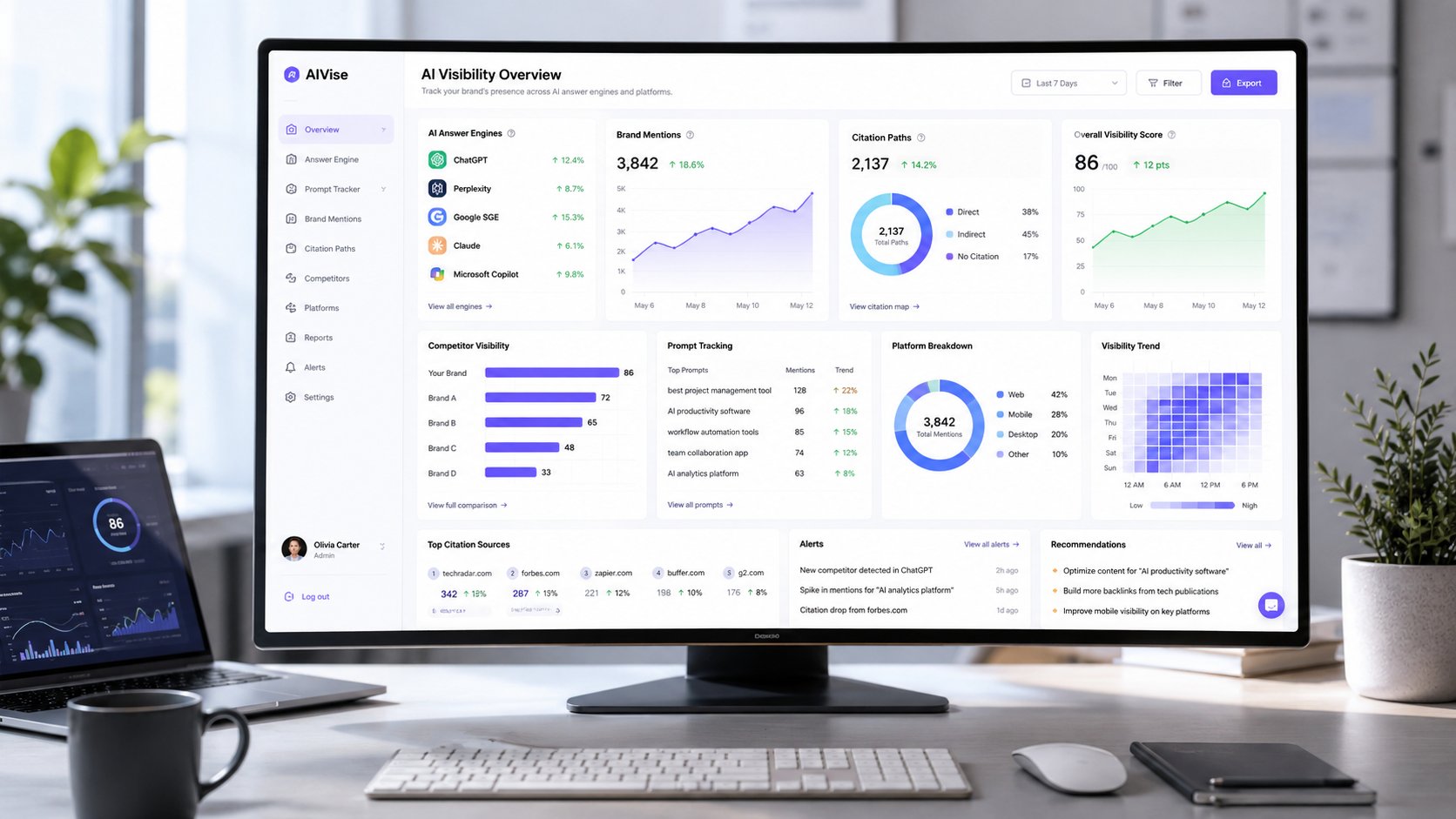
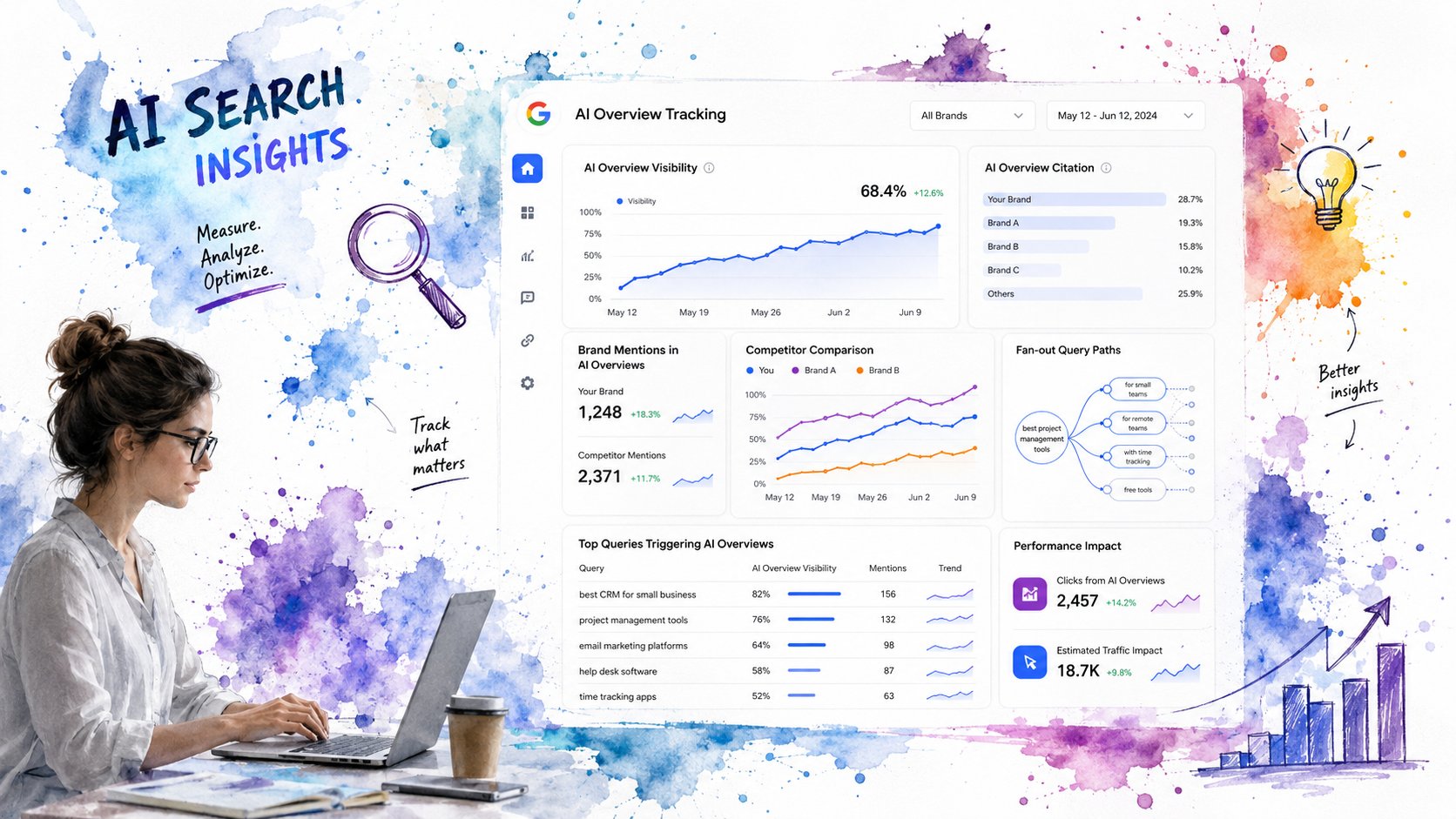
That gap is the practical problem behind Google AI Overview tracking. You need to know which prompts trigger an Overview, which sources Google cites, whether your brand appears without a link, and which related queries shape the answer. You also need a way to connect those observations to a content decision, rather than adding another passive dashboard to the reporting stack.
Why Traditional Rank Tracking Misses AI Overviews
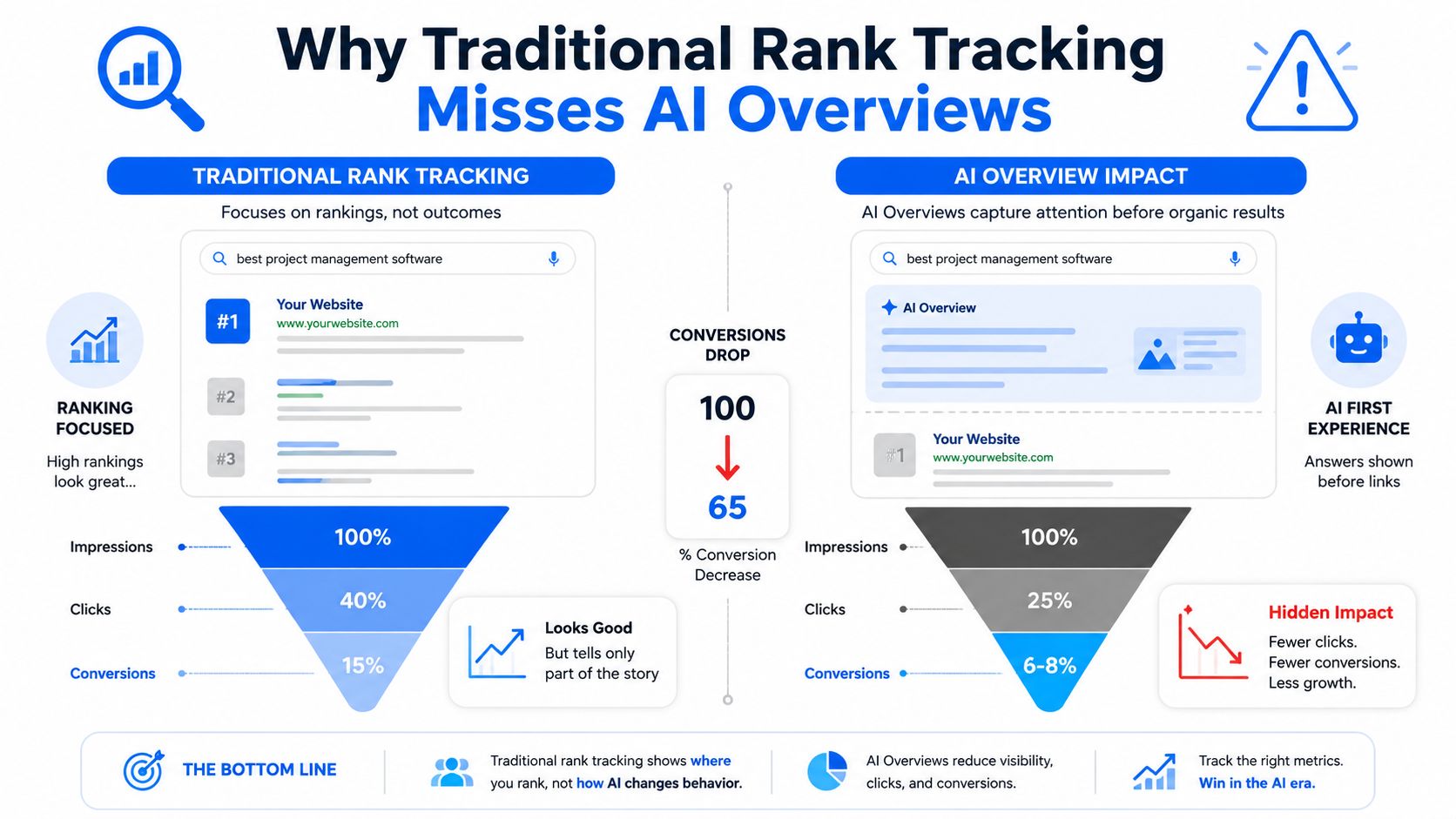
Traditional rank tracking measures the visible organic result set. It can tell you that a page appears in position one, but it usually can't tell you whether an AI Overview sits above it, whether your page is cited inside that answer, or whether a competitor appears in a follow-up source panel. That distinction matters because position-one visibility no longer guarantees position-one attention.
Google AI Overviews moved from limited coverage into mainstream search visibility during 2025. Semrush recorded Overviews on 6.49% of U.S. desktop searches in January 2025, 13.14% in March, 24.61% in July, and 15.69% in November, while Pew found an AI-generated summary on 18% of searches in its March study. The differing panels and monthly movement are documented in Semrush's AI Overviews study. For a practitioner, the lesson isn't to choose one number. It's to track the same prompts longitudinally, because a single SERP snapshot can misrepresent exposure.
The attribution blind spot
Last-click analytics records a visit after a user clicks. It doesn't reliably record that the user first saw your brand cited in an Overview, read your claim, and then searched for your brand later. Google Search Console also doesn't cleanly separate AI Overview impressions, clicks, and citations from standard organic reporting. Coverage of 51,000-plus tracked events found an average misattribution rate of 22.4%, reaching 29.3% in May 2026, as reported by Search Engine Land. Those figures don't provide a clean correction factor for every site, but they show why standard reporting can under-credit AI visibility.
A useful tracker therefore treats AEO as a separate measurement layer, not a replacement for SEO. Keep rank, impressions, and clicks, then add prompt-level Overview presence, citation URL, citation position, brand mention, competitor mention, and render state. The distinction between classic SEO and answer-engine visibility is also laid out in Llumo's comparison of AEO and SEO.
Practical rule: Treat a ranking position as context. Treat the rendered answer and its citations as the object you need to investigate.
Core Signals a Google AI Overview Tracker Must Capture
A useful tracker records more than whether an Overview appeared. It preserves enough evidence to explain why your brand was visible, why it was absent, and what should change next. The required fields fall into five connected signals.
Prompt coverage starts with the exact query. Store the raw prompt, intent family, persona, funnel stage, locale, language, device, and timestamp. A conversational query can trigger an Overview when a shorter keyword doesn't, so collapsing both into one keyword loses the condition you need to reproduce the result.
Citation data identifies the cited URL, domain, visible order, anchor text, and link type. Distinguish a true hyperlink from a plain textual reference. A page can influence the answer without receiving a clickable citation, and those outcomes require different remediation.
Mention tracking captures brand, product, and competitor entities even when Google doesn't link them. Store the sentence containing the mention and classify it as brand, product, comparison, recommendation, or negative context. A mention-to-citation view helps separate awareness from direct source authority.
Query fan-out deserves its own field rather than a note in the raw response. Google can break one query into related sub-queries, meaning the cited page may answer a hidden subtopic rather than the exact wording entered by the user. BrightEdge's explanation of query fan-out shows why original-keyword monitoring alone is incomplete.
Finally, record render state. Log whether the Overview loaded, whether the citation panel expanded, whether the response was partial, and whether the request failed. A 2026 study of 1,000 live AI Overviews recorded an 11% query non-render rate, an average of 4.2 citations per Overview, and different citation counts by intent, including 3.1 for commercial prompts and 5.6 for definitional or how-to prompts, according to Digital Applied's citation-pattern study.
Signal | Data Field to Capture | Vendor Evaluation Question |
|---|---|---|
Prompt coverage | Raw prompt, intent, locale, device, timestamp | Can we reproduce the exact prompt state? |
Citations | URL, domain, order, anchor text, link type | Does the tool distinguish visible links from plain references? |
Mentions | Entity, sentence, sentiment or context | Can we see unlinked brand and competitor mentions? |
Query fan-out | Related sub-query, source, relationship to parent prompt | Does the tool expose generated expansions? |
Render anomalies | Render state, retry, error, expansion state | Are failures and retries stored rather than silently discarded? |
Setting Up Tracking From Prompt List to Pipeline
Start with a small dataset that your team can inspect manually. A narrow, reliable prompt set teaches you more than a large export that hides locale errors, failed renders, and duplicate intent.
Build the first collection layer
Pull seed prompts from Search Console, sales-call transcripts, customer-support questions, and competitor Overviews. Cluster them by intent, then tag each prompt with persona, funnel stage, expected answer format, and commercial importance. The prompt-set framework from Llumo is useful for separating prompts that reveal real buyer questions from near-duplicate keyword variations.
Configure geography and language before you interpret results. Google can produce different answers by market, language, device, account state, and location. Use at least three locales and English plus one secondary language if those markets matter to the business. Otherwise, you may mistake a collection artifact for a content gap.
Schedule, store, and alert
Run frequent checks on your highest-value prompts and broader sweeps across the long tail. The exact schedule depends on query volatility and collection cost, but every run should preserve the prompt, locale, timestamp, render state, citation URLs, mention entities, and fan-out queries in a warehouse the analytics team already uses, such as BigQuery.
Your minimum pipeline needs three layers:
Collection: A browser or provider request retrieves the response and records the environment.
Parsing: A parser extracts answer text, links, domains, entities, citation order, and fan-out relationships.
Operations: Webhooks flag render failures and citation loss on priority prompts.
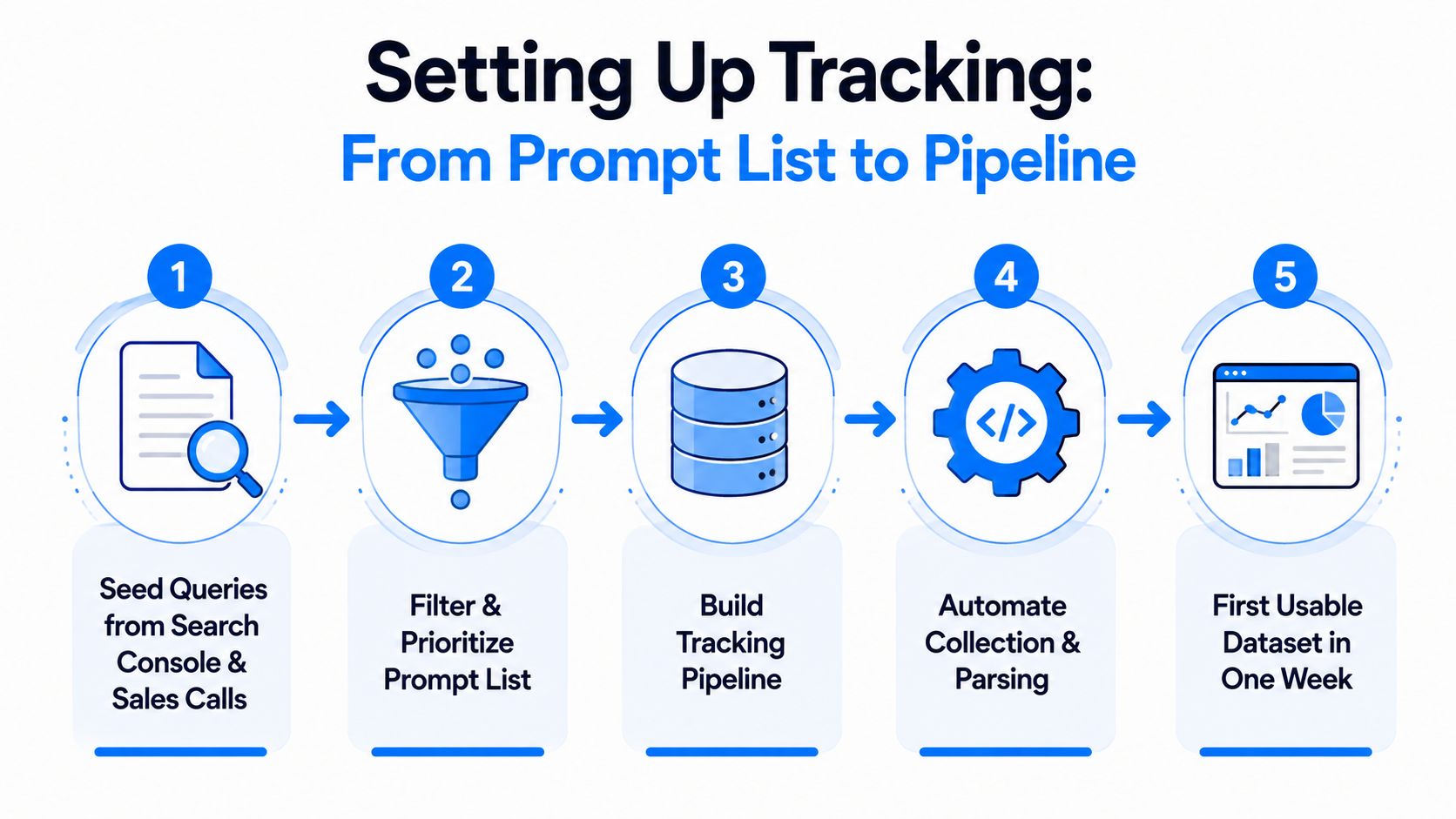
A production setup also needs rate-limit handling, retry logic, headless-browser diagnostics, and location-consistent collection. A residential proxy pool can help reproduce local results, but it doesn't remove the need to log every request state. If the answer fails to render, preserve that failure. Excluding it without a record makes the visibility trend look cleaner than the collection process really is.
Sample Prompts and What a Good Audit Looks Like
A good audit begins with the rendered answer, not a green or red presence flag. Consider three prompt families for a software brand: a definition such as “What is answer-engine optimization?”, a comparison such as “Which answer-engine optimization platform should a SaaS team use?”, and a decision prompt such as “How should an enterprise measure brand citations in Google AI Overviews?”
For the definition prompt, the tracker should save the raw Overview text, each cited URL in visible order, the anchor text, any brand mention, and the fan-out query that produced the source. The comparison prompt needs competitor entities and the claims attached to each one. The decision prompt should connect citations to downstream references, because a source used in the initial answer may differ from a source shown after expansion.
A thin audit says, “Overview present, brand absent.” That doesn't tell an editor whether the page lacked a clear definition, whether Google cited a third-party explanation, or whether the brand appeared in the answer without a link. A stronger audit distinguishes mentioned but unlinked, cited with a hyperlink, cited in a visible position, and cited only after expansion.
A sample row
Field | Example Value | Why It Matters |
|---|---|---|
Prompt | How should a SaaS team measure AI answer visibility? | Preserves the exact user-facing question |
Locale and device | U.S. English, desktop | Makes the result reproducible |
Render state | Overview rendered, citations expanded | Separates a real absence from a failed request |
Brand mention | Llumo mentioned in the answer | Shows awareness even without a source link |
Brand citation | No direct citation | Identifies a source-authority gap |
Competitor citation | Competitor domain cited in visible panel | Shows who currently supplies the answer |
Fan-out query | How do teams measure AI citations? | Reveals the hidden subtopic to address |
Recommended action | Add a concise measurement definition and supporting section | Turns the row into an editorial task |
The audit should retain the full response archive, not just extracted fields. When a citation disappears, the team needs to compare the old and new answer, source order, prompt state, and render condition. Without that evidence, editors tend to rewrite the wrong page.
Review Cadence, Dashboards, and Alert Thresholds
Daily monitoring should answer one operational question: is collection healthy and are priority citations still present? Keep that check lightweight. Review render failures, missing citation panels, changed locales, and lost citations on tier-one prompts. Don't turn every daily fluctuation into a content project.
The weekly review is where strategy belongs. Build a Citation Status board by prompt family, a Fan-Out Coverage map showing which related questions your pages answer, and a Competitor Mentions log that records new entities and changing source patterns. Segment each dashboard by market and intent so a commercial citation change doesn't disappear inside a blended average.
Configure actionable alerts
Use alerts that lead to a defined investigation:
Citation loss: Alert when a priority prompt loses its citation for two consecutive cycles.
Mention decline: Flag a mention drop above 15% week over week, with the threshold applied only after confirming stable collection conditions.
New competition: Notify the owner when a competitor enters a prompt your brand previously owned.
Render health: Investigate a prompt cluster when render failures exceed 5%.
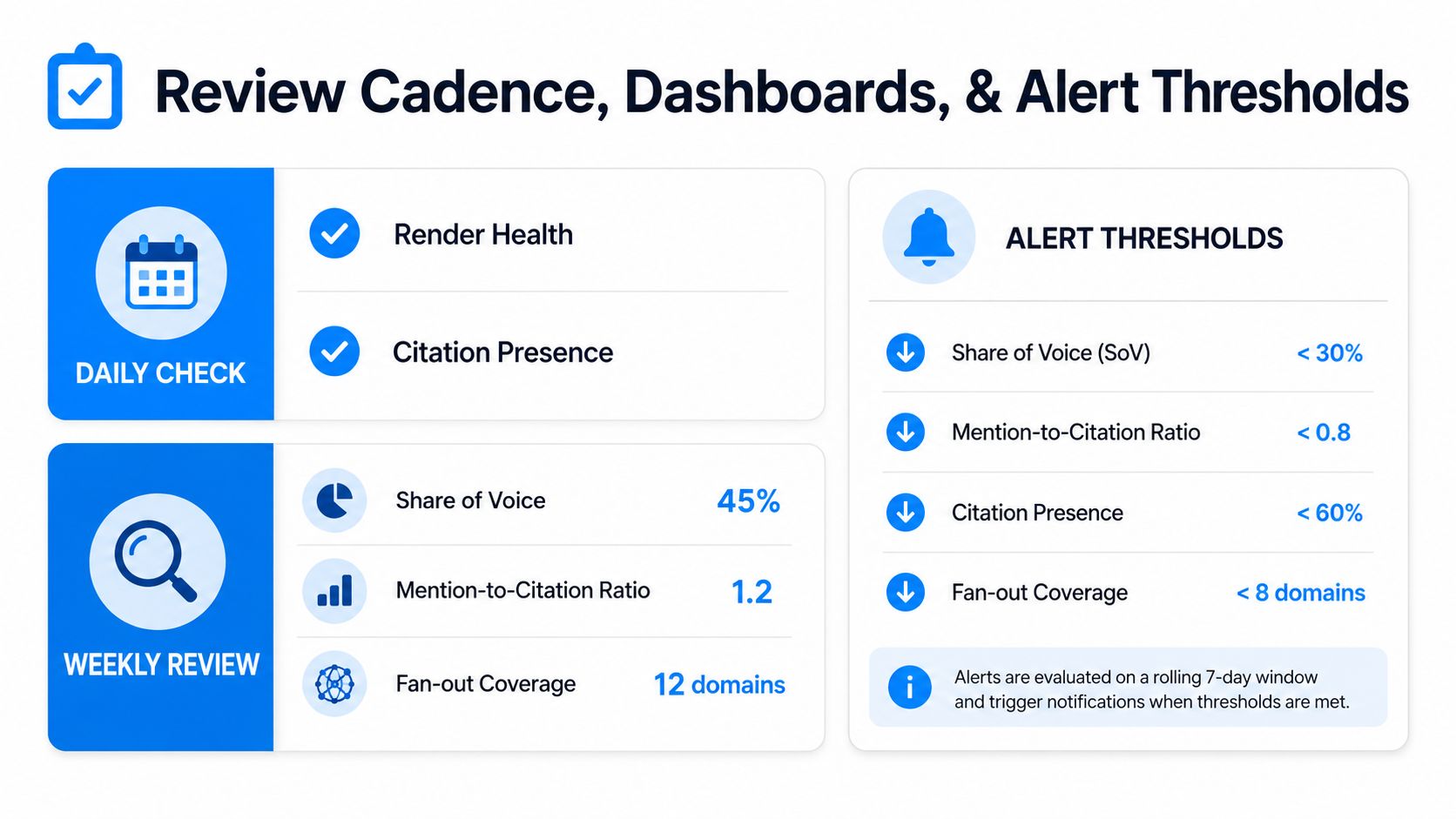
Those thresholds are triage rules, not universal performance benchmarks. Verify every alert with a short checklist: confirm the geography and language, manually inspect ten renders, compare the raw response archive, and reconcile tracker counts against a sampled SERP review. If the tracker and manual sample disagree, fix collection before changing content.
A dashboard should make the next investigation obvious. If it only produces a moving line, it isn't yet an operating system for AEO.
Remediation Workflows When Citations Slip
A citation loss is a diagnostic signal, not a generic invitation to “optimize for AI.” Match the finding to the smallest content or distribution change that addresses the observed failure.
When the brand is mentioned but unlinked
Start with the sentence Google appears to be using. Tighten the surrounding page copy into a self-contained definition, state the canonical claim near the opening, and connect the claim to the strongest relevant internal page. Add or refresh structured data only when it accurately describes the visible content. The objective is clarity, not markup for its own sake.
Re-run the exact prompt and preserve the old response. If the brand remains mentioned without a link, inspect whether another domain owns the underlying claim. That may be a source-authority problem rather than an internal-linking problem.
When an established citation disappears
Run a freshness audit on the exact URL that previously appeared. Check outdated references, changed product details, broken sections, stale structured data, and whether the page still answers the same prompt directly. Update the relevant material, request indexing for that URL, and set a re-tracking date rather than assuming the next crawl will restore visibility.
Research on citation selection suggests structure can matter independently of classic ranking. One analysis reported that pages above 2,500 words were cited 1.6 times as often as pages below 800 words, pages with named-source citations were cited 2.1 times as often, and schema markup showed a 2.3 times citation-likelihood increase, with HowTo schema showing a 2.8 times lift, as summarized by Stackmatix's AI Overview analysis. These are study findings, not guarantees for an individual page, so use them to form a test rather than a promise.
When fan-out reveals a coverage gap
Map the missing sub-query to a dedicated section with its own heading and a concise answer. Then add the supporting detail, examples, and source attribution below it. Don't force every related question into the opening paragraph. A page that answers the parent prompt but ignores the generated subtopic can remain visible for the original query while losing the citation opportunity created by fan-out.
When a third party owns your claim
Separate content improvement from distribution. If another publisher is repeatedly cited for a claim your brand originated, publish the claim clearly with evidence and explicit attribution, then pitch it to relevant high-authority outlets. Track whether the original source becomes cited, whether the third-party mention changes, and whether the fan-out query still favors the same domain.
Use Llumo's guide to reading citations behind an AI answer when the source relationship is unclear. Every branch should end with a re-tracking checkpoint and a named review date.

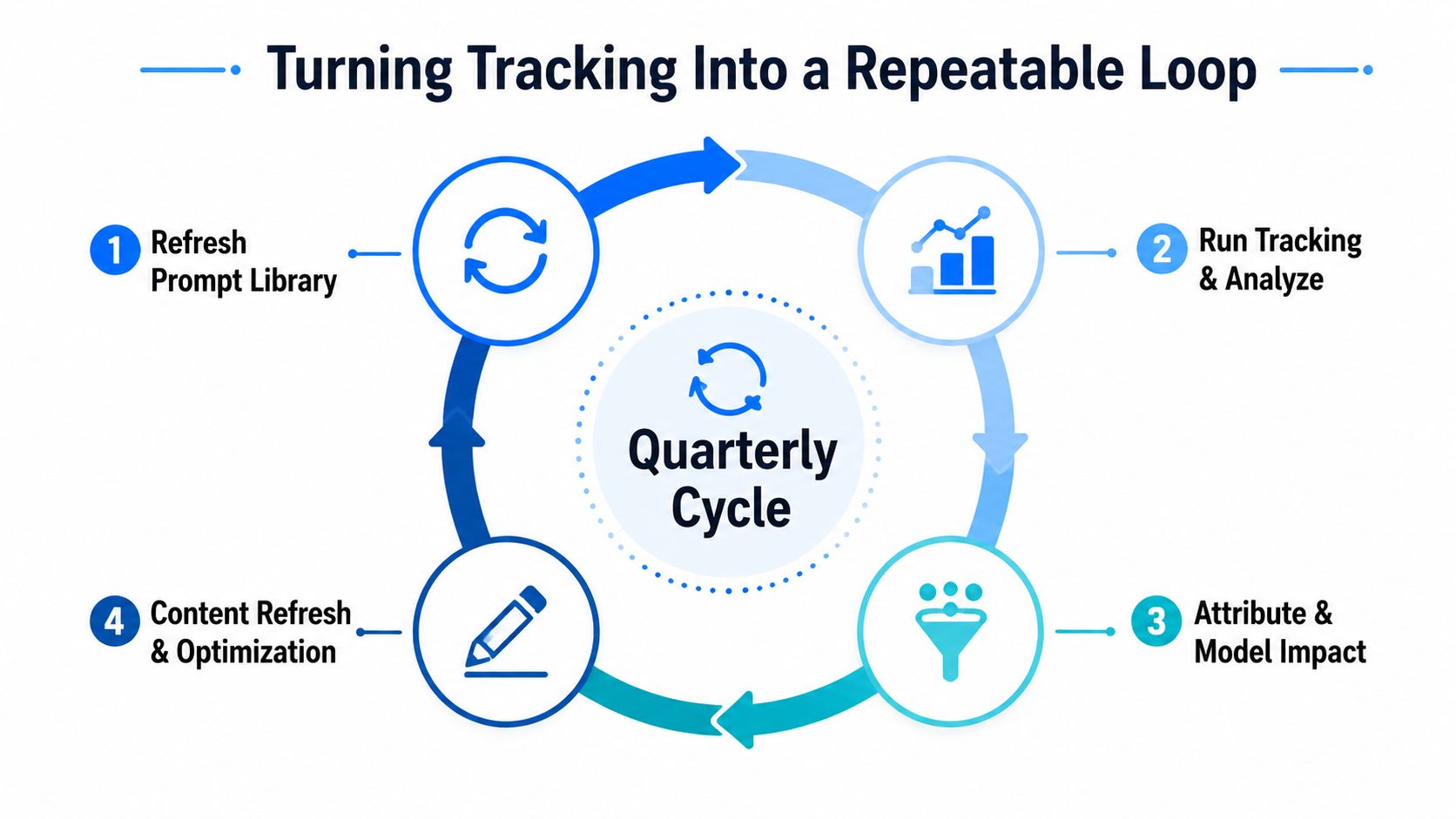
Turning Tracking Into a Repeatable Loop
Tracking becomes valuable when it changes the next brief. Treat prompt monitoring, attribution, and content refreshes as one loop rather than three disconnected programs.
Start each quarterly cycle by refreshing the prompt library against newly observed fan-out patterns. Remove duplicates, add emerging customer language, and preserve older prompts so you can distinguish a genuine visibility change from a changed test set. Then layer conversion and assisted-revenue data over citation counts where the available analytics support that comparison. A citation on a high-intent prompt deserves different attention from a citation on a general definition.
Weight visibility by consequence
A mature program stops treating every citation as equal. It considers prompt intent, source position, brand context, landing-page relevance, and downstream business signals. That approach also accounts for the uncomfortable gap between citation and traffic. A study of AI Overview behavior reported outbound organic click reductions between 38% and 39.8% on triggered queries, while Pew found clicks to cited sources in only about 1% of visits in its study, as summarized in the cited research on arXiv. Citation counts alone therefore can't serve as a revenue proxy.
Once a baseline exists, test specific hypotheses:
Entity-stated content: Make the brand, product, and category relationship explicit for prompts with inconsistent citations.
Structured-data variants: Test accurate schema changes against fan-out triggers, while keeping the visible content controlled.
Branded-search correlation: Compare periods of strong Overview presence with branded-search movement, without treating correlation as proof of causation.
Keep four artifacts alive: the prompt library, a weekly visibility snapshot, a monthly review, and a remediation log. The log should include the finding, affected URL, intervention, owner, re-tracking date, and result. That record prevents teams from repeating unmeasured edits.
Google said AI Overviews reached 2 billion monthly users and availability in 200 countries and territories in July 2025, while AI Mode reached 100 million monthly users in the U.S. and India, as reported by TechCrunch. That scale makes measurement worth operationalizing, but scale doesn't make a weak dataset useful. A tracker earns its place when it shows which prompt changed, which source replaced yours, and which content action deserves attention next.
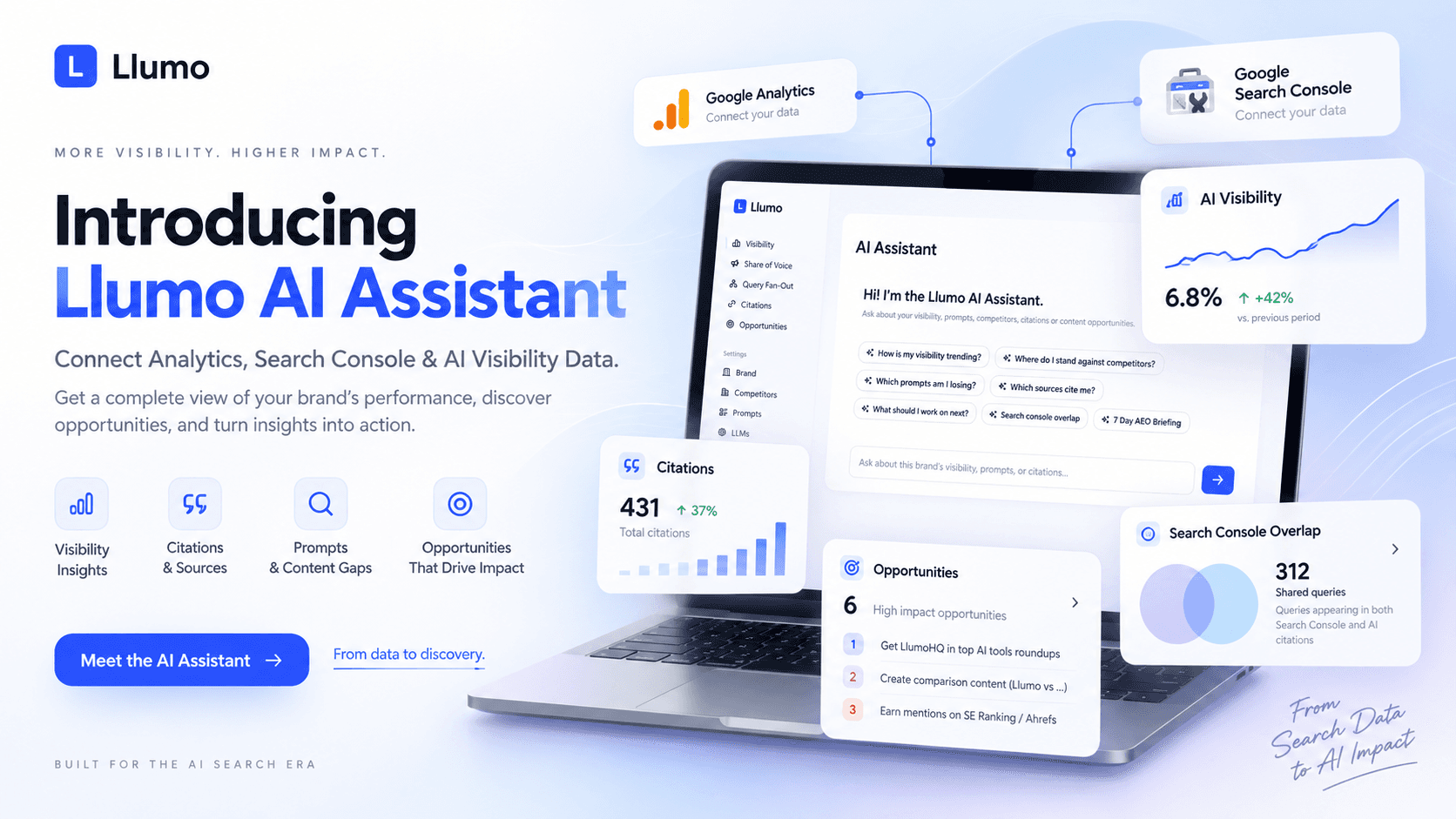
Llumo tracks Google AI Overviews alongside other answer engines, recording per-prompt visibility, mentions, citations, competitors, and query fan-out in longitudinal archives. Visit Llumo to connect your own provider keys, monitor AI visibility without usage markups, and turn citation findings into a repeatable content workflow.