AI Overview Tracking Tools: Best Options for 2026
Google AI Overviews have created a new layer of search visibility. A page can rank well in traditional results yet be absent from the AI-generated answer above them.
AI overview trackers help to close the gap in reporting. They keep an eye on brand mentions, the URLs that are cited, competitor visibility, prompt performance, and changes over time. Although some of the tools concentrate solely on Google, others monitor ChatGPT, Perplexity, Gemini, Copilot, Claude, and other AI platforms.
In 2026 the best AI Overview trackers are Llumo, AIclicks, the Semrush AI Visibility Toolkit, Ahrefs Brand Radar, Surfer, SE Ranking, Scrunch AI, Otterly.AI, and thruuu. This article currently compares their coverage, reporting features, limitations, and existing prices.
Why AI Overview Tracking Matters in 2026
AI-generated overviews appear in Google Search and offer synthesized answers together with links to external websites; Google considers this method a way of helping people to understand complicated topics and to explore the relevant sources.
A traditional rank tracker shows where a URL appears in standard search results. It may not reveal if that URL was selected as an AI Overview source, if the brand was mentioned without a link, or which competitors appeared in the generated answer.
Google Search Console records clicks and impressions from links in AI Overviews. However, dedicated trackers provide additional prompt-level competitive and citation data that Search Console may not show.
Google is also carrying out further expansion of its generative AI reporting; the present documentation for Search Console refers to a generative AI performance report relating to AI Overviews and AI Mode, even though access could still be restricted to certain properties.
Quick Comparison of Leading AI Overview Trackers
Tool | Best For | Published Coverage | Starting Price |
Llumo | Broad tracking without a platform fee | AI Overviews, ChatGPT, Perplexity, Gemini, Copilot, Grok, and others | $0 platform fee, plus API usage |
AIclicks | Prompt tracking and traffic attribution | AI Overviews, AI Mode, ChatGPT, Gemini, Perplexity, Claude, Copilot, Grok, and others | $59/month |
Semrush AI Visibility Toolkit | Existing Semrush users | Google Search AI features, ChatGPT, Gemini, Perplexity, and others | $99/month per domain |
Ahrefs Brand Radar | Large observational datasets | AI Overviews, AI Mode, ChatGPT, Perplexity, Gemini, Copilot | $199/month |
Surfer AI Tracker | Content optimization teams | AI Overviews, AI Mode, ChatGPT, Gemini, Perplexity | Included with selected plans; add-ons from $95/month |
SE Ranking | Combined SEO and AI monitoring | AI Overviews, AI Mode, ChatGPT, Gemini, Perplexity | AI Search from $71.20/month |
Scrunch AI | Agencies and larger organizations | Multiple leading AI answer engines | $250/month |
Otterly.AI | Solo marketers and small teams | AI Overviews, ChatGPT, Perplexity, Copilot; optional AI Mode and Gemini | $29/month |
thruuu | Google-focused AI Overview monitoring | Google AI Overviews | From $38/month |
Explore the Leading Tools for AI Search Monitoring
1. Llumo: The best comprehensive tracker of AI overviews
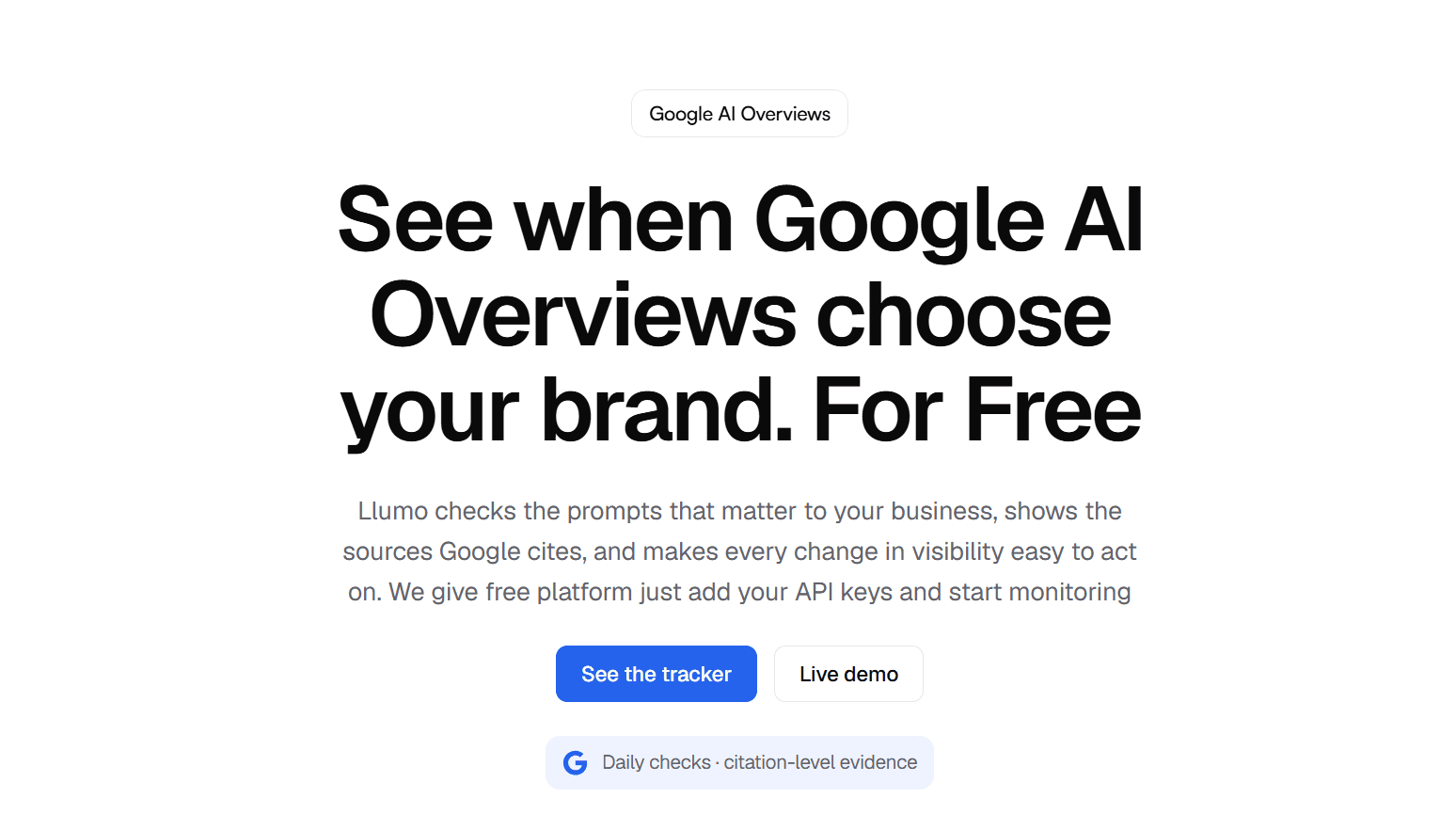
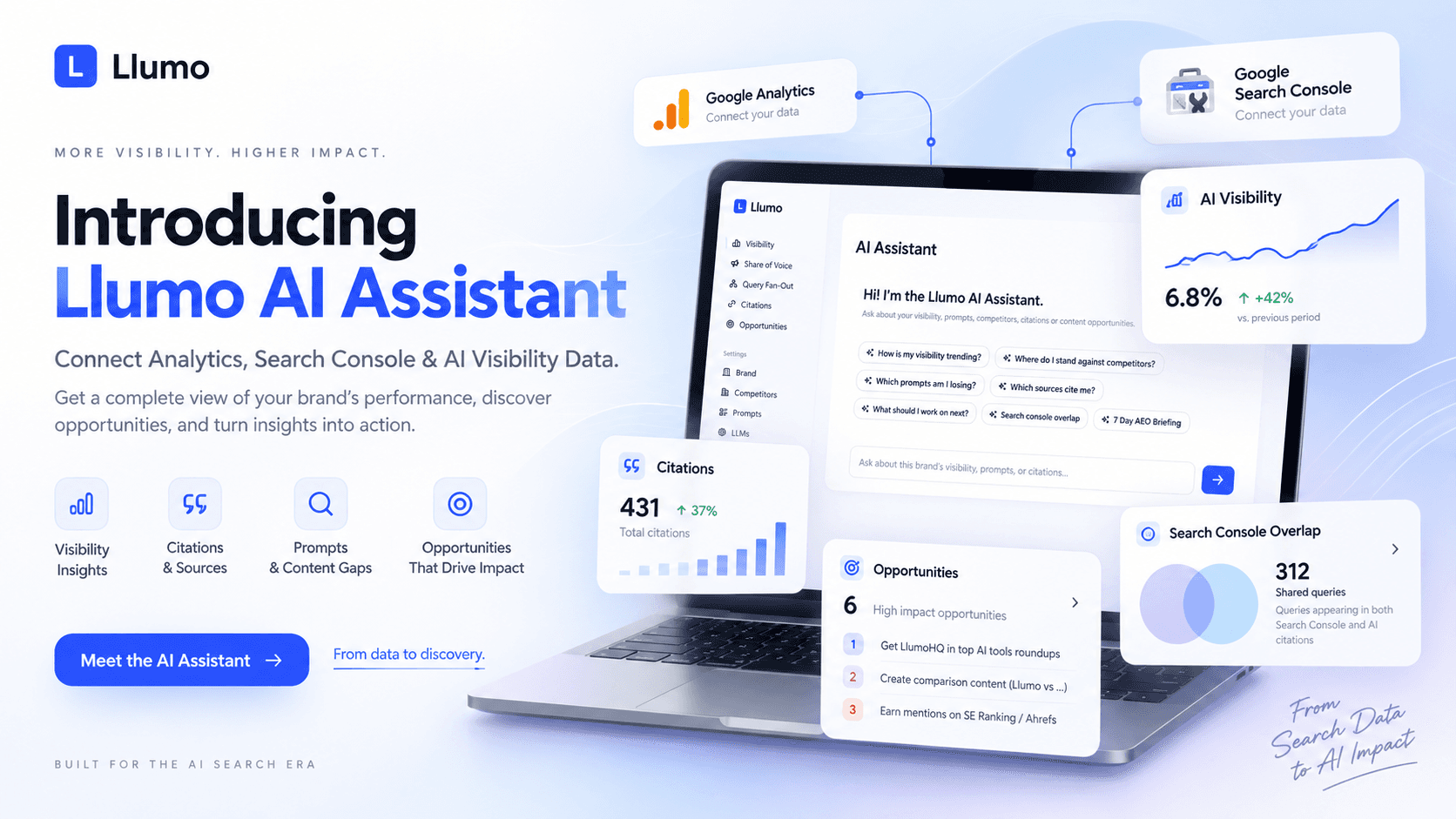
The single dashboard provided by the platform includes ten AI services: Google AI Overviews, Google AI Mode, ChatGPT, Perplexity, Gemini, Copilot, Claude, Grok, Mistral, and DeepSeek. This represents the most extensive coverage of AI engines on the list, with no artificial limit on the number of prompts. When 200 prompts are tracked each day across all the engines, the typical monthly cost ranges from $115 to $150, as opposed to the 189–828 dollars on the other platforms.
The main features are per-prompt visibility scores together with trend lines for the competitors, citation analysis that indicates which domains AI cites the most and where your brand is falling behind, tracking of query fan-out that shows the sub-searches that AI engines carry out in the background, and actionable opportunity prioritization which tells you what content to produce and which pages to optimize next. Furthermore, Llumo provides managed AEO services for those teams that would like direct assistance in getting cited by AI models.
Pros
Free platform with no license fee, unlimited prompts, and unlimited brands
Bring-your-own-keys model keeps costs transparent and under your control
Widest engine coverage: 10 AI surfaces including Google AI Overviews and AI Mode
Citation-level tracking, query fan-out, and actionable optimization recommendations
Dedicated hosted instance with custom subdomain for each user
Cons
Requires connecting your own API keys, which adds a brief setup step
Newer platform, so community and third-party integrations are still growing
Pricing
It’s free; you are only responsible for the costs of the third-party API, which generally amount to 115 to 150 per month for 200 daily prompts using all the engines.
2. AIclicks: Ideal for attribution of traffic and revenue
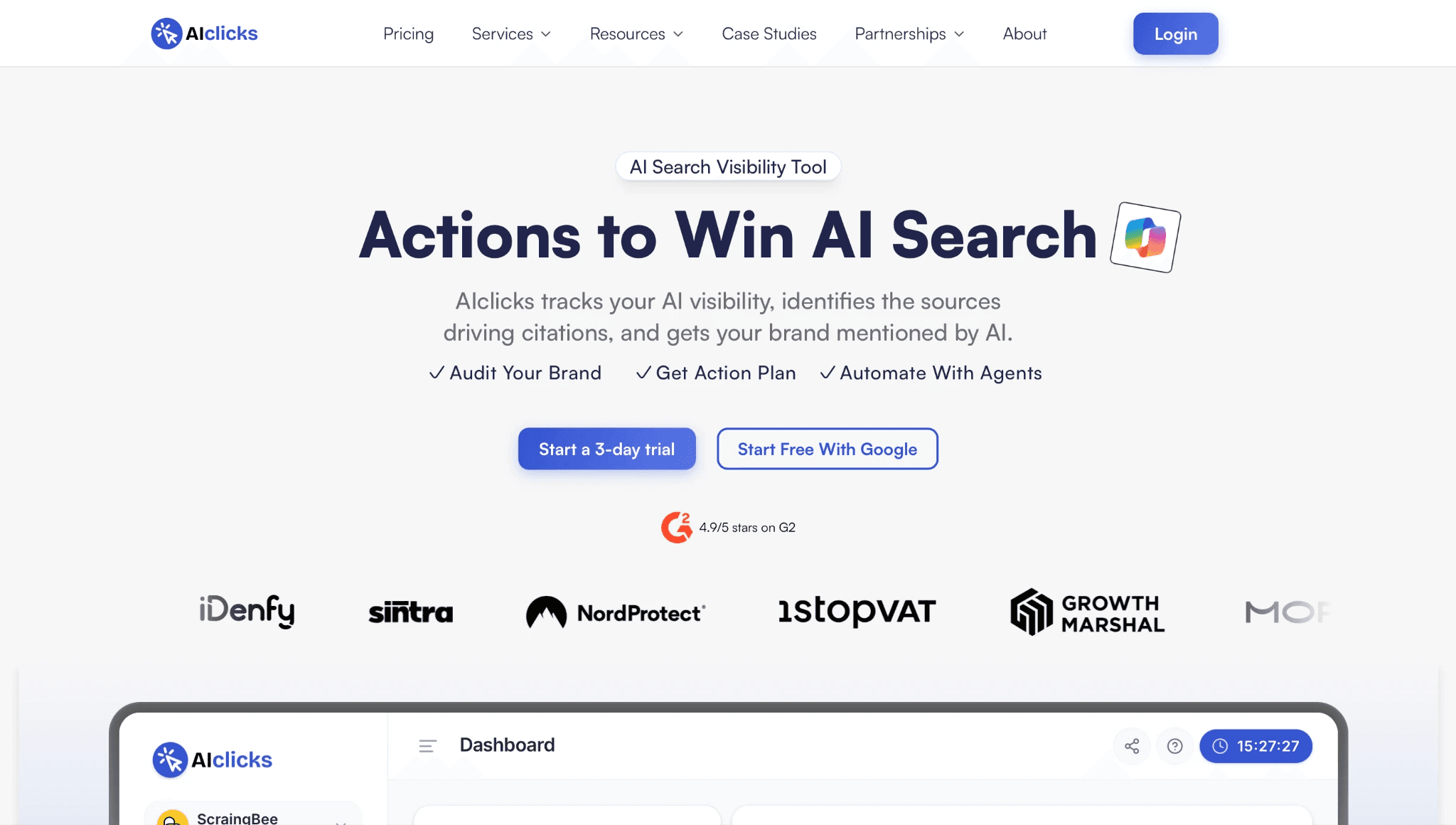
AIclicks combines its AI visibility monitoring with optimization and attribution tools and keeps an eye on brand mentions, source citations, competitive share of voice, and prompt-level performance on the major AI search platforms.
The coverage when published has included Google AI Overviews, Google AI Mode, ChatGPT, Perplexity, Gemini, Claude, Copilot, and Grok; the number of platforms available at any one time varies according to the plan chosen.
One of the main benefits is that it integrates with Google Analytics. This enables teams to link AI search visibility with website visits and business results rather than viewing mentions as a separate marketing metric.
Best for: Agencies, e-commerce companies, and performance-focused teams.
Pros:
Prompt-level visibility tracking
Citation-source reporting
Google Analytics integration
Competitor benchmarking
Content optimization capabilities
Multiple country support on higher plans
Cons:
Platform coverage is limited by plan
The number of features may create a learning curve
Costs increase quickly as prompt volume grows
Pricing: Starter costs $59 per month, Pro costs $189, and Business costs $499. Plans include different prompt, platform, and website limits, with a three-day trial available.
3. Semrush: Ideal for users who already have Semrush
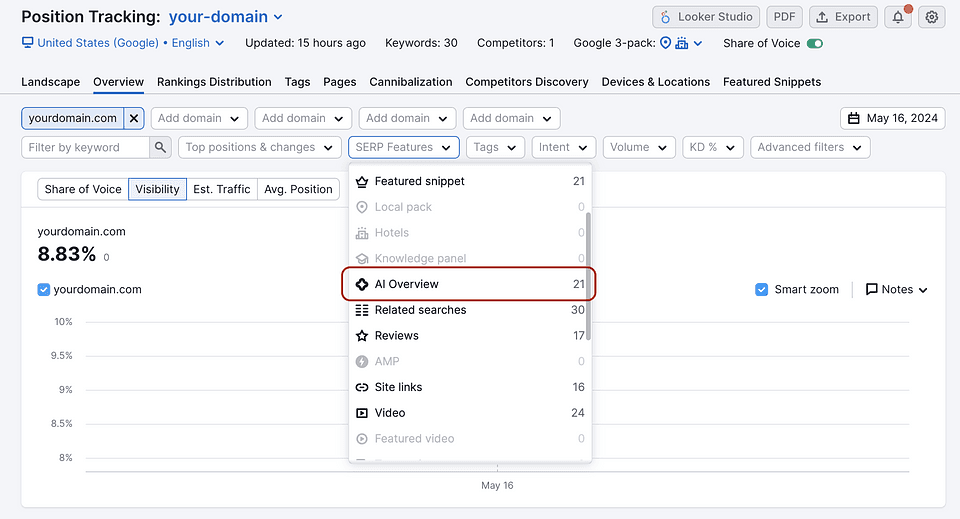
The AI search monitoring offered by the Semrush AI Visibility Toolkit is incorporated into the well-known Semrush environment and is especially convenient for teams who are already using Semrush for keyword research, competitor analysis, site auditing, and reporting.
The toolkit features brand visibility reports, competitor benchmarking, prompt research, daily custom prompt tracking, and AI-oriented site checks. The basic package allows for 25 tracked prompts and one domain when carrying out brand-performance analysis.
The greatest limitation is the charging method based on domain. Those agencies which look after a number of unrelated websites have to pay considerably more than a single-brand marketing department.
Best for: In-house teams already using Semrush.
Pros:
Integrates with existing Semrush workflows
Large prompt-research database
Competitor and brand-performance analysis
Daily tracking for custom prompts
AI-focused site auditing
Cons:
Only 25 custom tracked prompts in the base package
Additional domains increase the cost
No free trial for the standalone toolkit
Less attractive for agencies managing many small clients
Pricing: $99 per month per domain when billed annually. Additional domains or locations generally require another paid allocation.
4. Ahrefs Brand Radar: Ideal for observational data
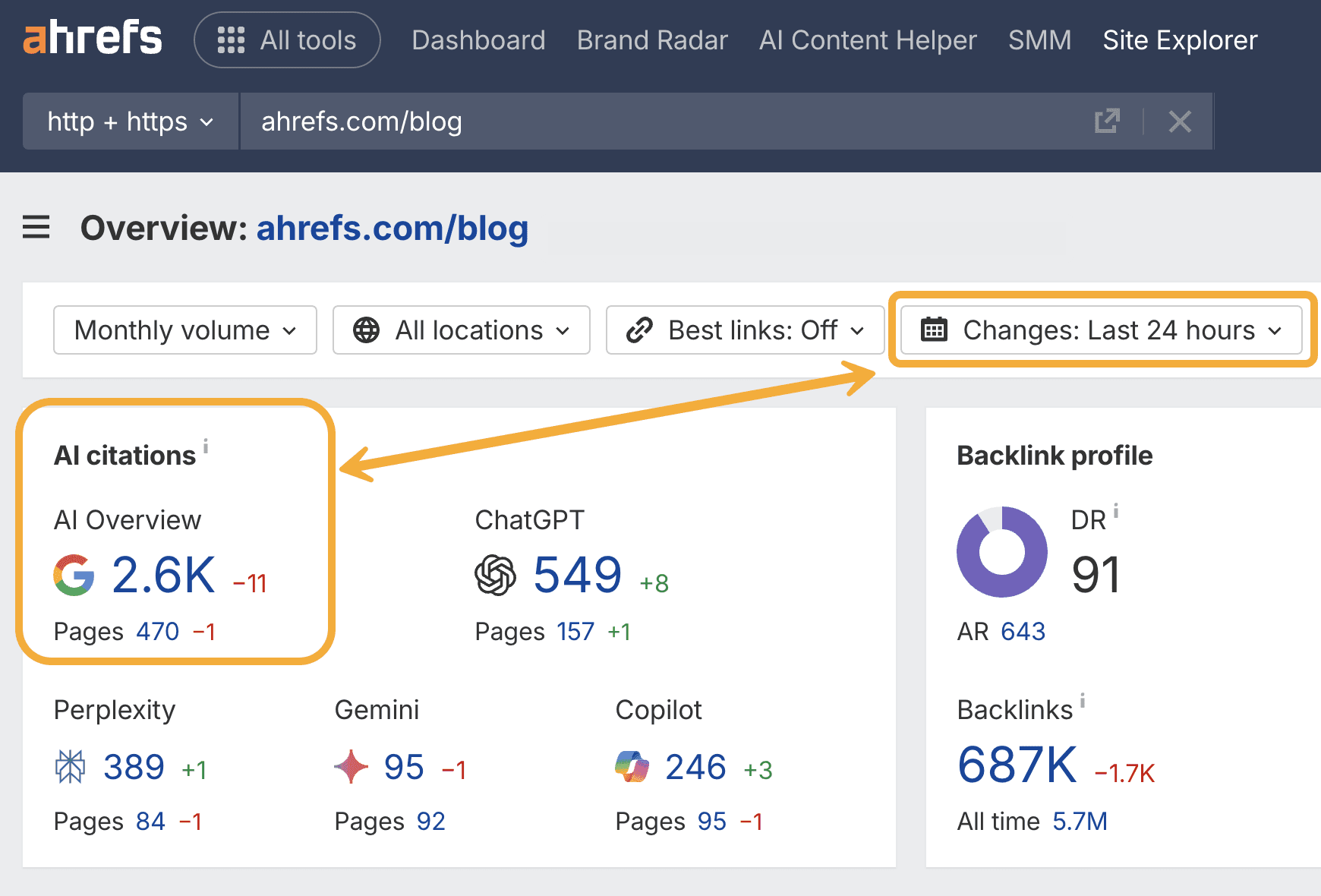
Unlike tools which primarily depend on prompts provided by the user, Ahrefs Brand Radar provides access to hundreds of millions of search-based prompts so that teams can carry out brand visibility research without having to build each prompt set themselves.
Users are able to compare the amount of voice that AI has, identify areas that are frequently cited, examine individual responses, and spot the pages which receive AI citations. The platform’s published coverage includes AI Overviews, AI Mode, ChatGPT, Perplexity, Gemini, and Microsoft Copilot.
YouTube, TikTok, and Reddit visibility data can also be offered as extra or beta indexes. While this enhanced research feature makes Brand Radar useful for market analysis, it does so at a higher price.
Best for: Established SEO teams conducting large-scale competitive research.
Pros:
Very large observational prompt database
Exact citation-page analysis
Competitive share-of-voice reporting
Search-demand context
Custom prompt tracking
Useful for category and market research
Cons:
Expensive for small businesses
Full platform access costs considerably more
More data than some small teams can use effectively
Pricing and available indexes require careful review
Pricing: Individual AI platform access starts at approximately $199 per month, while the all-platform package is listed at $699 per month.
5. Surfer is ideal for teams responsible for content optimization.
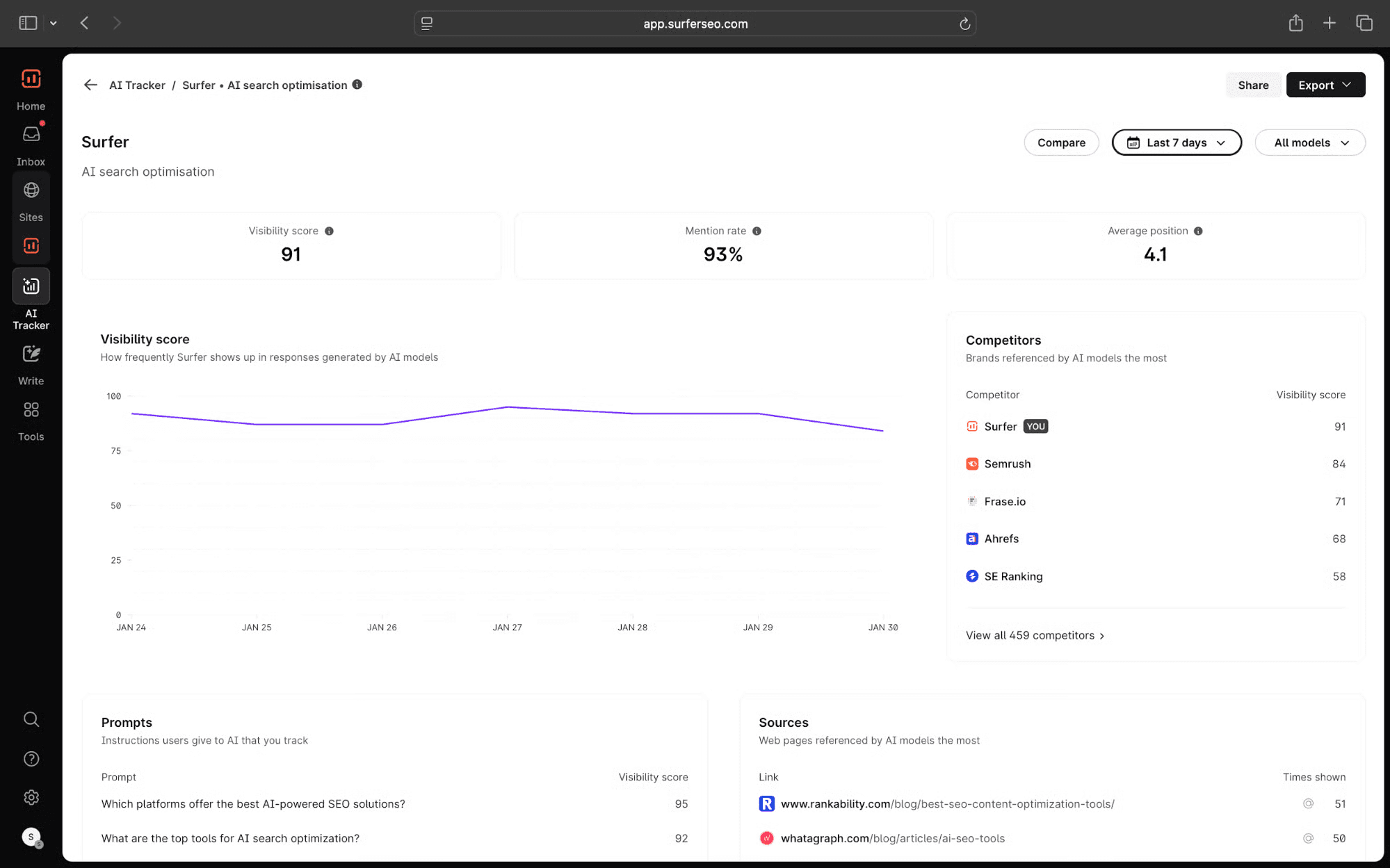
The Surfer AI Tracker combines visibility monitoring with Surfer’s existing content optimisation process, allowing teams to keep an eye on prompts, mentions, citations, competitors, and changes to AI-generated responses.
The product covers ChatGPT, Perplexity, Google AI Overviews, Google AI Mode, and other platforms that are supported. Since Surfer already places a strong emphasis on content planning and on-page optimization, its tracker is appropriate for teams who want to convert visibility gaps into content adjustments.
The greatest limitation is the cost when compared to the amount of prompting. Companies that need hundreds of prompts each day might find it more economical to use dedicated visibility platforms.
Best for: Content teams already using Surfer.
Pros:
Strong connection between tracking and content optimization
Prompt-level insights
Citation transparency
Competitor and trend reporting
Familiar interface for Surfer users
Cons:
Limited prompt allowance at lower levels
Higher cost for larger prompt sets
Less suitable for teams needing extensive enterprise intelligence
Pricing: AI tracking is included with selected Surfer plans. Paid tracking upgrades start around $95 per month, depending on prompt volume.
6. SE Ranking: The best all-in-one suite for SEO and AI
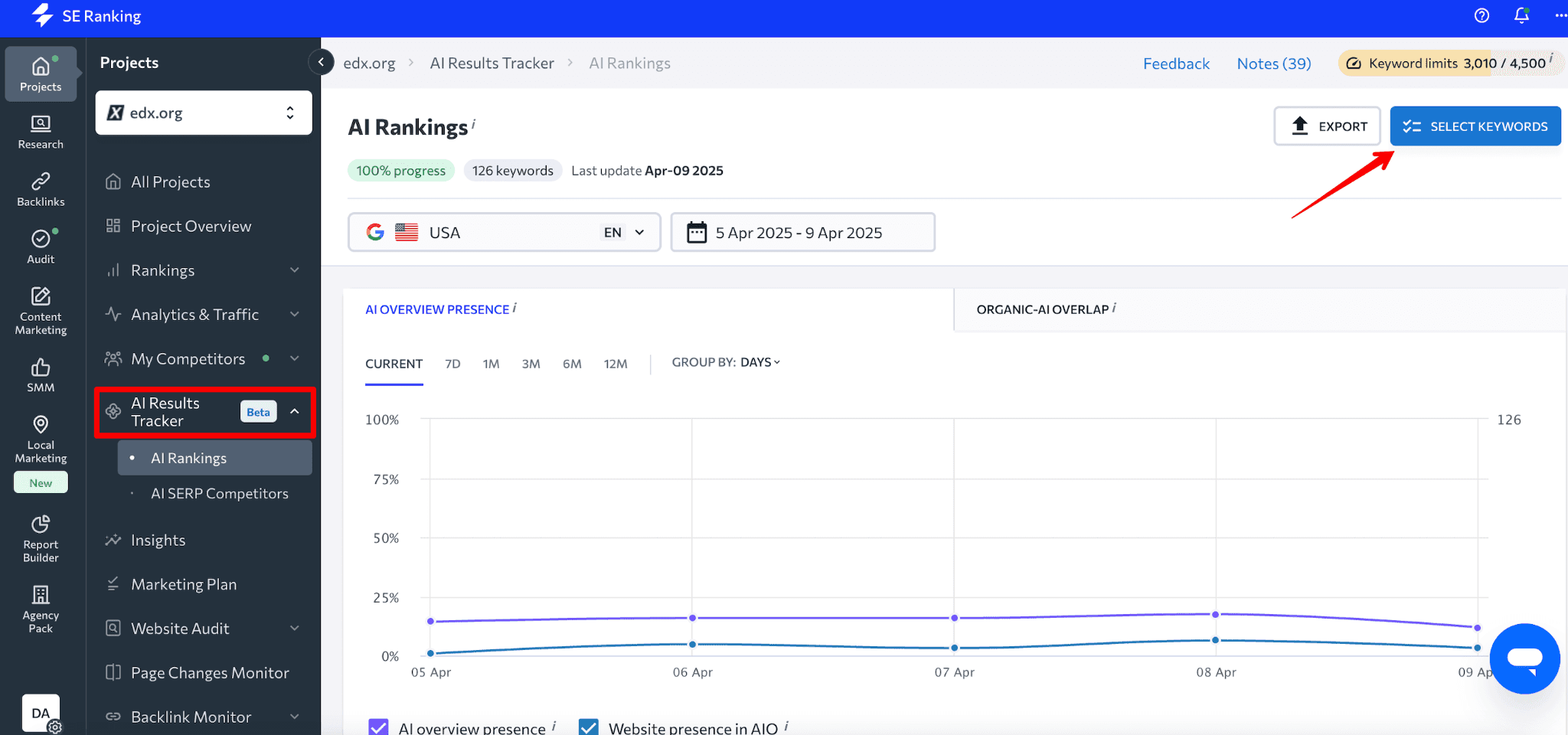
The SE Ranking AI Overview Tracker keeps an eye on whether AI Overviews appear for specific keywords, notes which sites are cited, and examines how visibility changes over time.
The platform is able to analyze source URLs, assess keyword intent, identify competing domains, markets, languages, and the cached search results. Its more extensive AI search features include ChatGPT, Gemini, Perplexity, Google AI Overviews, and AI Mode.
SE Ranking is suitable for teams who want conventional rank tracking, audits, competitor research, and AI search monitoring all on a single platform; the problem with the pricing however is that AI Search and other features can be offered as add-ons.
Best for: Small and mid-sized teams needing SEO and AI reporting together.
Pros:
Traditional and AI search tracking
Citation-source analysis
Historical data and cached results
Multiple markets and languages
Competitor visibility comparisons
Fourteen-day trial on eligible products
Cons:
AI features may require an additional package
Total cost depends on the base plan and add-ons
Less straightforward than one-price specialist tools
Pricing: Core SEO plans start at approximately $103.20 per month, while the AI Search package starts around $71.20 per month. Buyers should confirm which features require both products.
7. Scrunch AI is the best option for agency reporting.
Scrunch AI is created for organizations which need large-scale structured AI visibility monitoring, page auditing, reporting, and optimisation.
The features available include prompt management, citation tracking, content-gap insights, performance dashboards, personas, page audits, and AI referral-traffic monitoring; because of these capabilities the tool is appropriate for use by agencies and larger in-house marketing teams.
Since Scrunch counts the number of prompt variants on different platforms, users need to understand how their monitoring setup uses up the plan allowance. A prompt that is processed by several engines may be counted more than once.
Best for: Agencies and established teams managing complex campaigns.
Pros:
Cross-platform AI monitoring
Citation and content-gap analysis
Page audits
AI referral-traffic monitoring
Persona-based analysis
Reporting and integration options
Cons:
Higher starting price
Prompt accounting requires attention
More platform than most solo marketers need
Pricing: Plans start at $250 per month. A seven-day trial is available.
8. Otterly.AI: Great for Solo Marketers
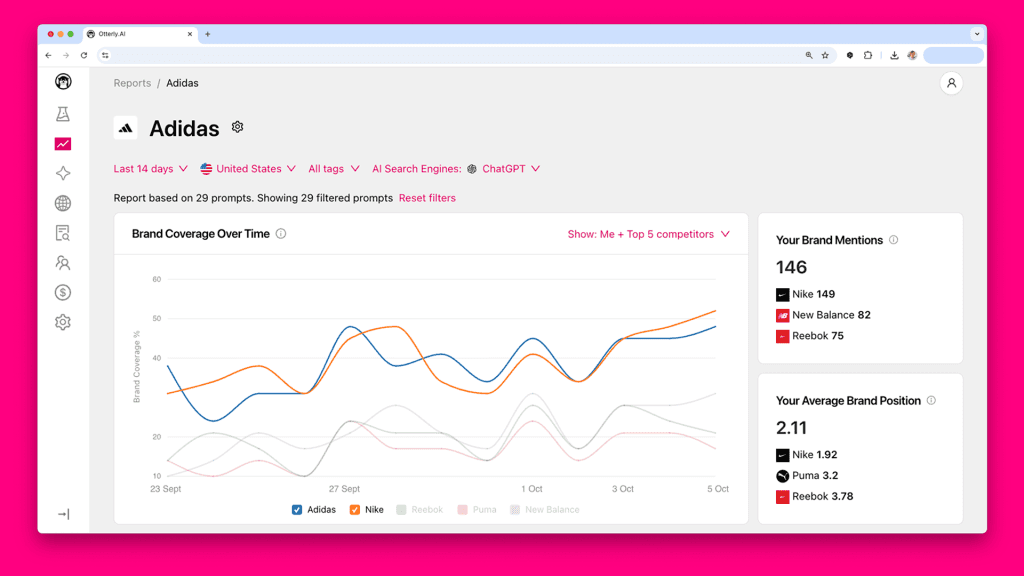
Otterly.AI offers a way for people to keep track of AI search visibility that is easy to access. The Lite plan keeps an eye on 15 prompts on Google AI Overviews, ChatGPT, Perplexity, and Microsoft Copilot.
The platform includes daily tracking, brand visibility scoring, citation analysis, domain rankings, prompt research, reporting, and GEO audits. Google AI Mode and Gemini are available as paid additions.
Otterly.AI is easy to approach, but the lower plan’s limited prompt allowance may become restrictive for brands with multiple products, countries, or audience segments.
Best for: Solo marketers and small businesses beginning AI visibility monitoring.
Pros:
Affordable entry price
Daily tracking
Citation and domain analysis
Multiple-country support
Free trial
Simple reporting
Cons:
Only 15 prompts on the Lite plan
AI Mode and Gemini cost extra
Costs rise sharply at higher prompt volumes
Pricing: Lite costs $29 per month, Standard costs $189, and Premium costs $489. Annual billing reduces the effective monthly price.
9. thruuu: Best for Google-Focused Monitoring
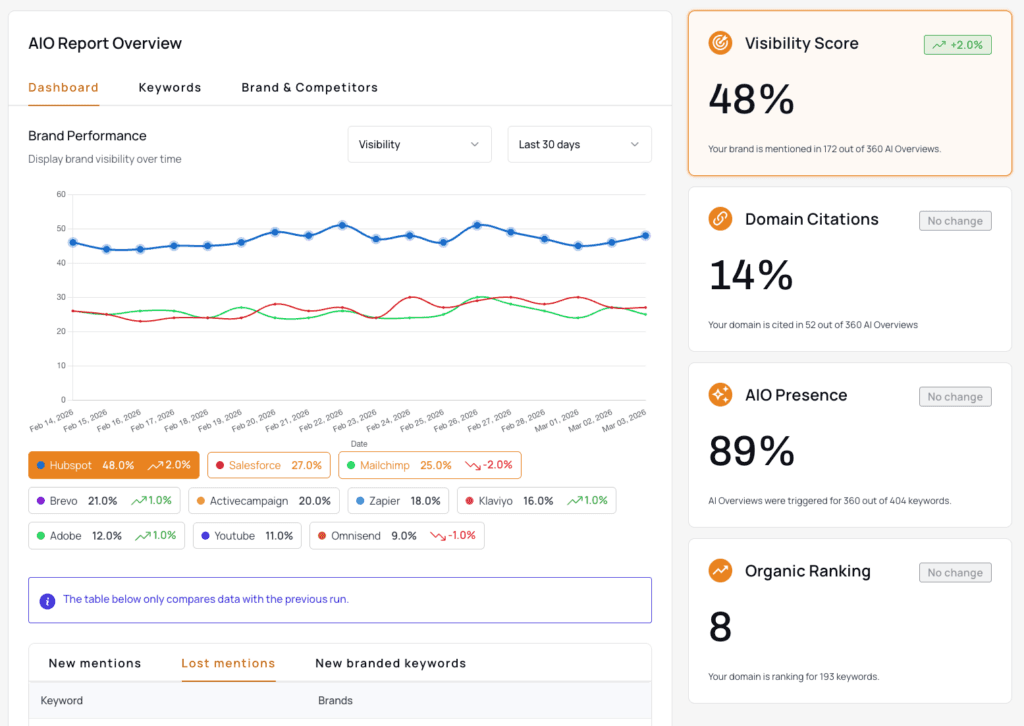
thruuu focuses on Google search analysis rather than broad tracking across conversational AI platforms.
Its AI Overview monitoring tool checks whether a brand is mentioned or cited across selected keywords. It can record AI Overview content, identify cited URLs, analyze competitors, preserve result snapshots, and support recurring reporting.
The platform is particularly useful for SEO professionals who care primarily about Google. It is less suitable for teams that also require ChatGPT, Perplexity, Gemini, or Copilot visibility.
Best for: SEO teams monitoring Google AI Overviews across many keywords.
Pros:
Focused AI Overview reporting
Direct Google results analysis
Brand mention and citation tracking
Competitor monitoring
Recurring reports
Useful SERP and content-analysis features
Cons:
Does not provide broad cross-engine visibility
Credit and project limits vary by plan
Less useful for full AI brand monitoring
Pricing: Current plans start at approximately $38 per month, with higher levels available for larger projects and agencies.
How to Choose Best AI Overview Tracker
Determine Which Platforms Actually Matter
Choose platforms based on customer behavior. An SEO publisher may prioritize Google AI Overviews and AI Mode. A B2B software company may also need ChatGPT, Perplexity, Gemini, Claude, and Copilot.
Do not pay for ten engines merely because the number looks impressive. Coverage has value only when those platforms influence your audience.
Calculate Your Required Prompt Volume
Start with your main products, services, problems, comparisons, and buying questions. Then multiply those prompts by the number of countries, languages, devices, and AI engines you want to monitor. This calculation often reveals that an inexpensive entry plan will not support the complete project.
Look Beyond a Single Visibility Score
A general score can summarize performance, but it rarely tells you what to change. Prioritize tools that show:
The exact prompt
Whether the brand was mentioned
Whether the site was cited
The cited URL
Competing brands
Historical changes
The wording or sentiment of the answer
Separate Monitoring From Optimization
Some platforms mainly report results. Others audit pages, identify citation gaps, recommend content improvements, or connect with analytics. A monitoring-only tool may be sufficient for a skilled SEO team. A smaller team may get more value from built-in recommendations.
Review Total Ownership Costs
Check charges for extra domains, users, prompts, locations, engines, exports, and API usage. Ask whether the quoted plan can support your entire tracking schedule before subscribing.
Frequently Asked Questions
What is the best AI Overview tracker?
Llumo is a strong overall choice for teams wanting broad coverage without a platform license fee. AIclicks is better for attribution, Ahrefs Brand Radar suits large-scale research, and thruuu is a practical option for Google-focused monitoring. The right choice depends on your platforms, prompt volume, and budget.
Is there a free AI Overview tracker?
Some providers offer free checks or limited trials. Llumo does not charge a platform fee, but users must connect their own API keys and pay any resulting provider costs. Therefore, it should not be described as completely free to operate.
How can I track Google AI Overview citations?
Use a tracker that records whether an AI Overview appeared, which domains were cited, which URLs received links, and whether your brand appeared in the generated text. Google Search Console can also report qualifying clicks and impressions from links appearing within AI Overviews.
Are AI Overview trackers the same as rank trackers?
No. Traditional rank trackers measure positions in conventional search results. AI Overview trackers monitor appearances inside generated answers, including mentions, citations, source URLs, competitors, and prompt-level visibility. Many teams need both forms of reporting.
Start Tracking Your AI Overview Visibility
Traditional rankings cannot show the complete picture of your visibility inside AI-generated search results. With Llumo, you can monitor brand mentions, citations, competing brands, and prompt-level performance across Google AI Overviews and other leading AI platforms.
Start tracking your AI search visibility with Llumo without paying a platform license fee. Connect your API keys, monitor the prompts that matter, and discover where your brand is being cited or overlooked.