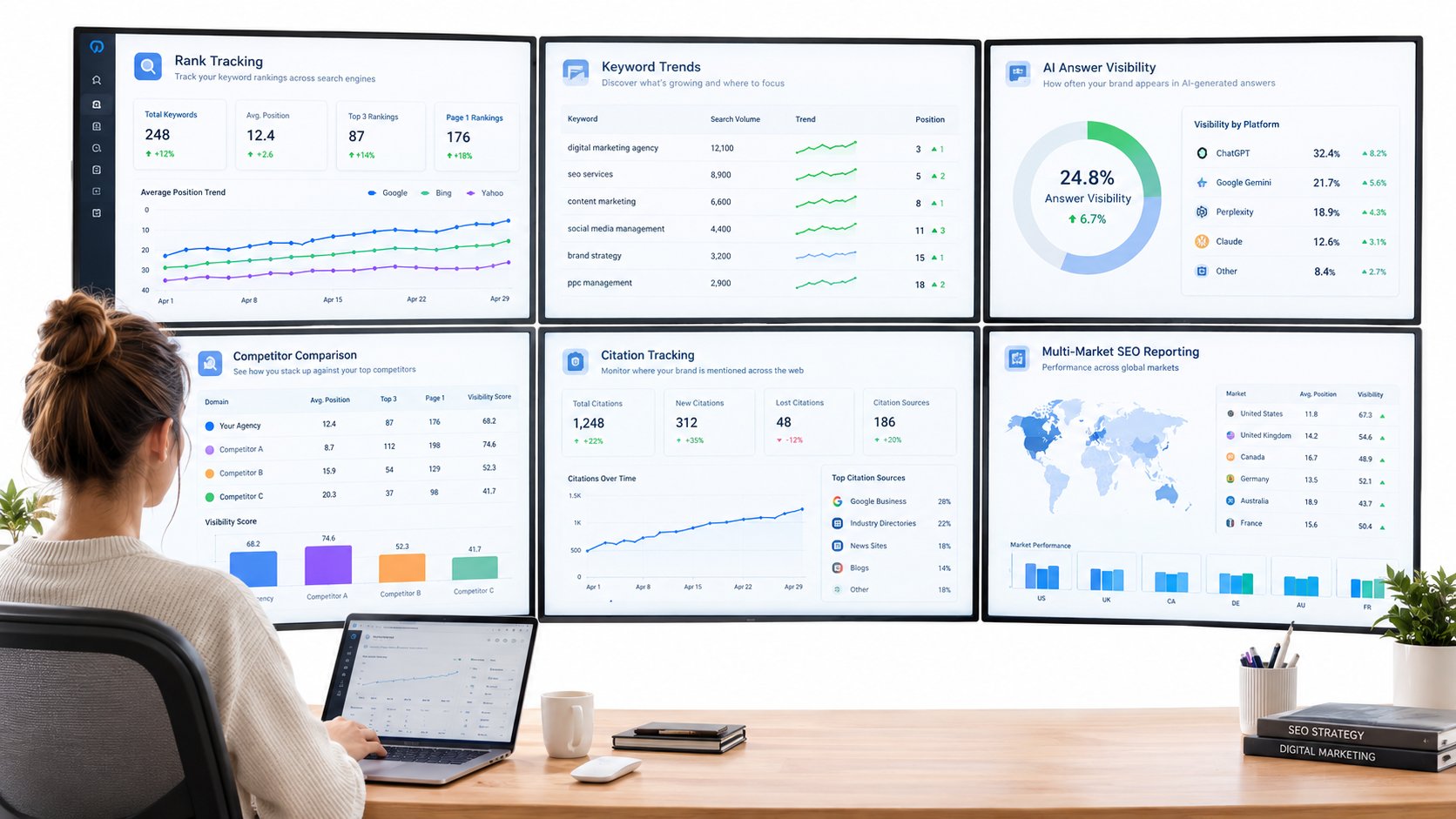
The biggest enterprise rank tracker is not automatically the best one for an agency. I've seen too many teams buy the broadest suite, then spend months fighting exports, permissions, and reporting templates instead of using the data to make decisions. The better choice depends on how your agency works, how often clients expect updates, how many markets you track, and whether you need traditional rankings alone or a wider view that includes AI answers and citations.
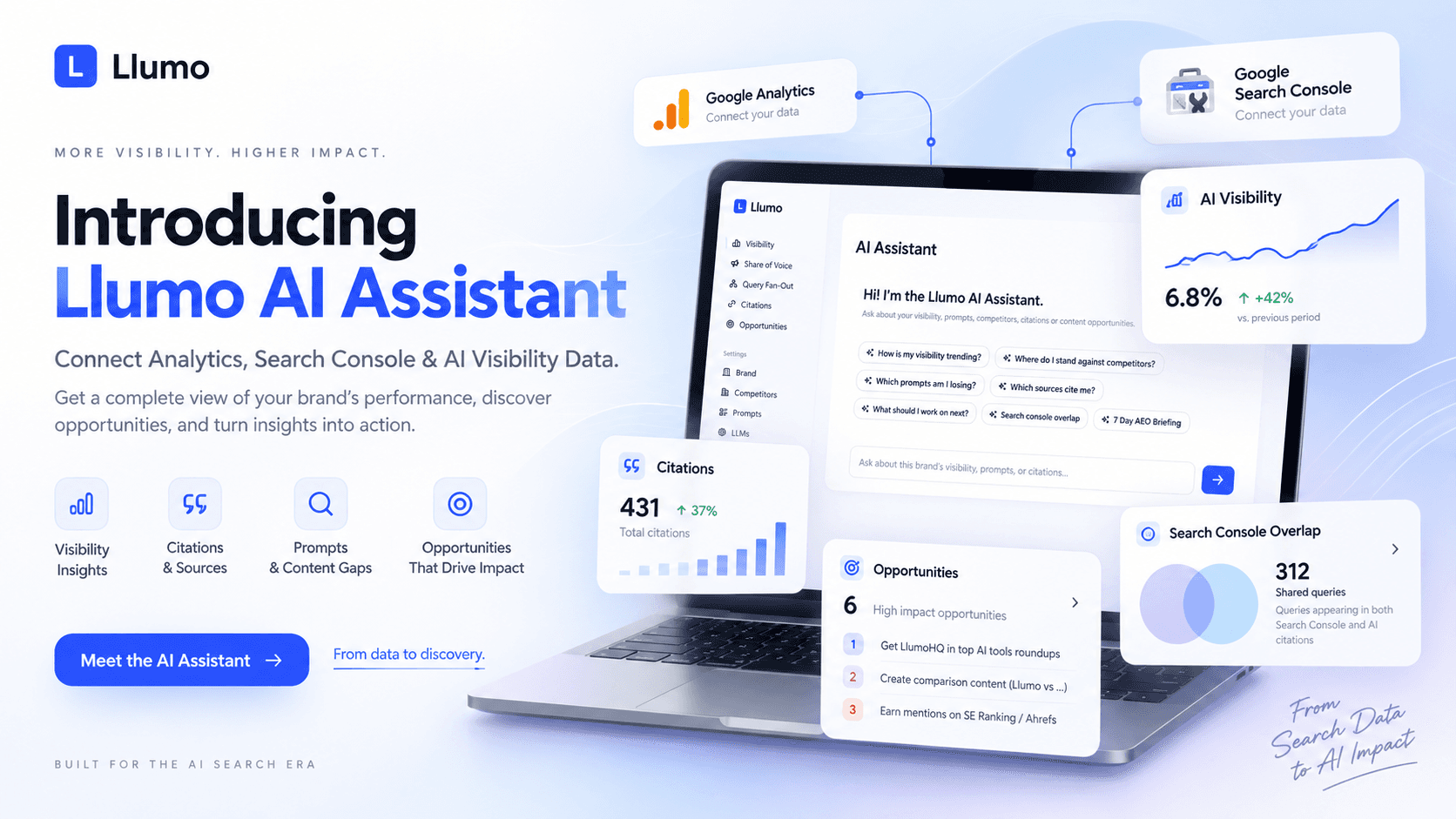
If AI search visibility is part of the brief, Llumo deserves a place in that conversation from the start. It helps agencies track AI answers, citations, and share of voice alongside classic keyword positions, which matters when rank data alone no longer explains how brands are being discovered.
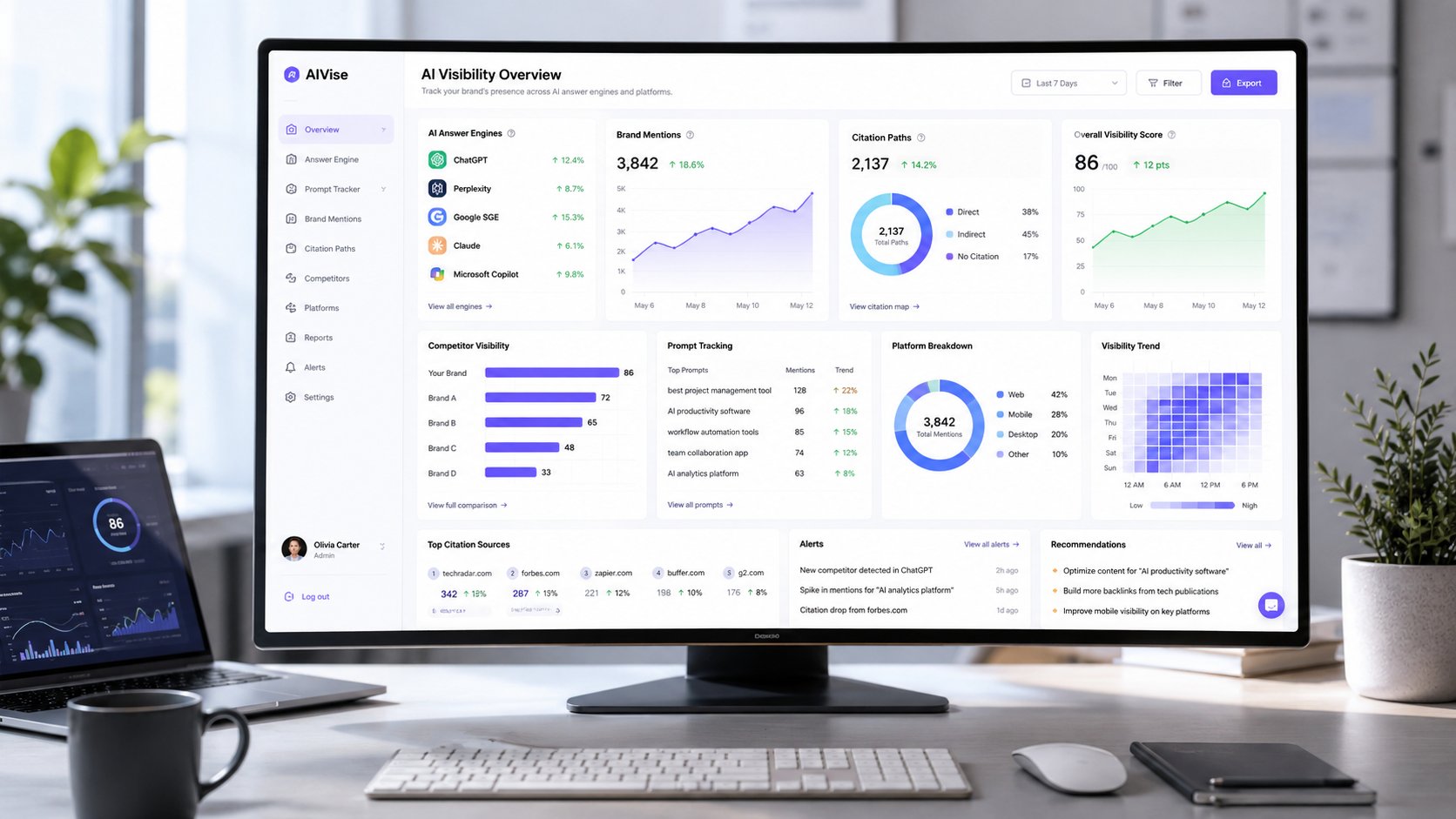
That's why the clean split is between specialist trackers, full SEO suites, and AEO visibility tools. Specialist trackers tend to win on speed, scale, and SERP fidelity, while suites are better when audits, content, links, and reporting need one operating layer. Llumo fits when a team also needs to measure AI answers, citations, and share of voice alongside keyword positions, because rank data by itself doesn't tell the whole story anymore.
1. Llumo
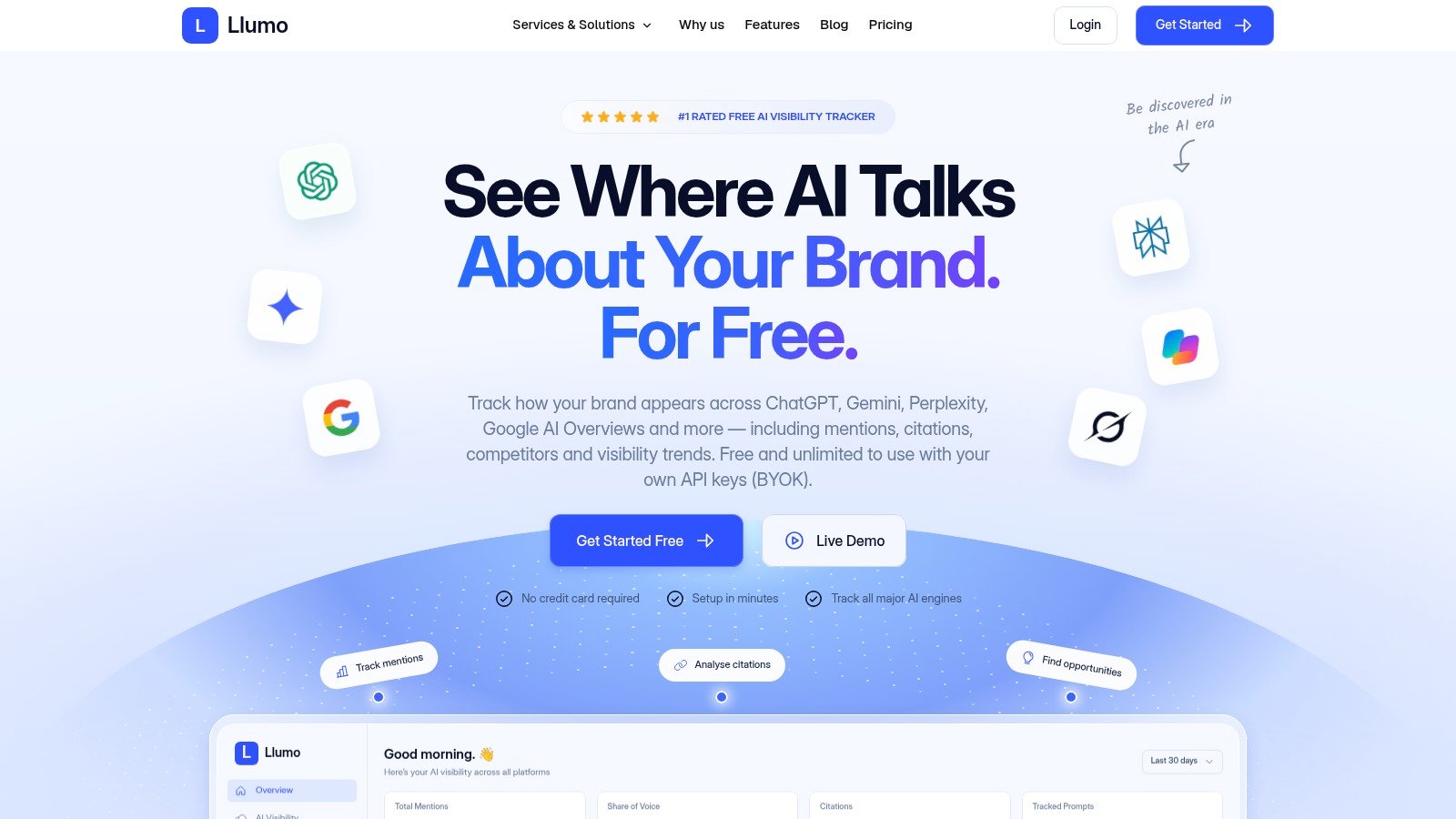
Llumo belongs near the top of this list because agencies increasingly need to report on more than blue-link rankings. When clients ask where their brand appears in AI answers, which sources get cited, and how visible they are versus competitors inside generative search, a standard rank tracker only covers part of the picture.
Llumo is built for that broader visibility problem. It helps agencies measure AI answers, citations, and share of voice alongside traditional rank tracking workflows, which makes it useful when reporting needs to connect classic SEO performance with answer-engine optimization.
Where Llumo works best
Llumo is strongest for agencies that already track keyword positions but need a clearer view of AI discovery surfaces. I'd use it when client reporting has expanded to include prompt-level visibility, citation tracking, competitive presence in AI answers, and broader share-of-voice reporting. It works well as an AEO visibility layer that complements enterprise rank tracking instead of trying to replace every SEO function in a suite.
The trade-off is simple. If you only need standard keyword rankings, a pure rank tracker may be enough. But if your clients expect your agency to explain visibility in AI search environments as well as classic SERPs, Llumo gives you data that many traditional tools still do not cover well.
2. STAT Search Analytics (Moz)
STAT is the kind of enterprise rank tracker you choose when SERP truth matters more than polished packaging. For agency operators, that matters because the hard part is rarely collecting keywords. It is keeping results clean across markets, devices, and features without losing trust in the numbers.

STAT earns attention through scale and fidelity. Enterprise rank tracking has moved from simple position checks to monitoring large volumes of data across devices, locations, and search features, and specialist trackers still matter most when the reporting has to hold up under scrutiny. Broadly speaking, some enterprise tools keep long historical ranking records, support very large keyword sets, and analyze millions of pages without turning the workflow into a reporting mess.
Where STAT works best
STAT is strongest when analysts need SERP-feature detail and pixel-depth data, not just a rank column. I'd use it when client conversations focus on competitors, pixel shifts, local differences, and how a result appears on the page. It works as a specialist observability layer for large programs, not as a full SEO operating system.
Practical rule: if your reporting team keeps asking, "What changed in the SERP?", a dedicated tracker usually pays for itself faster than a broader suite.
The trade-off is clear. STAT is built for ranking, so you still need other tools for audits, content operations, and technical diagnosis. Procurement can also take longer because pricing is sales-led, which is a real friction point for agencies that need to move quickly. The upside is just as clear. If your workflow centers on very large keyword sets and you care about SERP fidelity above all else, STAT is a serious option.
3. seoClarity
seoClarity is the kind of platform agencies buy when they want one system to sit at the center of reporting. It is broad, enterprise-first, and built for teams that need rankings, visibility, content context, and executive reporting in one place.
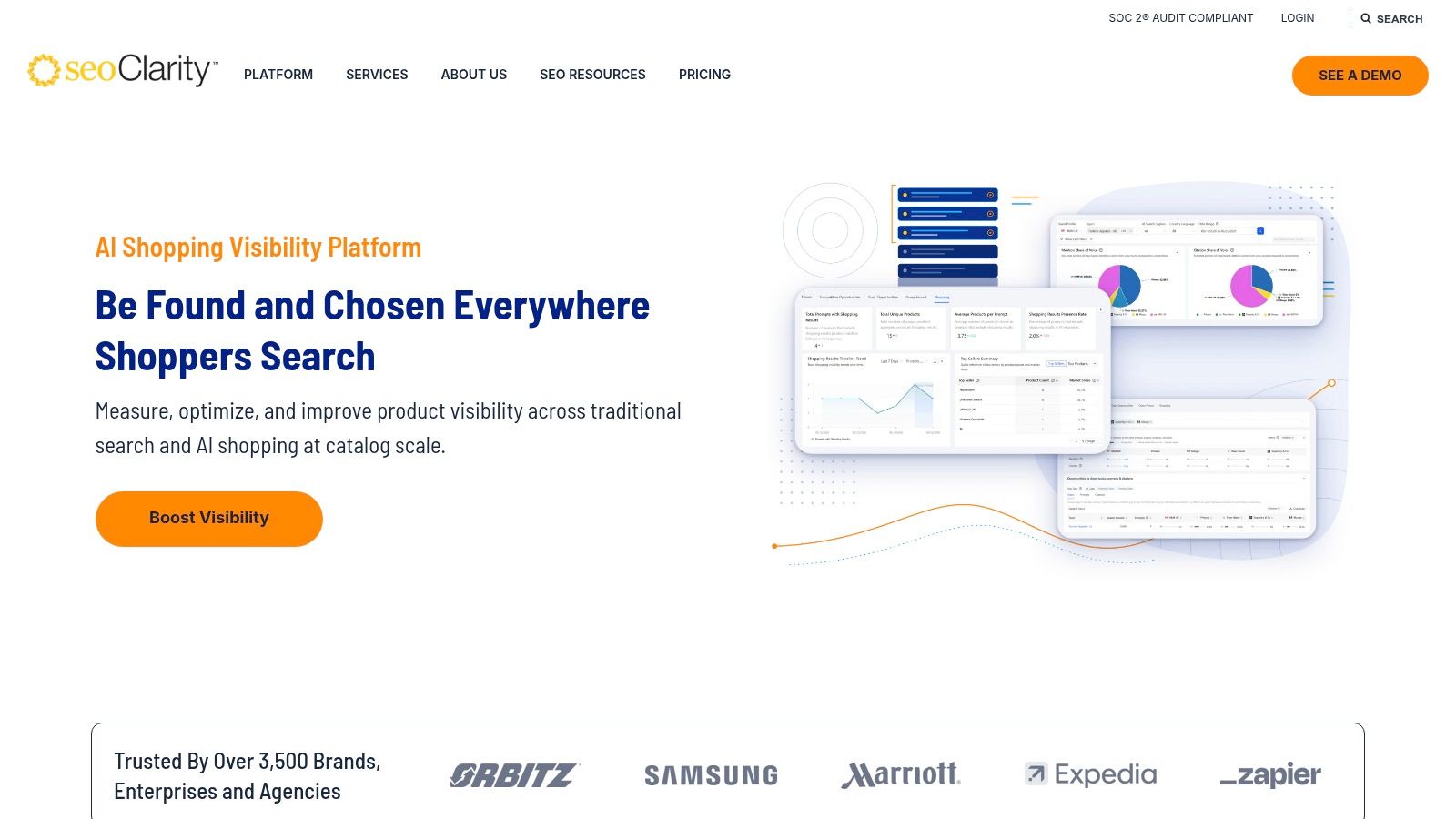
The appeal is simple, fewer disconnected tools and fewer debates over which number is the accurate one. Enterprise rank tracking now has to account for AI Overviews, featured snippets, local packs, desktop and mobile splits, and multi-market reporting, so a single source of truth matters more than it did in lighter SEO setups. seoClarity fits that reality because it combines daily rankings, competitor tracking, and AI visibility in a platform designed for enterprise governance.
What I like and what I'd watch
The daily cadence helps, but the value lies in the reporting structure. If you manage multiple client groups, consolidating performance into one system makes handoffs cleaner and client reviews less chaotic. The platform's add-ons, including automation and AI visibility tracking, also give it more staying power than a basic tracker.
Best for unified reporting: It works well when account managers, analysts, and leadership all need the same version of performance.
Best for hybrid workflows: It fits agencies already using broader SEO operations around rankings, research, and content.
Less ideal for tiny teams: The breadth can be more than you need if rank tracking is the only job.
The trade-off is onboarding. Broad platforms usually ask for more setup, more enablement, and more internal alignment before they feel smooth. Procurement can also take more time, which matters for agencies that need to move quickly. If your agency wants one place to manage enterprise SEO reporting and can handle that overhead, seoClarity is a serious option.
4. BrightEdge
BrightEdge fits agencies that need enterprise workflows, strong integrations, and a platform that can survive a long buying cycle. It is not the lightest rank tracker here, but it makes sense when governance, approvals, and stakeholder reporting matter as much as keyword movement.
That matters because enterprise tracking now has to sit beside AI visibility, not just classic rankings. If you are deciding whether to pair BrightEdge with broader visibility measurement, our guide to AI visibility trackers for agencies is a useful companion. BrightEdge also aligns with the buying reality described in market coverage of enterprise rank tracking, where cloud-based tools, white-label reporting, and API access are part of the expectation set for larger teams (RankMonster).
Why agencies pick it
BrightEdge works well when client reporting needs to feel polished and durable. It combines rank tracking with keyword intelligence and dashboarding, so the conversation can stay focused on search visibility instead of a single ranking swing. That helps when senior stakeholders want context, not just a position chart.
The trade-off is setup and procurement. Broad platforms usually take more internal alignment before they feel useful, and BrightEdge is no exception. Pricing is not public, which slows forecasting and makes vendor review harder for agencies that need quick approvals.
BrightEdge is strongest when SEO is part of a wider measurement stack. It is less attractive if you only need faster rank checks or a narrow tracker for a small team. For agencies that need multi-client reporting, integrations, and a platform that can support enterprise conversations, it is a solid fit, just not a lightweight one.
5. Conductor
Conductor is a good option when an agency wants SEO and AEO to live in the same operational frame. That matters more every month, because rank tracking is no longer only about blue links, it's also about whether a brand shows up in AI answers and related search experiences.
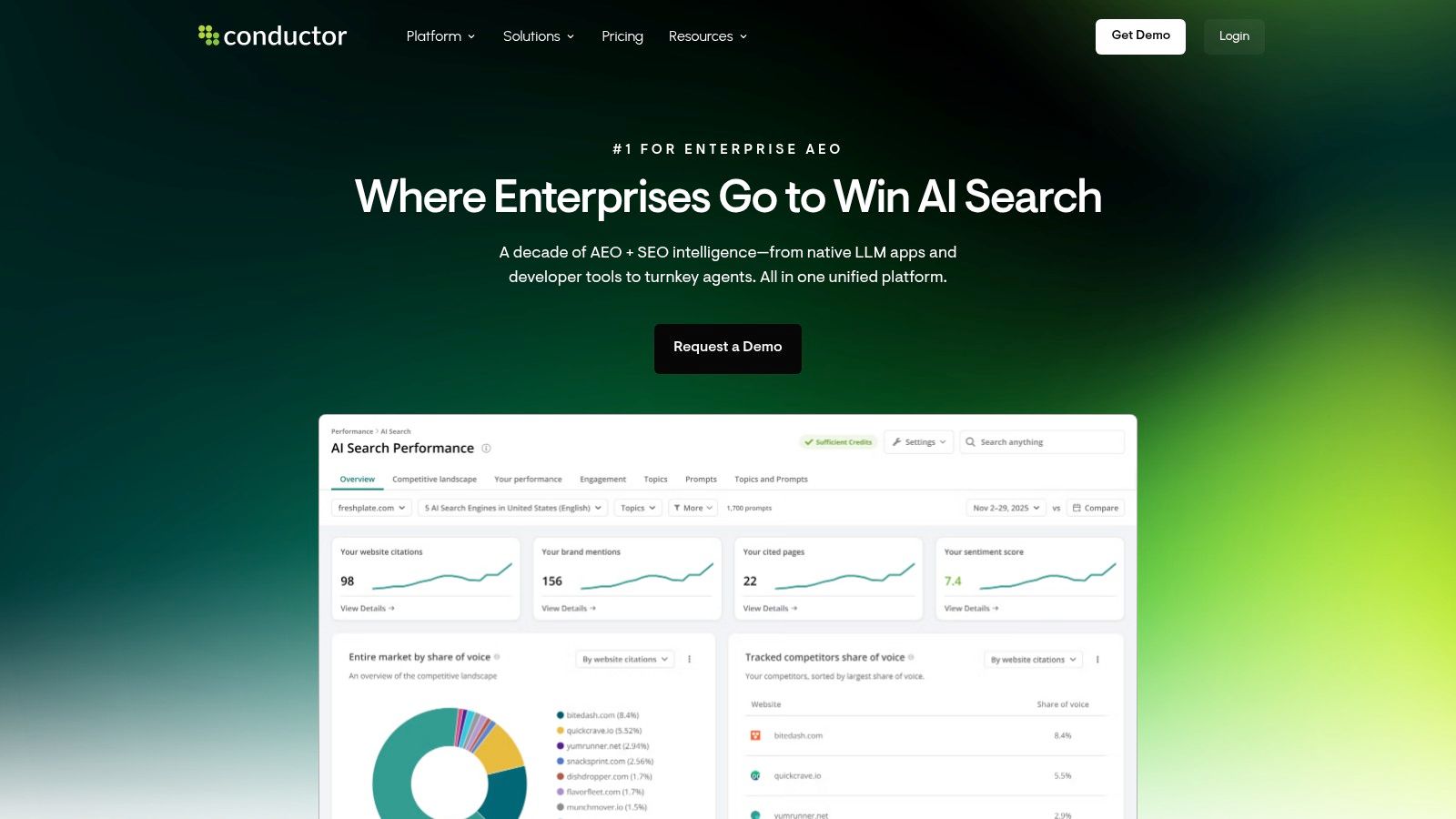
The practical benefit is workflow continuity. A team can monitor traditional rankings, content performance, and AI search visibility in one place instead of forcing analysts to reconcile separate dashboards. That's especially helpful when agencies need to report on market-by-market volatility and explain why a page gained exposure in one surface but not another. Independent coverage of enterprise rank tracking keeps pointing to this gap, noting that teams need multi-market, multi-device, granular location tracking, API export, BI integration, and visibility governance, not just raw position data (WorksBuddy).
The agency angle
Conductor is attractive when you want structure without splintering the stack. It supports tracked keywords and competitors within tiered plans, and the platform's integrations and APIs make it easier to move data into reporting workflows. That's a real advantage for agencies that build custom dashboards for different clients but don't want to stitch together a dozen separate sources.
The trade-off is that the suite can be more than you need if you only care about rank positions. I'd avoid it for narrow use cases where refresh cadence and raw ranking depth are the priority. But if you're already dealing with content workflows, monitoring, and AI search visibility in the same account, Conductor gives you a cleaner operating picture than a tracker alone.
6. Semrush Position Tracking
Semrush is the familiar choice for teams that want fast time-to-value and a broad SEO suite around their rank data. For agencies, that often means less procurement friction and faster onboarding, especially when the same team also needs audits, research, and link workflows.
Position Tracking is useful because it sits inside a bigger stack, so the handoff from keyword discovery to monitoring to reporting is fairly smooth. That matters in agency work, where account teams hate re-entering data into separate systems. Semrush also has enterprise packaging available, and its broader suite helps when you need to connect ranking changes to audits, backlink work, and content updates rather than treating rank tracking as an isolated task. For teams comparing AI visibility and classic SEO together, the broader suite can also be paired with the agency guidance in Llumo's rank tracking software guide.
Where it fits, and where it doesn't
Semrush is a good fit if your agency already uses the platform and wants position tracking to feel like part of a bigger SEO motion. It's especially handy when clients expect automated reporting and the team doesn't want to manage separate vendor relationships for every layer of work.
The limitation is scale friction. Public plans cap projects and keywords, so true enterprise use usually means custom packaging. There's also a calibration issue to keep in mind, because data can differ from Google Search Console and require interpretation rather than blind acceptance. That doesn't make the tool weak, it just means you need a disciplined reporting process.
If you want broad utility, fast onboarding, and one platform that a lot of marketers already know, Semrush is easy to defend. If you need a pure enterprise tracker with maximum depth and highly specialized reporting controls, it may feel more general than you want.
7. Ahrefs Rank Tracker
Ahrefs is still one of the easiest tools to recommend when a team wants rank tracking plus link intelligence in the same stack. That combination works well for agencies because clients rarely ask about rankings in isolation, they ask about visibility, authority, and why one page keeps outranking another.
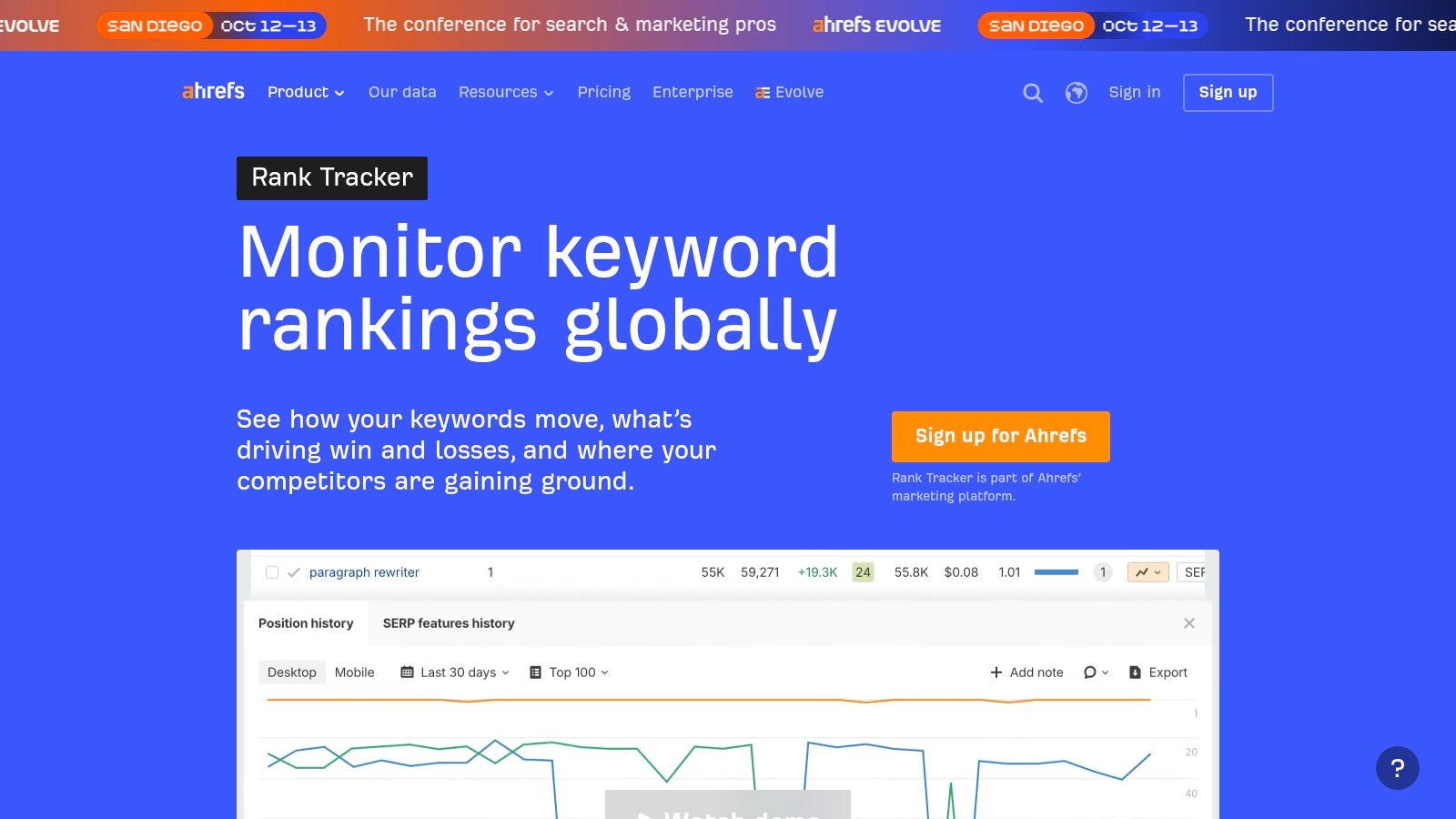
The tracker itself is solid for global programs. Ahrefs supports 190+ locations with SERP history charts, and it layers click share and traffic-potential context onto position data, which gives agencies more to say in client meetings than “you moved up two spots.” That said, it's not a dedicated rank-tracking specialist, and that matters when you're managing enterprise-scale governance. A specialist tool will usually give you more control over cadence, segmentation, and exports.
The trade-off in agency terms
Ahrefs works best when the same team needs backlink research, site audits, and rankings without jumping across products. That makes life easier for smaller enterprise-style teams and agencies that want fewer vendors. The UI is also clean enough that non-technical account managers can usually get the gist quickly.
The catch is procurement. Enterprise SSO and SLA discussions may need vendor back-and-forth, and pricing sits in the premium range. If your agency's core need is just rankings at scale, I'd still put specialist trackers ahead of Ahrefs. But if link data and site context are part of the daily workflow, Ahrefs gives you enough depth to be useful without turning the stack into a mess.
8. AccuRanker
AccuRanker is the classic specialist tracker on this list, and it feels built for agencies that care about refresh cadence, API access, and white-label reporting more than suite breadth. If you've ever had a client ask for a same-day answer about a ranking swing, this kind of tool matters.
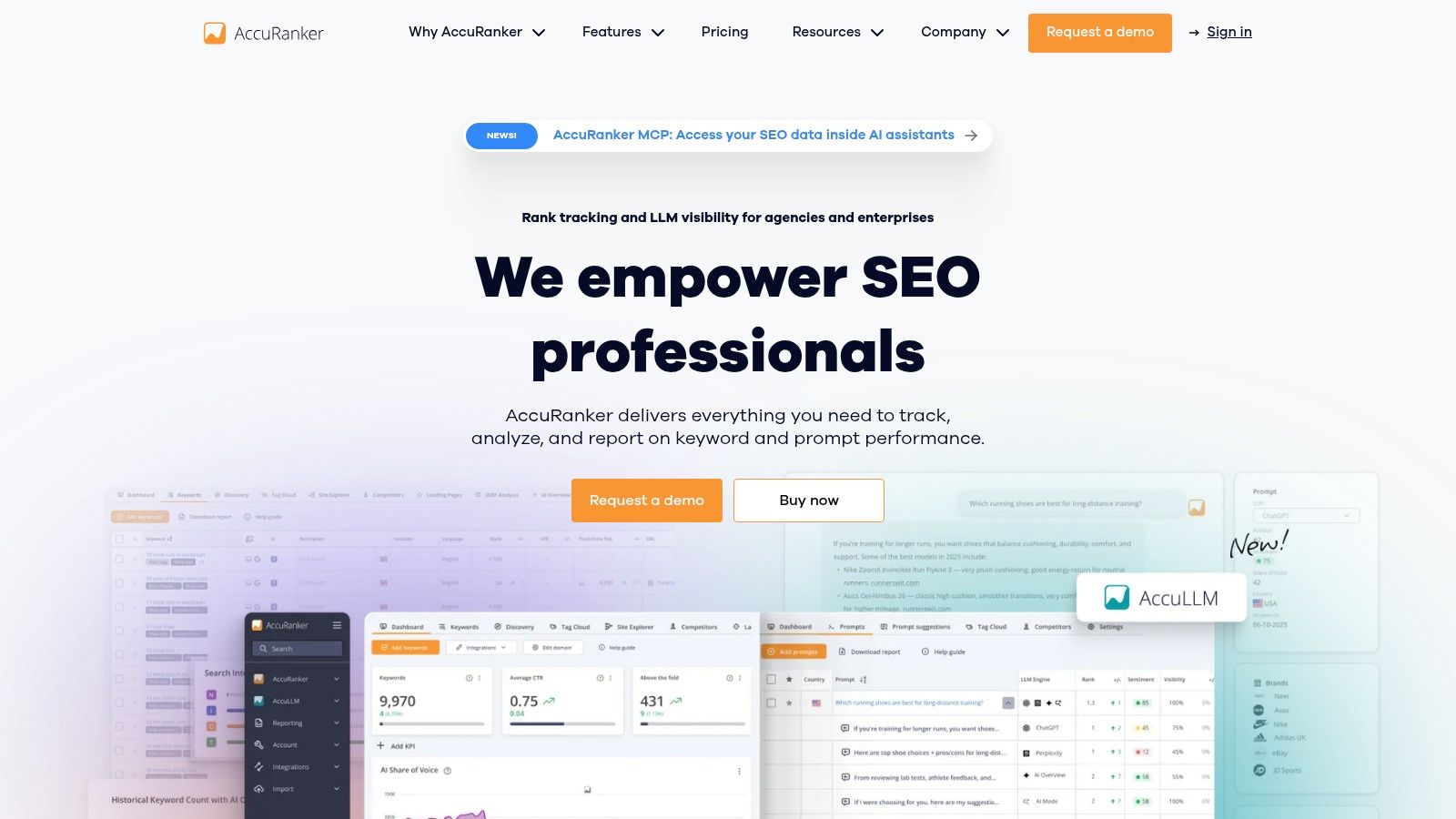
The logic is simple. A specialist tracker is easier to justify when you're managing very large keyword portfolios and need the platform to refresh quickly without turning reporting into a waiting game. AccuRanker's on-demand checks and granular targeting make it useful for agencies that don't want to compromise on speed. It also scales in a way that matches enterprise rank tracking's current reality, where the job is not just ranking lookups, but monitoring visibility across devices, locations, and search features.
Why it's agency-friendly
The white-label angle is a real benefit. Agencies live and die on presentation, and a clean client-facing report is often what keeps a retention conversation calm. API access also matters more than many buyers admit, because rank data is only valuable if it can travel into dashboards, client portals, and internal BI workflows.
The downside is that it's still a focused product. You'll need separate tools for audits, research, and content operations, and costs grow with keyword volume. That's not a flaw, it's the usual specialist trade-off. If your agency already has a broader SEO stack and just needs a strong enterprise tracker to anchor reporting, AccuRanker is easy to understand and easier to operationalize than a sprawling suite.
9. Advanced Web Ranking
Advanced Web Ranking is a strong case for choosing a specialist tracker over a large SEO suite. It suits agencies that need predictable account planning, client-ready reporting, and enough scale to manage multiple portfolios without adding unnecessary platform complexity.
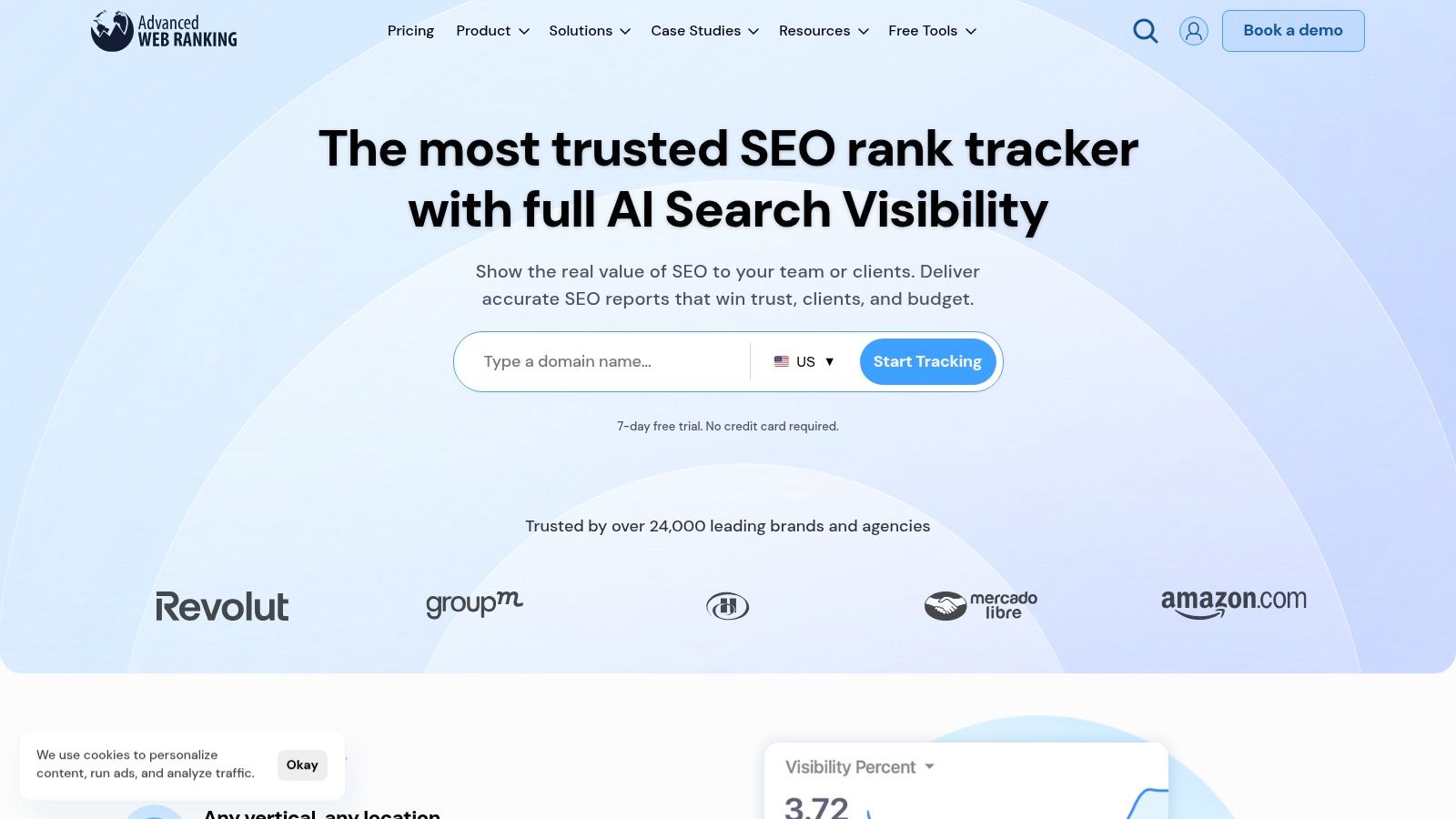
Agency economics are the main reason to examine AWR closely. Enterprise tracking costs can rise as you add clients, search engines, locations, devices, and refresh frequency. AWR's keyword units model makes those choices visible during planning, which helps teams estimate the cost of a growing portfolio before procurement begins. BigQuery connectivity also gives agencies a practical route for sending ranking data into wider analytics and reporting workflows.
The operational upside
AWR fits agencies that need ranking data to feed recurring reports without extensive manual work. Its reporting tools and white-label options support client-facing updates, so account teams do not have to rebuild the same presentation for every account or reporting cycle. That matters when several specialists share delivery responsibilities.
The trade-off is setup discipline. Units provide flexibility, but agencies still need to map each client's engines, locations, keyword groups, and refresh requirements before choosing a plan. A careless configuration can make a seemingly reasonable portfolio more expensive than expected.
For agencies measuring AI search visibility alongside traditional rankings, AWR is also relevant to the shift toward answer-engine optimization. Its comparison of enterprise rank tracking with Ahrefs discusses AI brand visibility across LLMs (AWR). Teams evaluating that broader measurement approach can also review our guide to historical data software. I would still treat AWR primarily as a rank tracker, then pair it with a separate AEO measurement process where needed.
Practical rule: if your agency wants specialist tracking with clear keyword-scale economics and established reporting, AWR deserves a serious trial.
The main limitation is that the units model rewards careful forecasting. Confirm the required scope, cadence, exports, and client structure before committing. Agencies that do this planning upfront are more likely to get predictable operating costs from the platform.
10. Similarweb Rank Tracker
Similarweb's rank tracking makes the most sense when you want keyword positions inside a broader market-intelligence story. That's useful for agencies that report beyond SEO, because clients often want traffic context, category context, and competitive context in the same deck.
The platform inherits Rank Ranger's legacy and now sits inside Similarweb's wider SEO and market intelligence suite. For agencies, the interesting part is the API story. When rank data can flow into BI pipelines, it becomes easier to combine SEO visibility with traffic signals and competitive research instead of treating them as separate conversations.
Where it helps
This is a strong fit for teams that already use Similarweb or want rank tracking tied to a larger view of the market. It can be especially handy in reporting meetings where stakeholders want to know not just “where are we ranking?” but “how does that tie to traffic movement and category position?”
The main caution is migration and packaging. Since the Rank Ranger acquisition, historical retention and plan structure deserve careful review before you sign. I'd ask for confirmation on data retention, export behavior, and any limits that might affect a long-running agency account. That friction doesn't make it a bad option, it just means procurement needs more diligence than usual.
For tracking-only teams, the suite may be broader than necessary. For agencies that want rank data inside a market-intelligence environment, it's a credible option.
11. Dragon Metrics
Dragon Metrics is a smart pick when international coverage and value at scale matter more than brand recognition. Agencies working across languages, engines, and regions often care less about marketing polish and more about whether the tool can handle the actual workload without blowing up the budget.

Its strongest appeal is multi-engine flexibility. Verified coverage in this category matters because enterprise rank tracking has become a broad observability problem, not a simple keyword checker. Dragon Metrics is built for global SEO programs that need to track across multiple engines and markets, and that can be the difference between a useful reporting stack and a pile of partial data.
Why agencies should care
The platform's public pricing is a real advantage, because procurement friction falls fast when a buyer can see the structure instead of chasing a custom quote. That's useful for agencies trying to forecast margins on multi-client retainers. It also scales to very large keyword sets, which is what you want when a client has dozens of markets and leadership still expects one view.
The downside is ecosystem depth. Smaller platforms usually don't have the same support footprint or surrounding marketplace as the biggest enterprise suites. That means you may need separate tools for deep audits or content operations. Still, if the assignment is global tracking with strong value at scale, Dragon Metrics earns a hard look.
Top Enterprise Rank Tracker Comparison
Tool | ✨ Unique features / AI focus | 👥 Target audience | Coverage & capabilities | 💰 Pricing & value | ★🏆 Strengths |
|---|---|---|---|---|---|
Llumo | AI answers, citation tracking, share of voice, AEO visibility ✨ | Agencies and teams measuring AI search visibility alongside SEO 👥 | Tracks AI answers, citations, competitive visibility, and supports broader reporting workflows | 💰 Custom pricing | ★★★★ Strong AEO visibility layer |
STAT Search Analytics (Moz) | Pixel-depth SERP fidelity; large-scale rank tracking ✨ | Agencies & enterprises with massive keyword sets 👥 | Daily high-volume tracking, deep SERP-feature data | 💰 Sales-led / Premium | ★★★★🏆 Scale & SERP accuracy |
seoClarity | Enterprise SEO + ArcAI AEO modules; BI-style analysis ✨ | Enterprise SEO teams seeking single source of truth 👥 | Daily ranks, unlimited competitors, AI content tools | 💰 High; published baseline guidance | ★★★★🏆 Enterprise reporting |
BrightEdge | Data Cube keyword intelligence; integrated analytics ✨ | Global enterprises with integrated workflows 👥 | Keyword research + rank tracking + SOV & integrations | 💰 Premium (custom) | ★★★★ Mature enterprise ecosystem |
Conductor | Unified AEO + SEO workflows; content ops & APIs ✨ | Enterprise content & SEO teams 👥 | AEO + SEO reporting, integrations, tiered quotas | 💰 Enterprise pricing (custom) | ★★★★ Unified platform approach |
Semrush Position Tracking | Part of broad SEO suite; AI Overviews in enterprise AIO ✨ | SMB -> Enterprise (scalable) 👥 | Daily positions, SOV, SERP feature & AI overview tracking | 💰 Public plans with caps; enterprise add-ons | ★★★★ Fast time-to-value |
Ahrefs Rank Tracker | Tight backlink + rank integration; clear UI ✨ | Brands needing rank + link insights 👥 | Global tracking (190+ locations), click-share context | 💰 Premium tiers; enterprise via vendor | ★★★★ Strong backlink context |
AccuRanker | High-refresh cadence, on-demand checks, white-label ✨ | Agencies & teams prioritizing speed/refresh 👥 | Daily & on-demand updates, SOV, API & reporting | 💰 Transparent, scalable pricing | ★★★★★🏆 Speed & transparent pricing |
Advanced Web Ranking (AWR) | Flexible "units" model, BigQuery connector ✨ | Enterprises optimizing cost/frequency 👥 | Flexible schedules, market-share metrics, integrations | 💰 Very cost-efficient at high volume | ★★★★ Cost-efficient at scale |
Similarweb Rank Tracker | Rank + market intelligence integration; BI API ✨ | Enterprises needing rank + market intel 👥 | Daily trends, competitor views, Rank Tracking API | 💰 Custom enterprise packaging | ★★★★ Strong market-intel integrations |
Dragon Metrics | Multi-engine international coverage; transparent pricing ✨ | Global SEO programs & multi-market teams 👥 | 9+ engines, scales to ~1M keywords, API & reporting | 💰 Good value at scale (public pricing) | ★★★★ Great global/multi-engine value |
Build a Stack That Matches the Work
The right enterprise rank tracker depends on what your agency does every week. If refresh speed, SERP fidelity, or international coverage is the main problem, choose a specialist tracker first. If audits, content, links, and reporting need one operating layer, a suite will usually be a better fit, even if it takes longer to configure.
I'd be even more specific for agency teams. Use a specialist when client reporting needs clean exports, fast updates, and strong location logic. Use a suite when your analysts need to move from keyword research to monitoring to diagnosis without stitching together three different logins. And when clients also want prompt-level mentions, citations, competitor share of voice, and AI answer visibility, add an AEO platform such as Llumo so you're measuring the surfaces where buyers are discovering brands now.
Before signing any enterprise agreement, test representative client portfolios instead of a toy dataset. Make sure the tool handles your permissions model, exports cleanly into the reporting stack you already use, and doesn't hide the true cost behind keyword caps or usage surprises. The best buying decision here is usually the one that fits your workflow with the least internal drag, not the one with the biggest feature list.
Llumo helps agencies measure how brands appear inside AI answers, not just in classic SERPs. If you need prompt-level visibility, citations, and share of voice alongside enterprise rank tracking, visit Llumo and see how it fits into your reporting stack.