
The cheapest request isn't automatically the best SERP API choice. A low unit price can become expensive if the endpoint returns shallow data, forces you to buy unused credits, or can't reproduce the locations, devices, and SERP features your workflow needs.
The practical decision is about the job: Google-only access or multi-engine coverage, live collection or queued jobs, simple rank checks or structured SERP parsing, classic results or AI Overviews and answer-engine data. Billing matters just as much. A scheduled agency tracker has different requirements from an AI agent that needs fast bursts of search context.
This comparison focuses on those trade-offs, including implementation effort, throughput, parser depth, legal exposure, and operational fit. The providers below aren't interchangeable, even when they all return JSON.
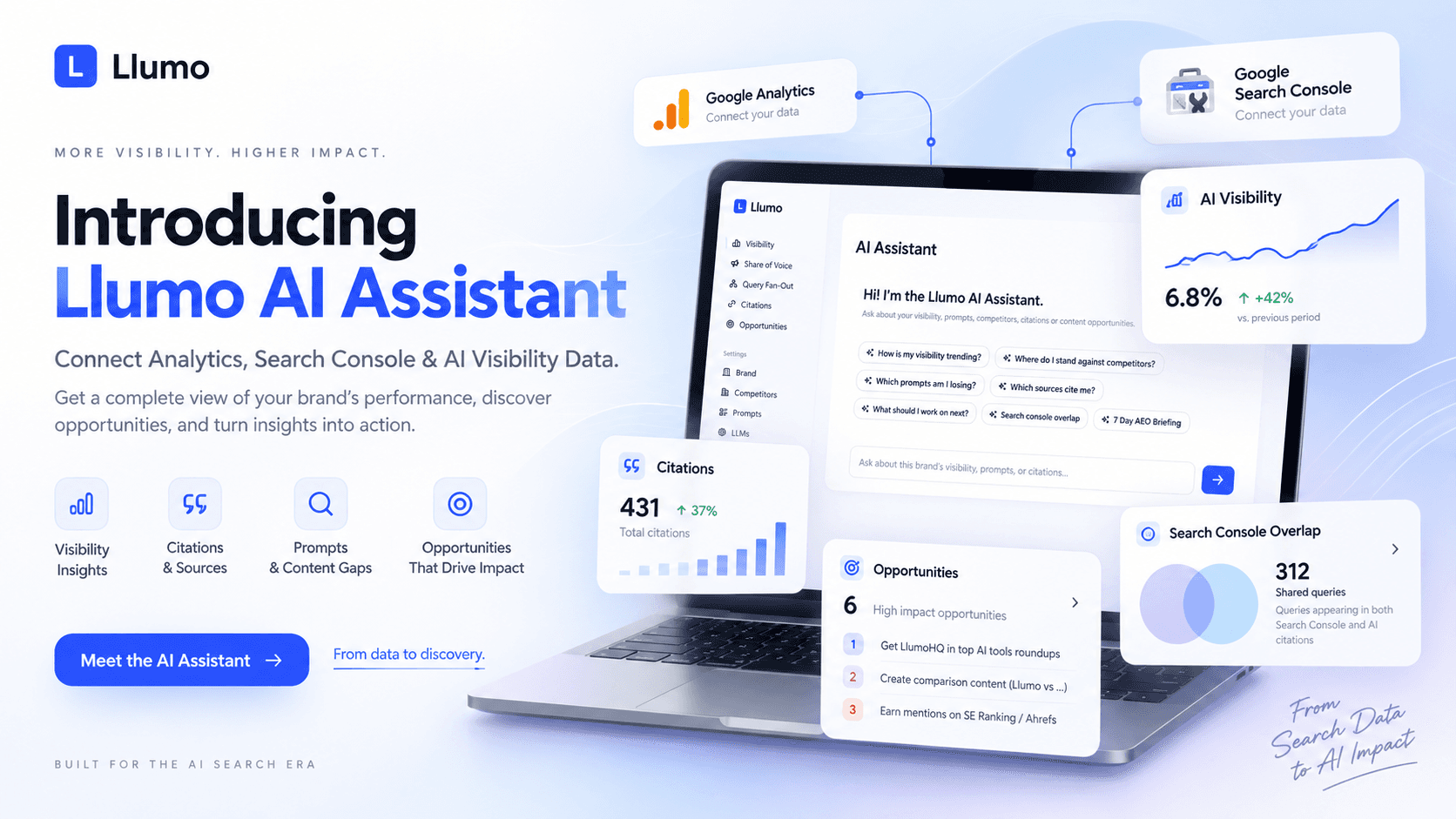
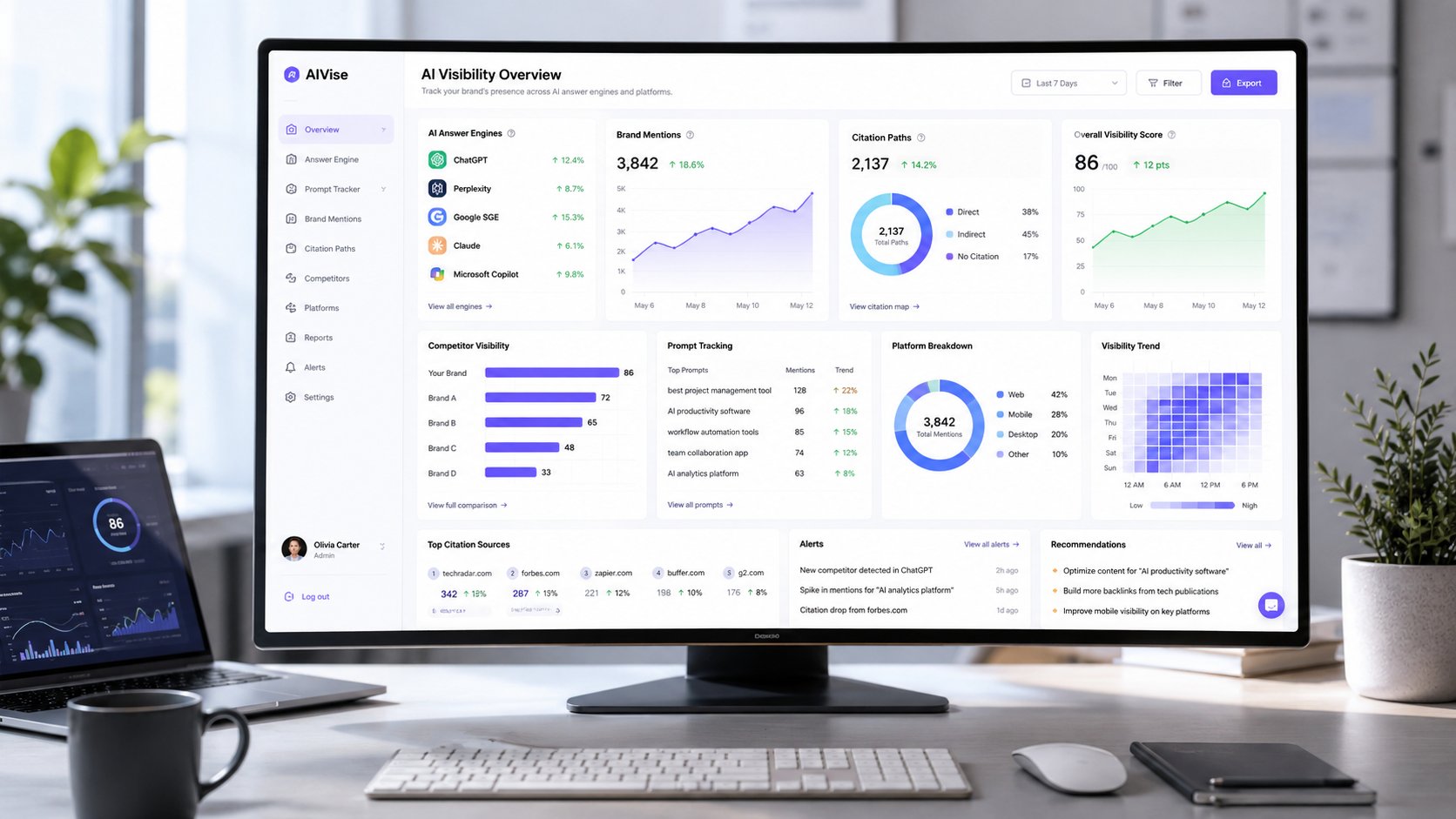
Llumo sits one layer above raw collection when the goal is AEO visibility, not just rankings. It can help teams measure brand mentions, citations, share of voice, competitor movement, and prompt-level visibility across AI answer engines, while the SERP API supplies the underlying search observations where needed.
1. Cloro.dev
Cloro.dev is a strong option for teams that want a developer-friendly SERP API with clean outputs, straightforward implementation, and a product that is clearly built with AI workflows in mind. It fits especially well when the goal is to pull structured search context into apps, agents, or SEO automation without adding a heavy integration layer.
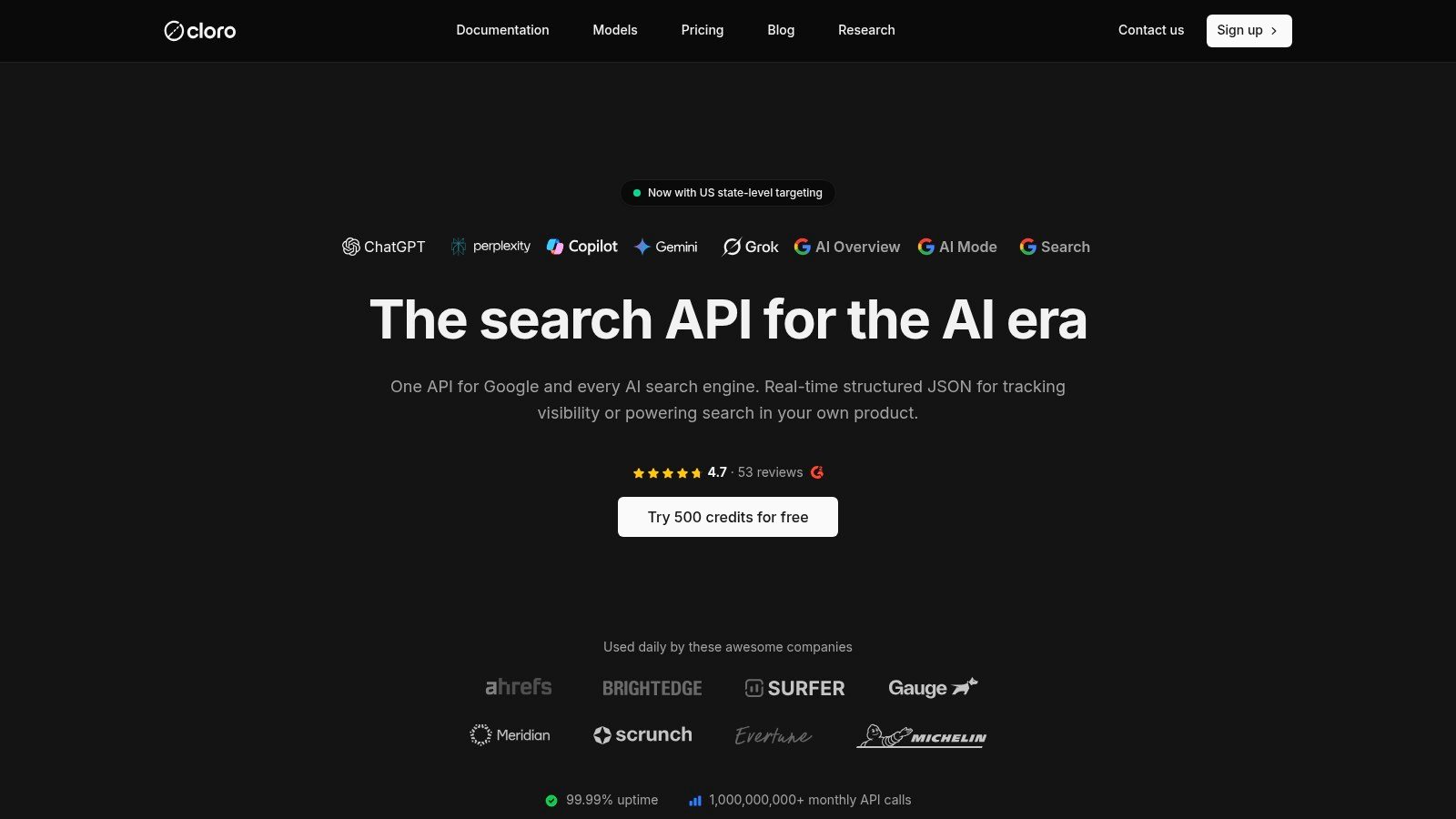
That matters for modern SERP and AEO work. In many workflows, the requirement is not only to fetch rankings, but also to capture the search environment around them in a format that is easy to pass into downstream systems. A provider that keeps the request model simple and the response usable can reduce both engineering overhead and post-processing time.
Where it fits
Cloro.dev suits teams that want fast integration, developer-friendly access, and a practical SERP data layer for AI or SEO products. It is a sensible starting point for builders who care about implementation speed as much as endpoint breadth.
Strong fit: AI-assisted search workflows, lightweight rank monitoring, developer tools, and app integrations.
Watch closely: teams should still validate location coverage, parser depth, and scale limits against their exact production use case.
Practical trade-off: a simpler experience can be a strength, but enterprise buyers may still want to compare governance, throughput, and advanced SERP feature coverage against larger vendors.
For teams that want to move quickly, the main appeal is simplicity. The key question is whether the available SERP depth and controls match the markets, devices, and result types the workflow depends on.
Practical rule: If Cloro.dev is your first choice, test the exact queries, locations, and SERP features your application needs before standardizing on it.
2. SerpAPI
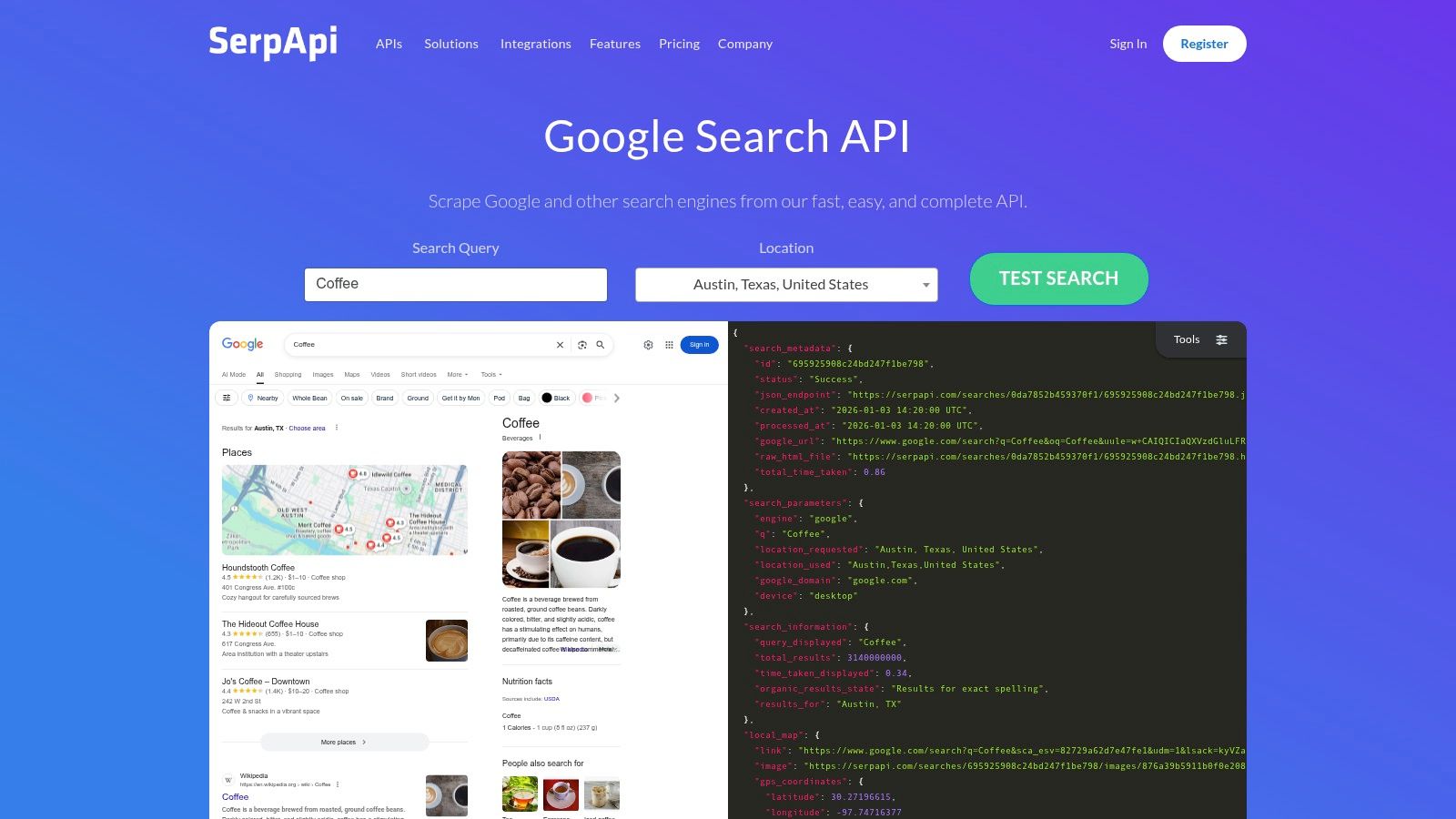
SerpAPI is the safest starting point when you need a mature, structured search interface and broad coverage across Google products and other engines. Its Google Search API supports extensive parameters and JSON, HTML, and Markdown outputs, while dedicated endpoints target Google AI Overviews and AI Mode.
That matters for AEO workflows. A conventional organic result parser tells you where a page ranks. A richer endpoint can also expose the result features surrounding that page, including local results, ads, shopping elements, snippets, and answer surfaces. Markdown output is particularly useful when search results need to move into an LLM or agent pipeline without another formatting layer.
Where it fits
SerpAPI suits brands and agencies that need location controls, language coverage, mature parsers, and operational controls in one service. Its Locations API and throughput tooling are useful when a tracker has to reproduce searches across markets rather than run a single national query.
Strong fit: AI Overview monitoring, enterprise rank tracking, multi-vertical Google collection, LLM-ready extraction.
Watch closely: subscription pricing can be less attractive than credit or top-up models at high volume.
Risk consideration: legal scrutiny around Google SERP collection remains a procurement issue, even when the technical product is strong.
For agencies building a repeatable rank tracking system for agencies, the main attraction is consistency. The main question is whether the extra parser depth and enterprise controls justify the recurring commitment.
Practical rule: Test the exact AI Overview, device, and location combinations your clients care about. A broad feature list isn't the same as reliable coverage for your prompts.
3. DataForSEO SERP API
DataForSEO is built for teams that treat SERP data as an operational data layer rather than a handful of interactive lookups. Its modular APIs cover Google organic results, News, Maps, Jobs, and other verticals, with separate live and queued collection modes.
The distinction between live and queued work is important. Live requests make sense for an application waiting for an answer. Standard or Priority tasks are better for scheduled rank tracking, historical snapshots, and large keyword inventories where the pipeline can accept asynchronous processing. DataForSEO also exposes AI Mode and AI Summary endpoints, which gives AEO teams a path beyond traditional blue-link monitoring.
Cost control versus setup effort
The provider bills per SERP page, and parameters such as depth and operators can affect the final cost. That transparency is useful, but it means the finance model needs to reflect the actual request configuration, not just the headline endpoint price.
Best fit: scheduled rank tracking, bulk keyword intelligence, multi-vertical SEO platforms.
Useful control: choose live collection for urgent checks and queued collection for routine workloads.
Implementation trade-off: the number of endpoints and configuration options creates more integration work than a simple REST search call.
Its market-analysis infrastructure illustrates why scale matters in this category. DataForSEO describes a Labs API environment built around billions of keywords and millions of SERPs, while reporting a proprietary database containing over 4.5 billion keywords, 3.5 billion collected SERPs, and 75 billion keywords collected in its 2025 numbers according to its market analysis documentation. Those figures don't guarantee that every niche query will be useful, but they show the historical depth expected from a serious SEO data supplier.
If your team can design a queue, retry failed tasks, and store results cleanly, DataForSEO is one of the more practical choices for predictable scheduled collection.
4. Bright Data SERP API
Bright Data's SERP API makes sense when the requirement extends beyond Google and the team expects enterprise-grade collection infrastructure. It covers Google, Bing, Yandex, DuckDuckGo, and other engines, returning structured organic, paid, local, and shopping results.
The platform's breadth is useful for international brands that need search-engine parity, not just a Google snapshot. OpenAPI specifications can shorten the path from evaluation to implementation, while guidance for agent and LLM workflows addresses a newer requirement: returning data in a form that an automated system can use without extensive post-processing.
Why teams choose it
Bright Data combines the endpoint with a proxy and reliability stack. That can reduce the amount of infrastructure your engineers need to operate, particularly when requests involve difficult locations, newer SERP elements, or sustained collection.
Strong fit: multi-engine competitive intelligence, international programs, high-volume extraction, agent workloads.
Data advantage: structured fields can include organic, ads, local, shopping, and AI Overview signals.
Integration trade-off: the platform can feel heavy for a small rank tracker that only needs Google organic positions.
AIMultiple's testing reported Bright Data at about 220 structured fields per query, described as roughly twice the market average, which is relevant when AEO workflows need snippets, People Also Ask, organic listings, and source metadata rather than rank positions alone in its SERP scraper API comparison.
Teams comparing vendors through a broader competitive intelligence platform lens should include proxy reliability and governance in the evaluation. Bright Data is rarely the simplest option, but it can be a rational choice when a fragmented collection stack would cost more to maintain.
5. Oxylabs SERP Scraper API
Oxylabs SERP Scraper API suits teams that need live SERP collection and control over difficult page types. It returns HTML or structured JSON from major search engines, parses organic and advertising results, and supports JavaScript rendering when standard requests cannot capture the required elements.
Its billing is based on results, rather than just counting searches. That can suit extraction jobs where query depth changes, but rank-tracking teams must translate result volume into a predictable monitoring cost. Collecting several pages has a different cost profile from retrieving only the first page, so model expected depth before committing.
The useful trade-off
Proxy and CAPTCHA handling reduce the infrastructure required for high-success-rate collection. JavaScript support helps with heavier result pages, while batch scraping fits grouped workloads better than one-request-at-a-time agent activity.
Best fit: high-volume extraction, JavaScript-heavy collection, HTML passthrough, and teams monitoring varied SERP features.
Pricing advantage: result-based billing can work when collection depth varies by query.
Budget risk: engine-specific rates and result accounting make forecasting less intuitive.
The provider documents a free trial of up to 2,000 results for its SERP scraper. Use it to test schema coverage, parsing effort, and storage requirements, not only whether a sample query succeeds.
Oxylabs fits a data or agency engineering team better than a marketer seeking a finished visibility dashboard. It can support high-volume extraction and bursty workloads, but your team will still own normalization, monitoring, and the AEO reporting layer. For AI-overview and answer-engine visibility, treat it as the collection layer rather than a complete Llumo-style visibility product.
6. Scale SERP
Scale SERP from Traject Data focuses on a straightforward problem: collecting Google SERPs at scale without turning every scheduled run into a custom infrastructure project. Its Batch API queues large workloads, and its location and device controls support local and rank-tracking use cases.
That Google focus is both its strength and its limitation. If your program measures positions, Maps results, and Place details across defined locations, a focused API can keep the implementation clean. If the same pipeline must compare Bing, Yandex, or DuckDuckGo, you'll need another provider or a different platform.
A practical choice for scheduled tracking
Scale SERP's plan structure, overage handling, and batch workflow are easier to reason about when the team has a recurring keyword set. It also documents local, Maps, and Place Details examples, which helps agencies build location-sensitive reports without inventing their own request patterns.
Best fit: budget-conscious rank tracking, local SEO collection, queued Google workloads.
Good operational feature: batch requests separate collection from report generation.
Main limitation: fewer non-Google endpoints than broad multi-engine providers.
The Batch API is also relevant to query fan-out workflows, where one user question produces multiple related searches. If you're building query fan-out tracking, make sure the batch model preserves the relationship between the original prompt, generated queries, locations, and returned SERP features.
Scale SERP won't replace an AI visibility platform. It can, however, provide a clean Google collection layer for teams that already know which keywords and locations they need to monitor.
7. Zenserp
Zenserp is aimed at teams that want Google SERP collection and adjacent keyword utilities without assembling several small tools. Alongside Google SERP types and batch endpoints, it offers AI Overview and Answer Engines API access for ChatGPT, Perplexity, and Gemini.
That combination makes Zenserp more relevant to AEO teams than a conventional Google-only endpoint. You can compare a keyword's search result environment with the answer-engine output connected to the same research program, although you should still validate whether the returned fields are deep enough for your visibility model.
A useful middle ground
Zenserp publishes a plan ladder and includes keyword volume, CPC, and bulk index-checking utilities. Those extras can help a small SEO product or agency reduce the number of vendor accounts involved in basic research.
Strong fit: teams combining Google SERP data with answer-engine checks.
Convenience: batch endpoints and related keyword utilities support compact workflows.
Constraint: AI Overview and Answer Engine access is limited to mid and upper plans.
Coverage gap: the service is primarily Google-focused rather than a full multi-engine layer.
The historical direction of the market supports this broader design. Semrush describes SEO API access for domain, keyword, and backlink analytics, a Trends API for raw clickstream data, and a Keyword Reports API v4 that is in Early Access and billed at 20 API units per request in its API overview. It also discusses AI search traffic from ChatGPT, Gemini, and Copilot, showing how SEO APIs are moving toward visibility measurement across search and answer surfaces.
Zenserp is worth testing when the workflow needs both worlds, but don't assume that one vendor's answer-engine endpoint replaces dedicated prompt-level monitoring.
8. SearchApi.io
SearchApi.io takes a Google-centric approach but covers a wide set of verticals, including News, Jobs, Local, Lens, and Maps. Its AI Mode and AI Overview-like endpoints make it relevant when a standard organic parser no longer captures the result environment that matters to the business.
The provider's pay-per-success model is the standout procurement feature. It can reduce wasted spend from unsuccessful collection attempts, while throughput tiers give larger teams a way to plan capacity. The commercial model is easier to understand when the team tracks successful results separately from attempted requests.
Where legal risk enters the buying decision
SearchApi.io also presents a Legal Protection Guarantee, which may matter to compliance-minded buyers. That language shouldn't end the review. Procurement should still examine the contract, coverage boundaries, jurisdiction, acceptable-use terms, data retention, and what happens when a search engine changes its policies.
Best fit: Google vertical coverage, risk-sensitive procurement, pay-per-success budgeting.
Useful capability: AI Mode and broad Google product endpoints.
Limitation: Google-centric coverage isn't enough when engine parity is a core requirement.
A recent discussion of SERP API procurement framed the choice as the risk profile you're buying, not just the parser or price in this industry discussion. That is the right lens for regulated brands and enterprise agencies. The cheapest request can carry higher internal review costs if legal, security, and data-governance questions remain unanswered.
9. Serper
Serper targets developers who need a fast Google SERP endpoint with minimal integration work. Its REST interface is straightforward, location controls are available, and larger credit packs can support sudden demand from agent workflows.
Its credit model suits irregular workloads. An AI agent can issue a concentrated batch of searches and then sit idle, so buying credits as needed may fit better than reserving a fixed monthly allowance. Teams still need to monitor consumption, expiry, and remaining balance.
A practical choice for bursty agent workloads
Serper fits applications where low integration effort and responsive Google results matter more than multi-engine coverage or deep historical storage. In one independent comparison, it recorded 2.5 seconds P50 and 4.6 seconds P95, with an estimated cost of about $25 per 1,000 requests from the benchmark's SERP API results. Treat those figures as test-specific. Validate performance with your own locations, devices, concurrency, and response depth.
Best fit: bursty LLM agents, Google-only SEO tools, and fast prototypes.
Integration advantage: a simple REST shape can get the first request running quickly.
Coverage limitation: it does not provide multi-engine parity.
Billing concern: credit validity and balance require active monitoring.
For scheduled rank tracking, agencies comparing several search engines, or teams building a detailed historical dataset, another provider may reduce future rework. Serper makes more sense when an application sends focused questions to Google in bursts and returns parsed results to an agent with a small integration surface. It can also support answer-engine experiments, but teams evaluating AI-overview visibility may need a dedicated AEO layer such as Llumo rather than another general SERP endpoint.
10. ScrapingBee Google Search API
ScrapingBee's Google Search API is part of a broader web-scraping platform, which changes its value proposition. You can use a dedicated Google Search endpoint for SERP collection while also relying on proxy infrastructure, JavaScript rendering, geotargeting, and AI extraction for other web tasks.
That consolidation helps teams with mixed requirements. A product might collect Google results, open competitor pages, extract structured fields, and feed both datasets into one processing pipeline. The trade-off is credit accounting. Google requests consume more credits than basic HTML requests, and rendering or premium proxy options can change the effective cost again.
Choose it for breadth, not just rank checks
ScrapingBee works best when SERP collection is one part of a larger scraping system. If all you need is structured organic positions, a specialist SERP provider may offer clearer schemas and simpler cost forecasting.
Best fit: general scraping plus Google Search in one account.
Useful tooling: proxy handling, JavaScript rendering, stealth options, and AI extraction.
Budget issue: endpoint-specific credit costs make per-search modeling less direct.
Coverage constraint: this is primarily a Google search solution rather than a multi-engine research layer.
The implementation effort is moderate because the platform handles much of the difficult request plumbing. Your team still needs to record which endpoint, proxy mode, rendering option, and result depth generated each response. Without that metadata, finance and analytics teams may struggle to explain why two seemingly similar requests consumed different amounts of capacity.
11. Apify Google Search Results Scraper
Apify's Google Search Results Scraper is a marketplace actor rather than a single-purpose SERP endpoint. Teams start runs through the Apify API, then retrieve the resulting dataset programmatically. That model suits scheduled collection, repeatable batch jobs, and workflows that already use Apify for broader scraping.
The actor can set a run budget, configure proxies, and return structured data. Its documented output includes organic results, ads, People Also Ask, and related searches, giving SEO teams the fields needed for standard reporting and content research.
Choose the actor, not just the platform
Apify hosts multiple maintained actors, so parser depth, output schema, maintenance quality, and pricing depend on the selected implementation. That flexibility helps when a project needs a particular SERP feature or a custom extraction workflow. It also adds evaluation work before production.
Best fit: batch capture, automation-heavy teams, and controlled per-run budgets.
Operational advantage: proxy costs are included, and runs can be capped.
Integration trade-off: starting actors and fetching datasets require more orchestration than calling a single search endpoint.
Quality concern: results depend on the actor's implementation and upkeep.
Apify suits overnight rank collection or high-volume extraction better than real-time monitoring. Its actor workflow introduces latency and operational steps, which can be a poor fit for AI agents that need immediate responses. Teams building answer-engine or AI Overview monitoring may prefer a provider with dedicated parsing and faster request handling, while agencies with wider scraping requirements may accept the extra setup for one programmable platform. The benchmark figures cited earlier also place Apify behind faster options for latency-sensitive work.
Top 11 SERP APIs, Feature & Performance Comparison
Provider | Core Features | Quality (★) | Pricing (💰) | Best For (👥) | Highlights (✨🏆) |
|---|---|---|---|---|---|
Cloro.dev | Developer-friendly SERP API for AI and SEO workflows; clean structured outputs; lightweight integration | ★★★★ | 💰 Simple implementation focus, validate pricing against production depth and scale | 👥 Builders who want a practical SERP layer for apps, agents, and SEO tooling | ✨ Fast setup; 🏆 strong fit for lightweight AI integrations |
SerpAPI | Google SERP + dedicated Google AI Overview/AI Mode; LLM-optimized JSON/Markdown | ★★★★ | 💰 Subscription tiers (can be costly at scale) | 👥 AEO workflows needing clean, LLM-ready outputs | ✨ AI Overview endpoints; 🏆 mature parsers & enterprise controls |
DataForSEO SERP API | Live vs queued modes; per-SERP page billing; AI Summary endpoints | ★★★★ | 💰 Pay-as-you-go; very granular cost control | 👥 Scheduled tracking & predictable budgeting | ✨ Granular SLAs & pricing; 🏆 transparent cost models |
Bright Data SERP API | Multi-engine coverage; OpenAPI; proxy/reliability stack; 5K free/mo | ★★★★★ | 💰 Competitive unit economics; free tier for volume testing | 👥 Large-volume enterprises & reliability-focused teams | ✨ Robust proxy + infra; 🏆 best-in-class reliability |
Oxylabs SERP Scraper API | Real-time scraper, optional JS rendering, proxy & CAPTCHA handling | ★★★★ | 💰 Per-result pricing (engine-specific); free trial up to 2K results | 👥 Heavy JS-render extraction & high-success-rate scraping | ✨ JS rendering & CAPTCHA handling; 🏆 strong proxy network |
Scale SERP (Traject Data) | Batch API for queued workloads; location/device controls; clear tiers | ★★★★ | 💰 Low per-search rates; predictable billing | 👥 Budget-conscious rank tracking at scale | ✨ Batch/queued scale; 🏆 cost-effective per-search pricing |
Zenserp | Google SERP + Answer Engines API (ChatGPT, Perplexity, Gemini); keyword tools | ★★★ | 💰 Simple published plans; AI access on mid+ tiers | 👥 AEO teams wanting combined SERP + answer-engine signals | ✨ Answer Engines API + extras; 🏆 straightforward plans |
SearchApi.io | Multi-vertical Google endpoints; AI Mode; pay-per-success pricing | ★★★★ | 💰 Pay-per-success model; clear $/1k pricing | 👥 Compliance-minded teams needing legal assurances | ✨ Legal Protection Guarantee; 🏆 pay-per-success billing |
Serper (serper.dev) | Real-time Google SERP with location controls; credit bundles, high QPS | ★★★★ | 💰 Credit top-ups with expiry; aggressive unit pricing at volume | 👥 LLM agents and bursty high-QPS workflows | ✨ Fast low-latency responses; 🏆 high-QPS packs |
ScrapingBee Google Search API | General scraping platform with dedicated Google endpoint; proxy/JS options | ★★★ | 💰 Credit-based pricing (Google calls cost more) | 👥 Teams wanting one vendor for broad scraping + SERP | ✨ Broad scraping + AI extraction add-ons; 🏆 flexible credit ladders |
Apify Google Search Results Scraper | Marketplace actors; pay-per-SERP page with proxy included; API to run actors | ★★★ | 💰 Pay-per-page actor pricing; predictable per-run budgets | 👥 Batch-oriented teams & those needing marketplace choice | ✨ Marketplace actor variety; 🏆 proxy-included runs |
Choose the Data Layer That Matches the Job
Start with the workflow, not the vendor logo. For multi-engine parity, shortlist Bright Data, SerpAPI, or another provider that can return comparable structures across the engines your market requires. Google-only services can be excellent for a focused SEO program, but adding a second engine later often means a second schema, authentication system, retry policy, and billing dashboard.
For scheduled rank tracking, queued or pay-as-you-go models are usually easier to control than a permanently provisioned live endpoint. DataForSEO is designed around live and queued collection, while Scale SERP's Batch API suits large Google-focused jobs. Data depth still needs testing. Google's Programmable Search XML API returns no more than 20 results per request, even when num is set higher, and paging requires additional requests through start; its request length is capped at 2048 bytes, with query terms limited to 10 across the listed parameters in Google's XML results documentation. Google's Custom Search API returns only the first 100 results, which creates an operational ceiling for SERP-like systems that depend on it in the REST API documentation.
For bursty agents, fast credit access and simple REST integration can matter more than a broad feature catalog. Serper is aimed at that pattern. For richer AI-era extraction, SerpAPI, Zenserp, Bright Data, and SearchApi.io all provide paths toward AI Overview or answer-engine workflows, but the endpoint name alone isn't enough. Recent testing found AI Overview detection ranging from about 60% to 68%, with response times from roughly 1.7 seconds to 5.5 seconds and costs from about $1.16 to $25 per 1,000 requests, depending on the vendor and test conditions in this comparison of Google SERP APIs. Coverage is not a checkbox. It needs a representative test set.
Before signing a contract, run the same prompts through each candidate using the locations, devices, languages, depth, and SERP features your product will request. Record latency, timeout behavior, retries, partial responses, schema stability, and the cost of failed or deeper requests. Also test account ceilings. One documented plan offers 80,000 monthly requests at 15 requests per second for $40 per month, 800,000 at 50 requests per second for $300, and 3,000,000 at 150 requests per second for $1,000 across its tiers in its throughput documentation. Another provider documents free-account limits of one concurrent request, 10 requests per minute, 100 per hour, and 500 per day, applied across all API keys and endpoints in its account-limit FAQ.
Finally, separate raw collection from visibility analysis. A SERP API can tell you what appeared for a query. Llumo can turn AI-answer observations into a monitoring program with prompt-level mentions, citations, share of voice, competitor trends, response archives, query fan-out logs, and prioritized opportunities across supported answer engines. Its bring-your-own-provider-key model lets teams connect their own keys and pay underlying provider costs directly, rather than treating every AI response as an opaque bundled allowance.
If your goal is to understand whether a brand appears in ChatGPT, Gemini, Perplexity, Copilot, or Google AI Overviews, a generic SERP endpoint is only part of the stack. Use the API that matches collection, then use a visibility layer to organize what the answers say, which sources they cite, and what your team should improve next.
Llumo helps SEO and AEO teams monitor prompt-level brand mentions, citations, share of voice, competitor movement, and answer-engine visibility without forcing the SERP API to do the job of a monitoring platform. Connect your own provider keys, organize the resulting evidence across AI surfaces, and visit Llumo to see how the visibility layer can fit your workflow.