
You can be active everywhere and still miss the one place buyers are checking. The social team sees mentions, PR sees coverage, sales hears objections, and the dashboard still doesn't tell you whether your brand shows up when someone asks an AI answer engine a blunt comparison question.
That gap matters more now because brand mention tracking has moved from a niche awareness task into a wider measurement layer. The category behind it is already large and still growing, with one neutral industry source estimating the global social media listening market at USD 8.44 billion in 2024 and another at USD 9.2 billion in 2024, which tells you the work is no longer optional housekeeping, it's part of core marketing operations. It's also changing shape, because buyers don't just ask who's being talked about anymore, they ask who's being named, cited, and surfaced inside generated answers.
The Shift from Keywords to Conversations
Traditional monitoring was built around obvious signals. You watched for your brand name, your product names, maybe a misspelling or two, and you checked what surfaced in social posts, news, or review sites. That still matters, but it no longer reflects how people discover options in a category.
AI answer engines changed the surface area. A brand can dominate conversation on social media and still be absent from the answer a buyer gets when they ask a category question in ChatGPT, Gemini, Perplexity, or Google AI Overviews. That's because being described and being cited are not the same thing, and answer engines care about both the wording of the question and the source set they pull from.

What changed in practice
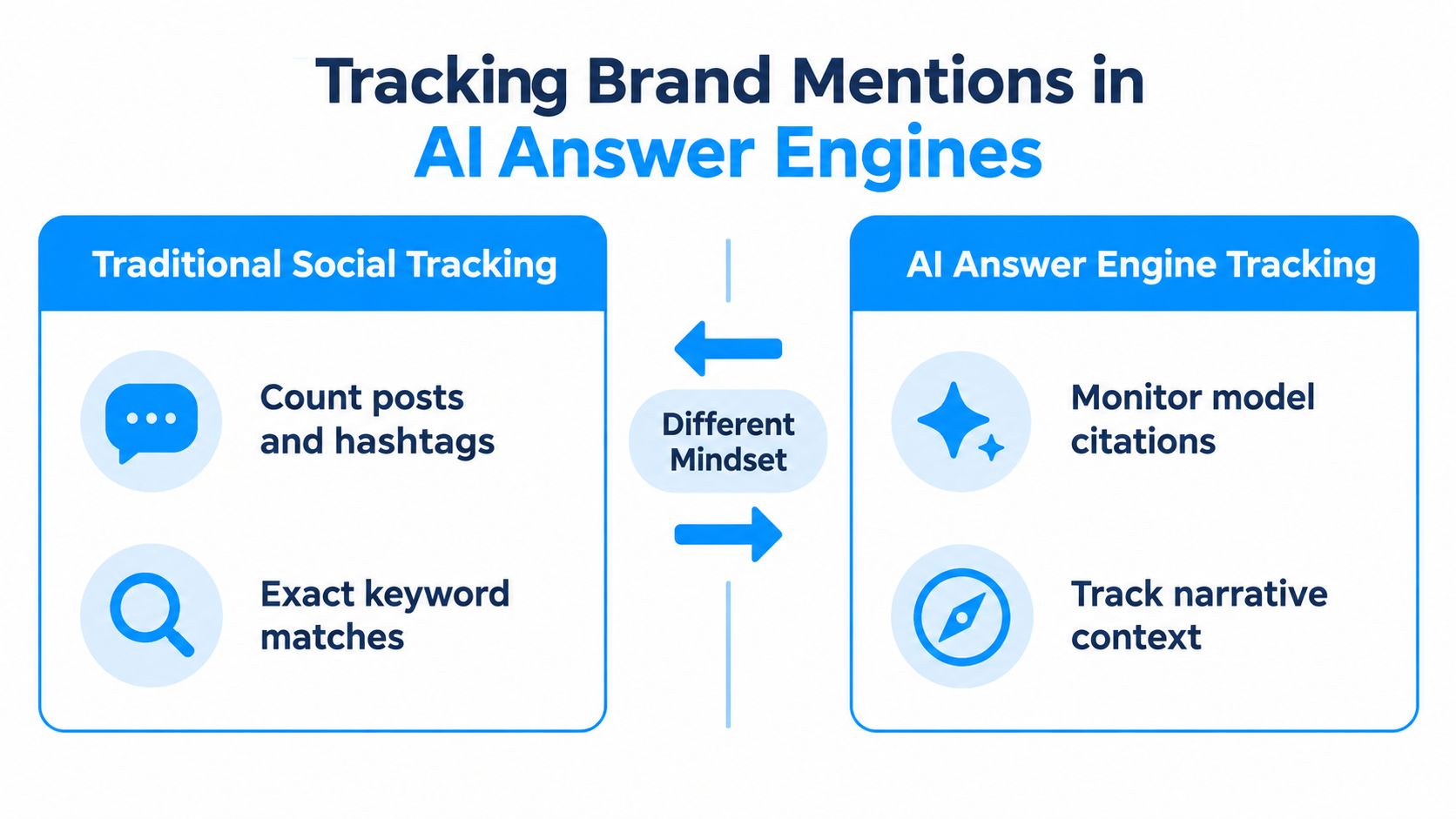
The old model tracked volume. The newer model tracks visibility in context. That means a mention on a niche blog, a forum thread, or a review page can matter more than a big social spike if that source feeds the kinds of pages and answers the engines reuse.
A useful way to think about it is this: social listening tells you what people are saying, but AI visibility tracking tells you whether those signals are being converted into answer presence. That's why a modern monitoring stack has to follow the conversation beyond branded queries and into category research prompts, comparison prompts, and unbranded buyer-intent questions.
Practical rule: if your reporting stops at “How many times were we mentioned?”, you're missing the more useful question, “Were we mentioned in the places and formats that answer engines trust?”
The shift also changes your competitor set. The brands that surface in AI answers aren't always the brands that dominate organic search or paid media. Sometimes the rivals that matter most are the companies that publish the clearest category explainers, gather the strongest third-party references, or get repeated in the sources AI systems already like to cite.
Setting Up Foundational Monitoring
Start with a wide net, not a clever one. Teams lose visibility because they track only the brand name and call it a day, which misses the untagged, off-platform, and misspelled mentions that tell you how the market really talks about you. A strong baseline covers your brand, product names, executive names, common misspellings, and competitor terms, then adds category slang and recurring phrases customers use when they describe the problem you solve.
The point isn't to create more noise. It's to make sure the data you collect can be compared over time, exported regularly, and filtered by source type. If a mention comes from an industry blog, a niche forum, a Reddit thread, or a review site, that context matters more than the raw count.
Build queries that match how people talk
Use alert terms that reflect real language, not just internal naming. Add the obvious brand terms first, then fan out into the language buyers use when they're undecided or comparison shopping. That includes competitor names, category phrases, and common misspellings that still show up in live conversations.
A few habits help this work in practice:
Capture variant spelling: People shorten, typo, and abbreviate names constantly, and those misses become blind spots if you ignore them.
Track competitor language: The fastest way to see positioning gaps is to compare how often rivals show up in the same threads or articles.
Filter for source type: A mention in a trade publication is not the same as a throwaway comment in a low-value thread.
Export on a schedule: You need historical trendlines, not just inbox alerts.
The best monitoring stacks also route different mention types to the right owner. Social hits don't belong in the same queue as backlink opportunities, and review mentions shouldn't sit in a general marketing inbox.
A clean baseline is boring, and that's good. Boring monitoring is what gives you dependable trend data later.
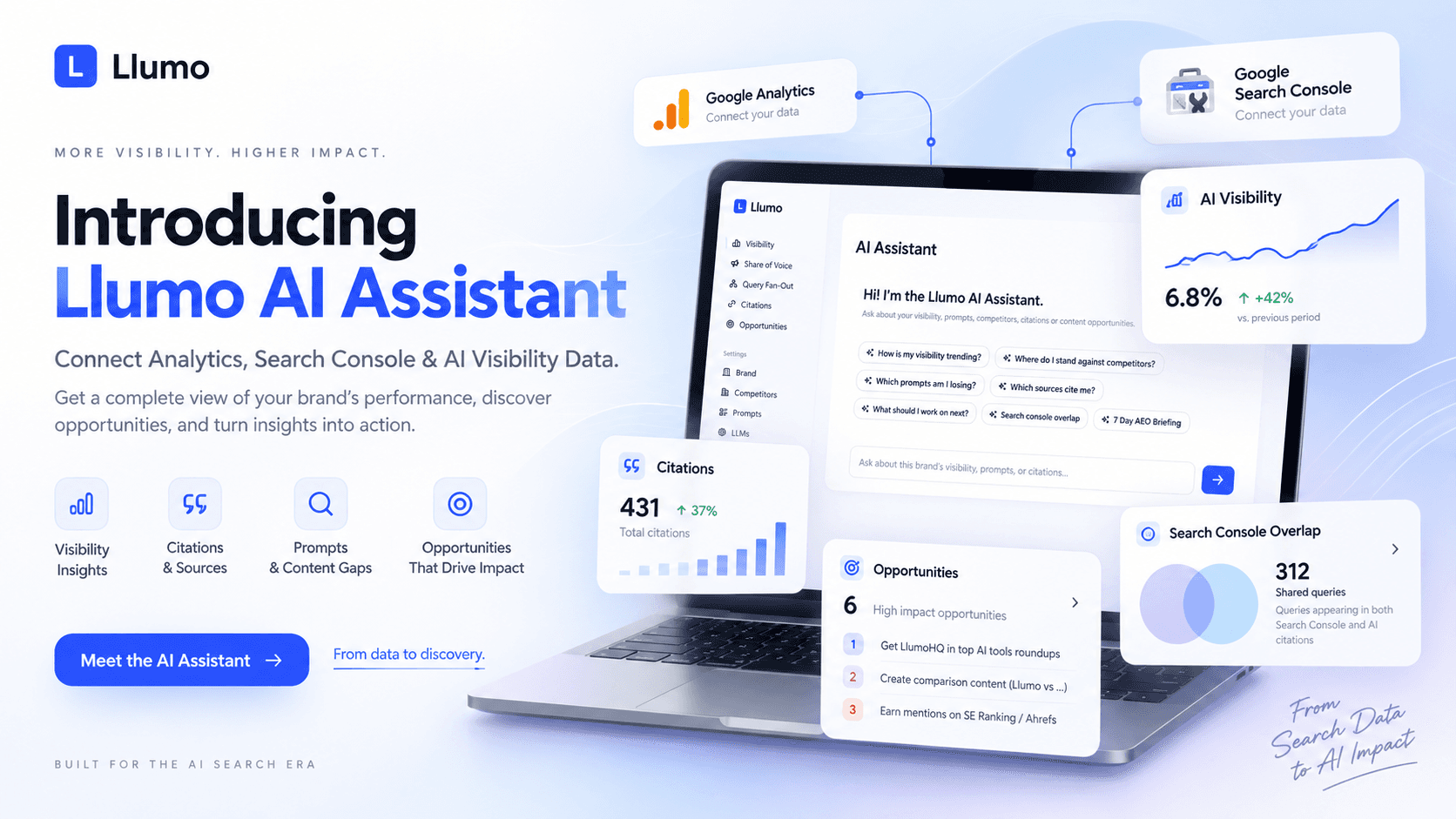
For teams building that foundation with software, a platform like Llumo's AEO tracking overview is one reference point for how modern visibility workflows are being organized around prompts, citations, and competitor movement.
Tracking Brand Mentions in AI Answer Engines
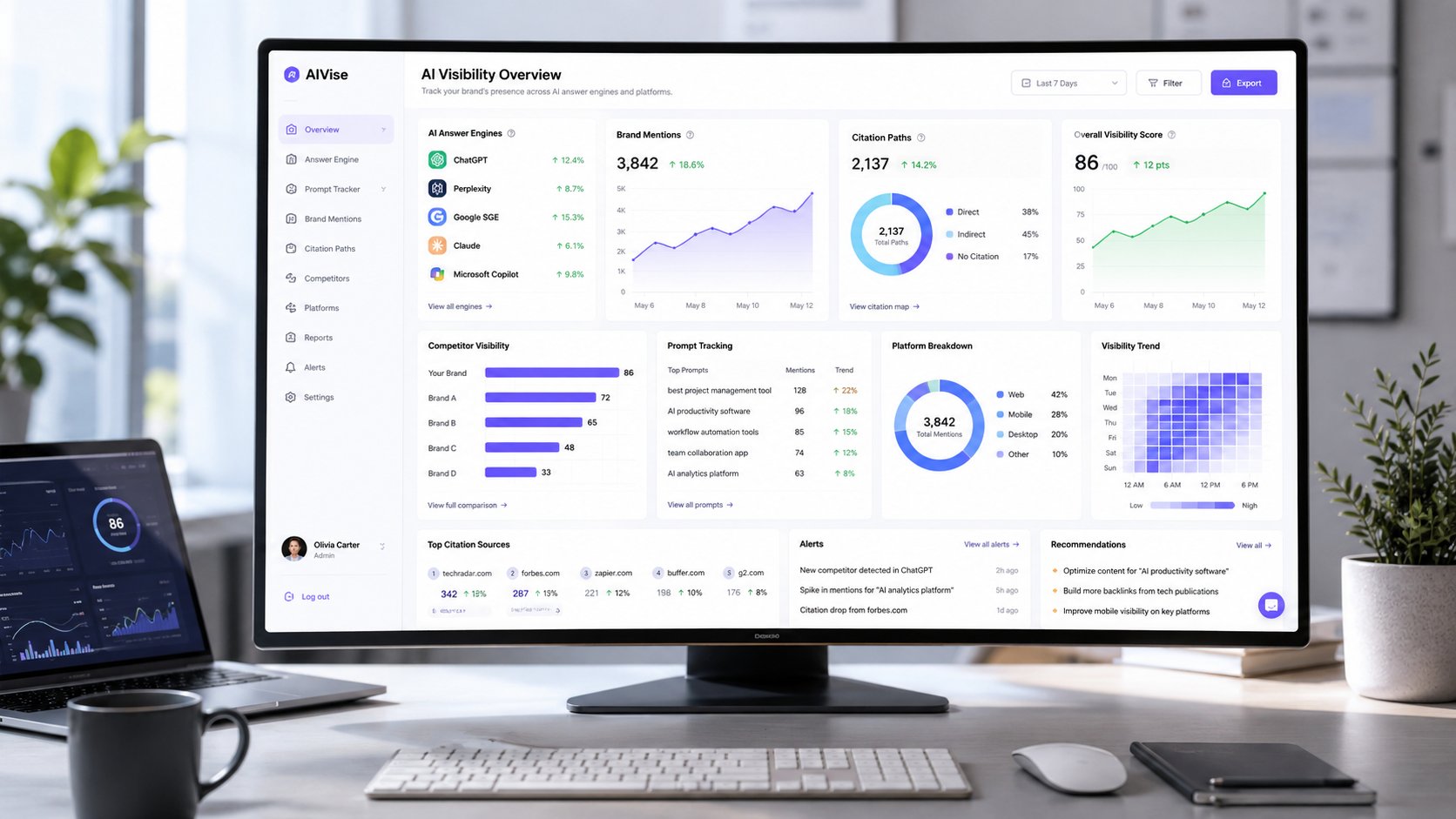
A client can be visible in classic monitoring and still be missing where buyers now ask questions. AI answer engines change the job. You are checking whether the brand appears in generated answers, whether it is named correctly, and whether the cited sources support the claim. That calls for a different archive from social listening or standard web alerts.
Track prompts, not just keywords
Start with a prompt library built from real buyer questions, comparison queries, and category research phrases. Use the language people already use on forums, review sites, and search suggestions, then add your own product terms and competitor names. Run those prompts across multiple surfaces, because citation behavior varies by engine and one surface cannot stand in for another.
That matters because citation patterns are fragmented. In Llumo's AI search tracking walkthrough, the focus stays on prompt-level visibility, which is closer to the way buying decisions surface in AI search. A brand can show up in one answer system and disappear in another, even when the wording of the prompt stays the same. That is the norm.
Read the archive like a competitive report
When you review prompt history, do more than mark whether your name appears. Log which competitors show up, which domains get cited, and whether the answer stays consistent from one engine to the next. That archive becomes a map of the competitive set in AI search, and it is often different from the set you use for SEO planning.
A practical structure is to score each result on three things, presence, citation, and context. Presence tells you whether you appear in the answer. Citation tells you whether the engine relied on a source. Context tells you whether the brand was framed accurately and in the right category language.
The gap between being described and being cited is the part teams miss. A multi-platform report found that brands could be described accurately when asked about directly and still fail to appear in category-research answers. That is a direct visibility problem. The brand is known, but it is not surfacing in the moments when buyers compare options.
Practical rule: if a competitor keeps appearing in prompts where you are missing, that is a visibility gap in the exact moments buyers are comparing options.
Turning Data into Actionable Insights
Monitoring only pays off when the findings change what your team does next. Once you've got both traditional and AI mention data, map it against your existing content, PR, and product pages. If you're mentioned but not cited, the problem is often source strength, clarity, or category alignment. If you're missing entirely, you may need new assets, better distribution, or stronger third-party references.
Look for the pattern behind the mention
The most useful question isn't “How many mentions did we get?” It's “Where did those mentions happen, and what did those sources look like?” If the same type of publication or forum keeps showing up in AI citations, that tells you what kind of material the engines are elevating in your space.
That's also where competitor monitoring becomes tactical. When a rival appears in a generated answer and you don't, inspect the source mix, not just the answer text. Their content may be more explicit, more quotable, or more connected to the category language the engine favors.
Turn trends into a monthly operating rhythm
A monthly review works better than a constant fire drill. Review share of voice across social, web, and AI surfaces, then sort the changes into three buckets, content updates, digital PR, and product proof. If you gained visibility in answer engines but lost momentum on social, that tells you something very different from a flat line across both.
A simple dashboard is enough, as long as it separates the surfaces cleanly. You don't want a blended total that hides the fact that AI visibility improved while social dropped, or that one competitor gained citations in a category you care about.
For teams that want a concrete share-of-voice framing, Llumo's share of voice guide is a helpful companion piece because it keeps the measurement logic tied to competitive comparison, not just raw volume.
Here's the operational test I'd use with a client:
If we're mentioned but not cited, fix the content that should be source-worthy.
If competitors appear and we don't, benchmark their source mix and update the pages that should answer the same query.
If our social buzz rises but AI presence doesn't, the content may be loud but not useful to answer engines.
The value lies not in the report itself, but in the loop it creates. Once your mention data points to specific content gaps, the team stops guessing and starts editing with intent.
Avoiding Common Monitoring Pitfalls
The biggest mistake is still the simplest one: relying on branded keyword alerts and assuming they capture the entire market. They don't. A lot of the conversation happens around category language, competitor comparisons, untagged mentions, and source formats that never trigger a narrow alert in the first place.
Don't treat all mentions as equal
A mention in a low-value thread and a citation in a respected industry publication are not interchangeable. Yet many dashboards flatten them into the same number, which makes the report easy to read and hard to act on. If your tooling can't separate source type or domain quality, you're looking at volume, not influence.
This matters even more in AI answer engines because source selection drives what gets surfaced. One major audit found AI Overviews appearing for 13.7% of 55,393 searches, with 61,212 citations measured across those results, and about 89% of cited claims were clearly or broadly supported by their sources. That means citation quality is measurable, and the sources behind your mentions can shape whether your brand is reused accurately or ignored.
Track the language buyers use
People don't search like your product team writes. They use comparisons, shorthand, edge-case phrasing, and category labels that never appear in a polished brand deck. If you don't expand monitoring to include competitor names, common misspellings, and related category phrases, you'll miss the exact prompts and discussions that shape purchase intent.
The next filter is source quality. In AI systems, being described accurately is not the same as being cited, and branded alerts rarely reveal that gap. Unbranded buyer-intent prompts do. They show which pages, reviewers, and industry sources are getting pulled into answers, and they make it obvious where your content is absent or too weak to be used.
A narrow alert set gives you comforting data and incomplete decisions.
The practical fix is broader coverage with stricter source review. Track the language buyers use before they know your name, then watch which sources keep appearing in the answers. That's how you find the blind spots your branded searches will never show.
Building a Long-Term Visibility Strategy
Treat brand mention tracking as a standing marketing system, not a project you finish. Product names change, new category terms emerge, campaigns create fresh language, and AI surfaces keep shifting. If your term list and prompt library stay frozen, your visibility data becomes stale faster than you realize.
Keep the system current
Review your query set regularly. Add new product terms, campaign slogans, and category phrases when they start showing up in real conversations. Revisit the tool stack too, because the coverage you need for web, social, and AI surfaces won't stay static.
The broader business case is straightforward. Brand mention tracking now supports reputation management, competitive intelligence, content planning, and AI visibility in one system. The teams that win are the ones that connect those signals to action, not the ones that just admire the dashboard.
A good long-term setup also keeps ownership clear. PR owns media and crisis references, SEO handles unlinked mentions and source opportunities, and content teams update pages that should show up in answer engines. Without that routing, even strong data sits idle.
If you want one place to manage AI visibility measurement, citations, and prompt-level tracking across answer engines, Llumo fits into that workflow as the layer that shows where your brand is mentioned, where it's cited, and where it's still missing. Visit it if you're ready to turn brand mention tracking into a real operating system instead of a loose set of alerts.