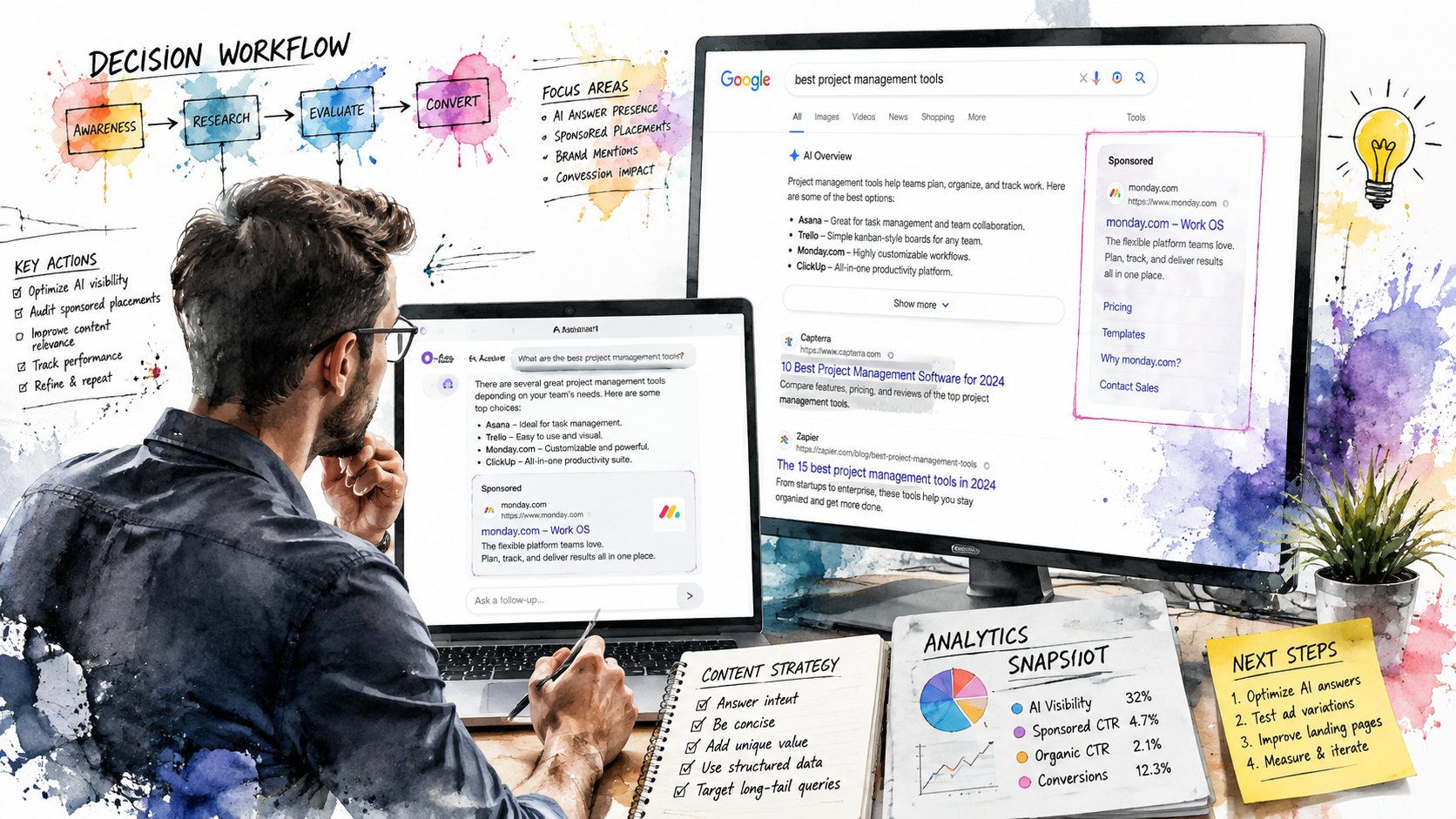
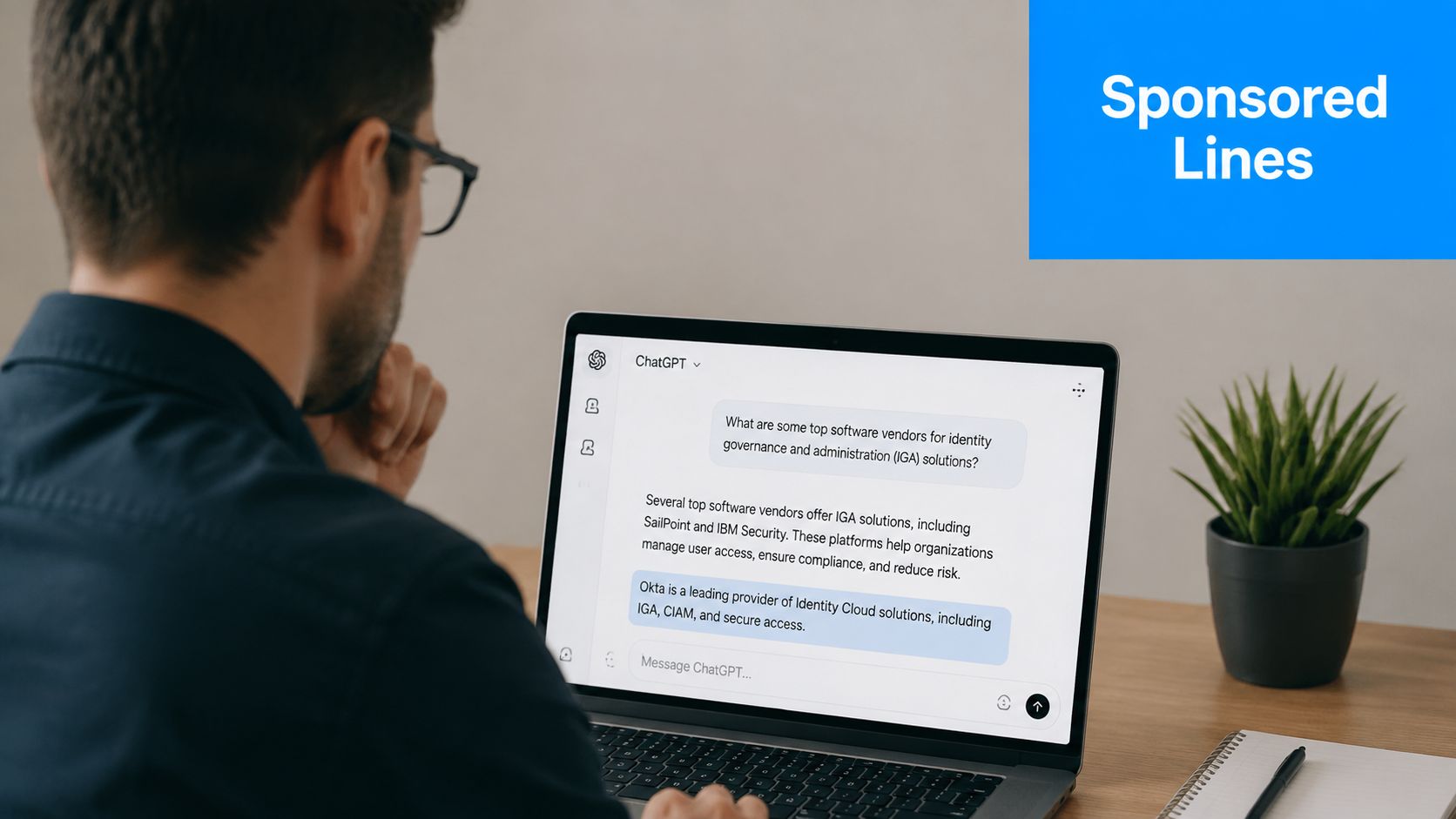
A procurement lead asks ChatGPT which identity governance platforms are worth comparing. The answer is polished, practical, and names two familiar vendors. Then a third company appears beneath the response, clearly marked as sponsored. Minutes later, a buyer runs a similar commercial query on Google and sees a sponsored result positioned alongside an AI-generated overview and its supporting citations.
That moment creates a serious marketing gap. Many teams still lack a reliable playbook for appearing in either placement, while many agencies continue selling generic AI SEO retainers as if discovery still worked like a conventional results page. ChatGPT ads and Google AI Overview ads are related, but they monetize different kinds of intent and require different operating skills.
The right agency won’t just promise “visibility in AI.” It will show how it handles eligibility, auctions, creative, measurement, and budget control on the exact surface where your buyers are making decisions.
A New Surface That Is Already Showing Sponsored Lines
A buyer asks an AI assistant which identity governance platforms to compare. The response synthesizes a recommendation, then places a clearly labeled sponsored line beside that answer. The same buyer searches Google and finds a sponsored placement alongside an AI Overview. Those are different buying moments, not interchangeable ad inventory.
Google announced trials for search and shopping ads in AI-generated AI Overviews on May 21, 2024, initially in the United States. The placement created an early monetization path for an answer-engine surface, with ads shown in a labeled sponsored area and selected using the query and information in the generated response, according to Reuters’ coverage of Google’s AI Overview advertising trials.
The format has moved beyond a limited experiment. An industry analysis found Google Ads on 25.56% of search results containing an AI Overview in October 2025, compared with 5.17% in March 2025, a roughly 394% increase over that period. That growth makes Google AI Overview ads a buying-signal channel agencies should be able to audit, not a vague add-on to an AI SEO retainer.
Why early learning matters
OpenAI entered testing later. On January 16, 2026, it began testing ads with some United States users on the free tier and the lower-priced Go plan. Plus, Pro, Business, and Enterprise remained ad-free, as reported by Reuters on OpenAI’s initial ChatGPT ad test. OpenAI planned to expand the test to all free and Go users in the United States within weeks.
The pilot also showed that available inventory and user exposure are separate questions. It reportedly surpassed $100 million in annualized revenue after six weeks, with around 85% of eligible users able to see ads, fewer than 20% seeing them daily, and more than 600 advertisers engaged. Agencies should use those conditions to set realistic reach assumptions before recommending ChatGPT ads.
Choose the agency by monetization fit. Google specialists should explain query and AI Overview eligibility, while ChatGPT specialists should explain conversational context, category access, and exposure measurement. A credible partner can also state where its method stops working.
My recommendation: Reject any agency that sells generic “AI” visibility. Hire the team that can identify the intent segments it can access, show the measurement plan, and define the conditions for stopping spend.
How the Two Surfaces Actually Monetize Intent
ChatGPT and Google AI Overviews put sponsored content near generated answers, but the commercial mechanics differ.
ChatGPT ads are separated from the model’s response. The sponsored unit includes the advertiser name, favicon, title, copy, landing page, and image asset, and it appears as a distinct labeled unit rather than being woven into the generated text, according to OpenAI’s explanation of ChatGPT ads. Eligibility depends on conversational context, relevance, and safety constraints. The advertiser isn’t just matching a conventional keyword. The platform evaluates the live prompt and surrounding dialogue.
OpenAI says ads don’t influence answers, are clearly labeled, and can be managed through personalization and data controls, as explained in OpenAI’s advertising approach. That separation is strategically important. The ad competes for attention beside an answer, not for authorship of the answer itself.
Google AI Overview ads extend established Search and Shopping systems into an AI-generated response. Google considers both the user’s query and the content of the AI Overview when determining eligibility. Ads are currently served only in English and in a defined set of countries, with restrictions covering sensitive areas such as adult products, alcohol, gambling, finance, healthcare, and politics, according to Google Ads’ AI Overview placement guidance.
Monetization at a glance
Dimension | ChatGPT Ads | Google AI Overview Ads |
|---|---|---|
Answer relationship | Sits apart from the model’s generated answer | Appears within or around an AI Overview experience |
Context signal | Live prompt and surrounding conversation | Search query, overview content, campaign signals, and policy eligibility |
Creative structure | Explicit sponsored unit with advertiser name, title, copy, landing page, favicon, and image | Search, Shopping, and related Google Ads formats adapted to an AI answer surface |
Auction logic | Relevance-weighted conversational selection | Google Ads auction, quality, relevance, and applicable campaign controls |
Intent position | Mid-answer discovery and recommendation context | Commercial research, comparison, and shopping moments across Search |
Availability | Pilot and tier eligibility determine access | English-language and country eligibility, plus policy filters |
Agency implication | Requires prompt and dialogue analysis | Requires campaign, feed, asset, and placement expertise |
Google’s placements have scaled quickly. By contrast, recent independent analysis described ChatGPT ad coverage as concentrated, with ads on about 4.47% of queries overall and roughly 90% of placements in the United States, while other snapshots reported higher density in narrower markets and samples, as summarized by Adthena’s comparison of ChatGPT ads and Google AI surfaces. The practical conclusion is simple: don’t allocate budget evenly because the interfaces look similar.
Use ChatGPT to test contextual category claims, recommendation language, and brand presence inside active research conversations. Use Google AI Overview placements to extend existing Search and Shopping intent, defend commercial categories, and understand how AI summaries affect the paid and organic results beneath them. Teams planning the organic side should also review strategies for improving visibility in AI Overviews, but paid placement still needs its own measurement and governance.
Selection Criteria for an AI Answer Ads Agency
Most agency pitches fail under direct questioning. They show a polished deck, a few screenshots, and a broad promise to improve “AI visibility.” Score the agency instead. A weighted scorecard exposes whether the team has genuine access and measurement capability or is repackaging familiar search services.
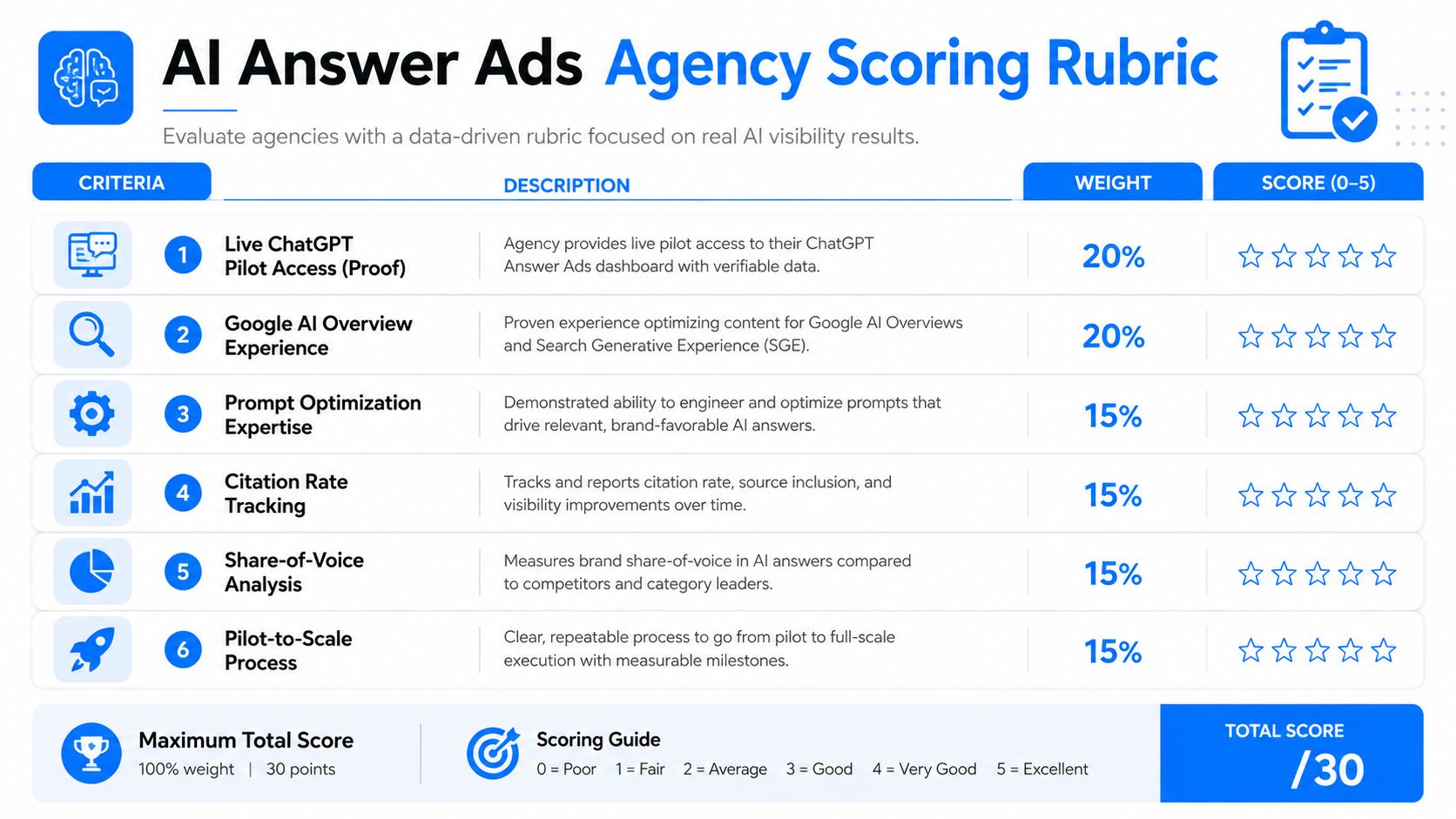
The six-part scorecard
Live ChatGPT access. Require proof of active pilot access or a named early-access partner. A screenshot in a presentation isn’t proof that the proposed team can launch or manage your account.
Ask: Which account will run the campaign, and can you demonstrate the current access path without exposing another client’s data?
Google AI Overview reporting. Standard Search dashboards won’t tell you enough about a new placement. The agency should separate AI Overview visibility from ordinary Search performance and identify the dashboard or report where that distinction will appear.
Ask: Show me the exact report that isolates AI Overview placement data from standard Search and Shopping results.
Conversational creative. ChatGPT ads need concise sponsored units that fit the surrounding dialogue. Google placements may require strong text assets, product information, landing pages, and campaign inputs. The agency should explain how it will test creative without implying that the model endorses the advertiser.
Ask: What will you change when the ad is relevant to the prompt but fails to earn attention beside the answer?
Measurement beyond clicks. The agency should track citations, answer share of voice, named competitors, assisted conversions, and incremental outcomes where the platform supports them. Clicks and cost per click are useful, but they’re incomplete for answer-engine exposure.
Ask: Which non-click signals will appear in the weekly readout, and how will you connect them to commercial outcomes?
Transparent fees. The contract should identify whether compensation is a percentage of spend, a flat retainer, or a hybrid. Reject an unexplained “AI surcharge,” especially when the agency can’t tie it to a distinct service or reporting workload.
Ask: What exactly changes in the fee if we run one surface instead of both?
Named people and response standards. You need an accountable strategist, operator, analyst, and escalation path. A large agency name doesn’t protect a pilot from slow approvals or inexperienced delivery.
Ask: Who owns the account day to day, and what response time applies when policy or serving changes affect spend?
Set a hard shortlist threshold
Weight live access and measurement more heavily than presentation quality. An agency that scores below 70% of available points across those two criteria shouldn’t make the shortlist, regardless of its client logo page or search pedigree.
For a deeper agency evaluation framework, compare the rubric with this guide to the best AEO agency selection criteria. The right partner welcomes difficult questions because the answers protect both sides from an unmeasurable pilot.
Agency Archetypes Worth Shortlisting
Agency type determines what you’ll get after the sale. A generalist digital agency brings breadth, a specialist AEO firm understands answer visibility, and an in-house native team can provide deep platform familiarity when it has real operating access.
A generalist digital agency is the sensible choice for a company that already runs substantial Google Ads, Shopping, Performance Max, landing-page testing, and analytics programs. It can connect AI Overview activity to the broader paid-media account and avoid creating a disconnected reporting island. Its common failure is treating ChatGPT as another Google Ads tab, then forcing keyword lists and standard creative into a conversational environment.
A specialist AEO agency is stronger when the primary problem is being named, cited, or compared inside AI answers. It should understand prompt mapping, source coverage, entity consistency, and competitor visibility. Its weakness appears when it has strong organic AEO credentials but limited experience with paid auctions, budgets, policy restrictions, and conversion tracking.
An in-house native team can win when it has direct product, audience, and first-party data access. It may understand the buyer’s language better than an outside partner and move quickly across product marketing, content, paid media, and analytics. The risk is limited bench depth and unclear transparency when the team resells capacity from another provider.
Dimension | Generalist Digital | Specialist AEO | In-House Native |
|---|---|---|---|
Channel breadth | Strong across paid search, shopping, social, and analytics | Deep in answer engines, variable in paid media | Depends on internal hiring and systems |
Prompt and answer coverage | Often developing | Core capability | Strong category knowledge, inconsistent tooling |
First-party data access | Client-dependent | Usually limited | Highest potential access |
Bench depth | Usually broad | Narrower, often expert-led | Can be constrained |
ChatGPT fit | Good only with proven conversational expertise | Strong for prompt-led discovery | Strong if pilot access exists |
Google AI Overview fit | Strong when integrated with existing Google Ads | Requires explicit paid-search capability | Strong if campaign operations are mature |
Typical failure | Treating AI surfaces as a placement checkbox | Over-indexing on organic visibility | Limited external transparency |
Self-select by buying situation. If Google already drives your commercial demand, start with a generalist that can prove AI Overview reporting. If answer citations and recommendations drive the business problem, prioritize an AEO specialist with paid expertise. If your team has first-party insight but lacks capacity, an in-house native model can work, provided ownership and access are documented.
Onboarding Steps That Predict a Good Pilot
A strong agency earns trust before it spends meaningful budget. The first month should produce a working measurement system, a controlled prompt and keyword set, and explicit rules for pausing or expanding activity.
Week one begins with existing paid media
The agency should audit current Search, Shopping, Performance Max, conversion actions, feeds, landing pages, exclusions, and creative assets. This prevents the common mistake of launching an AI placement on top of broken tracking or weak commercial foundations.
The audit should end with a short handoff document that names what can be reused, what needs revision, and which outcomes the pilot can realistically measure.
Week two maps the conversations
Prompt-mapping workshops should separate informational questions, category comparisons, branded research, competitor prompts, and action-oriented buying language. ChatGPT requires dialogue context, while Google AI Overview planning must account for query intent, campaign structure, product data, and policy eligibility.
Don’t accept a copied keyword export as a prompt strategy. The agency should show how a buyer’s question changes across research stages and which signals would justify a different creative or landing page.
Week three establishes the baseline
Before launch, capture current citations, named competitors, answer share of voice, existing paid visibility, and conversion paths. Baseline work gives the team something to compare against when impression and click data fluctuate.
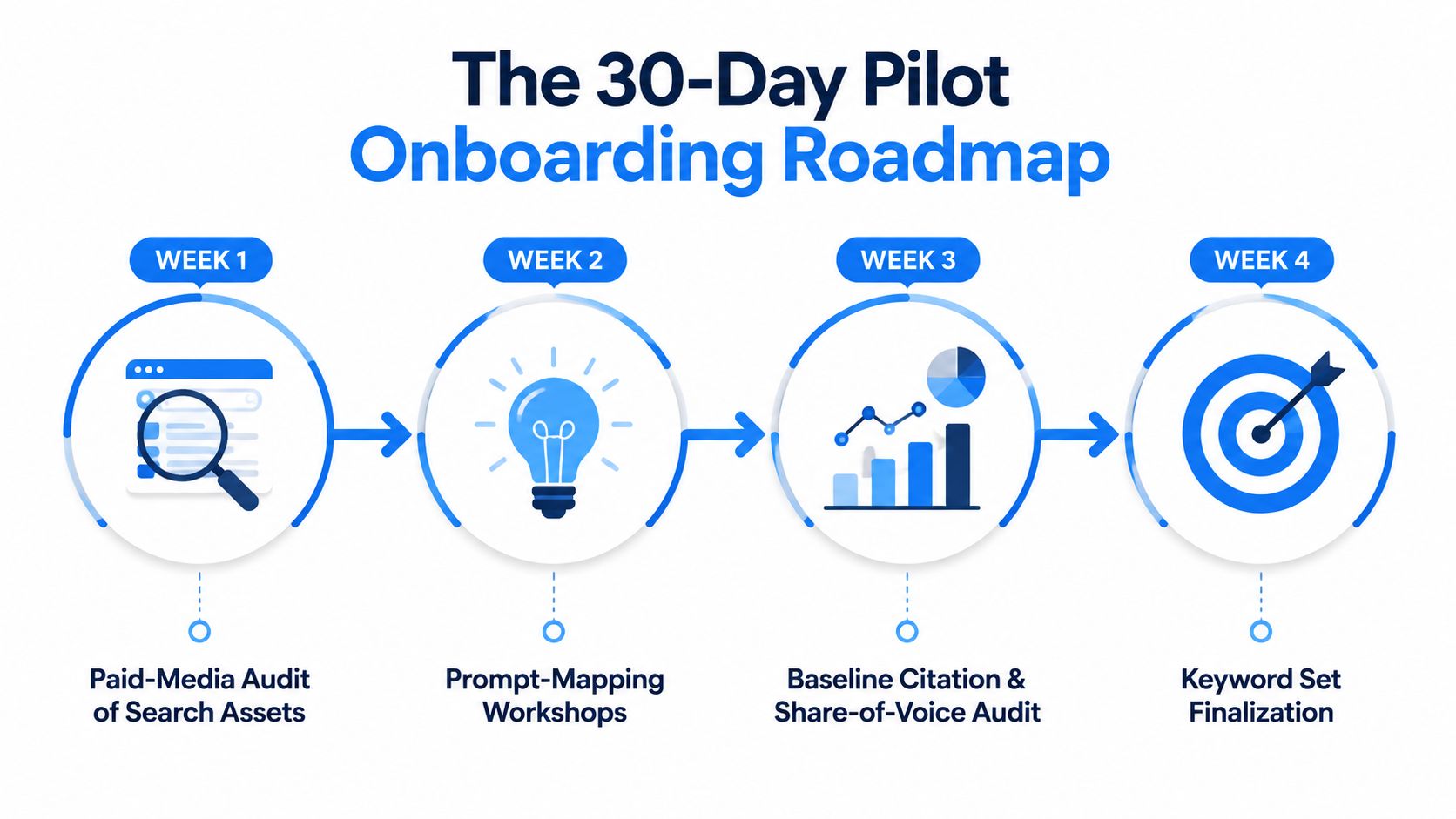
Week four finalizes control
The agency should deliver keyword and audience handoff documents, a prioritized prompt set, approved creative, dashboard access, and a kill-switch governance model. Agree in advance on what triggers a pause, what requires a policy review, and what qualifies as a scale decision.
Red flags appear early. Vendors who rush creative, avoid baseline instrumentation, refuse incrementality testing, or can’t identify the person responsible for daily optimization are telling you how the engagement will operate after signature.
A good pilot doesn’t start with spend. It starts with a shared definition of what the team is allowed to learn.
Measuring Performance Beyond Clicks
Clicks are visible, familiar, and insufficient. AI answer surfaces can influence a buyer before the buyer visits your site, especially when the response summarizes options, names competitors, or cites a source that reinforces your credibility.
Build the measurement stack around four signals.
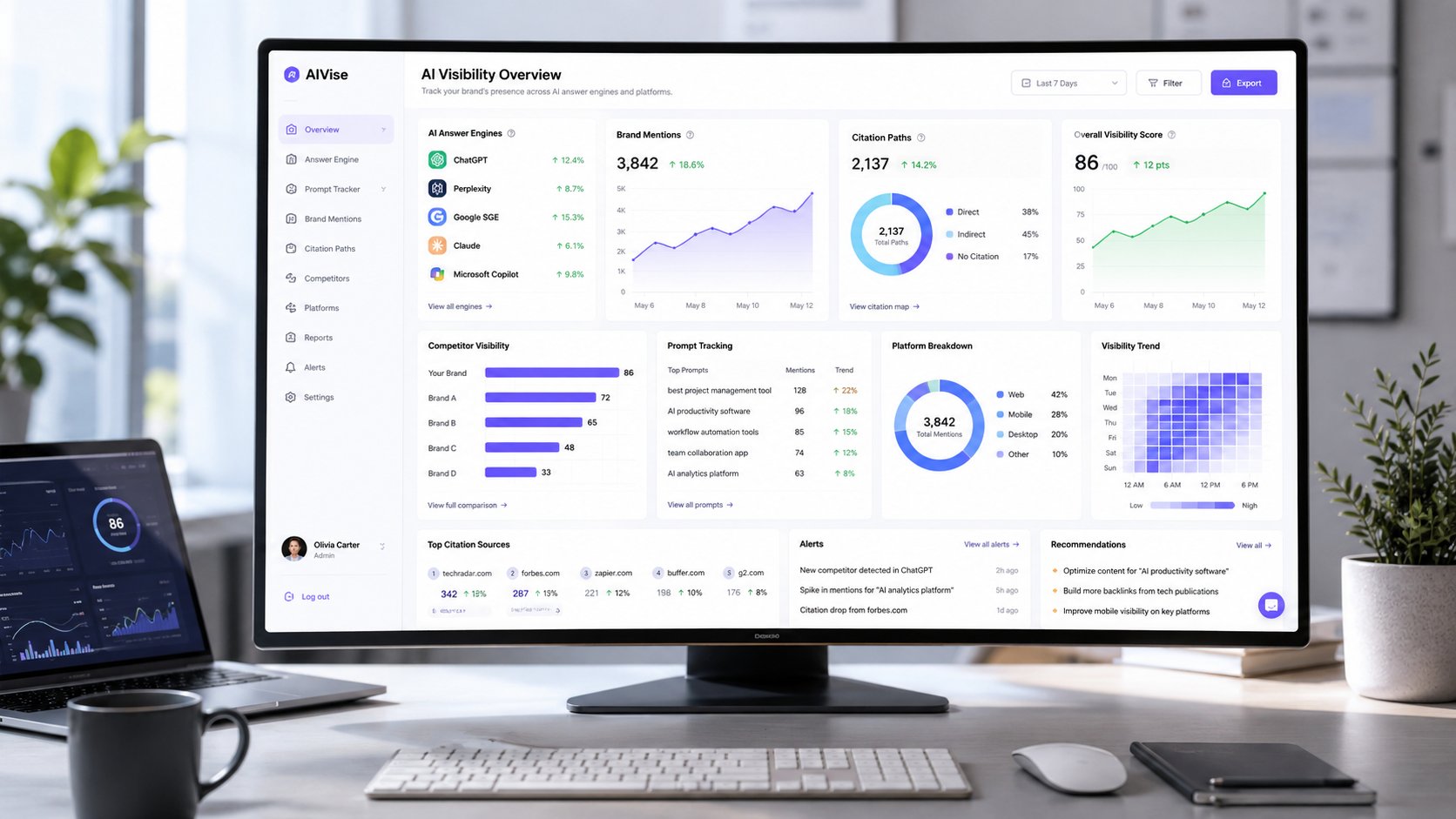
Citation rate shows whether your brand or source pages appear in answers for the prompts that matter. Track it by prompt family, market, model, and competitor set. A citation isn’t a conversion, but losing or gaining citations can reveal whether content and digital PR work is changing the information environment around your category.
Share of voice shows how often your brand appears relative to named competitors. Store the underlying answers, not only a summary score, because a brand mention can be favorable, neutral, or buried in an unhelpful comparison.
Brand lift captures exposure that click reporting misses. Use a consistent survey design and separate audiences exposed to the relevant surface from comparable audiences that weren’t, where your research setup allows it.
Incremental conversion lift asks the commercial question directly: did the surface create additional outcomes that wouldn’t have happened without the campaign? Holdout tests, geo comparisons, audience splits, and carefully defined pre-post designs can support the analysis, but the method must match the available data.
Connect every metric to an operational decision
Signal | What it tells you | Agency action |
|---|---|---|
Citation rate | Whether answer sources include your brand or pages | Improve source coverage and content relevance |
Share of voice | Whether competitors dominate the same prompts | Prioritize defensive or category opportunities |
Brand lift | Whether exposure changes awareness or consideration | Adjust reach and creative strategy |
Incremental lift | Whether the channel creates additional demand | Scale, redesign, or stop the pilot |
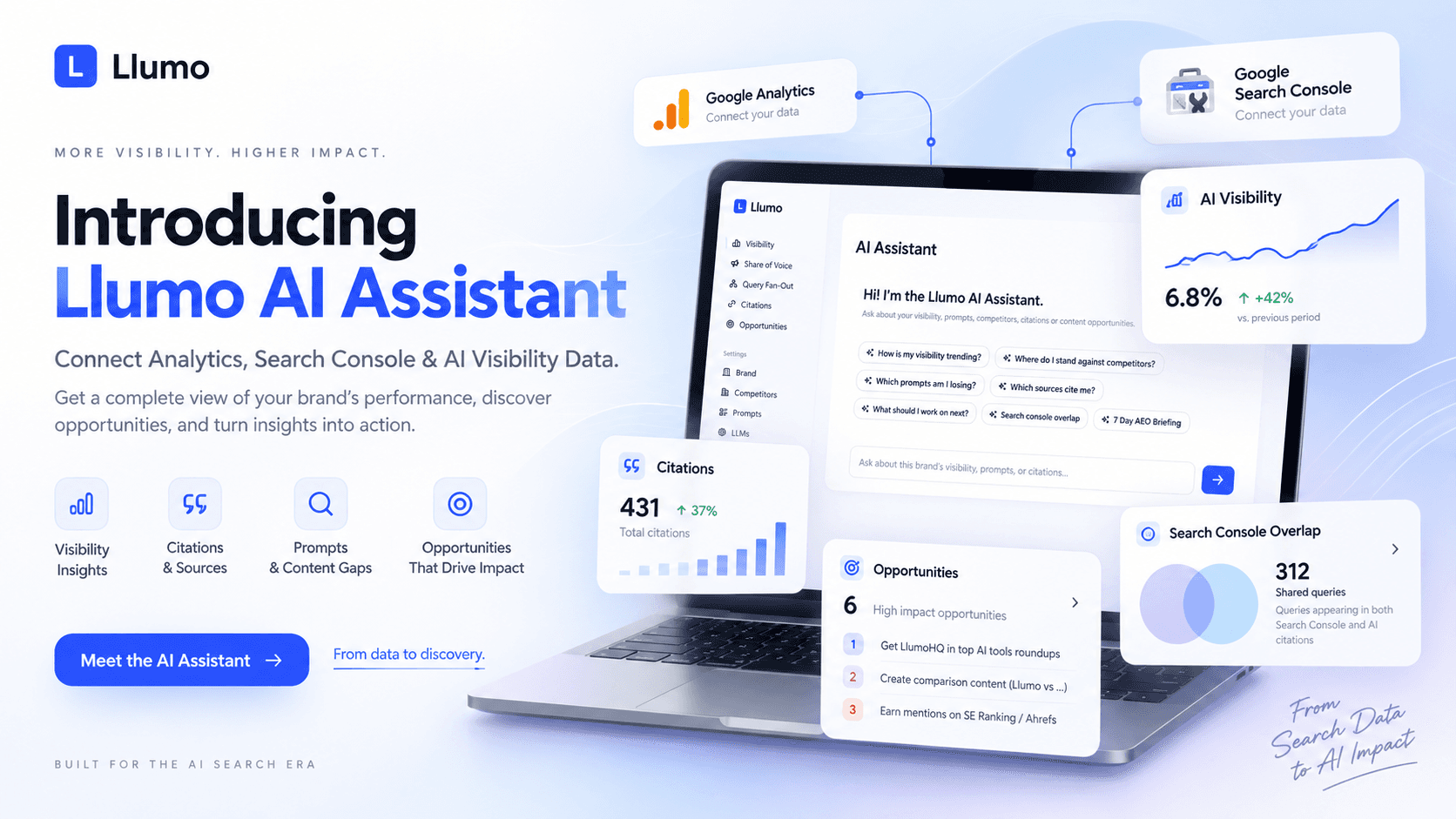
Google’s own placement reporting can inform AI Overview visibility, while ChatGPT’s ad reporting supplies sponsored impressions and clicks. For cross-model answer monitoring, Llumo’s AI visibility tracker for agencies is one option that tracks prompts, mentions, citations, competitors, and trends across AI answer surfaces.
Teams that optimize only CPC may cut an ad that influences later branded demand. Teams that optimize only impressions may keep funding exposure with no commercial role. The answer is a connected dashboard where paid delivery, answer visibility, and downstream outcomes sit beside one another.
Common Misreads That Kill Pilots Early
AI placements don’t behave like a mature paid-search campaign. The auction depth, creative space, eligibility rules, and relationship between exposure and click all differ, so familiar benchmarks can produce bad decisions.
Misread | Correct Read |
|---|---|
Low CTR means failure | A generated answer can shape consideration before the user clicks. Review assisted actions, branded demand, citations, and answer share of voice. |
Last-click attribution is enough | The placement may influence a later visit through another channel. Use incrementality and assisted-conversion analysis where possible. |
A short test settles creative quality | Early serving can be uneven, and answer visibility needs a stable observation window. Don’t call a winner from a thin sample. |
Google keyword lists transfer directly to ChatGPT | Conversational prompts include context, follow-up questions, and recommendation language that standard keyword exports don’t capture. |
Uncapped spend fixes low conversion volume | More budget doesn’t solve weak eligibility, poor creative fit, or insufficient commercial intent. Set controls before launch. |
The most damaging error is treating a limited ad surface as if it were a conventional inventory pool. When only a small share of relevant conversations carries a sponsored unit, daily delivery can look inconsistent even when the underlying audience is valuable. Google’s broader Search ecosystem may provide more familiar controls, but AI Overview eligibility still depends on language, country, query context, and policy.
A candid agency flags these constraints before launch. It doesn’t promise that every prompt will show an ad, every answer will produce a click, or every early impression will translate into a tracked conversion. Killing a pilot before the team has separated serving limitations from creative and intent problems destroys the learning that would make the next test better.
A Short Decision Framework for Choosing and Onboarding
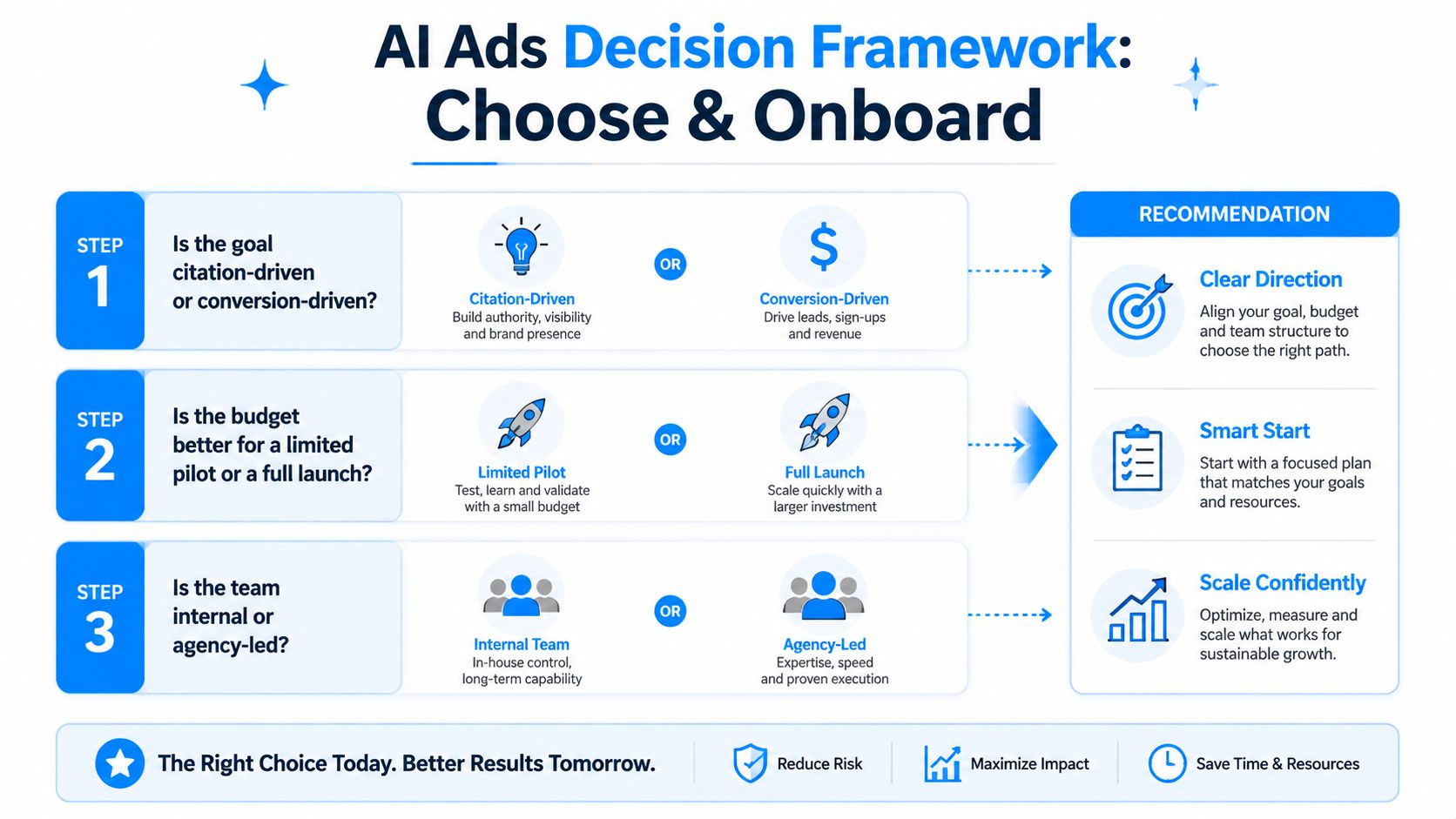
Start with three questions.
Is the problem citation-driven or conversion-driven? If buyers don’t encounter your brand in recommendations, prioritize prompt coverage, citations, and share of voice. If demand already exists and the issue is capturing commercial action, prioritize Google Ads operations and AI Overview placement reporting.
Does the budget fit a specialist or a generalist? Choose a generalist when the work must connect to mature Search, Shopping, and analytics programs. Choose a specialist when answer-engine visibility is the central operating problem.
Can the agency prove experience on both surfaces? Ask for named examples, access details, reporting views, and the specific work performed. Don’t accept a logo list as evidence.
Use this shortlist before signing:
Request a 30-day learning plan: It should include audits, prompt mapping, baselines, creative, dashboards, and governance.
Verify beta or pilot access: Ask who has access today and which account will run your activity.
Demand shared dashboards from day one: You should see platform delivery and answer visibility without waiting for a monthly presentation.
Agree on kill criteria before launch: Define unacceptable spend, policy issues, tracking failures, and conditions for pausing.
Require weekly readouts during the first month: Each readout should state what changed, what was learned, and what happens next.
Name the decision owner: Your team and the agency should know who can approve creative, budget changes, and pauses.
Agencies that welcome this process usually understand the difference between a controlled pilot and a speculative retainer. Agencies that resist shared data, access verification, or pre-agreed stop rules are asking you to purchase uncertainty. Choose the partner that makes learning visible, keeps surface strategies distinct, and earns the right to scale through evidence.
Llumo helps teams track how brands and competitors appear across ChatGPT, Google AI Overviews, and other answer engines through prompt-level visibility, share-of-voice, citation, and competitive trend data. Visit Llumo to evaluate the measurement layer before you select an agency or launch your next AI ads pilot.