The right Semrush alternative depends on the work you need done, not on how many features a vendor can place in one dashboard. Many buyers searching for the best Semrush AI alternatives need different things: multi-model visibility tracking, content recommendations, technical SEO, managed AEO execution, or pricing that scales without surprise usage fees. A traditional SEO suite may be ideal for backlink research, but it won't necessarily explain why an AI answer cites a competitor instead of your brand.
The seven providers below take different approaches. Llumo focuses on prompt-level evidence and citation analysis. Ahrefs brings deep SEO and backlink research into AI-search workflows. SE Ranking and Serpstat offer broader value-oriented suites, while Surfer, MarketMuse, and Frase concentrate more heavily on content execution and strategy. The comparison considers AI engine coverage, prompt and citation evidence, content workflows, agency fit, pricing transparency, support, and proof of results. Documented capabilities are separated from claims that still require a demo, reference check, or case-study review.
1. Llumo
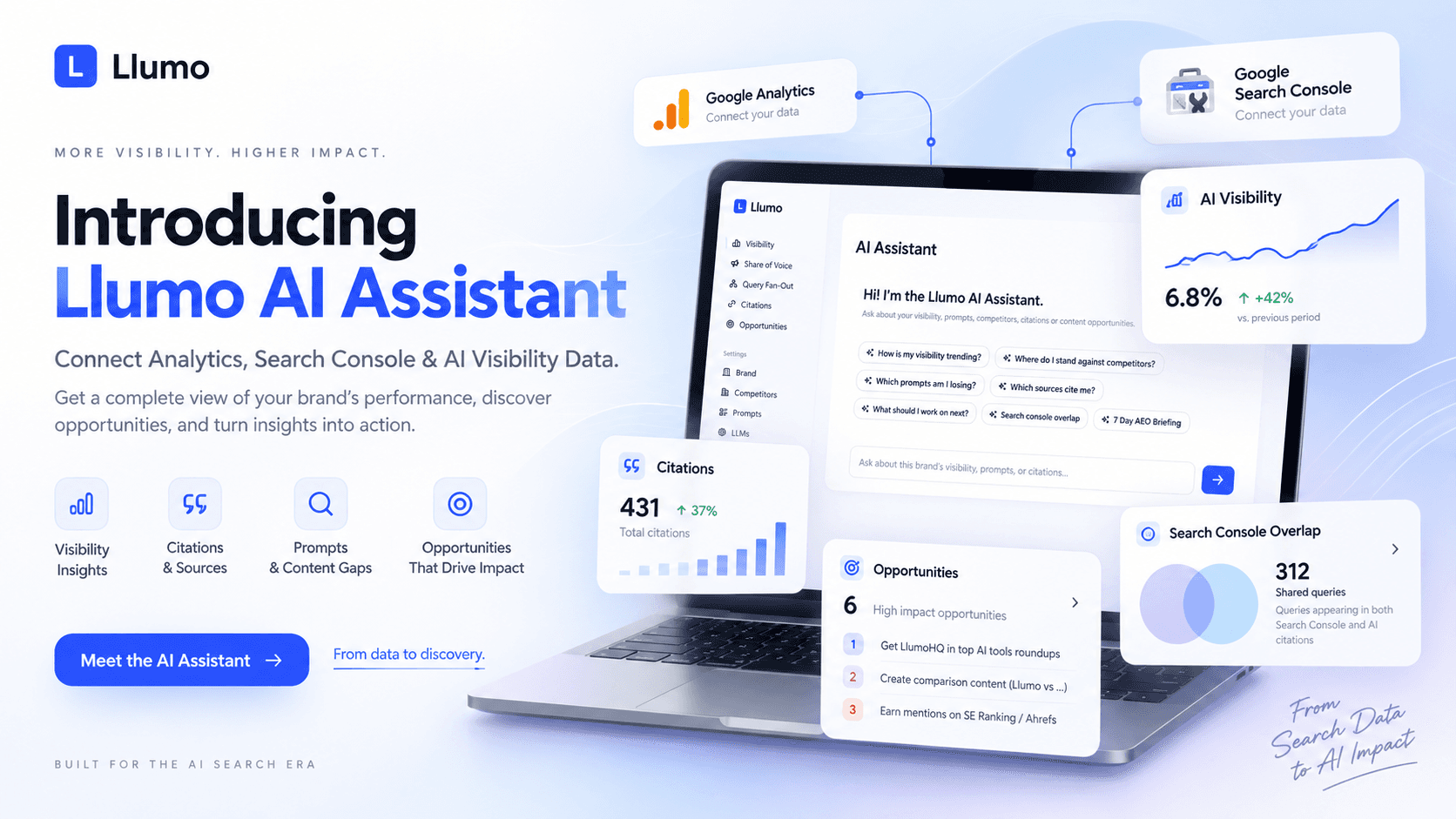
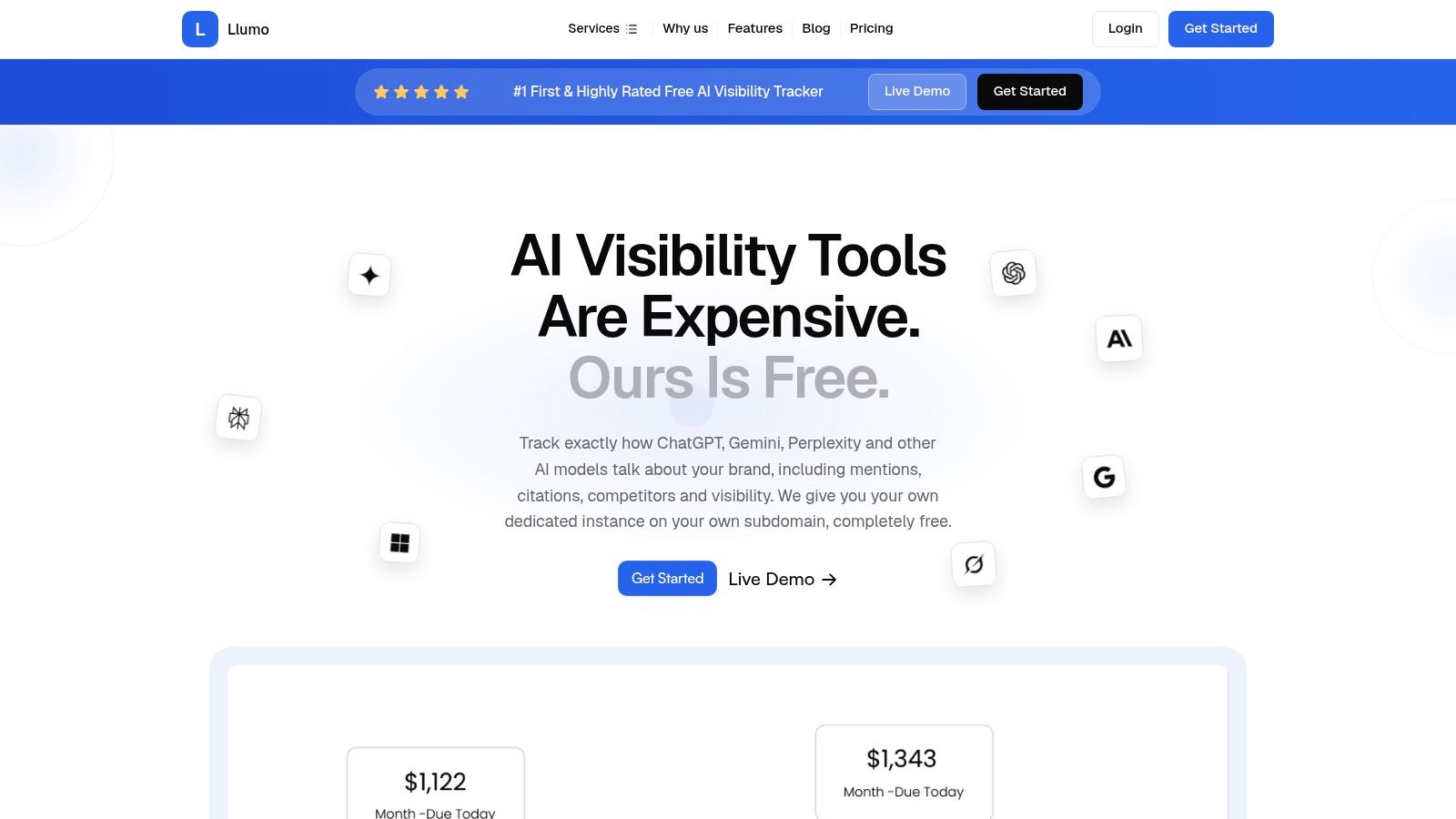
Llumo is the strongest choice when AI visibility evidence is the primary job. It tracks how answer engines mention and cite a brand across ChatGPT, Gemini, Perplexity, Copilot, Google AI Overviews, Claude, Grok, Mistral, DeepSeek, and other models. Instead of treating AI visibility as a vague brand metric, it gives teams per-prompt visibility scores, competitor share of voice, citation sources, domain analysis, and trend dashboards.
That distinction matters because AI answers draw from a relatively small group of referenced pages. Google AI Overviews cite an average of five sources per query, and the answers average 157 words, according to Surfer's AI Overviews study. Traditional rankings remain useful, but they don't fully explain which page gets selected as evidence.
Evidence you can act on
Llumo stores prompt-level model responses and sources, logs query fan-out, and lets teams search, tag, filter, and track prompts over time. Its citation analysis shows referenced domains and pages, including new and lost references. The opportunity layer then connects those findings to possible content updates, new pages, and brand-mention or outreach work.
Practical rule: A visibility tracker is only valuable if the team can turn an absent citation into a specific content, technical, or digital PR task.
Llumo also offers dedicated Google AI Overviews and ChatGPT trackers, share-of-voice comparisons, longitudinal dashboards, unlimited projects and brands, daily backups, and hosted instances on a custom subdomain. Agencies can add white-labeling, priority support, and managed AEO services covering audits, recommendations, and execution.
The cost trade-off
The pricing model is unusual. Llumo doesn't charge a core software license fee or add a markup to LLM usage. Customers connect their own provider API keys and pay providers directly. That can make large-scale testing more transparent, but it also means teams must manage API budgets, quotas, and provider-cost variability.
Public pricing isn't posted on the product page. Llumo provides response-based cost comparisons to help estimate consumption, but buyers should request a realistic forecast for their prompt set. The product page also doesn't list customer testimonials, awards, or certifications, so a demo and reference check should be part of procurement.
Best for: AEO teams, agencies, SaaS growth leaders, competitive-intelligence practitioners, and brands that need citation-level evidence rather than another general SERP dashboard.
2. Ahrefs
Ahrefs is the best Semrush alternative when your existing SEO operation depends on backlink intelligence, competitor research, and a large keyword dataset. Its core toolkit includes Site Explorer, Keywords Explorer, Site Audit, Rank Tracker, and Content Explorer. Those tools give an established SEO team a strong research foundation before it investigates how AI systems describe the brand.
Ahrefs has also layered AI features into that workflow. Brand Radar AI tracks brand presence across multiple AI engines through prompt and mention monitoring, while AI Content Helper and AI Content Grader support optimization inside the writing process. The practical advantage is continuity. An SEO manager can move from a competitor's link profile to a target topic, then into content optimization and AI-visibility review without abandoning the broader SEO context.
Where Ahrefs earns its place
Independent data from Ramp's SEO Intelligence Software category gives Ahrefs 29% share in that dataset, making it the category leader there. That level of adoption can reduce implementation friction because documentation, practitioner familiarity, agency support, and hiring experience are easier to find. It doesn't prove that Ahrefs is the right tool for every AEO program, but it does make the platform a credible choice for teams that want a widely recognized SEO foundation.
Ahrefs also leads the market-share data cited by Ramp's SEO category analysis, while the broader competitor field includes specialized products such as Moz, SpyFu, Majestic, Searchmetrics Suite, and Botify. The category isn't a one-player market, and Ahrefs' strength is still concentrated in research depth rather than managed AEO execution.
What to verify before buying
Premium pricing and add-on AI capabilities are the main constraints. New users may also need time to learn the interface and decide which reports belong in their operating rhythm. Ask for a clear breakdown of what Brand Radar AI includes, how prompt monitoring is metered, and whether citation evidence connects directly to content or outreach recommendations.
Best for: Established SEO teams, technical specialists, agencies, and enterprises that want deep backlink and keyword research with AI features added to a mature platform.
3. SE Ranking
SE Ranking is the most balanced pick for teams that want one practical SEO suite with an AI-results layer. It combines rank tracking, keyword research, website and on-page audits, competitor analysis, and backlink research with an AI Results Tracker. That tracker monitors brand visibility across Google AI Overviews, Google AI Mode, ChatGPT, Perplexity, and Gemini, with daily prompt tracking and share-of-voice views.
The platform suits agencies particularly well because reporting and integrations sit close to the core workflow. Data Studio, GA4, GSC, and Matomo integrations support recurring client reporting, while API access and an Agency Pack give larger teams more room for automation. The trade-off is that heavy automation can push buyers toward add-ons, so a simple starting plan may not reflect the eventual operating cost.
A strong value-oriented suite
G2 competitor data places SE Ranking at 4.7 out of 5 from 1,564 to 1,567 reviews, ahead of Ahrefs at 4.5 from about 702 reviews, Similarweb at 4.4 from 1,167 reviews, Serpstat at 4.6 from 464 reviews, and Moz Pro at 4.3 from 608 reviews. These figures come from SE Ranking's competitor comparison. The review spread makes SE Ranking a compelling operational choice, particularly for teams that care about user satisfaction and broad adoption across day-to-day SEO work.
SE Ranking isn't as focused on citation archives or provider-cost transparency as Llumo. It also isn't a managed AEO service by default. You'll get a broader platform and a familiar SEO workflow, but you'll need to determine whether its AI-results reports explain the next action clearly enough for your team.
Best for: Mid-sized businesses, agencies, and in-house teams that want a value-oriented replacement for a broad SEO suite with AI-search monitoring included.
4. Serpstat
Serpstat is the budget-conscious option for teams that want keyword research, technical audits, rank tracking, backlinks, and AI visibility in one place. Its core platform covers competitor analysis, backlink analytics, site audits, and rank monitoring. The AI layer includes AI Overviews keyword tracking inside position monitoring and an LLM Brand Monitor that covers ChatGPT, Claude, Gemini, and other models.
That combination works well for freelancers, small businesses, and agencies that need useful signals without building a large specialist stack. Serpstat also offers MCP and ChatGPT integrations, which can make research more accessible for teams already working through AI assistants.
The practical limitation
Serpstat's price-to-feature balance is attractive, but data depth can trail premium competitors in some regions or niches. That matters for AEO because a brand may look visible in a broad sample while remaining absent from the exact prompts that influence its buyers. Treat the default dashboards as a starting point, then test your own markets, languages, competitors, and commercial questions.
Advanced agency capabilities, including white-label reporting and higher API request rates, require upper tiers. Those limits don't make Serpstat unsuitable for agencies, but they can change the economics once reporting and automation become central to delivery.
Serpstat is a sensible first platform for monitoring AI-search signals. It isn't the right choice if your team needs the deepest citation forensics or a managed execution partner.
The platform also doesn't replace a dedicated content strategy system. It can identify visibility and ranking conditions, but editors may still need separate tools for detailed briefs, entity coverage, topical authority, or brand-voice production.
Best for: Freelancers, SMBs, and smaller agencies that want broad SEO coverage plus AI Overviews and LLM brand monitoring at a controlled cost.
5. Surfer
Surfer is the best fit when content production and optimization lead the workflow. Its Content Editor provides entity recommendations and optimization guidance tied to live SERP conditions, while Surfer AI supports drafting. The platform also includes site and content audits, a Topical Map, rank tracking, and an AI Tracker that monitors brand mentions, citations, and competitor share of voice across ChatGPT, Perplexity, Google AI Mode and Overviews, and Gemini.
Surfer's strength is not only that it reports visibility. It puts visibility work close to the page being written or refreshed. That makes it useful for content teams that need a repeatable path from research to brief to draft to optimization. Teams can choose the broader suite or a standalone AI Search Analytics plan if AI visibility tracking is the immediate requirement.
AEO needs more than content scores
AI Overview citation patterns show why content optimization can't rely on a single ranking metric. One large citation study found that 38% of cited pages also rank in Google's top 10, while the top 1% of domains capture 47% of citations. The Stacc's citation analysis also reported an average of 4.2 citations per response, with responses ranging from 2 to 9 sources. The figures point to a concentrated evidence environment, where content quality, authority, and source selection all matter.
Surfer can help teams improve the content itself, but it isn't a replacement for a crawler-heavy technical SEO suite or a full digital PR operation. Lower tiers can also limit content volumes and AI credits. Teams should define who owns citation outreach and technical fixes before assuming an AI writing workflow will improve visibility on its own.
For a broader explanation of how answer engines influence content decisions, see this guide to Answer Engine Optimization.
Best for: Editorial teams, content marketers, and SEO managers who need prescriptive page-level recommendations alongside AI-search monitoring.
6. MarketMuse
MarketMuse is the strategic choice for teams that need AI-assisted topic planning rather than a general-purpose rank tracker. It inventories a site, scores topical authority, identifies gaps, and prioritizes content opportunities. Its briefs, optimized outlines, SERP analysis, and heatmaps help content strategists decide what to create, consolidate, refresh, or expand.
The platform's proprietary topic modeling and metrics, including Personalized Difficulty and Competitive Advantage, are designed for complex content programs. That makes MarketMuse particularly useful when a brand has a large library and needs to decide where editorial effort will have the greatest strategic value. It's less about checking rankings every morning and more about shaping the information architecture that supports authority.
Where it fits in an AEO stack
MarketMuse can identify the pages and topic relationships that deserve attention, but it doesn't provide the same broad rank-tracking and backlink coverage as a full SEO suite. It also doesn't automatically function as a managed service. Teams still need a way to measure model-level mentions and citations, validate whether updated pages are being referenced, and execute digital PR where third-party sources influence answer engines.
That distinction becomes more important as citation mechanics diverge from standard ranking assumptions. A 2026 academic analysis of AI-generated search summaries found that AI-generated documents were cited more frequently than human-authored documents even after retrieval rank was controlled, with the effect driven mainly by non-retrieved citations and strongest at highly ranked positions. The finding doesn't turn AI-generated content into a guaranteed visibility strategy. It does show why teams should audit citation behavior rather than infer it from rankings alone.
MarketMuse uses tiered pricing with feature caps, and paid plans require contacting sales for rates. Request a workflow demonstration using your own content inventory, not a generic sample.
Best for: Content strategists, enterprise editorial teams, and brands building topical authority across a substantial content library.
For a focused view of tools in this category, compare LLM SEO tool capabilities against the reporting and planning functions your team already uses.
7. Frase
Frase is the most integrated option for teams that want to move from research to published content and AI-visibility monitoring in one workflow. Its AI agent can audit, research, draft in a brand voice, optimize for Google and AI search, publish to a CMS, and monitor rankings and citations. The platform also provides topic clusters, content briefs, internal-linking support, site audits, GEO optimization, and MCP or API integrations.
That end-to-end approach reduces handoffs. A content manager can identify a topic, create a brief, develop a draft, optimize it in the editor, publish it, and then watch how AI systems mention the resulting page. Frase's AI Visibility dashboards cover ChatGPT, Google AI, Perplexity, Claude, and Gemini, with share-of-voice and trend views.
The boundary to respect
Frase isn't a classic backlink or technical SEO suite. If your team needs extensive crawl diagnostics, link prospecting, or a deep competitive index, pair it with a specialist platform rather than expecting Frase to replace every Semrush workflow. Its value comes from execution speed and workflow continuity, not from being the deepest source of every SEO dataset.
Exact pricing and plan limits are surfaced through the app or sales process and vary by tier. Ask how agent usage, AI visibility prompts, CMS publishing, and team access are metered. You should also request examples that show citation-level reporting, not only content scores or ranking charts.
Buying test: Ask Frase to demonstrate the complete path from an AI visibility gap to a revised page, published update, and follow-up citation report.
Frase is especially relevant for teams that want an operational answer to the question, “What do we do after we discover an AI visibility gap?” You can also review answer engine optimization software options before deciding whether one integrated content platform is enough for your reporting needs.
Best for: Content-led marketing teams that want agent-assisted creation, optimization, publishing, and AI-visibility monitoring in a connected workflow.
Top 7 Semrush AI Alternatives, Feature Comparison
Tool | 🔄 Implementation complexity | ⚡ Resource requirements / Cost | 📊 Expected outcomes | 💡 Ideal use cases | ⭐ Key advantages |
|---|---|---|---|---|---|
Llumo | Medium–High: requires API key management and initial setup | PAYG provider fees (no license markup); scalable; hosted/white‑label optional | High: per‑prompt visibility, citation tracking, trend dashboards | AEO/SEO teams, agencies, competitive intel needing model‑level proof | Multi‑model, per‑prompt visibility; transparent pricing; deep citation/query analysis |
Ahrefs | Medium–High: enterprise UI and many features to learn | Premium pricing; large data indexes; some AI features are add‑ons | Very high for backlink/keyword intelligence and integrated AI workflows | Enterprise SEO, competitive research, large content programs | Huge link/keyword index; AI woven into core SEO workflows; strong CI |
SE Ranking | Low–Medium: straightforward all‑in‑one setup | Value pricing with clear limits; API & Agency Pack add‑ons for scale | Solid: rank tracking + daily AI results tracking across LLMs | Agencies and teams needing affordable, repeatable reporting | Competitive pricing; clear limits; optional API/Agency Pack for automation |
Serpstat | Low: simple, budget-friendly platform | Budget-oriented plans with generous mid‑tier limits | Moderate: AI visibility signals adequate for SMB use | Freelancers, SMBs, cost‑conscious agencies | Strong price‑to‑feature ratio; broad toolkit for smaller teams |
Surfer | Medium: best when adopted end‑to‑end (research→write→optimize) | Flexible plans; AI credits/content caps on lower tiers | High for content performance when process is followed | Content teams focused on optimization and editorial workflows | Prescriptive content guidelines; flexible AI‑visibility or full suite options |
MarketMuse | Medium: research‑led workflow with topic modeling | Tiered pricing; focused on content strategy rather than full SEO stack | High for topical authority and prioritized opportunity selection | Teams building topical authority and complex content clusters | Proprietary topic modeling; deep research and prioritized briefs |
Frase | Medium: unified authoring → publish → monitor workflow | Tiered pricing; agent usage varies by plan | High for fast drafting, optimization and AI‑citation monitoring | Teams that want agent‑assisted drafting and fast iteration | End‑to‑end creation, CMS publishing, and AI visibility monitoring |
How to Choose Your AEO Partner
Start with the job, not the vendor name. If your priority is prompt-level visibility, citation evidence, multi-model tracking, usage control, or managed AEO services, choose Llumo. Its model-level archives, query fan-out logging, domain and page analysis, and bring-your-own-key structure make it the clearest fit for teams that need to understand not only whether they're visible, but why.
Choose Ahrefs when your SEO foundation depends on backlink research, keyword intelligence, and competitive analysis. Its market position and mature ecosystem reduce implementation risk, but you should confirm which AI features are included and how add-ons affect the total cost. Choose SE Ranking or Serpstat when you want broader value-oriented suites that combine conventional SEO with AI-results monitoring.
Surfer and Frase suit teams where content production is the central operating system. Surfer is stronger for prescriptive page optimization and SERP-informed content guidance. Frase is stronger when you want research, drafting, optimization, publishing, and monitoring in one workflow. MarketMuse is the better choice when your main challenge is prioritizing topics and building authority across a complex content library.
Before signing, request a live workflow using your prompts, competitors, and content. Ask for a realistic pricing estimate, provider-cost assumptions, examples of citation-level reporting, details on usage limits, and customer references or case studies. If a vendor can't show how its data becomes a concrete content, technical, or outreach action, you're buying measurement without execution.
Semrush remains a useful benchmark, but it isn't a requirement. Compare each partner's evidence quality, coverage, support model, and execution process against your actual AEO goals. The best replacement won't be the platform with the longest feature list. It'll be the one that gives your team reliable evidence and a practical way to earn better citations.
Llumo gives AEO teams per-prompt visibility, cross-model tracking, citation analysis, competitor share of voice, and prioritized opportunities without a core software license fee or usage markup. If you want to compare a focused AI-visibility partner with broader SEO suites, visit Llumo and request a workflow review using your own prompts and brands.