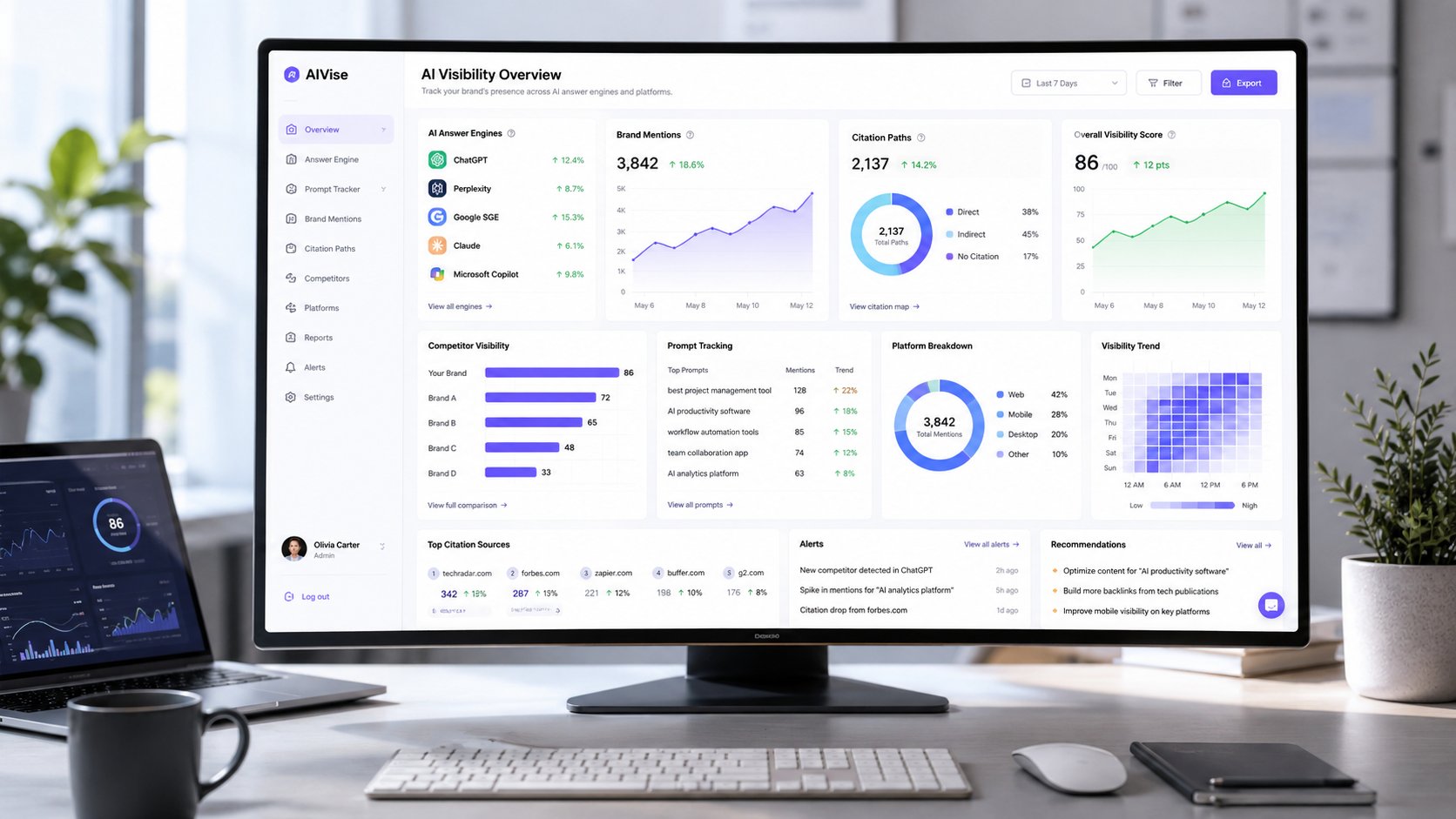
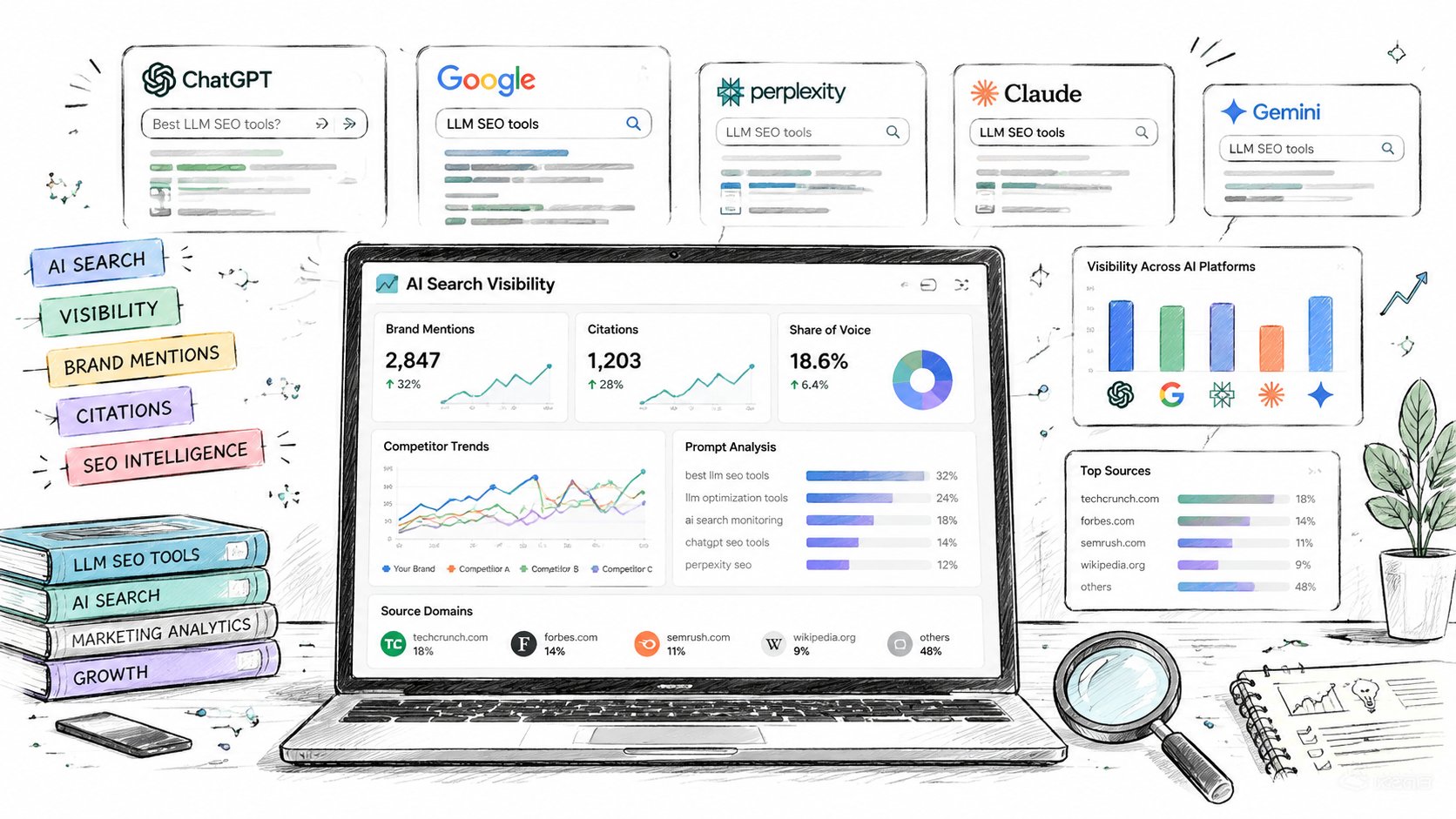
Traditional SEO advice says to track rankings, improve click-through rates, and assume strong organic performance will carry into AI search. That assumption is already too narrow. A brand can rank well in Google and still disappear from an AI-generated answer because the model favors a different source, a fresher page, a clearer passage, or a domain with stronger visibility across the wider web.
That's why choosing an LLM SEO tool requires more than counting supported engines. You need to know what each platform measures, whether it exposes the actual citation sources, how clearly it connects findings to content or outreach work, and whether its pricing fits your prompt volume and team structure. This roundup ranks seven tools by those practical signals and workflows. Llumo is the reference point for usage-driven, bring-your-own-key tracking, but the best choice depends on whether you need evidence, recurring monitoring, execution guidance, or a focused Google check.
1. Llumo
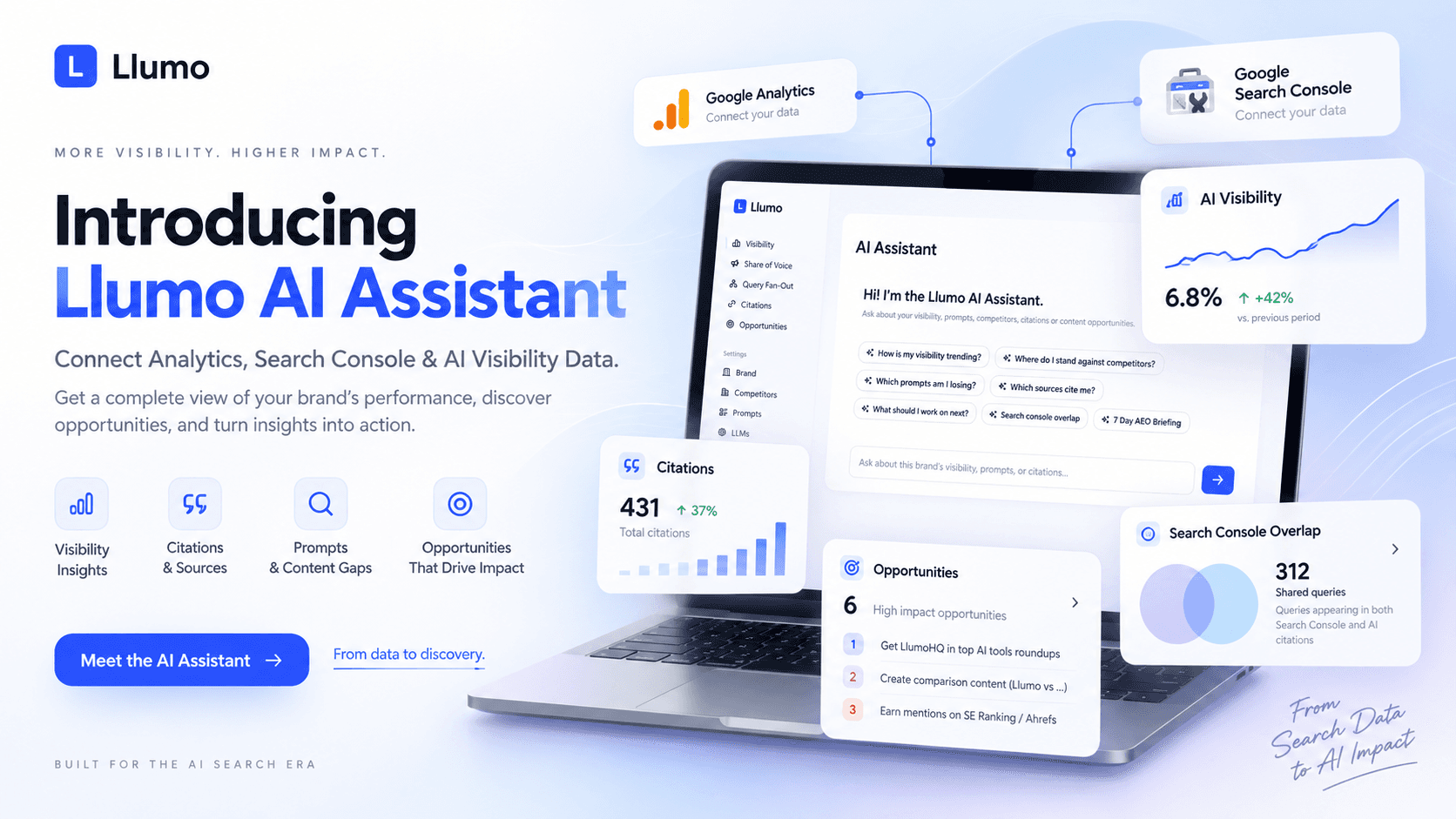
Llumo is the strongest choice here for teams that want to understand why an AI system mentioned a brand, not just whether it appeared. The platform is built for Answer Engine Optimization and tracks brand mentions, citations, competitors, and source domains across ChatGPT, Gemini, Perplexity, Copilot, Claude, Grok, Mistral, DeepSeek, and Google AI Overviews.
The useful distinction is its prompt-level evidence. Llumo archives responses so you can inspect which model referenced which page, what competitors appeared beside you, and which generated query expansions shaped the answer. That turns an abstract visibility score into an investigation. If a competitor earns citations while your page ranks well in classic search, you can examine the cited format, source domain, page section, and topic coverage instead of guessing.
Best workflow fit
Llumo combines per-prompt visibility scores, share of voice, competitor trend lines, citation analysis, tagging, filtering, and longitudinal reporting. Its opportunity discovery layer turns those findings into recommended work, such as updating an existing page, creating a new resource, or pursuing brand mentions through digital PR. Managed AEO services are also available for teams that want audits, recommendations, and execution rather than another dashboard to operate.
That depth matters because AI citation behavior doesn't consistently follow traditional rankings. One analysis of 863,412 queries found that only 38% of cited pages appeared in Google's top 10, while 44% ranked from 11 to 100 and 18% came from outside the top 100 entirely, according to Digital Applied's AI citation analysis. A rank tracker alone can't explain that divergence.
Practical rule: Buy a tool that preserves the answer and citation context, not only the score derived from it.
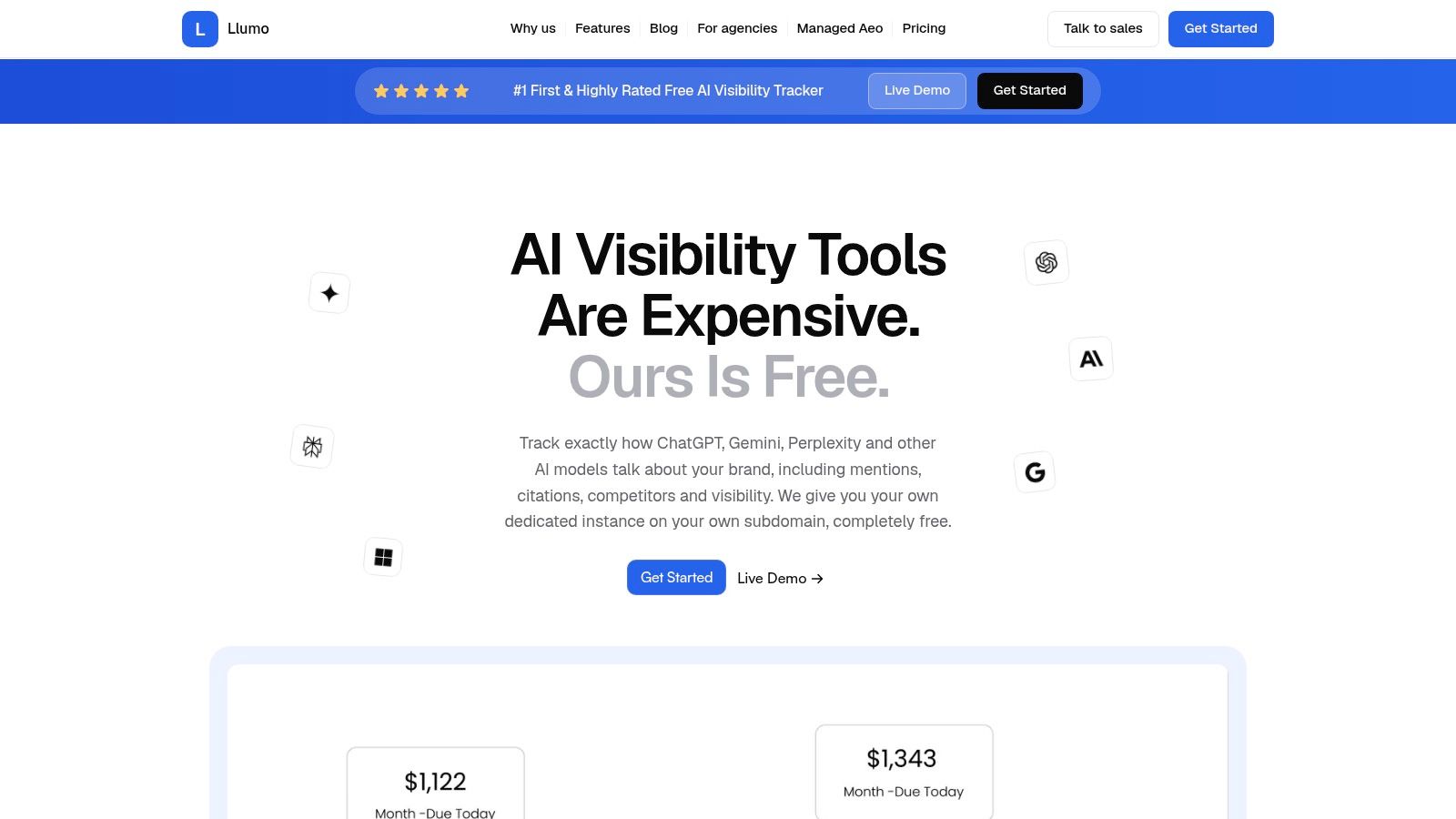
Llumo uses a bring-your-own-API-keys model. There's no core software license fee, customers pay connected providers directly, and Llumo doesn't add usage markup. That makes cost ownership more transparent, though procurement teams must manage provider accounts and quotas. The site doesn't publish fixed dollar tiers, public customer testimonials, or awards, so request a demo and a provider-cost projection before committing.
2. PromptRush
PromptRush is a practical option for teams that want recurring visibility checks without building a complex measurement system. It monitors ChatGPT, Gemini, Perplexity, Google AI Overviews, and Google AI Mode, with Claude available as an optional addition. The product focuses on daily scans, prompt-level visibility, competitor share of voice, source analysis, historical trends, and reports that are easy to share with clients or stakeholders.
The inclusion of both Google AI Overviews and AI Mode is useful because those experiences don't behave identically. A team tracking only one Google surface can miss changes in how commercial and informational prompts produce answers. PromptRush gives you a straightforward way to separate those results and review which domains influence each answer.
Its clearest advantage is pricing clarity. The self-serve tiers include daily scanning, competitor tracking, and source analysis, so buyers can estimate the operating model before a sales conversation. That's often more useful for a small SEO team than an impressive feature list with unclear usage limits.
The trade-off is that the visibility metrics are modeled. They indicate presence within the tracked responses, but they aren't a direct measure of audience reach, impressions, or traffic. Claude also has separate limits and pricing, which can complicate a multi-engine budget.
Use it when: You need a repeatable monitoring rhythm and shareable reports, but don't need the deepest prompt-response archive or a managed execution layer.
Before setting up campaigns, define prompts around real buying questions rather than stuffing the tracker with every keyword variation. This guide to building a prompt set that actually matters is a useful reference for creating a smaller, more representative set.
3. Citations.io
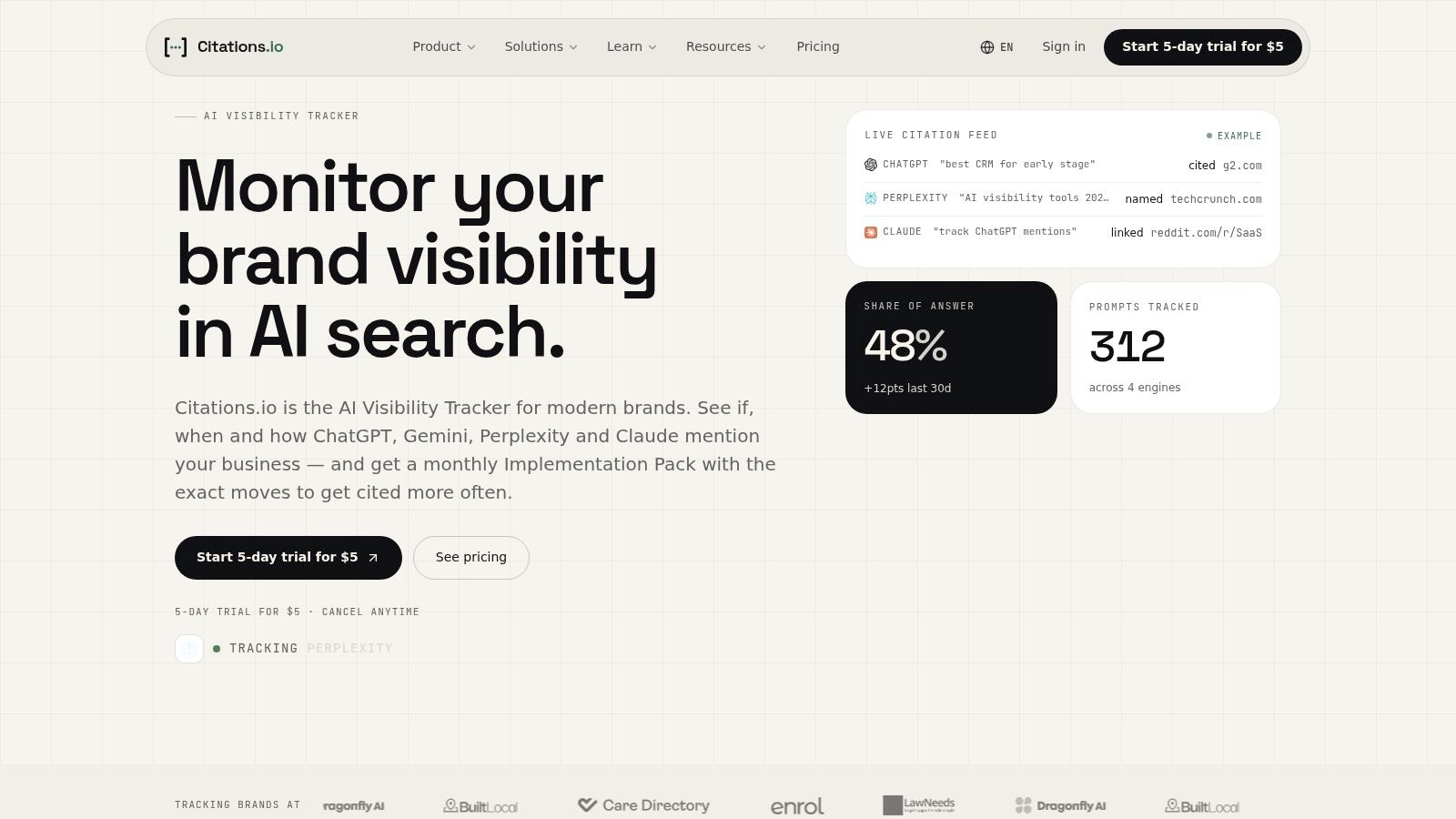
Citations.io is built around a simple question, which sources are shaping the answers that mention your brand or competitors? It tracks ChatGPT, Perplexity, Gemini, and Claude, then organizes visibility scores, prompts, competitor appearances, and citation sources into an output-oriented workflow.
The standout feature is the monthly Implementation Pack. Instead of leaving the marketing team with a dashboard and no decision, the platform prioritizes content and PR tasks based on the sources influencing AI answers. That suits teams that already have writers, outreach specialists, or brand marketers ready to act on a short list of recommendations.
Its ranked citation source lists add useful competitive context. If several competitors are repeatedly associated with the same publication, directory, review site, or reference resource, that pattern can inform outreach and content planning. It won't replace manual judgment, but it provides a better starting point than monitoring mentions in isolation. For a deeper explanation of the workflow, see Llumo's guide to AI citation tracking.
Where the coverage narrows
Citations.io focuses on four primary engines. That's enough for a focused program centered on the largest conversational surfaces, but it limits the picture for teams responsible for Google AI Overviews, Copilot, or a broader model portfolio. The platform's visibility metrics are also derived, so results may not line up directly with another vendor's score.
The entry-level pricing and low-commitment trial make it easier to test whether citation recommendations fit your operating process. Still, buyers should judge it by the quality of the Implementation Pack, not by dashboard polish alone. A recommendation is valuable only when the team can identify the page, source, or outreach action behind it.
4. Bee LLM
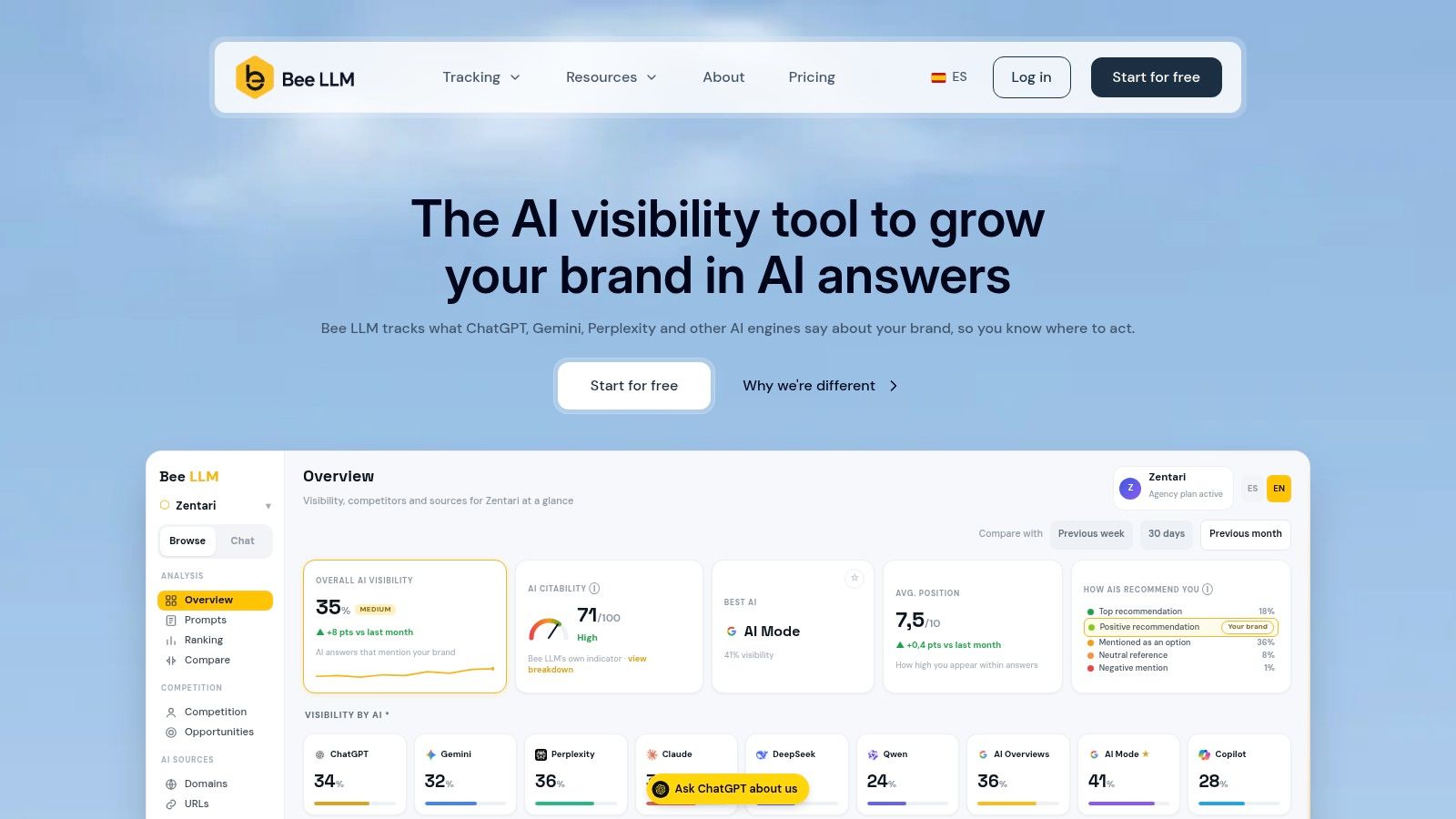
Bee LLM offers broad monitoring from a relatively accessible starting point. It tracks nine AI engines, including ChatGPT, Gemini, Perplexity, Google AI Overviews, Google AI Mode, Claude, DeepSeek, Qwen, and Copilot. The dashboard combines per-engine visibility, sentiment, source extraction, competitor comparisons, alerts, and the “fan-out” terms generated behind an answer.
The fan-out data is particularly useful for diagnosing how a model expands a user's original question. A buyer might ask for the best analytics platform, while the system explores integrations, pricing, implementation effort, and customer segment fit before composing its response. Seeing those expanded terms can reveal content gaps that a fixed keyword list misses.
Bee LLM also works well for agencies that need client-ready reporting. Shareable reports and alerts make it easier to turn a monitoring program into a recurring service rather than a one-off audit. The free plan gives prospective users a way to understand the interface before paying.
The limits to watch
The free plan is limited to ChatGPT and uses a smaller ChatGPT model, so it shouldn't be treated as a full representation of the platform's wider coverage. Paid plans impose daily prompt caps, which may require an upgrade as a team adds brands, competitors, markets, or prompt variants.
The broad engine list is useful, but coverage alone shouldn't decide the purchase. Ask whether the tool stores the source pages, shows the full answer, separates model-level results, and lets your team turn a lost mention into a specific content or outreach task.
A broad dashboard helps you spot movement. Source-level evidence helps you decide what to do next.
Bee LLM is a good fit for teams that want a transparent, self-serve starting point with sentiment and fan-out analysis. It's less suitable when provider-cost control or highly detailed citation archives are the main buying criteria.
5. RankZero
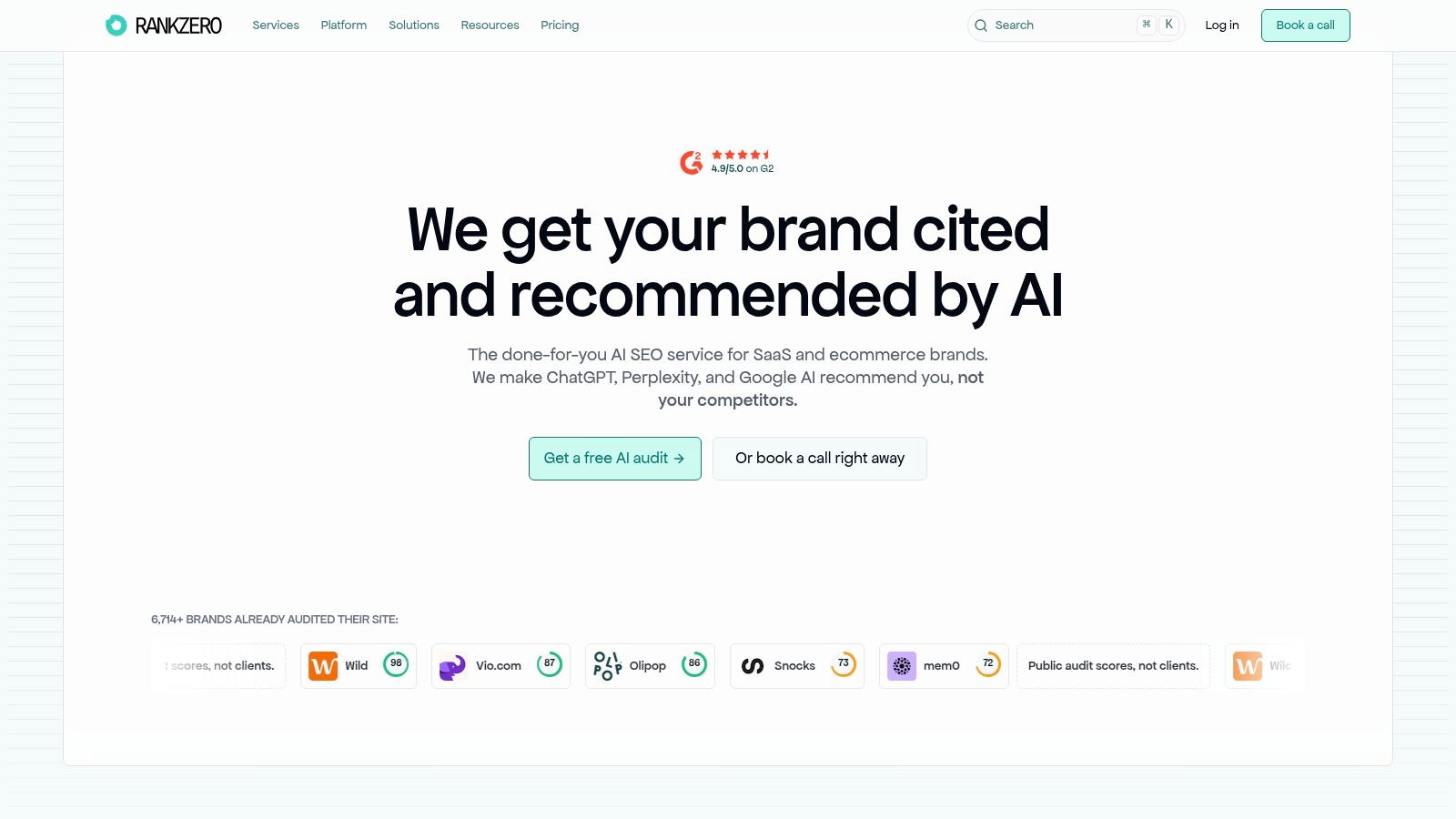
RankZero is the most Google-centered platform in this list, but it goes beyond a basic AI Overview monitor. It tracks whether AI Overviews activate for target prompts, whether your brand is mentioned or linked, which competitors appear, and which sources are cited. It also supports prompt tracking across ChatGPT and Perplexity with share-of-voice reporting.
The practical appeal is the connection between monitoring and site work. RankZero includes an AI SEO audit, schema builder, LLMs.txt utilities, and to-do workflows. That gives technical SEOs a place to investigate structured content and implementation tasks without immediately adding another audit product.
This approach suits a team whose immediate concern is Google AI visibility and on-site readiness. It can show whether a page is being cited, then direct attention toward schema or content utilities that may support an optimization program. Whitelabel reporting at higher tiers also makes the product relevant to agencies.
The limits are clear. Pricing and interface elements are presented in EUR, and some modules carry “Soon” labels, so buyers should confirm which capabilities are mature and available in their chosen plan. Google-focused utilities also shouldn't be mistaken for a complete multi-engine AEO strategy. Citation patterns can vary sharply between Google AI Overviews, ChatGPT, Perplexity, and other answer surfaces.
RankZero works best when a team wants AI Overview monitoring plus technical utilities. It's a weaker fit for organizations that need extensive model coverage, provider-level cost control, or detailed analysis across many answer engines.
6. Ahrefs AI Overviews Tracker
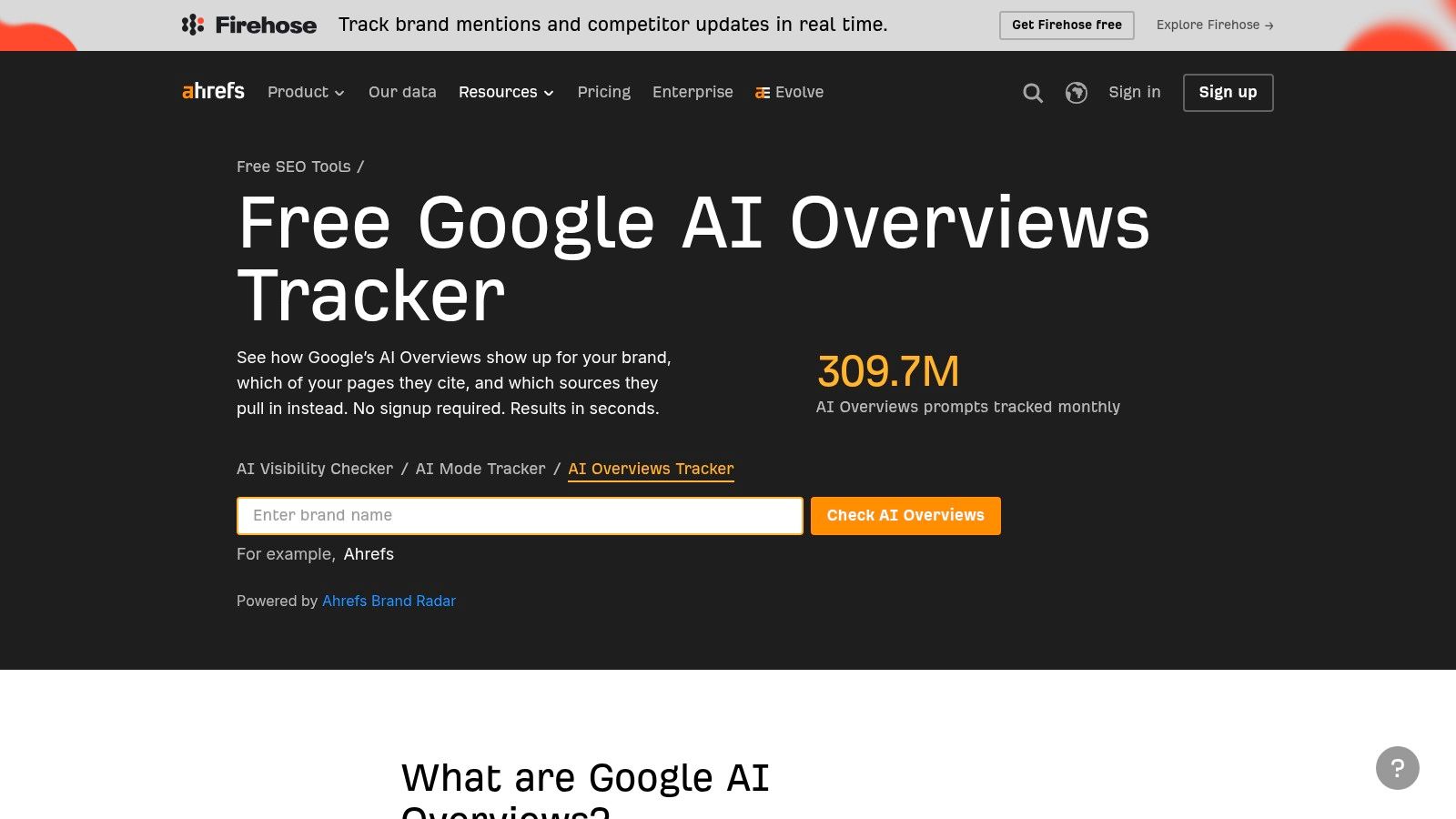
The Ahrefs AI Overviews Tracker is the simplest tool in this roundup. It's free, fast, and focused on one job, checking whether Google AI Overviews trigger for a query and whether your site is cited. For an SEO team that already uses Ahrefs and wants an initial view of Google's AI surface, that narrow scope may be exactly right.
Ahrefs also provides context around AI Overview volatility and potential click-through effects, then points users toward related products such as its AI Mode Tracker and AI Visibility Checker. That makes the tracker useful for validating exposure before investing in a broader measurement platform.
The limitation is the same reason the tool is easy to use. It doesn't provide multi-engine visibility across ChatGPT, Gemini, Claude, Perplexity, or Copilot. It also uses modeled visibility metrics, which shouldn't be interpreted as measured audience reach or guaranteed traffic.
When a focused check is enough
Use Ahrefs when you have a small set of important Google queries, need a quick diagnostic, or want to monitor a known AI Overview change without purchasing a dedicated suite. It's also a sensible first step for teams that don't yet know whether AI citation tracking belongs in their regular reporting.
Don't use it as the only tool if your customers discover products through conversational assistants or if your strategy depends on understanding citation sources beyond Google. In that situation, a single-surface check can confirm exposure but won't explain the wider answer-engine environment.
For a more specialized workflow, compare it with Llumo's Google AI Overviews Tracker, especially if you need prompt-level archives, competitor trends, and broader model comparisons.
7. AnswerLift
AnswerLift is designed for teams that don't want to stop at measurement. It monitors ChatGPT, Perplexity, Gemini, Claude, and Google AI Overviews, then connects visibility findings to GEO action plans, content kits, competitive benchmarking, and citation probability scoring.
That execution focus is the product's main differentiator. A visibility report tells you that a competitor appears more often. An action plan should tell you which topic to cover, which page to revise, what supporting evidence to add, and whether the task belongs to content, technical SEO, or external promotion. AnswerLift aims to close that gap for teams that need structured next steps.
The platform offers self-serve and managed paths, which is helpful for organizations at different stages of maturity. A small marketing team can start with a visibility audit, while a larger brand can explore managed execution when internal resources are limited. Public “Index” checks and free instant visibility audits also make initial evaluation easier.
What to verify before buying
Some product pages require JavaScript to load and provide limited detail without direct engagement. Pricing specifics aren't fully visible on static pages, so buyers should ask for a live walkthrough of the scoring model, action-plan output, content-kit workflow, and usage limits.
AnswerLift is a strong candidate when recommendations and implementation matter more than raw engine count. It's less suitable for procurement teams that need fully transparent pricing before speaking with sales or analysts who want unrestricted access to every underlying response and citation record.
7-Way LLM SEO Tool Comparison
Product | 🔄 Implementation complexity | ⚡ Resource requirements | 📊 Expected outcomes | 💡 Ideal use cases | ⭐ Key advantages |
|---|---|---|---|---|---|
Llumo | 🔄 Moderate, BYO API keys, model mapping, hosted-instance setup | ⚡ Pays provider API costs; scales with usage; no license fee | 📊 Per-prompt visibility, share-of-voice, citation sources, prioritized opportunities | 💡 AEO/SEO teams, agencies, product & competitive intelligence needing model-level visibility | ⭐⭐⭐⭐ Multi-model prompt-level tracking; BYO-API transparency; hosted instance |
PromptRush | 🔄 Low–Medium, self-serve onboarding, daily scan setup | ⚡ Subscription tiers with generous daily scans; Claude as paid add-on | 📊 Daily visibility scores, historical SOV, source analysis | 💡 Continuous multi-engine tracking for marketing teams and agencies | ⭐⭐⭐ Clear pricing; covers Google AIO/AI Mode; shareable reports |
Citations.io | 🔄 Low, onboarding plus monthly Implementation Pack workflow | ⚡ Entry-level pricing and low-commitment trial; limited engine coverage | 📊 Monthly action packs: ranked citation sources and prioritized tasks | 💡 Brands wanting output-to-action recommendations with light commitment | ⭐⭐⭐ Practical, action-oriented workflow; affordable entry |
Bee LLM | 🔄 Low–Medium, single dashboard across nine engines | ⚡ Free starter tier (limited); paid plans with daily prompt caps | 📊 Per-engine visibility, sentiment, search "fan-outs", alerts & reports | 💡 Teams needing broad engine coverage at lower price points | ⭐⭐⭐ Broad engine coverage; transparent self-serve pricing; reports |
RankZero | 🔄 Medium, AIO tracking plus on-site SEO utilities (schema, LLMs.txt) | ⚡ Tiered pricing (EUR); some modules marked "Soon" / still maturing | 📊 AI Overviews activations, mentions/links, competitor & source tracking | 💡 Google-centric AI Overview monitoring with optimization tasks | ⭐⭐⭐ Monitoring + on-site optimization tools; whitelabel reporting |
Ahrefs (AI Overviews Tracker) | 🔄 Very low, one-off checks, minimal setup | ⚡ Free and fast; limited scope (Google AIO only) | 📊 Validates AIO triggers and site citations; research-backed CTR context | 💡 Teams needing free Google AIO validation without full-suite purchase | ⭐⭐ Free, research-backed, transparent checks |
AnswerLift | 🔄 Medium–High, monitoring integrated with execution workflows | ⚡ Self-serve or managed services; pricing/details require engagement | 📊 Prescriptive GEO action plans, citation probability, competitor benchmarking | 💡 Organizations that want tracking plus prioritized execution & kits | ⭐⭐⭐⭐ Execution-oriented approach; citation scoring; managed support |
Choose the Tool That Matches Your Workflow
The right LLM SEO tool depends on what your team needs to prove and what it can act on. If you need model-level evidence, prompt archives, source analysis, flexible provider costs, and room to scale, choose Llumo. Its bring-your-own-key setup gives finance and technical teams direct control over provider spending, while its dashboards and managed AEO services support both independent operators and teams that want execution help.
Choose PromptRush or Bee LLM for recurring multi-engine monitoring. PromptRush is the cleaner fit when daily scanning, historical reporting, Google AI Overviews, and AI Mode coverage matter. Bee LLM is more appealing when you want broad engine coverage, sentiment, and search fan-out terms with transparent self-serve entry points. In both cases, treat visibility scores as modeled indicators, not direct audience or traffic measurements.
Citations.io and AnswerLift make more sense when recommendations need to lead directly to work. Citations.io's Implementation Pack emphasizes practical content and PR priorities, while AnswerLift connects monitoring to GEO action plans, content kits, and managed services. These tools are useful when a team has limited time for interpretation and wants a more prescriptive workflow.
Choose RankZero for Google-focused monitoring combined with schema, LLMs.txt, audits, and technical to-do items. Choose Ahrefs when a free Google AI Overviews check is enough and you don't need broader model coverage or detailed cross-engine citation analysis.
The market context supports taking this category seriously. Google AI Overviews appeared on 13.14% of U.S. desktop searches in March, up from 6.49% in January, according to Digital Strategy Force's AI search market report. Another market summary estimated that AI search engines handled 18.7% of global search queries, up from 11.2% in Q1, while ChatGPT represented about 74.8% of AI referral traffic in that analysis, as reported by Cllimber's AI search data summary. The specific percentages vary by dataset, but the operational lesson is consistent, visibility is fragmented and rank tracking alone can't describe it.
Before committing, compare prompt coverage, citation detail, response archives, competitor reporting, model limits, ownership of API costs, export options, and the actions your team can take from each finding. A tool that supports more engines but hides its evidence may be less useful than a narrower platform that shows exactly which page earned the citation and what should change next.
Llumo gives SEO, growth, agency, and competitive intelligence teams per-prompt visibility, share of voice, citation sources, competitor trends, and archived answers across major AI surfaces. Connect your own provider API keys, control underlying usage costs directly, and turn citation gaps into prioritized content and outreach work by visiting Llumo.