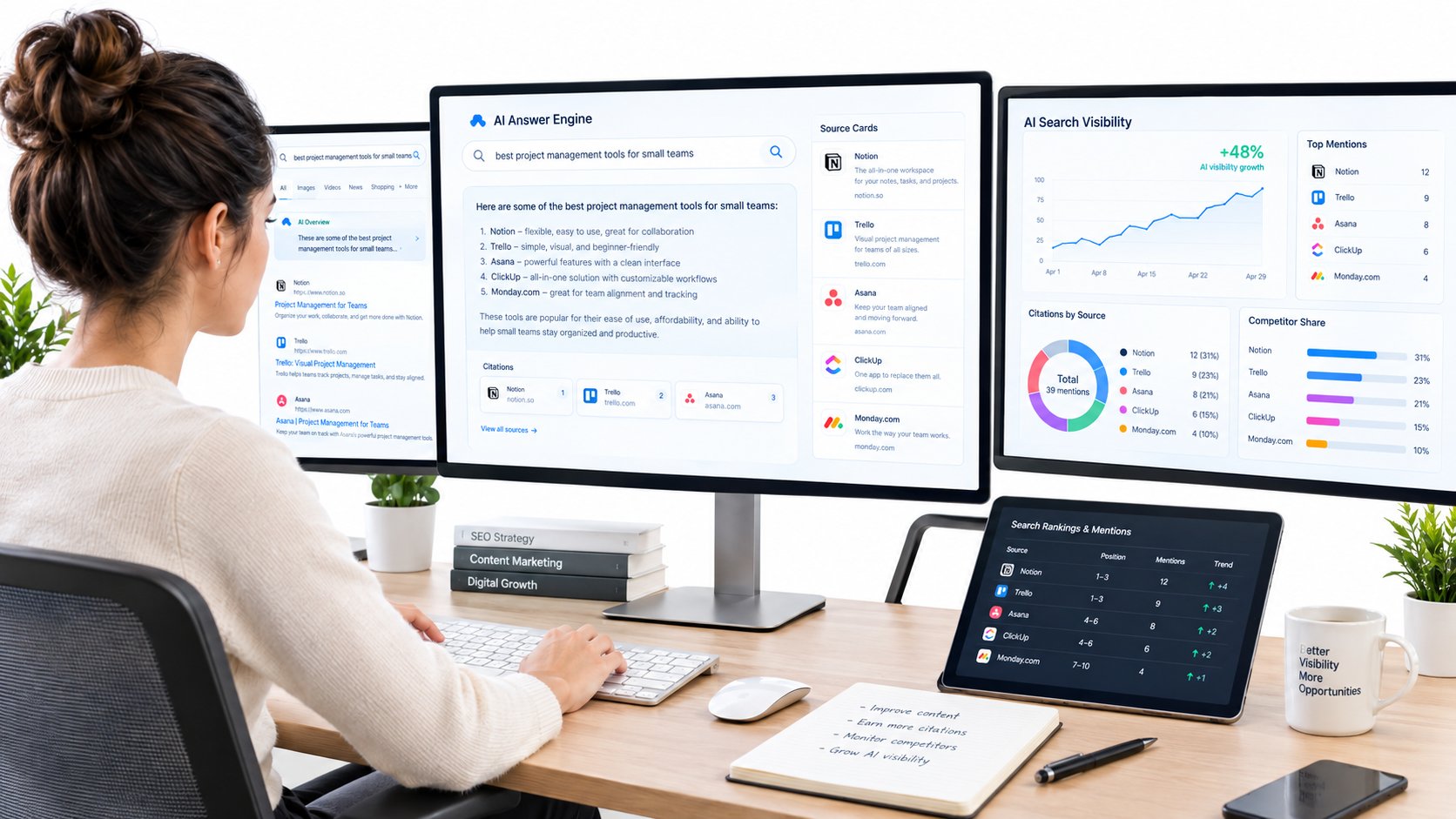
AI search engines typically cite only about five sources per query, so being one of those few matters more than holding a blue-link position. That's why AI search optimization is really a citation game, not just a ranking game, and the brands that show up inside answers are already taking visibility away from the ones still thinking in keyword terms.
You can see the gap fast in client work. A page can rank well, earn steady traffic, and still vanish the moment someone asks an AI engine the same question in plain language. That's the frustrating part, because the old report looks healthy while the new discovery layer skips you.
The Hidden Gap Between Ranking and Being Cited
A lot of teams discover this gap the hard way. A brand has the strongest organic page in its category, the content is polished, the backlinks are decent, and the title tag looks competitive. Then someone checks an AI answer engine and a rival gets mentioned instead, or the answer comes back with no brand mention at all.
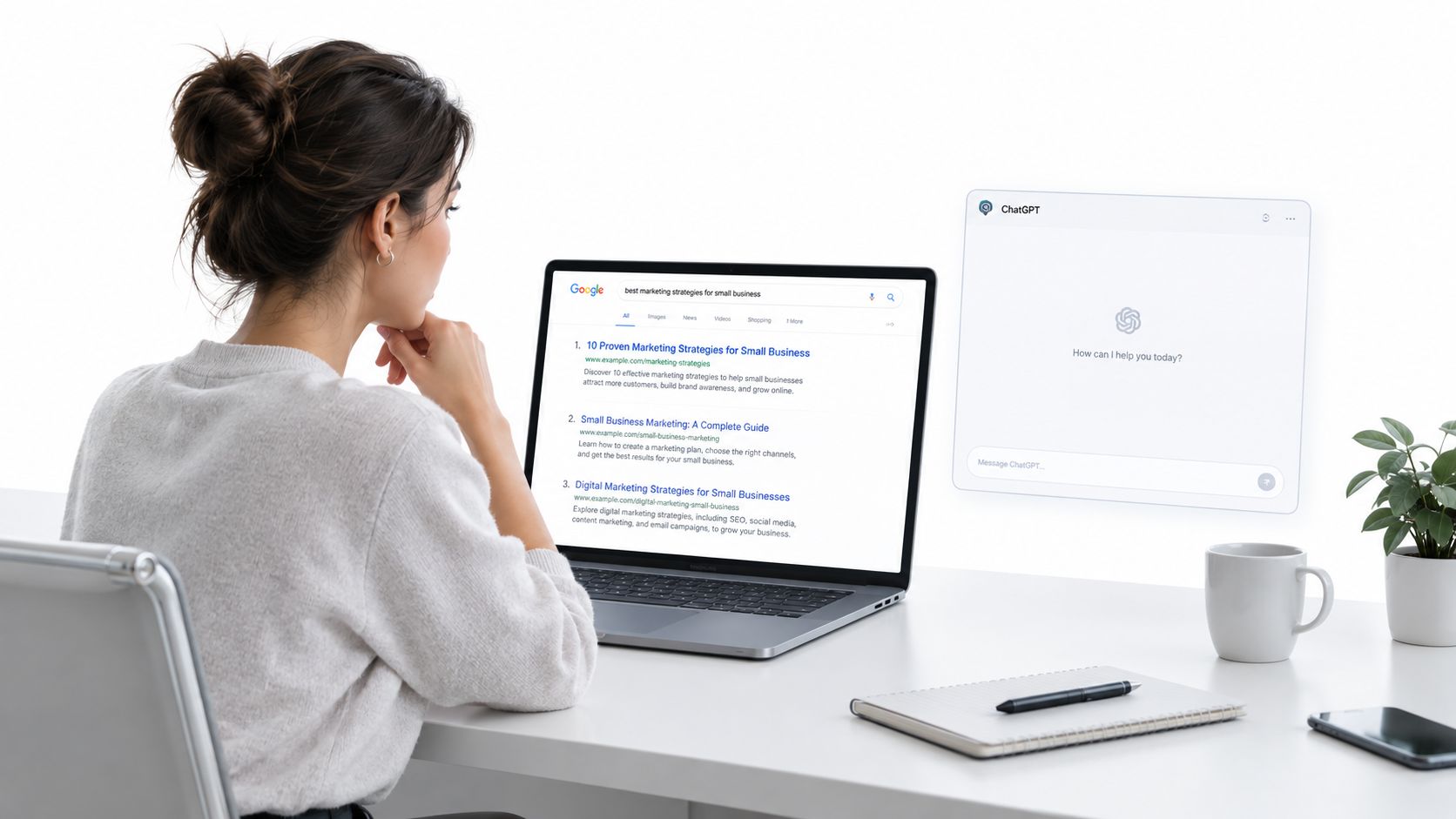
That mismatch isn't rare. A 2026 survey found that 92% of practitioners were already tracking AI visibility and citations, up from 78% the prior year, which tells you this has moved from curiosity to routine measurement (Semrush AI Visibility Index). The basic reason is simple: search engines are no longer only deciding who gets the click. They're deciding who gets named.
A familiar scenario with an unfamiliar outcome
A page that ranks first for a commercial query may still lose in AI answers if the model prefers a tighter topic match, a clearer structure, or a page that appears earlier in its retrieval set. That is the part conventional SEO misses. Traditional ranking can still matter, but it is no longer the whole story when a system is synthesizing an answer rather than listing ten blue links.
Practical rule: if your brand isn't appearing in AI answers, don't assume the page is weak. Assume the retrieval and citation filters are different.
The measurement shift matters because AI answer engines do not behave like a static SERP. The underlying discipline draws on older search foundations, from Knowledge Graph in 2012, to Hummingbird in 2013, to RankBrain in 2015, all of which pushed search toward entities, semantics, and machine interpretation. AI visibility follows that same logic, only now the output is a generated answer, not a results page.
The painful part for teams is that absence is hard to notice until a competitor starts showing up everywhere a buyer asks a question. By then, they have already become the brand the model seems to trust. That is why AI visibility deserves its own scorecard, not just a note inside the SEO dashboard.
What Makes AI Search Different From Traditional SEO
A page can rank well and still stay out of an AI answer if it does not fit the system's retrieval and citation logic. AI search optimization is about becoming a cited or mentioned source inside the answer, and that changes what gets rewarded.
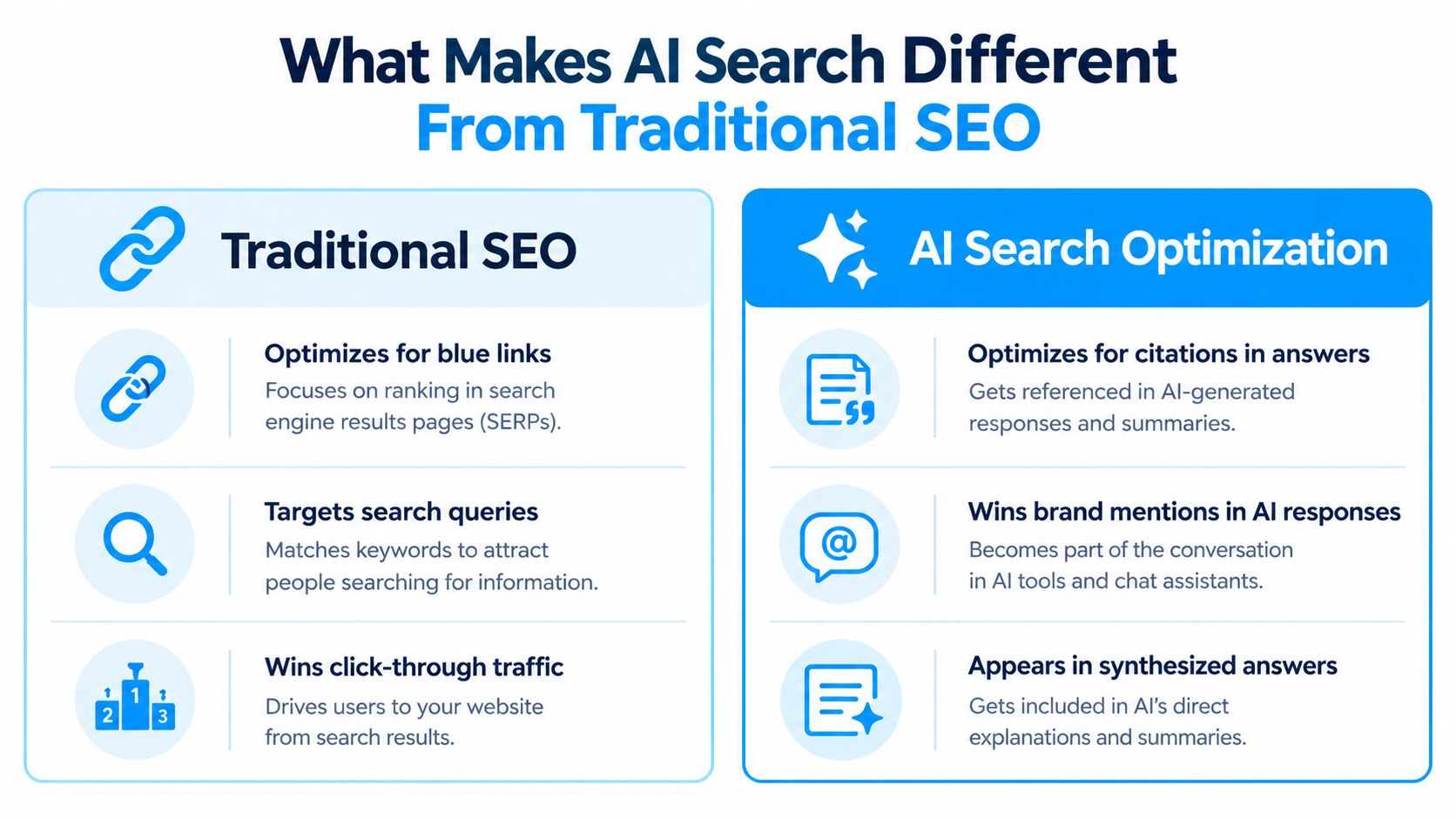
Citation patterns make the difference visible. In a large AI Overviews study, only 52% of cited sources also appeared in the top 10 organic results, and the average overview cited about 5 sources per query (Surfer SEO AI Overviews study). A separate citation study found that only 8% of AI Overviews cited more than 7 domains, with a median of 4. That is a narrow field, and it shows why a strong organic ranking can still miss the answer layer.
Why citation hierarchy beats decoration
The strongest citation drivers are not clever layout tricks. Analysts at Digital Applied found in a 252,000-trial study of competitive GEO that topical relevance and list position were the strongest factors for being cited first. Explicit price information and a recent timestamp also improved citation likelihood. Formatting-only edits barely moved the needle.
That has blunt implications. Fancy callout boxes, decorative schema, and keyword repetition will not rescue a page that does not match the query tightly. If the model is choosing between several plausible sources, the page that is easiest to retrieve and easiest to justify usually wins.
The difference from traditional SEO is partly structural. A useful comparison is Llumo's AEO vs SEO overview, which makes the split between ranking and citation easier to see. In AI search, the system is not just judging whether a page deserves traffic. It is deciding whether your page belongs in the small set it can defend inside the answer.
Bottom line: AI engines reward content that is close to the question, early in the candidate set, and easy to defend as a source.
Broad “topical authority” advice gets vague fast because AI systems cite a small number of sources, not a wide panel. Be the source the model reaches for when a specific prompt lands, not a generally good page that fits every prompt equally poorly.
The Three Proven Levers for AI Citation
Citation patterns get clearer once you stop treating AI search optimization as one broad cleanup job. In practice, three levers keep showing up, and each one affects whether a page gets retrieved, defended, and cited. They are plain, but they move visibility.
Tight topical relevance
A page has to answer the prompt's real intent, not just sit near the topic. If a buyer asks about AI search optimization, a page about “future-proof content strategy” sounds polished, but it is too loose. A page that names the problem, the decision criteria, and the trade-offs has a better chance of being selected.
Use the language the searcher would use, then narrow the page around one job to be done. One page per high-value question usually works better than one catch-all article. The tighter the match, the easier it is for the model to justify the citation.
Early retrieval position
As noted earlier, position in the candidate set is one of the strongest citation drivers. If your page surfaces early, it has a better shot at being cited first. That makes this a retrieval problem as much as a writing problem.
Internal linking, page hierarchy, and source clarity shape that path. A page also needs a strong entry point, because if the answer engine has to work through generic sections before it reaches the useful part, another source usually takes the slot.
Freshness and explicit signals
A 2026 analysis of 4,124 cited pages found that 72% had been updated within the past year, but only 42% were newly published, so freshness is not just about posting something new (ar5iv freshness and source selection study). Maintained legacy pages often have a better chance than brand-new assets that still feel thin.
Keep legacy pages alive if they still match the topic. A maintained page with clear recency cues can beat a newer page that lacks depth.
Price signals matter when the query expects them, because structured commercial detail gives the model something concrete to cite. The point is not to stuff in numbers. It is to make the page easy to classify, extract, and trust.
For prompt research and retrieval planning, I use a live prompt set that reflects how buyers ask the question. A practical prompt-tracking workflow for prompt sets keeps attention on what gets retrieved, cited, and ignored over time.
Where Old SEO Tactics Fail With AI Engines
A lot of classic SEO habits still feel productive, which is exactly why they waste time here. AI answer engines do not reward every tactic evenly, and some familiar moves barely matter once the model compresses sources into one answer.
Formatting is overrated
Clean formatting helps humans scan content, but it does not guarantee citation. As noted earlier, formatting-only edits had negligible impact across six models in the 252,000-trial study. That matters because teams can spend hours polishing layout while the page still leaves the answer buried.
The failure mode is easy to spot. If your H2 asks a question and the answer only appears after two paragraphs of setup, retrieval may truncate before the useful part. If a page opens with context, then circles back to the actual answer, the engine may pull a different source that gets to the point faster.
Broad coverage is not enough
Old SEO often rewards range, but AI answers usually reward precision. A wide umbrella article can lose to a narrower page that matches the prompt better and is easier to extract from. Long content is not the problem. Loose structure is.
The same issue shows up with keyword stuffing. Repeating terms does not help if the page never states the entity, the claim, and the evidence in a form the model can parse quickly. If the page reads like it is trying to cover everything, the symptom is usually weak citation coverage on the exact questions you care about.
Useful test: if a section cannot stand alone as a direct answer, it probably will not win the citation.
Quality is necessary, but not sufficient
Good writing still matters, but it stops being the differentiator. A clean page with no clear topical fit can still lose to a more focused competitor. A well-written article with weak source placement can still disappear from the answer layer.
That is the core trap with old SEO advice. It optimizes for pages that look finished, not for pages that get retrieved. If your content is polished but sits low in the hierarchy, answers may skip it entirely.
Measuring AI Visibility and Building a Workflow
You cannot improve what you do not measure, and that becomes obvious once visibility sits inside generated answers instead of a rankings report. The first question is simple: where does the brand appear, and where does it disappear?
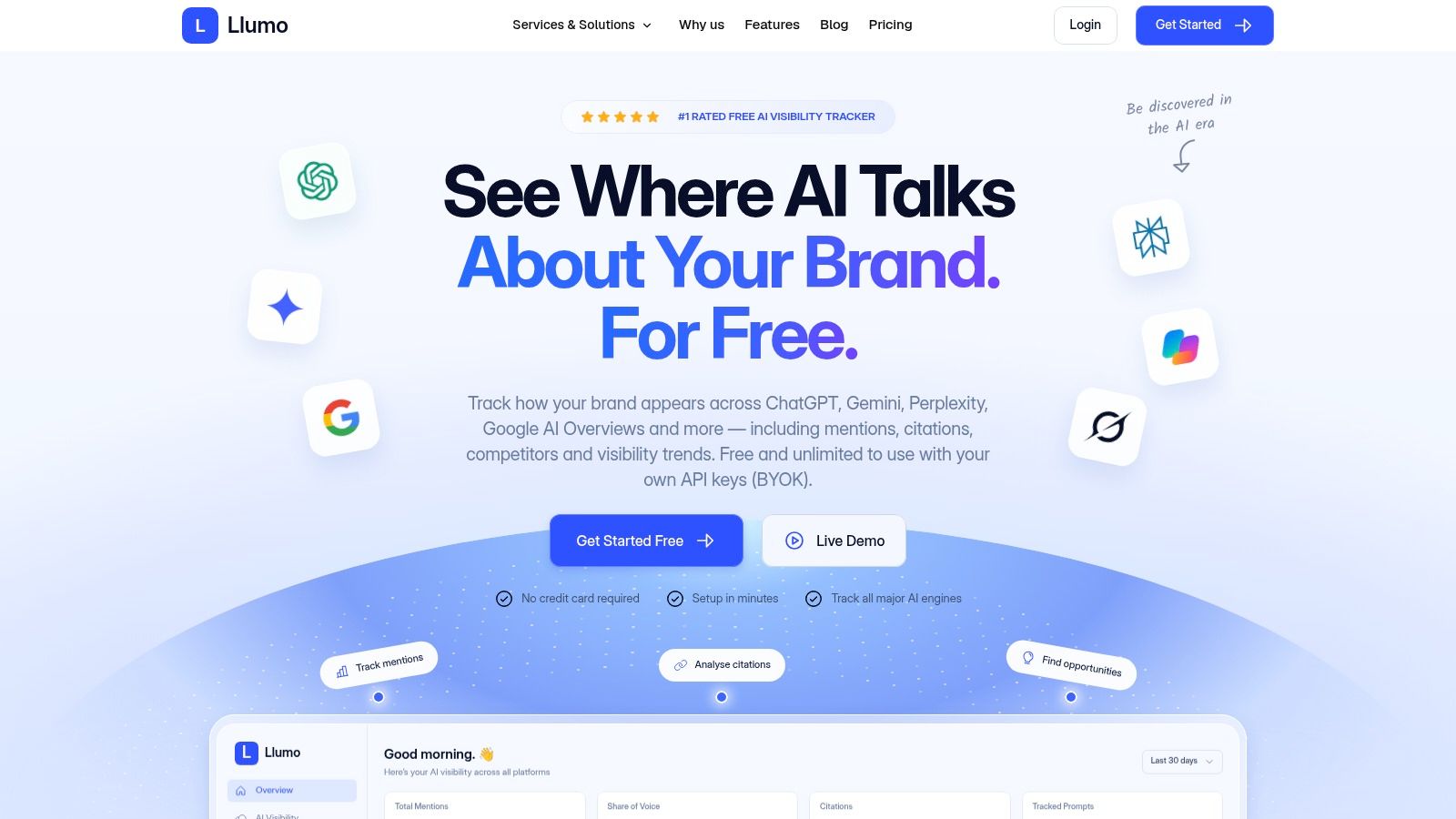
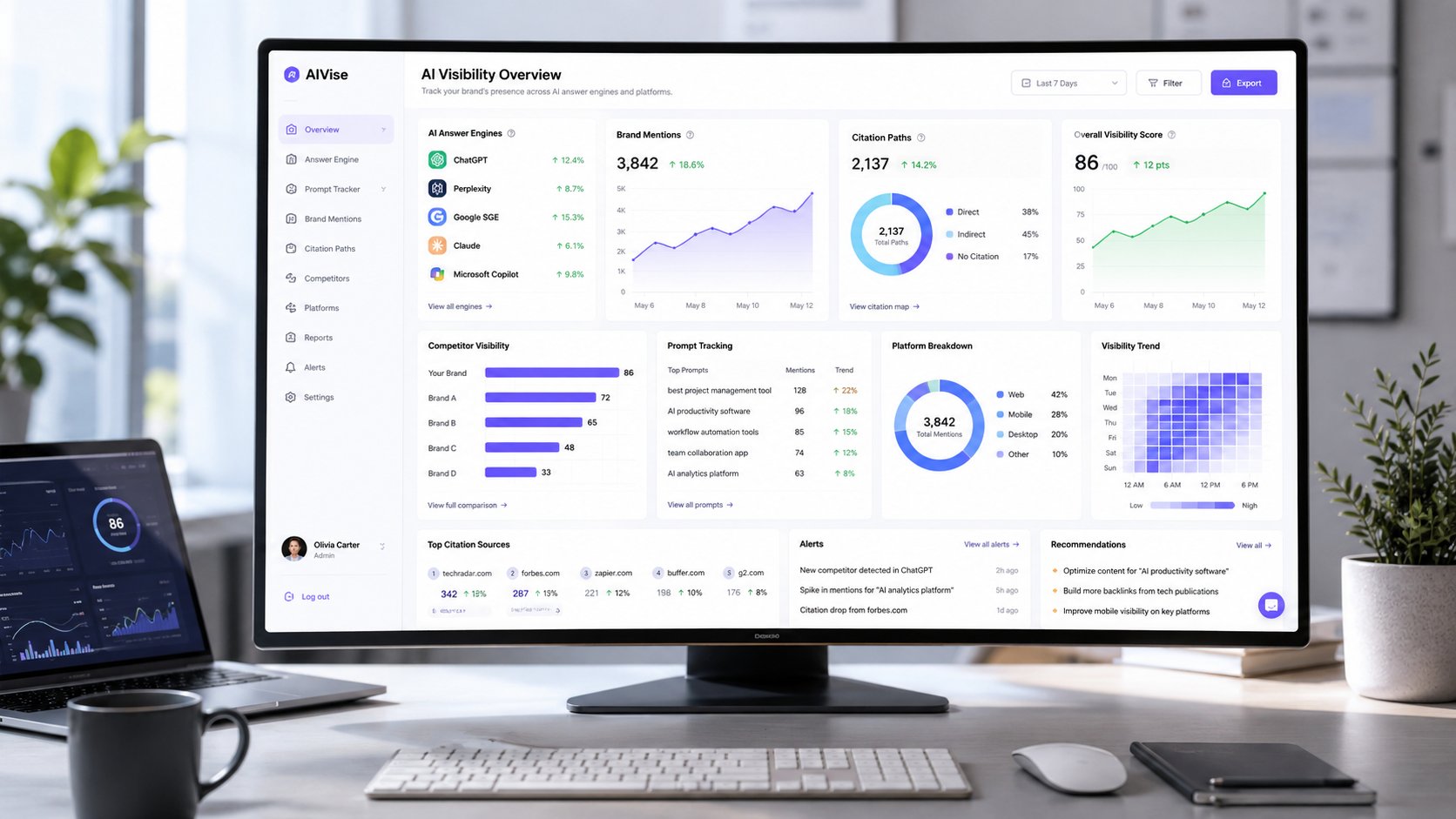
A useful setup needs more than a mention count. It needs per-prompt visibility, citation source tracking, competitor comparison, and a way to watch changes over time. Multi-model tracking matters because the source set for ChatGPT, Gemini, Perplexity, Copilot, and Google AI Overviews does not always match. In a tool like Llumo, that means watching per-prompt visibility and citation sources each week, and because you connect your own provider API keys, the tracking cost scales with usage rather than seat count.
A simple workflow that holds up
Start with the prompts buyers use. Track a small set of high-intent questions, then expand once you know which topics show visibility gaps. For how to build and maintain that prompt set, see the AI citation tracking guide. From there, compare which competitors are cited, which pages are absorbed, and which sources are repeatedly ignored.
A good workflow usually has four parts:
Baseline visibility: Record which prompts mention your brand, which cite competitors, and which produce no brand visibility at all.
Citation review: Check whether your pages are cited, merely mentioned, or not retrieved.
Content action: Update pages that are close to relevance, tighten pages that are too broad, and build new pages only where the gap is structural.
Trend watching: Re-run the same prompts over time so you can see whether changes shifted the answer layer.
That last step matters more than many teams expect. If a rewrite changes rankings but not citations, you have learned something real. If a page gains citations after a freshness update or a source rewrite, you have learned even more.
The operational upside of tracking this way is clarity. You stop debating whether AI visibility matters and start seeing which prompts, pages, and competitors shape answers. A tool cannot make the strategy for you, but it can show you where the model is already making the decision.
Why AI Search Optimization Belongs in Your Strategy Now
The market has already moved. A State of AI Search Optimization survey found that 98% of respondents had been asked about AI search visibility by a client, manager, or decision maker, 69% had budget allocated, and 75% said they had a dedicated AI search optimization strategy for at least some sites. That is no longer early-adopter behavior. It is a mainstream operating concern.
The business signal is getting louder too. The same survey found 56% saw at least some positive business impact, and the share attributing more than 5% of site revenue to AI search rose from 8% to 19%. In the same report, a separate analysis of 1,700 businesses found only 202 appeared in ChatGPT recommendations, which works out to roughly an 11.9% visibility rate by our calculation, and 88.1% were absent from AI search discovery. If competitors are already in that cited set, the gap is real.
What to do next
Start with one category page and one high-intent article. Tighten the topic match, make the answer obvious in the opening, add the clearest support you have, and check whether the page is being retrieved in AI answers. If it is not, the problem is usually not more content. It is better retrieval design.
Old SEO habits can slow you down here. Producing more pages and hoping visibility follows takes too long for answer engines. A better approach is to identify the prompts that matter, inspect the sources being cited, and close the gap with pages that models can select more easily.
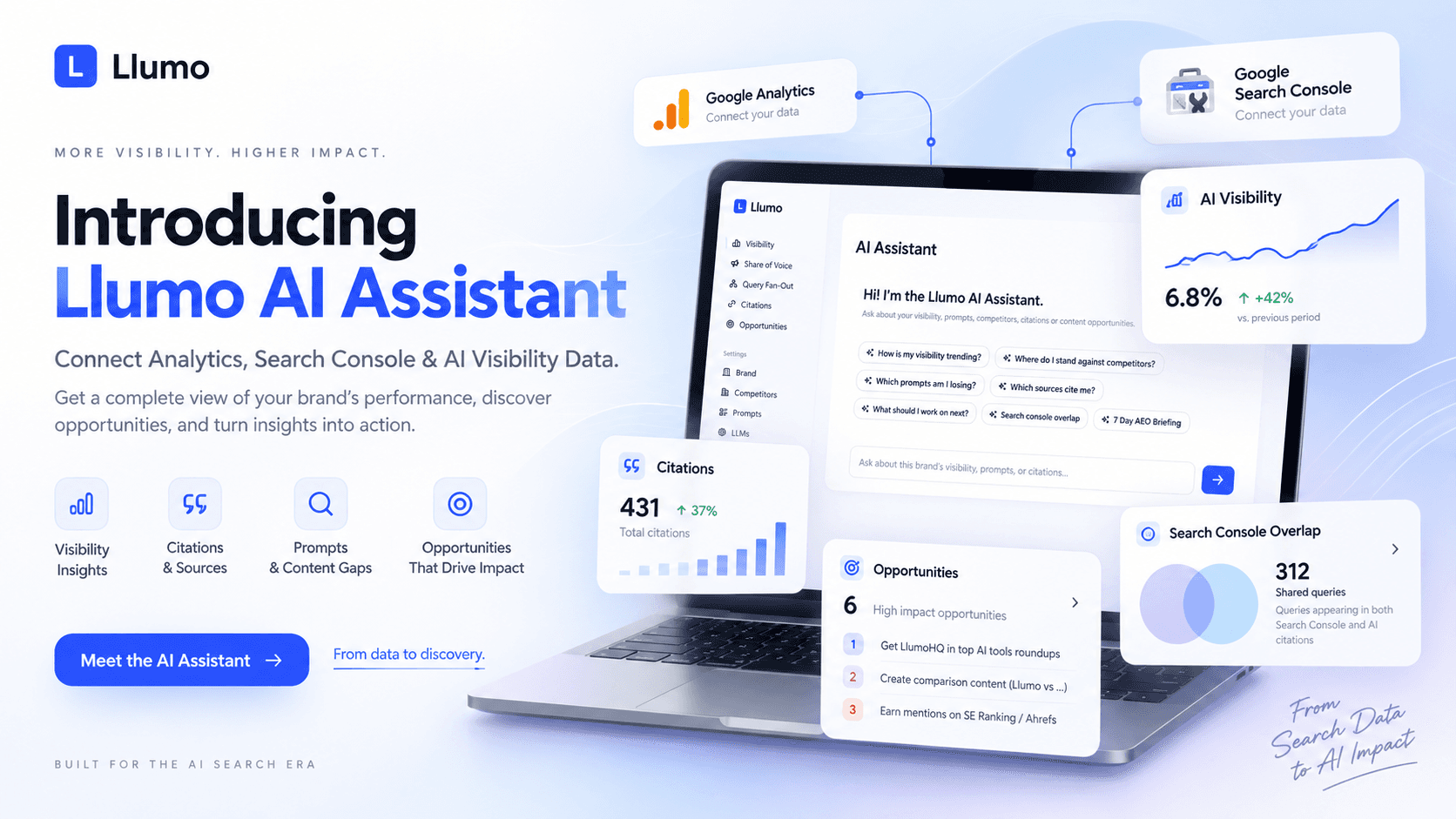
If you need a way to see how your brand is showing up across answer engines, Llumo measures mentions, citations, and prompt-level visibility across multiple AI surfaces, which makes it easier to spot where the gap is and what changed after an update. Visit Llumo if you want to track the answers your buyers are already seeing and turn those patterns into a workable optimization plan.