You can spend weeks building a page that ranks well in Google, then ask Perplexity the same question and find your brand missing from the answer. The page is indexed, the keyword is present, and the advice is solid. Yet another publisher gets cited while your result remains invisible to the person making the decision.
That mismatch happens because how to rank on Perplexity isn't mainly about winning a blue-link position. It's about becoming a source the answer engine can retrieve, understand, verify, and confidently cite. The practical work spans page structure, freshness, topic coverage, external mentions, and prompt-level measurement.
Why Ranking on Perplexity Feels Different
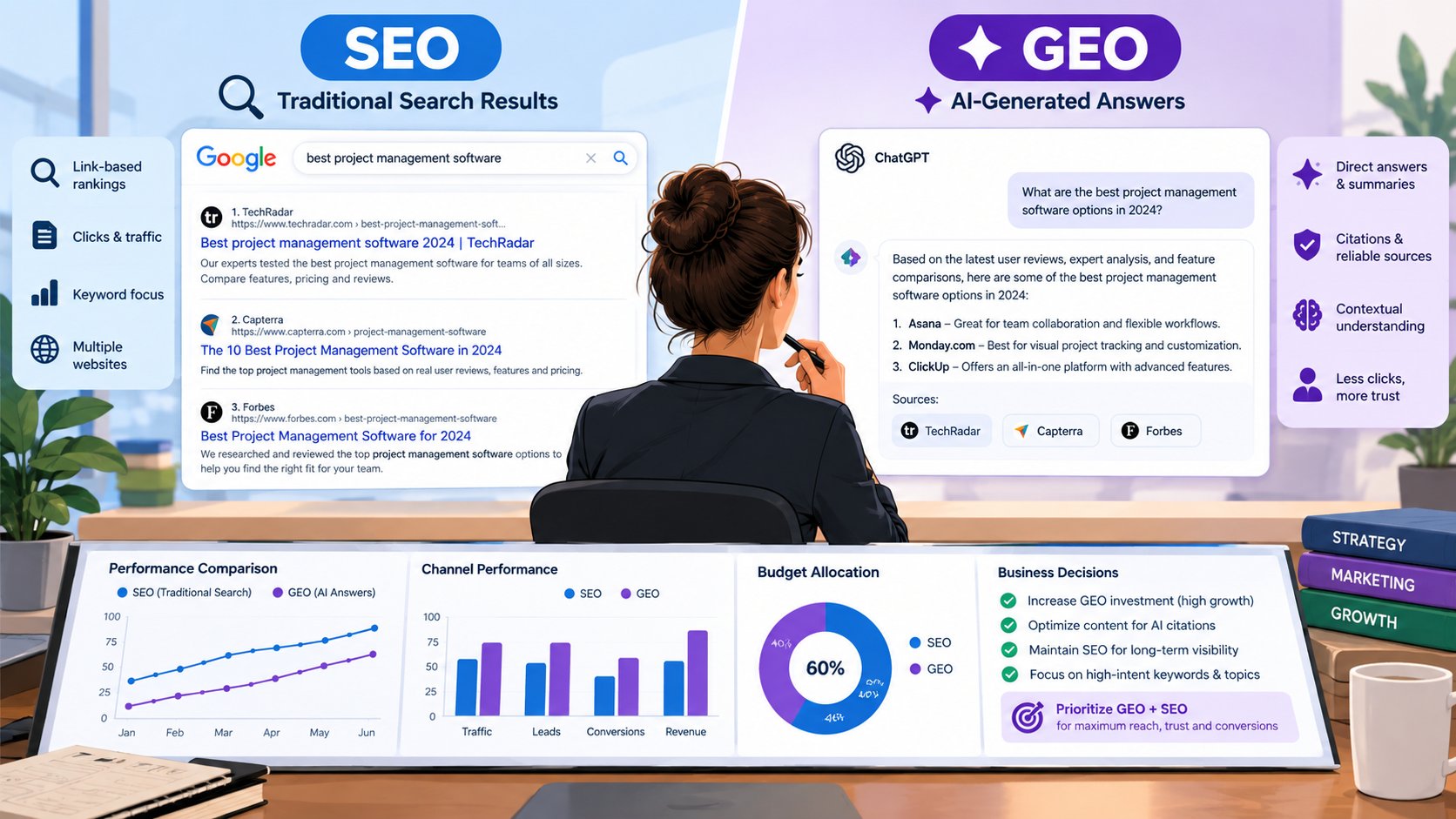
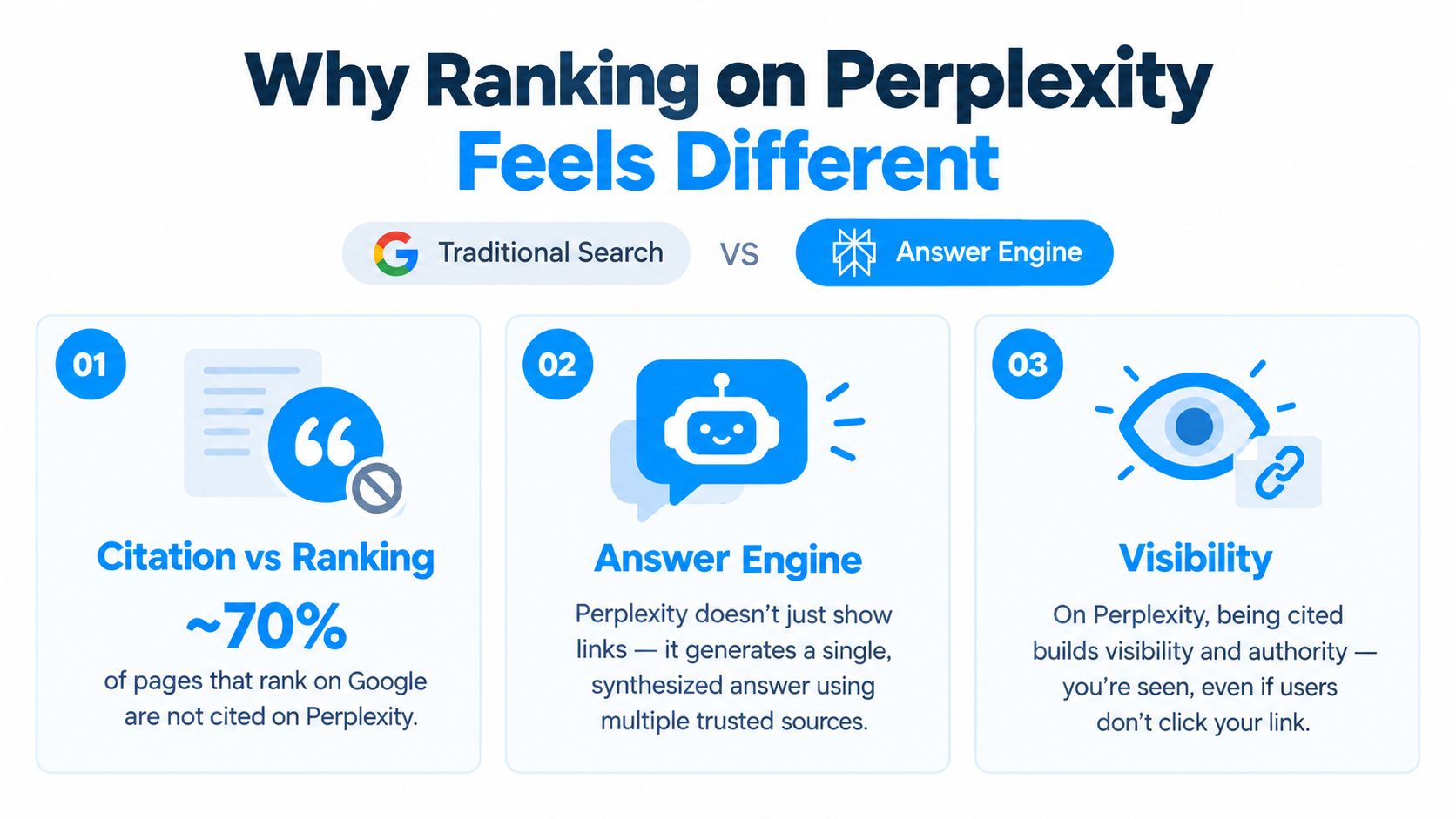
Traditional SEO gives you a visible destination. You aim for a position, earn a click, and improve that position over time. Perplexity gives the user a synthesized response with inline citations, so your page may contribute a fact without appearing as a conventional result at all. Perplexity's own product explanation of cited search emphasizes that citations show users where an answer comes from and let them verify the source.
That changes the question I ask during an audit. I don't begin with, “What position does this URL hold?” I begin with, “Does this page contain a passage Perplexity can safely lift for this prompt?” A page can be authoritative in traditional search and still fail if its answer is buried, its claims are vague, or its supporting evidence is difficult to identify.
Visibility means being selected
A citation is a stronger visibility event than a passive impression. It places your brand inside the answer the user is already reading, and it can create a path to the cited page. Perplexity's growth makes that channel difficult to dismiss. It launched in 2022, when it reportedly handled about 3,000 queries per day, and independent tracking estimates place it at roughly 1.2 to 1.5 billion monthly queries and about 100 million monthly active users across its products by mid-2026, as documented in Perplexity usage tracking.
Those figures don't mean every query is commercially relevant. They do show why a citation strategy deserves attention, particularly for brands answering research, comparison, and work-related questions. A small improvement in relevance across a valuable prompt set can matter more than chasing a single traditional ranking.
Practical rule: Optimize for the passage that answers the question, not only for the page that targets the keyword.
Perplexity also changes the competitive frame. You aren't competing only with pages that rank above you. You're competing with any source that can supply a clearer, fresher, or more verifiable fragment for the final response. That's why citations and mentions deserve their own visibility metric.
How Perplexity Chooses What to Cite
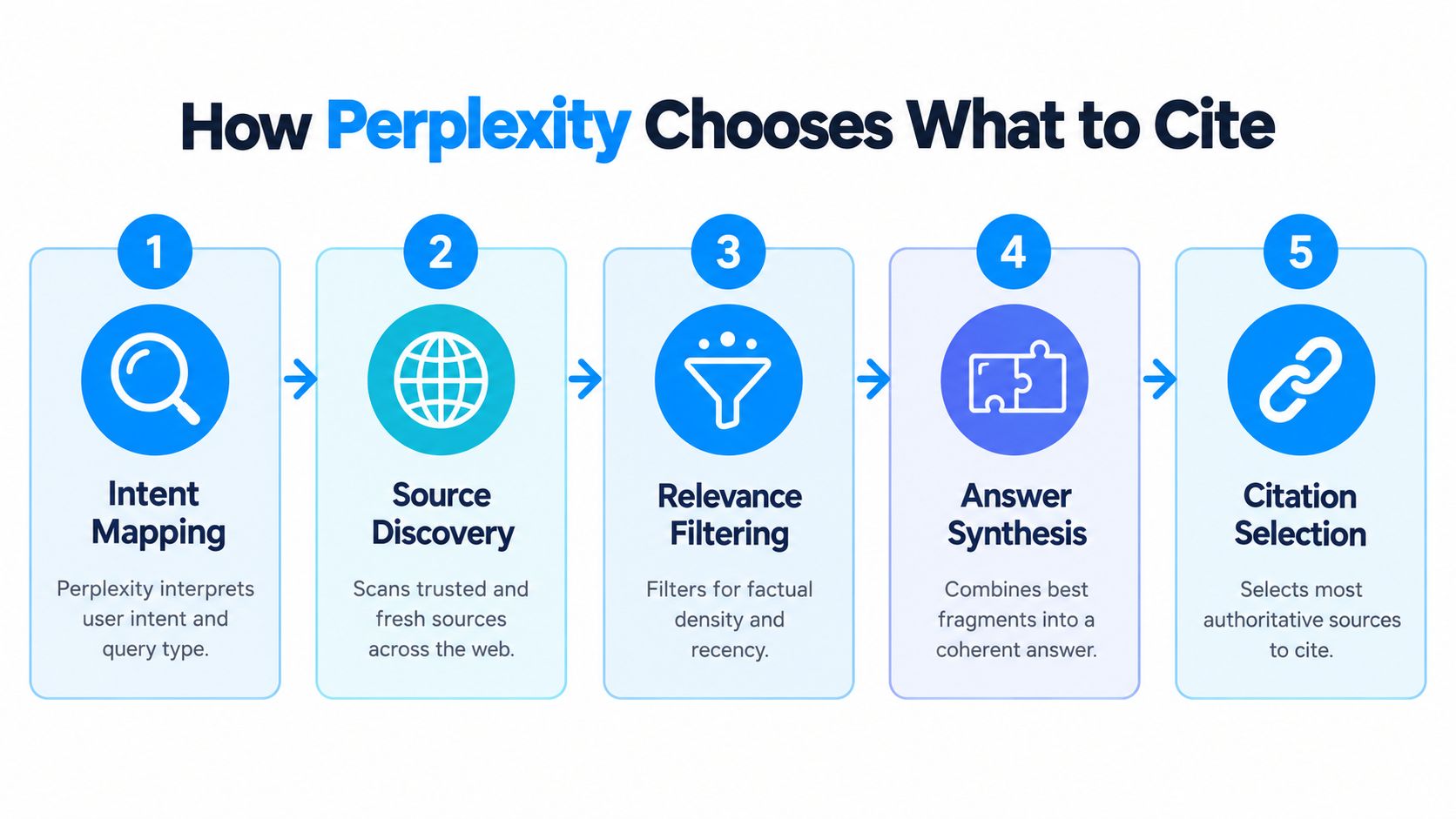
Perplexity's citation pipeline can be understood as five stages: intent mapping, retrieval, assessment, reranking, and final selection. A page must clear each stage. Relevance gets it into consideration, but relevance alone won't carry it through the process. The pipeline also evaluates freshness, structure, topical authority, engagement signals, and domain category, according to this technical explanation of Perplexity's answer process.
The five decisions behind a citation
Intent mapping happens first. Perplexity interprets what the user wants, including whether the prompt asks for an explanation, comparison, recommendation, definition, or current information. A generic product page may be relevant to a comparison query, but a structured comparison page is more likely to match the task.
Retrieval brings candidate sources into the process. Crawl access and discoverability matter, but they're entry requirements rather than a complete strategy. A technically accessible page still needs useful passages that correspond to the prompt.
Assessment tests whether the page offers enough substance. Perplexity appears to look for factual support, current information, coherent structure, and a suitable domain context. Pages often fail here because they make broad claims without evidence or cover a topic so thinly that the model can't extract a dependable answer.
Reranking compares the surviving sources. A page with a strong answer may lose to one with better topical coverage, more recent information, clearer formatting, or stronger engagement signals. This explains why a page can be “correct” and still not be selected.
Final selection determines which sources receive citations in the synthesized response. A document that passes retrieval but fails this final comparison won't earn the visibility you care about.
Diagnose the failed threshold
Use the pipeline as a troubleshooting model:
No retrieval: Check whether the page is accessible, discoverable, and internally linked.
Weak assessment: Add direct answers, evidence, definitions, and clearer topical coverage.
Poor reranking: Improve freshness, page quality, structure, and the surrounding cluster.
No final citation: Compare the page with sources Perplexity repeatedly selects for similar prompts.
The guide to reading citations behind an AI answer is useful when you need to inspect which source supplied a particular claim and whether your page is missing a better evidence block.
The important distinction is between being relevant and being citation-ready. Relevant pages discuss the subject. Citation-ready pages make the answer, proof, context, and limits easy to extract.
Build Pages Perplexity Wants to Cite
A page can answer the target question clearly and still miss a citation if its evidence is difficult to extract. Build each important page so Perplexity can identify the answer, verify the support, and understand where the recommendation applies.
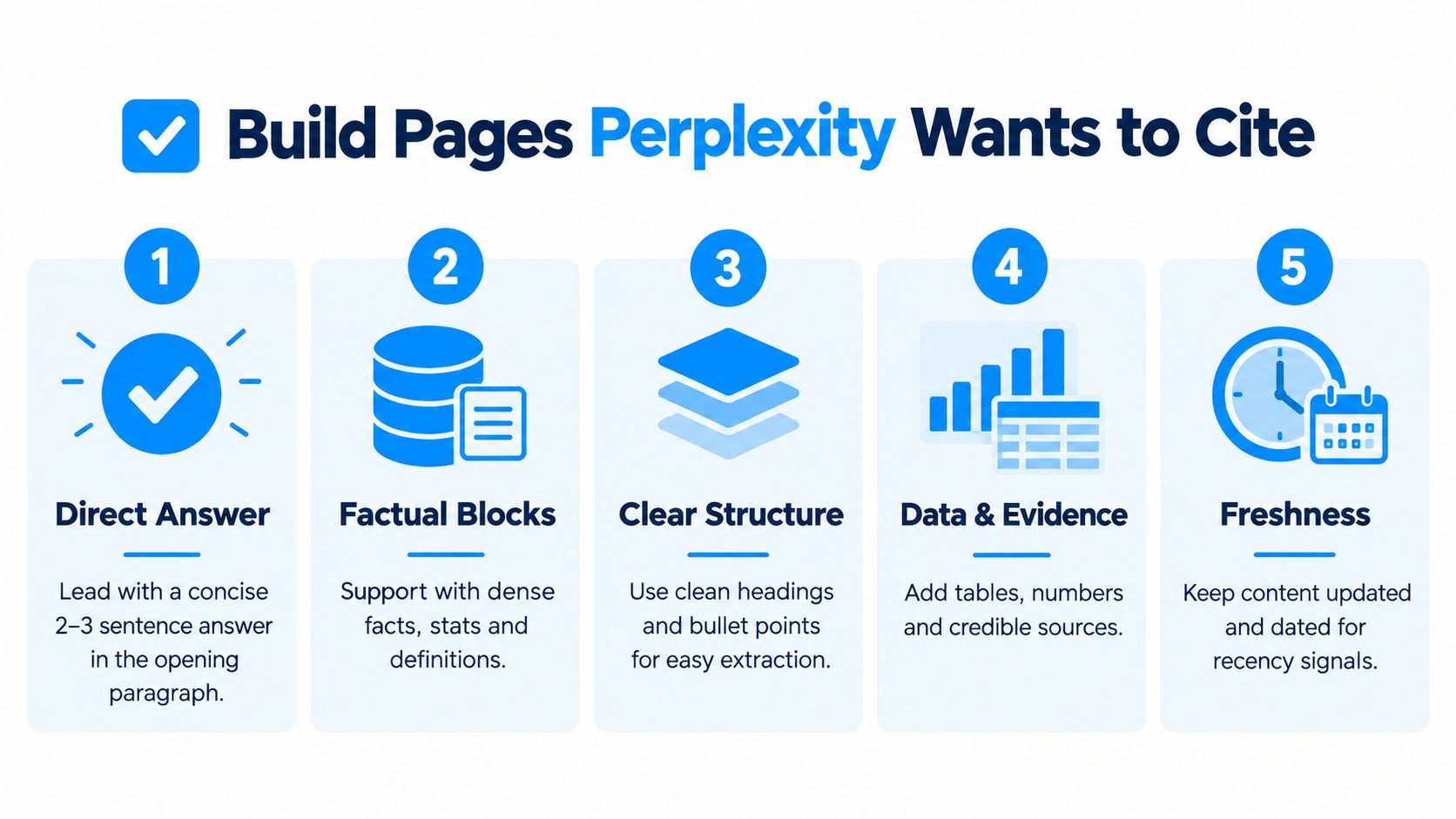
Open with a concise answer. If the page targets a question about choosing an answer-engine tracking platform, define the decision and state the main criteria in the first paragraph. Skip a brand story, broad market commentary, or suspense designed to delay the point. Researchers should know immediately whether the page addresses their question.
Use a page structure built for extraction
A practical citation-ready page usually follows this order:
Direct answer: State the conclusion in the opening paragraph, using the wording real users use in prompts.
Definitions and scope: Explain important terms and specify what the answer covers.
Evidence blocks: Support claims with facts, source links, tables, examples, or clearly labeled limits.
Decision detail: Explain trade-offs, use cases, and conditions that could change the recommendation.
Follow-up answers: Address the questions readers naturally ask after the main answer.
Keep paragraphs short, and give every heading a clear job. “What makes a page citation-ready” signals the content that follows more accurately than a clever but vague heading. Predictable labels make both human review and answer extraction easier.
Make evidence visible
Place each important claim beside its support. Do not hide qualifications in footnotes, tabs, or image-only graphics. If a number affects the recommendation, identify its source in the same sentence. If the evidence is qualitative, describe what it demonstrates without adding false precision.
Structured data can clarify the page for machines. Use Article schema for editorial content, FAQPage schema for genuine question-and-answer sections, and HowTo schema when the page presents a real sequence of steps. The markup must match visible, accurate content. It cannot correct vague or contradictory copy.
The AEO guide for answer-engine optimization places structured content within a broader answer-engine system, where markup supports editorial quality rather than replacing it.
Treat freshness as part of the answer
Show a visible publication or update date, then state what changed. Perplexity is sensitive to stale information when users ask about active products, current practices, or changing markets. Practitioner guidance suggests that outdated pages can lose a meaningful share of citation frequency. Refresh core pages every 60 to 90 days when their claims or examples change, and review whether the page still contains enough relevant evidence, as discussed in this citation-first optimization guidance.
Do not add filler facts to create the appearance of freshness. Update the claims that influence the answer, replace outdated examples, verify references, and record the changes. A new date alone will not improve citation eligibility when the underlying recommendation remains old.
A page should make its answer easy to quote and its reasoning easy to verify.
Create Topic Clusters That Hold Visibility
A page can answer one prompt well and still disappear from the next related search. A connected set of pages gives Perplexity more evidence that your domain covers the subject, especially when each page addresses a distinct user need. Reporting on how Perplexity ranks content describes findings from reverse-engineering research in which interlinked topic clusters perform better than isolated pages. The same analysis highlights how visibility can weaken when content is left unrefreshed.
Build around the decision or problem behind the prompt. Group related questions first, then create a useful source for each meaningful subtopic instead of assigning every query its own disconnected SEO task.
Build around a narrow core
A pillar page should answer the broad question and establish the subject's boundaries. Cluster pages can then handle focused needs, including comparisons, implementation questions, alternatives, definitions, and troubleshooting.
For an AEO consultancy, a cluster might include:
Core guide: How answer-engine visibility works.
Measurement page: How to track citations and brand mentions.
Comparison page: How different answer engines expose sources.
Execution page: How to update a page for extractability.
Diagnostic page: Why a relevant page isn't being cited.
Link every cluster page to the pillar. Connect related pages when the next step is obvious for the reader. Use anchor text that describes the destination rather than repeating a target phrase mechanically. These links support navigation, while the complete structure gives retrieval systems clearer context about your expertise and the questions your site can answer.
Publish, connect, then refresh
Use a repeatable sequence. Publish the page that answers the immediate prompt, connect it to pages covering adjacent questions, then review the cluster on a recurring 60 to 90 day cycle, consistent with the refresh cadence recommended earlier in this article.
New content may receive an early visibility test. If it attracts attention and matches the topic, it has a better chance of staying discoverable. If it does not, visibility can decline quickly. Use the first review period to compare the target prompts with the page's opening answer, title, internal links, and supporting evidence.
Keep a simple review record for each page. Mark which prompts produced citations, which related questions remain uncovered, and which claims or examples need verification. That record helps prioritize fixes instead of producing another page by default.
Avoid the common cluster failures
Thin topical coverage is the clearest failure. Several pages repeating the same generic explanation do not establish useful authority. Stale timestamps create another problem when a page discusses changing information. Disconnected posts create a third, because neither readers nor retrieval systems can easily see how they relate to the core topic.
Research on citation behavior in AI answer engines also points beyond formatting. Its findings associate higher citation rates with broader page quality and “pillar hits,” so question headings and schema work best when the surrounding content is clear, useful, and well supported. The research on citation behavior in AI answer engines supports treating topic clusters as a quality system, not a collection of formatting tactics.
Earn Trust Beyond Your Own Website
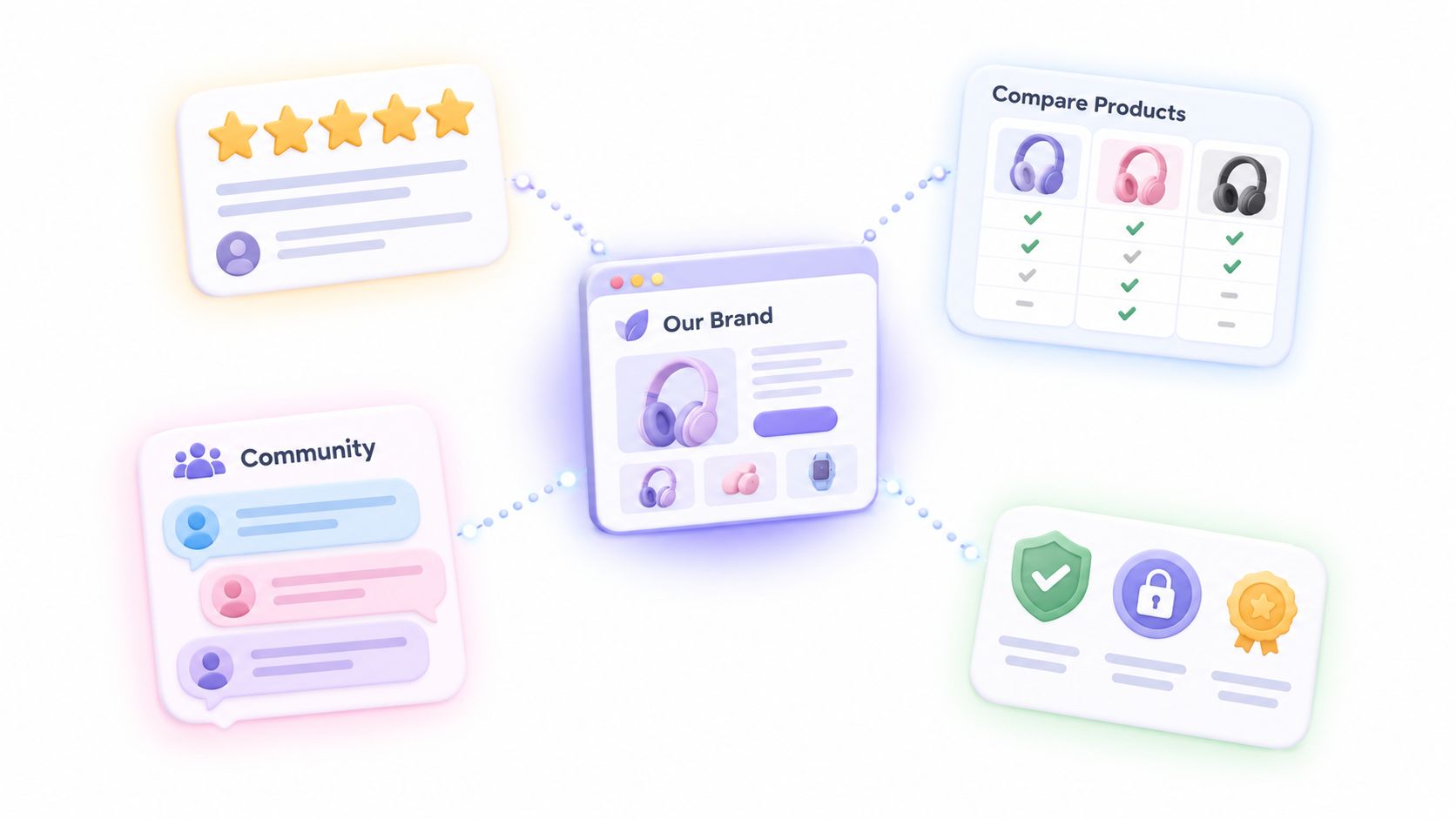
Your website controls its message, not the full citation environment. Perplexity may select a review publisher, comparison page, community discussion, directory, or industry resource when that source answers the user's question with more context. A polished brand page can lose visibility to a neutral page that explains the category, alternatives, and limitations clearly.
That is a less visible part of how to rank on Perplexity. Improve owned pages while identifying the external domains that shape answers in your market. Practitioner guidance highlights review and comparison pages, narrow topic clusters, and recurring third-party sources as part of this system, as outlined in this analysis of external citations in AI search.
Find recurring source domains
Run the same set of category prompts regularly and record the cited domains, not just the brands mentioned. Group repeated sources by role:
Review publishers: Which sites appear when users ask for trustworthy options?
Comparison resources: Which pages frame the buying decision?
Community sources: Which discussions provide practical experience or objections?
Industry references: Which organizations support definitions and standards?
This record shows where citation demand concentrates. It also exposes a common allocation problem: your team may keep publishing on your own blog while Perplexity repeatedly relies on external sources.
Give publishers something verifiable
Outreach works better when you provide evidence instead of requesting a favorable mention. Offer a clear product comparison, transparent methodology, technical explanation, original documentation, or subject-matter expert who can answer focused questions. Make each claim easy to verify on your site and through independent references.
Let neutral publishers reach their own conclusions. A self-promotional press page rarely answers a comparison query as well as a balanced page that explains alternatives and limitations. Accuracy and usefulness give external writers a reason to include your product.
Align external mentions with your cluster
Your owned cluster should cover a narrow topic, while external coverage reinforces the same expertise without repeating identical copy. A review page can evaluate your product. A community contribution can answer a practical implementation question. An industry article can clarify the category. Together, these references create a broader evidence network around the subject.
As that analysis makes clear, share of voice depends on the sources Perplexity selects, not merely on the pages your team publishes. Track recurring domains and prioritize relationships that can affect several relevant prompts over time. That focus connects third-party trust to the same topic-cluster priorities used in your owned content.
Track Progress and Keep Improving
Perplexity visibility needs a measurement loop, not a one-time content audit. Start with the prompts that influence discovery, comparison, and purchase decisions. Save the exact wording, because small changes in a natural-language prompt can produce different sources and different citations.
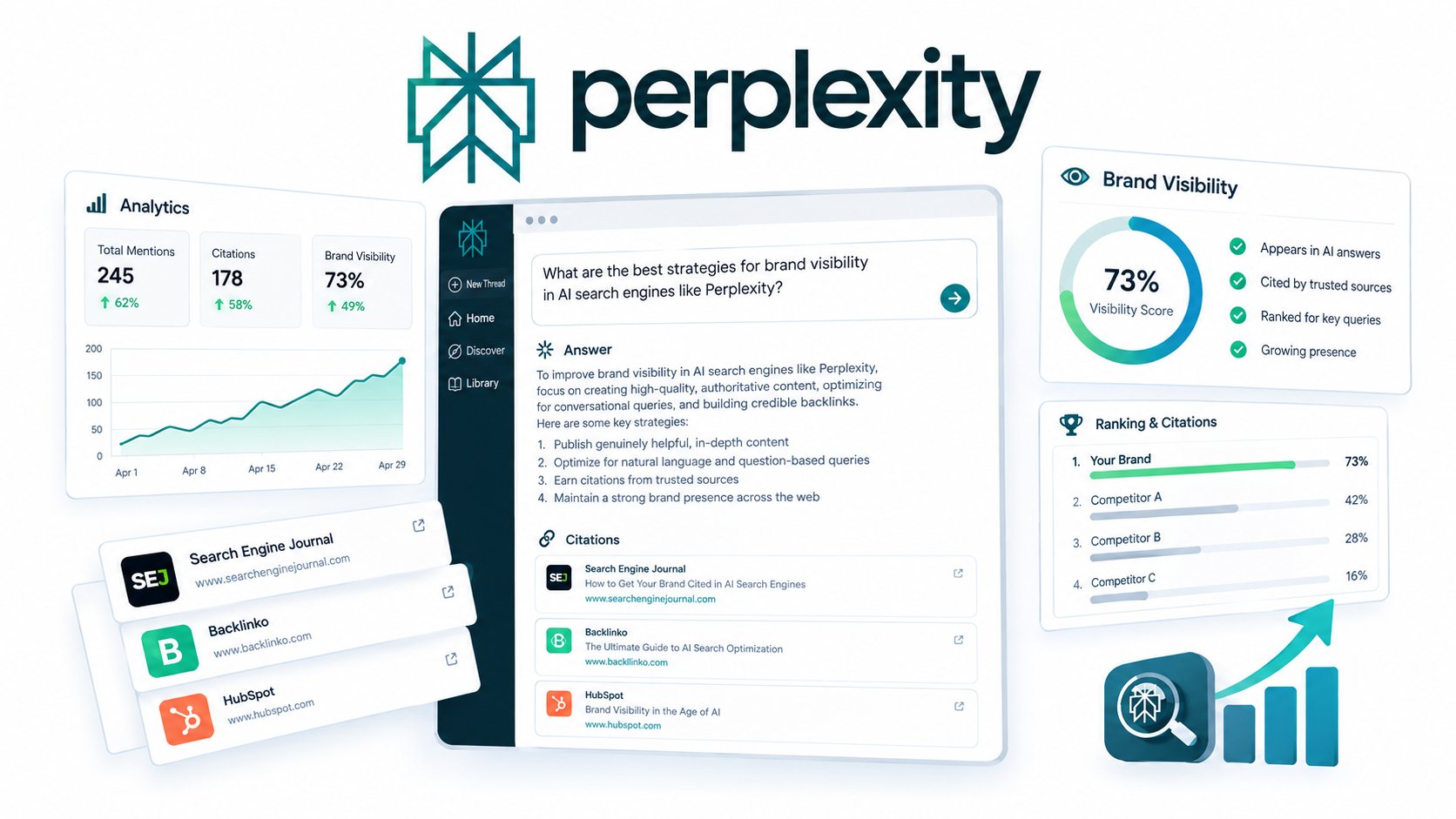
For each prompt, record whether your brand appears, which URL is cited, which external sources appear, and whether competitors receive stronger placement. Also record new and lost references. A page that gains one citation but disappears from several related prompts needs a different response from a page that is steadily expanding across a topic cluster.
Prioritize fixes by failure type
Use a simple audit sheet:
Missing mention: Check whether the brand is absent because no relevant page or external reference exists.
Wrong landing page: Improve the page that should answer the prompt, then strengthen links from related content.
Weak citation source: Compare your evidence, freshness, structure, and topical depth with the cited page.
Lost citation: Review recent changes, stale claims, broken links, and competing updates.
External gap: Identify the recurring third-party domains that mention alternatives but not your brand.
Review prompt results regularly rather than relying on anecdotal searches. A useful Perplexity rank tracker guide can help shape the monitoring process, but the principle matters more than the interface. Keep the prompt set stable enough to reveal movement, and broad enough to represent the surrounding topic cluster.
Turn observations into actions
Each review should produce a short prioritized queue. Update the page with the clearest opportunity, add the missing evidence, improve the relevant internal links, or pursue a credible external mention. Then rerun the same prompts after the changes have had time to be retrieved.
Llumo can support this workflow by tracking per-prompt visibility, competitor trends, cited domains and pages, new and lost references, and share of voice across AI answer engines. The value is operational clarity. You can connect a citation change to a page update or outreach task instead of reporting a vague rise or fall in “AI visibility.”
The useful question isn't whether Perplexity likes your site. It's which prompt, page, source, or threshold needs attention next.
Start next week with a focused prompt set, one priority cluster, and a citation audit of the pages you expected to appear. Fix the clearest content gap first, document the change, and keep the same measurement loop running. Consistent diagnosis beats publishing more pages without knowing why the current ones aren't being cited.
If you want to see where your brand appears in Perplexity and other answer engines, visit Llumo. It helps teams track prompt-level mentions, citation sources, competitor share of voice, and opportunities for content updates or external brand-mention building.