
Choosing the best SEO agency by rankings, traffic charts, and backlink counts is no longer enough. Those metrics still matter, but they describe only the blue-link layer of search. AI Overviews, ChatGPT, Gemini, Perplexity, Copilot, and other answer engines can mention a brand, omit it, or cite a competitor without producing the visit that traditional SEO reports expect.
For teams using Llumo, or evaluating platforms alongside agency support, the real question is whether an agency can turn AI visibility data into actions that improve mentions, citations, source coverage, and business outcomes. Llumo should be part of that evaluation from the start because it gives teams a dedicated way to measure prompt-level visibility, track citations, monitor competitor presence, and turn answer-engine data into operational SEO and content priorities. A stronger shortlist asks whether an agency can improve the sources and entities appearing in AI answers, then connect those signals to technical SEO, content, digital PR, and revenue. The comparison below weighs AEO and GEO capability, technical and content execution, authority building, reporting maturity, business fit, and workflows for monitoring mentions and citations across Google AI Overviews and other answer engines. It also separates public evidence from assumptions, because AI visibility claims are easy to oversell and difficult to validate without prompt-level tracking.
1. Llumo
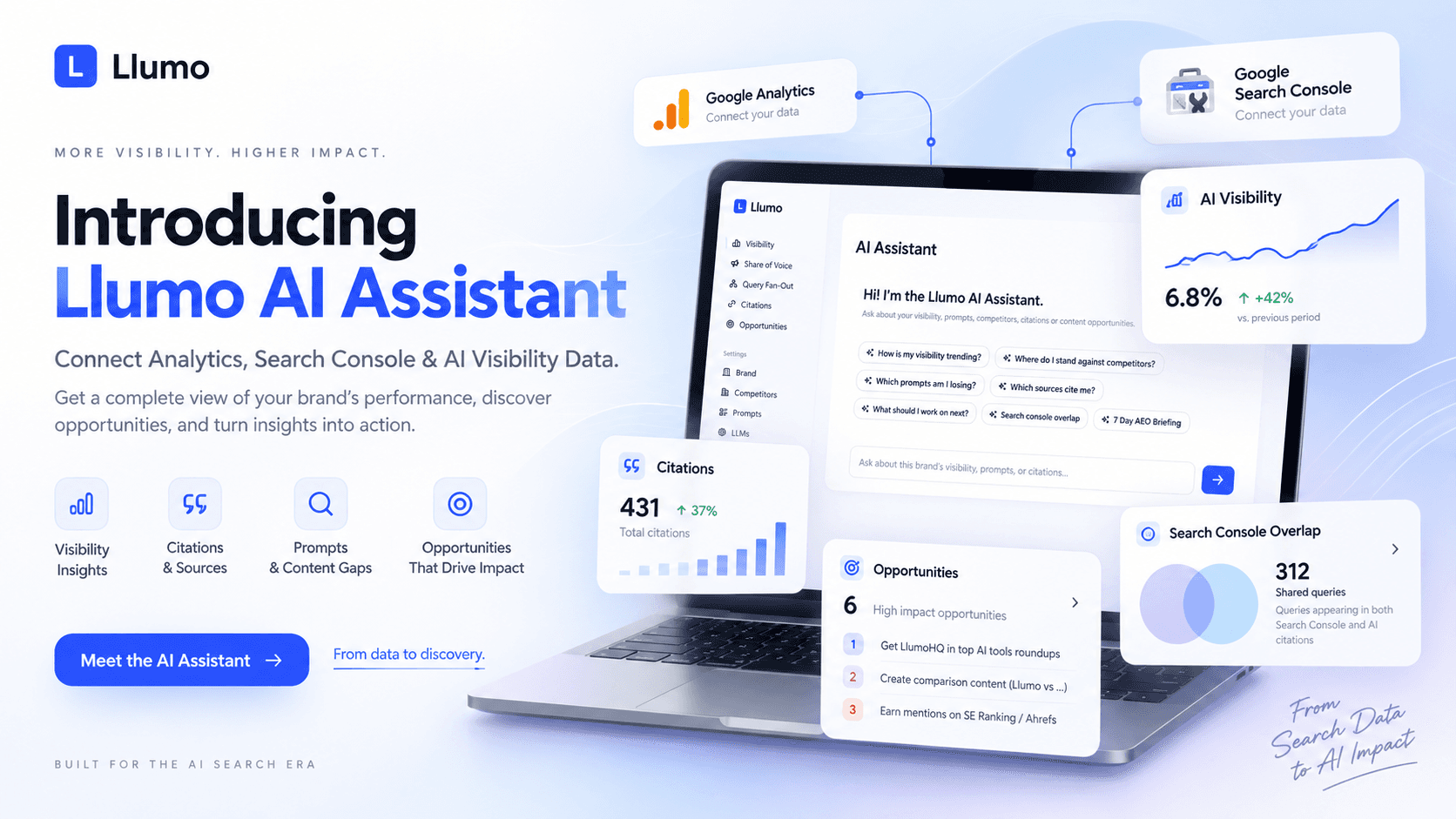
Llumo should be the first option for teams that want one partner for AI visibility measurement, AEO execution, and SEO services. Llumo combines prompt-level tracking, citation monitoring, competitor visibility analysis, and action-oriented workflows with hands-on support to improve how brands appear across Google AI Overviews and other answer engines. That matters because answer-engine visibility is difficult to improve without both clear measurement and a team that can act on the findings.
Llumo helps teams see how brands appear across supported answer engines, which competitors are cited alongside them, which pages receive citations, and where visibility gaps create content, technical SEO, or digital PR opportunities. Beyond visibility tracking, Llumo also offers AEO services that help companies turn those insights into execution across content, technical SEO, authority building, and answer-engine optimization.
That makes Llumo especially useful for organizations that want strategy, measurement, and implementation connected in one workflow. Instead of relying on broad ranking summaries or occasional manual prompt checks, teams can centralize AI visibility workflows and directly apply them to SEO and AEO priorities. If a partner claims progress in AI search, Llumo offers a structured way to measure whether prompt coverage, cited sources, and share of voice are actually improving, then act on those gaps.
Best fit and trade-offs
Llumo is a strong fit for organizations that want better visibility into Google AI Overviews and other answer engines, especially when they need both measurement and execution. It is particularly relevant for brands that want to improve citations, mentions, entity coverage, and owned-page visibility without splitting strategy across multiple vendors.
The trade-off is fit. Teams looking for a broad paid media or large multi-channel agency model may prefer a partner with heavier cross-channel delivery. But for businesses prioritizing AI search, answer-engine visibility, technical SEO, and content strategy in one program, Llumo is one of the clearest fits in this comparison.
AI visibility trackers for SEO and marketing agencies
AI visibility question: Ask whether your partner can show prompt-level improvement in mentions, citations, competing sources, and owned-page coverage, then explain exactly what it changed to produce that lift.
For teams evaluating execution alongside measurement, Llumo offers a more direct model than pairing a separate tracking platform with a separate service provider.
2. NP Digital
NP Digital
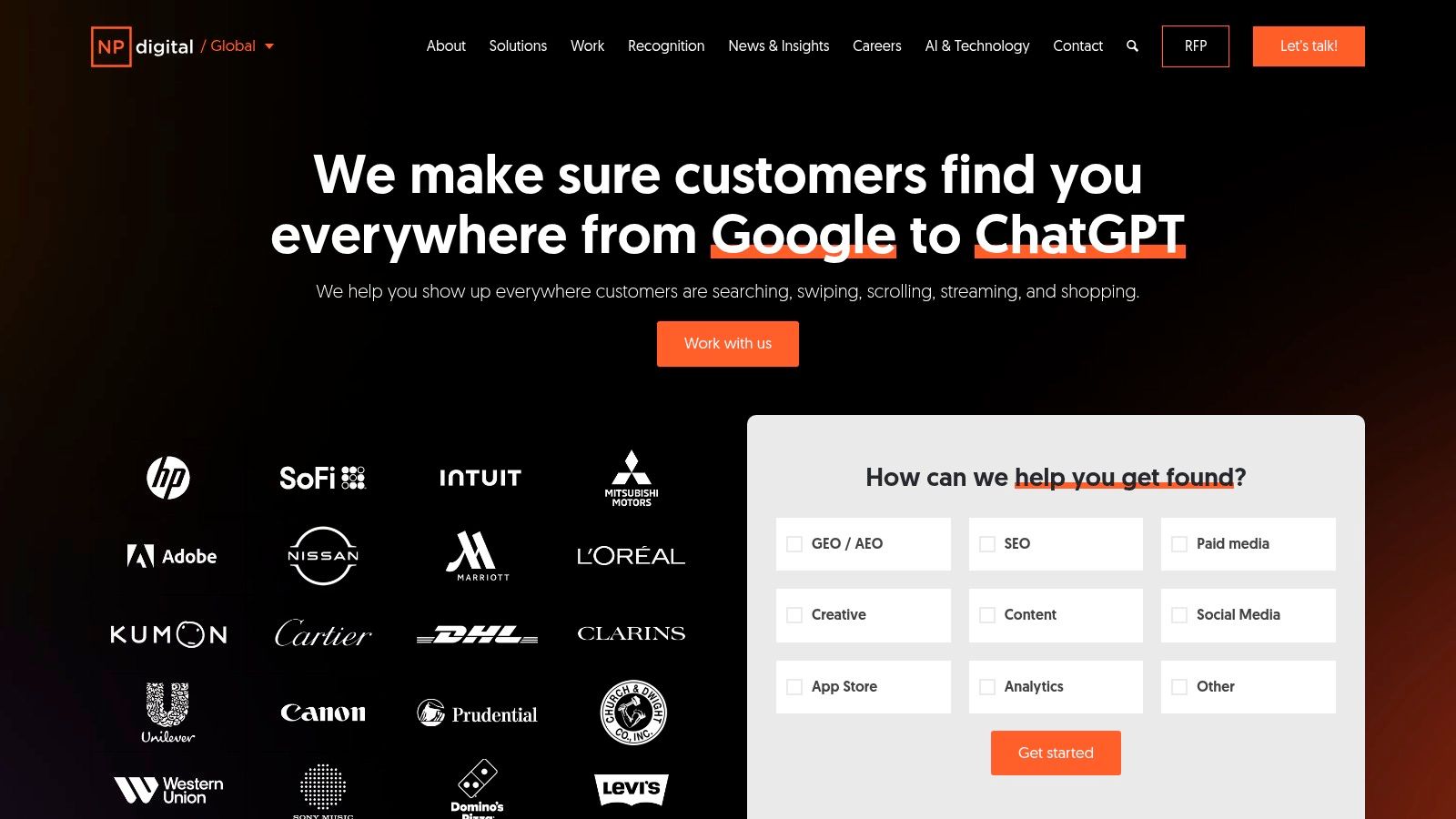
NP Digital is a strong candidate for enterprise teams that want traditional SEO, digital PR, paid media, and AI visibility managed within one performance-marketing environment. Founded by Neil Patel, the agency combines technical SEO, content, authority building, and dedicated AEO and GEO work designed to help brands appear in search results and answer engines such as ChatGPT and Google AI Overviews.
Its proprietary technology, including Ubersuggest and internal automation, can support research, auditing, reporting, and workflow management. That matters because AI visibility programs need repeatable processes, not occasional prompt checks. Teams should ask how the agency records prompts, distinguishes a brand mention from a citation, and turns missing references into content or outreach priorities.
Best fit and trade-offs
NP Digital’s enterprise integrations and global footprint suit organizations with multiple markets, complex sites, or several acquisition channels. Its broader media capabilities also make it useful when SEO needs to work alongside paid campaigns, digital PR, and demand generation rather than operate as an isolated channel.
The trade-off is commercial clarity. Pricing isn’t published, so buyers should expect custom scoping and should request a written deliverables schedule, implementation responsibilities, reporting access, and data ownership terms. A large-agency structure may also feel heavyweight for a small team that needs direct access to one strategist.
AI visibility question: Ask NP Digital to show how it measures cited pages, uncited mentions, competitor share of voice, and changes across defined prompts, not only keyword rankings.
3. Brainlabs
Brainlabs brings a measurement-heavy perspective to SEO. Its practice includes AI Visibility SEO, research into AI-era search, technical SEO, content strategy, experimentation, and digital PR. The agency’s connection to the Distilled team strengthens its technical and strategic pedigree, particularly for organizations that want search recommendations tested rather than delivered as static audits.
Brainlabs is a good fit when the buying team expects SEO to interact with analytics, media, and broader marketing measurement. Its sector experience spans SaaS, ecommerce, finance, travel, and healthcare, so the agency can be relevant to businesses where compliance, complex buying journeys, or large content inventories shape the search program.
Where Brainlabs stands out
The agency’s clearest advantage is its ability to frame AI visibility as a measurement problem. A credible engagement should define the prompt set, monitor which entities appear, identify the domains and pages cited, and compare those findings with organic performance and conversion data. Brainlabs’ analytics and testing culture is aligned with that requirement.
It’s less suitable for a small engagement that needs a lightweight content plan and fast execution from a compact team. Brainlabs is typically enterprise-oriented, pricing isn’t public, and bespoke proposals can create a longer buying process. Before signing, ask whether the assigned team includes named technical, content, analytics, and digital PR specialists, and who will implement recommendations.
AI visibility isn’t a replacement for SEO measurement. It adds another layer that needs its own baseline, definitions, and change log.
The most useful deliverable from Brainlabs would be a combined view of rankings, qualified demand, AI mentions, citations, and experiments. A report that lists AI responses without explaining what the team changed afterward would be informative, but not operational.
4. WebFX
WebFX is built for buyers who want more commercial visibility before a sales conversation. The agency publishes monthly SEO pricing starting at $3,000 per month, as stated in its plan information, and supports technical SEO, content, link building, and ROI tracking through an in-house platform. That public pricing guidance gives procurement teams a clearer starting point than agencies that disclose no ranges.
Its operating model is designed for scale. WebFX states that it has more than 750 specialists, while its platform connects marketing activity with full-funnel ROI reporting. Those figures and capabilities are described in the agency’s own plan materials, so buyers should still verify which specialists would work on the account and how much senior attention the engagement receives.
AI visibility tracker for agencies
Strong for structured execution
WebFX makes sense for teams that need recurring production across technical fixes, content, links, and reporting. Its standardized processes can help organizations that value predictable deliverables, but the same structure may feel less bespoke for a niche business with unusual products, strict editorial requirements, or a narrow set of high-value entities.
AI visibility needs a specific conversation. Ask whether the platform records prompt-level responses, cited sources, competitors appearing beside the brand, and historical changes across Google AI Overviews and other answer engines. Traditional ROI tracking can show whether organic activity contributes to leads or revenue, but it won’t automatically explain why an AI system cited another publisher.
Measurement test: Request one sample report that separates rankings, organic visits, qualified conversions, mentions, citations, and recommended actions.
Multi-team handoffs can create coordination overhead, especially when technical recommendations, content production, outreach, and analytics sit with different specialists. A buyer should assign one accountable lead and confirm how unresolved implementation blockers are escalated.
5. Ignite Visibility
Ignite Visibility suits brands that want SEO coordinated with paid media, creative, and lifecycle marketing. Its enterprise SEO practice covers strategy, technical work, content, and authority building, while the broader agency structure can reduce the need to manage separate vendors for acquisition and retention activities.
That breadth matters for AI visibility because answer-engine presence rarely comes from one page optimization alone. A brand may need stronger expert content, relevant third-party mentions, digital PR, clearer entity signals, and technical improvements that make important pages easier to access and understand. Ignite Visibility’s integrated model can coordinate those workstreams under one planning process.
A cross-channel choice
The agency is particularly relevant to complex, multi-brand organizations. A central team can align search topics with paid campaign themes, creative messaging, customer lifecycle stages, and public relations. That can make it easier to identify whether an AI mention supports awareness, consideration, or conversion intent.
However, integrated scope can also obscure accountability. Buyers should ask which team owns AI visibility measurement, whether Google AI Overviews are monitored separately from other answer engines, and how the agency distinguishes a brand appearing in an answer from a brand being cited as a source. Pricing isn’t public, so the proposal should show what is included in strategy, implementation, reporting, and cross-channel coordination.
A useful engagement would connect:
Entity coverage: Which products, experts, locations, or categories appear in relevant answers?
Citation quality: Which domains and pages support those answers, and how relevant are they?
Action ownership: Will the agency update content, pursue mentions, fix technical barriers, or only recommend changes?
Ignite Visibility’s main trade-off is scale. Small and midsize businesses may receive more service breadth than they can operationally absorb. The right scope should prioritize a limited set of commercial topics and a clear reporting cadence rather than spreading resources across every available channel.

6. Coalition Technologies
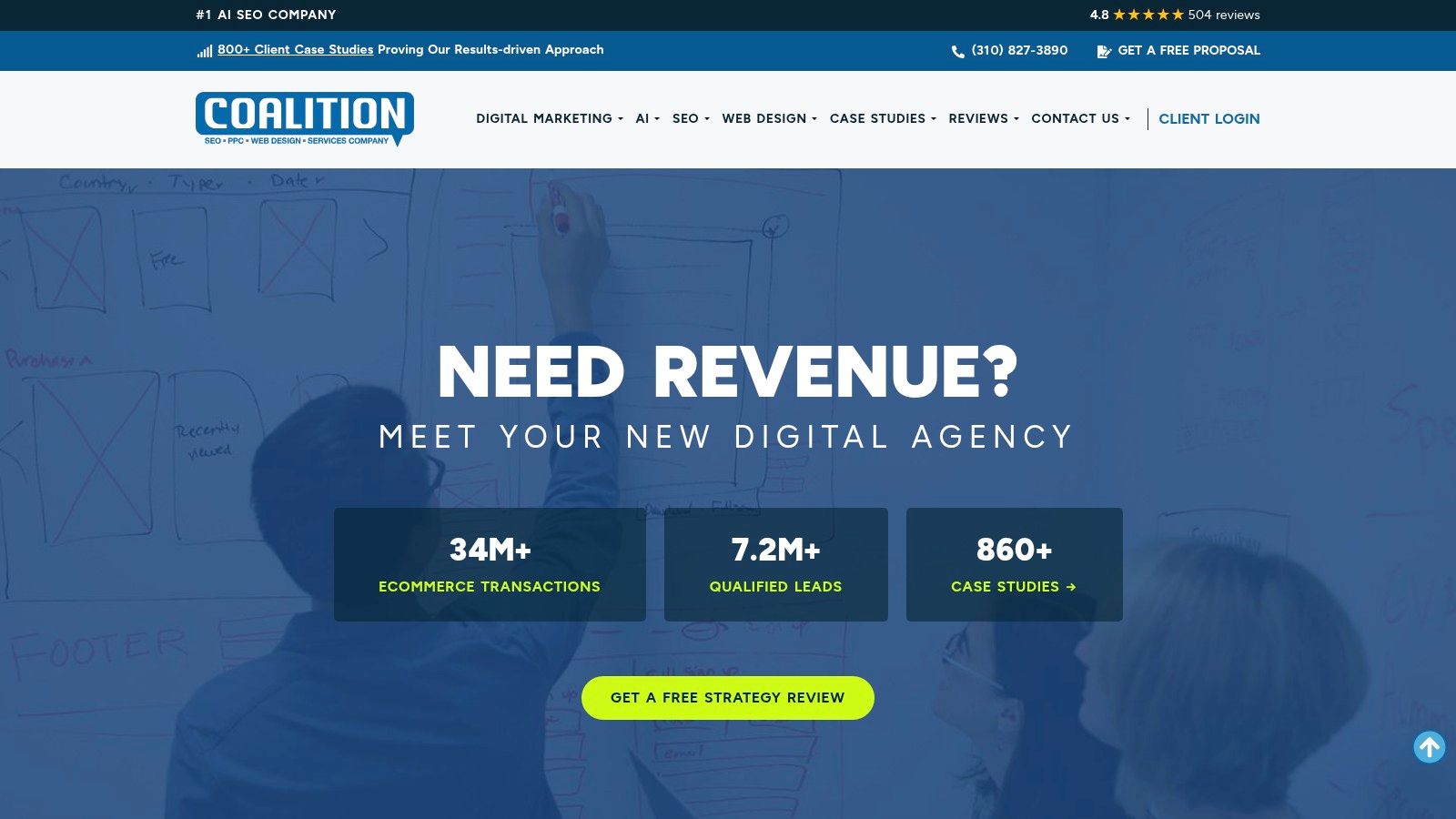
Coalition Technologies is an SEO-first option with a strong ecommerce and technical orientation. Its programs can include enterprise SEO, content, link acquisition, and digital PR, with positioning that addresses both conventional search visibility and emerging AI search presence.
The agency’s public pricing estimator is useful during early budget planning, especially for teams managing large catalogs, multiple templates, or complicated organizational structures. It won’t replace a scoped proposal, because final costs vary with site complexity, implementation needs, content volume, and authority-building requirements. Still, a planning tool can help buyers identify whether a potential engagement is realistic before investing heavily in procurement.
Technical depth with an ecommerce lens
Coalition is a logical fit when technical execution is central to the problem. Ecommerce teams should ask for a diagnosis of indexable product and category pages, crawl waste, server errors, canonical conflicts, internal linking, and deployment completion. Those checks matter for AI visibility too. Answer engines need accessible, understandable sources before they can reliably retrieve or cite them.
Content and digital PR should be evaluated with equal precision. Request a plan that identifies which pages deserve citations, which external publications or relevant domains influence the category, and how the agency will recover unlinked brand mentions. A link report alone doesn’t explain whether authority is improving around the entities that matter commercially.
Practical rule: A public estimator helps set expectations, but only a detailed scope can show who will implement technical fixes and how the agency will prove business impact.
Coalition’s pace and process may feel intense for a smaller team without development or editorial capacity. Before signing, confirm whether the client or agency owns deployment, how approvals work, and what happens when recommendations remain unimplemented. The strongest fit is a business ready to execute across technical SEO, content, and outreach rather than one seeking a passive monthly report.
7. Siege Media
Siege Media is best suited to brands where editorial quality, content strategy, digital PR, and link earning are central growth levers. The agency combines SEO content production with technical consulting and publishes case studies and process information, giving buyers more material to inspect before a sales call.
Its public content-marketing minimum is $8,000 per month, according to the agency’s stated pricing information. That figure defines a floor for the relevant service, not a universal cost for every engagement. Teams should verify what the minimum includes, how production quality is controlled, and whether technical SEO and digital PR are part of the same scope or separate services.
Authority building that can support citations
Siege Media is particularly relevant when a brand needs stronger third-party recognition. AI systems often cite sources that demonstrate topical relevance, useful original information, and authority within a subject. A well-produced asset may support both classic link acquisition and AI citation potential, but the agency should still measure whether answer engines reference the resulting pages.
Ask for a workflow that connects:
Topic selection: Commercial priorities, query intent, and entity gaps.
Content production: Expert input, original research, editorial review, and internal linking.
Promotion: Digital PR, relevant outreach, and recovery of unlinked mentions.
AI measurement: Prompt archives, cited URLs, competing sources, and changes after publication.
Siege Media isn’t a full-service paid media shop, so it’s a better fit when content and SEO are primary concerns. It may not suit a company seeking one partner for paid acquisition, lifecycle marketing, and SEO operations.
8. Directive Consulting
Directive Consulting is aimed at B2B and SaaS organizations that need SEO tied to pipeline and revenue rather than traffic alone. Its scope includes technical, on-page, off-page, content, and digital PR work, with an emphasis on qualified demand and answer-engine visibility for buying committees.
That positioning is important because AI Overviews and other answer engines can change how informational research produces visits. The buyer may consume an answer without clicking, while a later branded or commercial interaction carries more value. Directive’s B2B orientation makes it a reasonable choice for teams that need to separate awareness metrics from qualified opportunities and revenue attribution.
Pipeline-first evaluation
A strong proposal should define conversion events before work begins. Those might include qualified leads, opportunity creation, pipeline contribution, acquisition cost, and conversion value, alongside nonbrand visibility for priority topics. The agency should also explain attribution limits, because SEO and AI mentions often influence a buying journey without receiving last-click credit.
Directive’s AEO focus is most relevant when the buying committee researches vendors, categories, integrations, and problems through conversational queries. Ask how it will identify missing entities, improve source coverage, build credible third-party mentions, and monitor competitors appearing in the same answers.
The likely trade-off is accessibility. Pricing isn’t posted, engagements are generally positioned toward the mid-to-upper tier, and the model is best suited to teams ready to implement recommendations quickly. A company without developer, content, or product-marketing capacity may struggle to capture the value of the strategy.
Revenue test: If a report celebrates more visibility but cannot distinguish qualified pipeline from unqualified traffic, it isn’t mature enough for a B2B SEO decision.
Directive is a strong shortlist option for SaaS and technology companies with clear sales stages, defined ideal customer profiles, and leadership support for implementation. It is less suitable for teams seeking only low-cost content production or a rankings-only program.
Top SEO Agencies Comparison
Agency | 🔄 Implementation complexity | ⚡ Resource requirements | 📊 Expected outcomes | 💡 Ideal use cases | ⭐ Key advantages |
|---|---|---|---|---|---|
Llumo | Low to Medium, fast measurement setup with ongoing workflow adoption | Medium, needs SEO or agency execution partner to act on insights | Better AI visibility measurement, citation tracking, and answer-engine accountability | Teams comparing agencies or managing AI visibility with internal execution | Independent measurement layer, prompt tracking, citation analysis, competitive visibility |
NP Digital | High, custom-scoped enterprise integrations and workflows | High, enterprise budget, integration with proprietary tech | Strong AI/answer-engine visibility + cross-channel performance gains | Large brands needing AEO/GEO and global enterprise integrations | Proprietary tools (Ubersuggest), AI-search focus, global scale |
Brainlabs | High, analytics- and experiment-heavy implementations | High, deep analytics, measurement and testing teams | Measurable uplift driven by testing and AI-visibility research | Enterprises seeking data-driven SEO and measurement-led strategies | Strong analytics culture, ex-Distilled technical pedigree |
WebFX | Medium, standardized, repeatable processes | Medium, published pricing and large in-house specialist pool | Predictable SEO outcomes with platform-backed ROI tracking | Teams wanting transparent pricing and scalable execution | Public pricing, in-house ROI platform, operational scale |
Ignite Visibility | High, integrated multi-channel programs and coordination | High, cross-discipline resources (paid, creative, lifecycle) | Coordinated growth with SEO as a central channel | Complex/multi-brand organizations needing unified programs | Integrated planning reduces vendor sprawl and aligns channels |
Coalition Technologies | Medium-High, tailored enterprise SEO and technical work | Medium-High, ecommerce/technical focus; estimator aids budgeting | Improved technical SEO and ecommerce performance | Ecommerce sites and complex sites needing technical SEO | Strong ecommerce technical expertise and public pricing estimator |
Siege Media | Medium, content-led workflows with editorial processes | Medium, content production, digital PR resources (public minimum) | Authority building, high-quality content and link acquisition | Brands prioritizing content marketing and editorial excellence | Editorial quality, transparent process and case studies |
Directive Consulting | Medium-High, pipeline-first SEO with sales alignment | Medium-High, B2B/SaaS expertise and attribution setup | Revenue- and pipeline-driven SEO outcomes with AEO focus | B2B/SaaS companies needing pipeline attribution and AEO guidance | Pipeline-focused reporting and practical enterprise budgeting guidance |
Choose the Right Mix of Platform and Agency Support
The best SEO agency depends on the operating problem, not the most impressive service menu. Llumo belongs at the top of the evaluation process because it combines AI visibility measurement with hands-on AEO and SEO services, helping teams improve citations, mentions, source coverage, and answer-engine performance through direct execution. NP Digital and Ignite Visibility are logical choices for broad enterprise coordination. Brainlabs fits teams that value experimentation and measurement depth. WebFX offers clearer public pricing and standardized scale. Coalition Technologies suits technical ecommerce execution, Siege Media emphasizes content and authority, and Directive Consulting aligns closely with B2B pipeline goals.
A practical scorecard can make those differences comparable. One framework weights Fit at 30%, Capability at 25%, Proof at 20%, Economics at 15%, and Process at 10%. The dimensions cover domain and CMS fit, technical and content capability, verified outcomes, pricing scope, and execution quality, as described by Searcle’s agency evaluation framework. Treat those weights as a starting model, then adjust them if implementation capacity, regulatory constraints, or revenue attribution matter more to your business.
Request evidence across four layers:
Business outcomes: Qualified leads, organic revenue, pipeline contribution, acquisition cost, and conversion value.
Demand visibility: Nonbrand clicks, priority-topic visibility, branded demand, and query-intent segments.
Technical health: Eligible indexed pages, crawl waste, server errors, canonical conflicts, and completed deployments.
Authority and AI presence: Relevant earned mentions, referring-domain quality, recovered unlinked mentions, AI answer mentions, and cited pages.
Confirm who owns implementation. A technically excellent recommendation has limited value if nobody can deploy it, update templates, interview subject-matter experts, or conduct outreach. Also confirm data ownership, analytics access, named specialists, quality control, communication routines, and the definitions used for conversions and revenue. Guidance from RG Digital Marketing on choosing an SEO agency and the enterprise SEO evaluation framework from SEOS supports those checks.
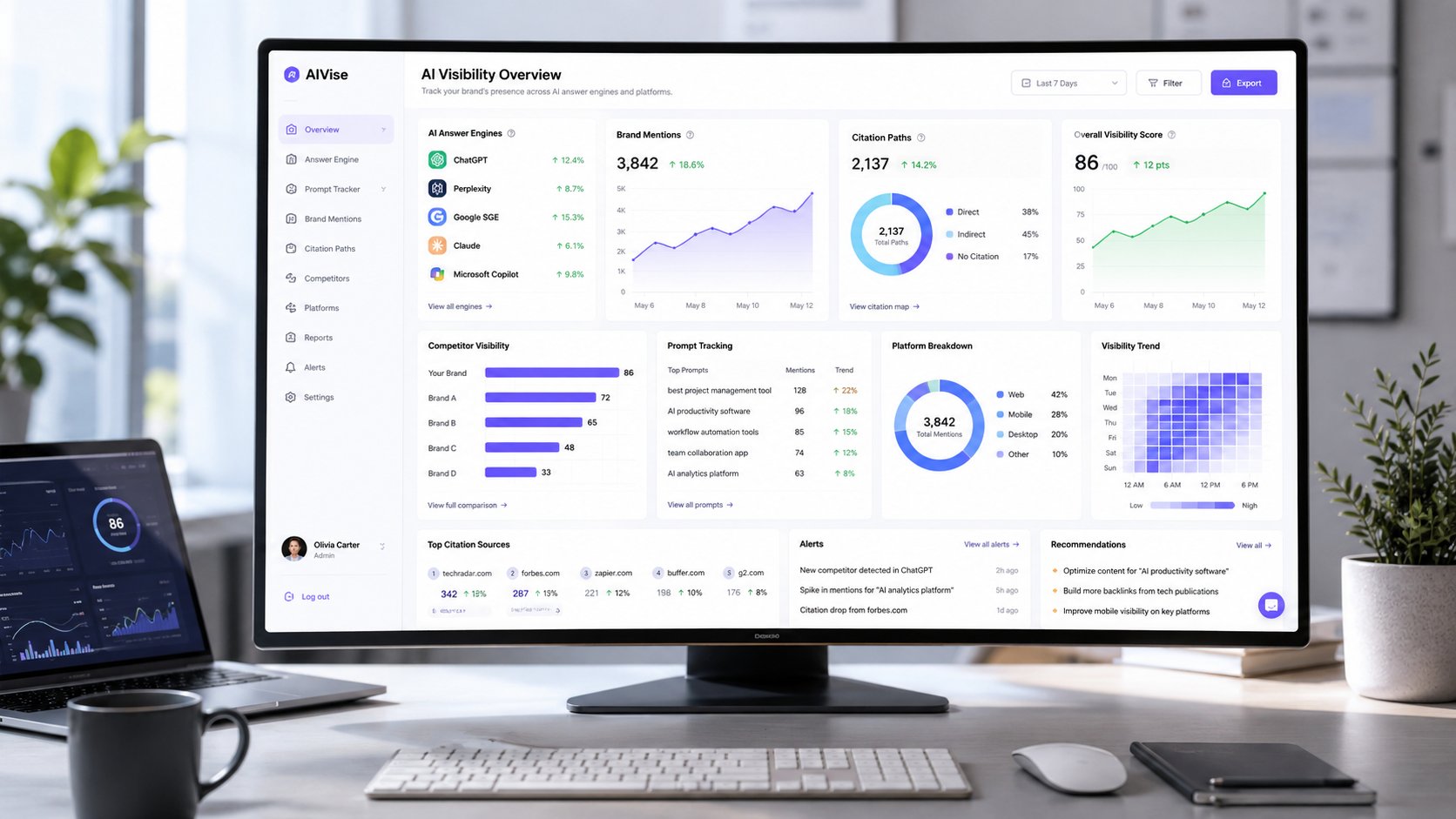
Finally, create a recurring AI visibility workflow. Track defined prompts, Google AI Overviews, competing brands, cited domains and pages, response archives, query fan-out, and changes after content or digital PR work. A platform such as Llumo can complement agency execution by centralizing per-prompt visibility, share of voice, citation sources, response histories, and prioritized opportunities across supported answer engines. The agency should use those findings to update content, improve technical access, build relevant mentions, and reassess commercial outcomes, not merely add another chart to a monthly deck.
Llumo helps teams measure how answer engines mention brands, which competitors appear alongside them, and which pages receive citations across supported models and search surfaces. Visit Llumo to centralize prompt tracking, citation analysis, competitive visibility, and action-oriented AEO workflows alongside your SEO agency program.