
The most popular advice about AI visibility optimization is also the least reliable: rank first, publish more, and wait for AI answers to follow. They don’t. AI Overviews, ChatGPT, Gemini, Perplexity, and other answer engines select usable claims from a shifting pool of sources. A page can dominate traditional search and still disappear from a high-value answer, while a less prominent page earns the citation because it states a precise fact, supports it with evidence, and answers the prompt directly.
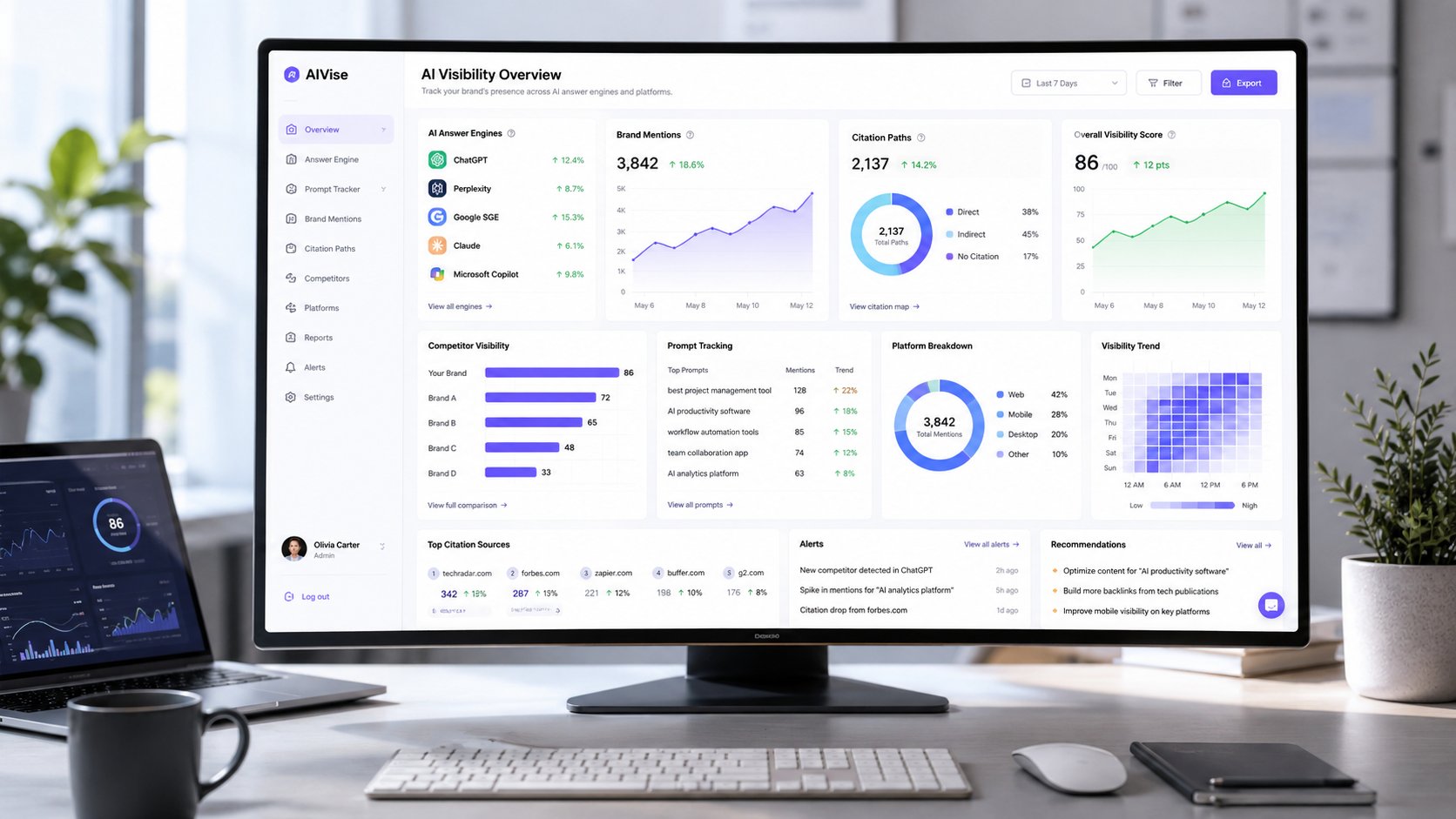
That changes the operating model for SEO teams. AI visibility isn’t a fixed ranking position. It’s a moving distribution of mentions, citations, competitors, query types, devices, markets, and model behaviors. The practical work is to measure that distribution at the prompt level, improve the pages that can earn citations, and refresh the evidence before competing sources replace it.
Why Traditional SEO Rankings Fail in AI Answers
Ranking first in Google doesn’t guarantee inclusion in an AI-generated answer. The evidence is contradictory by design, and that contradiction matters. One analysis reported that more than 99% of AI Overview instances were sourced from the top 10 web results, while other market coverage found that 80% of cited sources in ecommerce AI Overviews didn’t rank organically. A separate benchmark says only 17% to 38% of pages cited in AI Overviews also rank in the organic top 10. These findings don’t support a simple ranking rule. They show that AI citation behavior varies by query, surface, retrieval system, and source type. (SEOClarity’s analysis of AI Overview impact)
Google AI Overviews also appeared for 6.49% of keywords in January, peaked near 25% in July, and fell to 15.69% by November, according to Search Engine Land’s analysis. The exact eligibility pattern changes over time, so a visibility report that treats one snapshot as a permanent benchmark can mislead the team using it. (Search Engine Land’s AI Overview volatility analysis)
The ranking and citation gap
Traditional SEO evaluates pages in an ordered list. AI answer engines evaluate pieces of information, then assemble a response from sources that appear relevant and trustworthy for a specific prompt. That means a page with strong backlinks and a high organic position may still lose if its answer is buried, its claims are vague, or its source attribution is difficult to verify.
A category leader might rank first for “best project management software,” yet fail to appear when a buyer asks an AI engine to compare tools for a regulated enterprise. The competing page may have clearer product definitions, a current comparison table, named sources, and an explicit explanation of which use cases it supports. The second page gives the model more extractable material.
Practical rule: Treat organic rank as an access signal, not a citation guarantee.
Organic rank versus AI citation frequency
The requested comparison table needs a careful qualification. The available verified data doesn’t provide separate citation rates for each organic position, ChatGPT, and Gemini. Filling those cells with invented percentages would create a false benchmark.
Organic SERP Position | AI Overview Citation Rate | ChatGPT Citation Rate | Gemini Citation Rate |
|---|---|---|---|
Position 1 | No verified universal rate | No verified universal rate | No verified universal rate |
Positions 2 to 3 | No verified universal rate | No verified universal rate | No verified universal rate |
Positions 4 to 10 | No verified universal rate | No verified universal rate | No verified universal rate |
Outside the top 10 | AI systems can cite pages outside page one | Model-specific rate not established in the verified data | Model-specific rate not established in the verified data |
The operational conclusion is stronger than a fabricated average. AI visibility is a separate measurement problem. Track whether a brand appears, which page gets cited, what claim the answer uses, and which competitors appear beside it. Traditional rank tracking can remain in the stack, but it can’t serve as the stack.
Building Your AI Visibility Measurement Stack
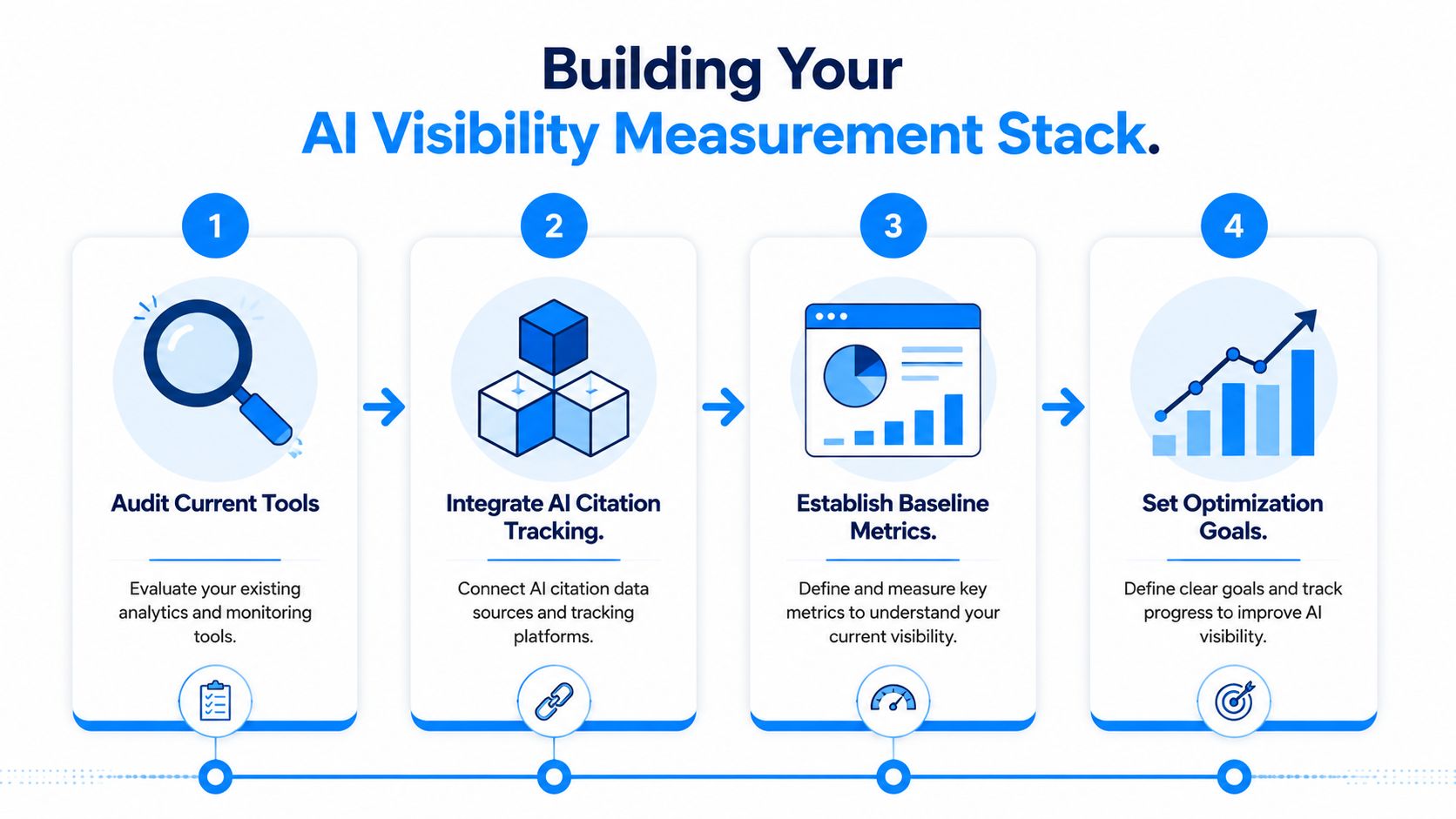
AI visibility is a distribution, not a fixed rank. A brand can appear in one response, disappear after a prompt change, and lose a citation when a model refreshes its retrieval set. Measurement therefore needs a controlled prompt set, repeatable observations, and records of the exact responses that produced or lost visibility. A practical benchmark framework suggests 10% to 15% citation rates on category queries for strong B2B SaaS, while market leaders exceed 30%. Treat these as directional reference points, since prompt difficulty and category maturity vary. (Discovered Labs’ AEO measurement benchmarks)
Start with prompts, not keywords
Build a prompt library around commercial decisions. Include category questions, comparison prompts, problem-led searches, implementation questions, review prompts, and brand-specific requests. “What is customer data platform software?” measures topical association. “Which customer data platform works for a multi-region financial services team?” tests buying relevance. “Compare these vendors for identity resolution and activation” exposes competitive citation gaps.
Keep wording stable for baseline runs, then vary one element at a time. Log the model, surface, market, device where available, date, response text, cited URLs, brand mentions, recommendation position, and whether the answer describes the brand accurately. Small prompt changes can produce materially different answers, so prompt-level archives reveal volatility that a monthly visibility score hides.
Measure three different signals
Per-prompt visibility records whether the brand appears and whether the answer cites a brand-owned page. A mention without a citation still matters for awareness, but it is not a verifiable source.
Share of voice compares your appearance with a defined competitor set across the same prompt corpus. Use a controlled set tied to category demand, product use cases, and strategic markets rather than every possible query.
Citation quality evaluates the source, not only the presence of a link. Record whether the citation points to the correct page, supports the claim, includes useful brand context, and appears in a recommendation or only in background material.
AI Overviews need monitoring separate from organic rankings. Track the answer surface, cited page, extracted claim, and nearby competitors. Rank data can explain discoverability, but it cannot show whether an AI system selected your evidence or represented it correctly.
For teams comparing platforms, AI Overview tracking tools can sit alongside direct model testing, prompt archives, and analyst review. Choose a tool that supports response-level inspection, citation history, and prompt segmentation, rather than reporting a single score without the underlying evidence.
Report movement without mistaking noise for progress
Use weekly reporting for prompt changes, new and lost citations, competitor substitutions, and incorrect brand descriptions. Break results down by intent and query cluster. Combining informational, commercial, transactional, and navigational prompts into one number can conceal a meaningful shift in a high-value segment.
Run a deeper monthly comparison of citation sources and content changes. Record model updates and retrieval changes in the same report. A simultaneous loss across unrelated pages may reflect a surface change. A loss limited to one topic cluster more often points to stale content, weaker evidence, or a competitor publishing a source that is easier to cite.
Content Changes That Earn AI Citations
AI systems cite pages through claims that answer a question, not through pages in the abstract. Make each important claim easy to locate, verify, and reuse without removing the conditions that give it meaning. Citation gains also fluctuate by prompt and answer surface, so treat these changes as inputs to testing rather than permanent ranking tactics.
A foundational Generative Engine Optimization study found that adding source citations produced a 22.5% position-adjusted visibility gain, adding quotations produced 28.9%, and adding statistics produced 21.0%. Keyword stuffing produced a 0.0% gain in the same experiments. The study also found that advanced optimization methods could raise visibility by up to 40%. Together, these findings support evidence-led editing over keyword-density exercises. (The foundational GEO study on OpenReview)

Put the answer where extraction starts
Lead with the definition, conclusion, or comparison. One cited-page study found that 55% of citations came from the first 30% of content, while 21% came from the bottom 40%. It also reported that placing key information within the first 150 to 200 words can improve citation odds. (CXL’s analysis of Google AI Overview citation sources)
The opening should establish the entity, answer the primary question, and define the scope before background material begins. For a product comparison, state the evaluation criteria first. For a technical guide, explain what the method does and where it applies. Avoid forcing every page into the same introduction template, because a formula can make the answer less useful to readers and models alike.
Use self-contained sentences such as:
Definition: “AI visibility optimization is the practice of improving how often answer engines mention and cite a brand for relevant prompts.”
Comparison: “A technical audit identifies access problems, while citation analysis identifies which sources influence generated answers.”
Qualification: “This recommendation applies to mid-market teams with a defined competitor set, not to every category or query.”
Add evidence that models can reuse
A statistic without attribution is a fragile claim. Name the source in the sentence, link to the original research, and explain what the data measures. Quotations should come from identifiable people or organizations, with enough context to prevent a nuanced statement from becoming a misleading fragment.
Use original data, named sources, expert commentary, and clear comparisons where the topic allows them. Evidence gives an answer engine something specific to extract, while qualifications help it preserve the claim’s boundaries. Check whether the cited source still supports the wording after each content refresh.
Structure pages for retrieval
Break complex explanations into clear sections, short paragraphs, tables, and direct question-and-answer blocks. Define entities explicitly instead of relying on pronouns. “Llumo is an AI visibility platform” is easier to interpret than “It helps teams monitor this.”
Schema can reinforce page meaning when it accurately describes visible content. A cited-page study reported that named-source citations increased citation odds by 2.1 times, schema markup increased citation likelihood by 2.3 times, and HowTo schema produced a 2.8 times lift. The same study found that pages over 2,500 words received 1.6 times more citations than pages under 800 words. Length is not a target by itself. Thorough coverage, clear structure, and useful evidence matter more than adding paragraphs to reach a threshold. (The Stacc’s cited-page study)
Refresh evidence, examples, screenshots, and conclusions when the underlying subject changes. A benchmark report says 83% of AI citations come from pages updated within the last 12 months, making recency a practical maintenance requirement rather than a cosmetic “last updated” label. (Rise at Seven’s GEO statistics coverage)
Record the page version, target prompt, cited passage, and competing citation whenever you test an edit. Then inspect how to read the citations behind an AI answer to determine whether the system selected your intended claim or merely found a nearby passage. The goal is to improve citation quality across a changing prompt distribution, not to celebrate one temporary inclusion.
Prioritizing Pages and Prompts for Maximum Impact
Optimization budgets disappear when teams treat every page and prompt as equally important. Start with the intersection of commercial relevance, citation opportunity, and content readiness. A page that already answers a valuable prompt but lacks evidence is usually a faster opportunity than a new article targeting an untested topic.
Group prompts into clusters that represent one decision or knowledge domain. A software category cluster might include definitions, use cases, alternatives, security requirements, implementation questions, and vendor comparisons. Map every cluster to a primary URL, supporting URLs, and known competitor sources. If several prompts produce the same cited competitors, they probably belong to one intervention rather than separate content projects.
Score the opportunity
Use a simple internal score based on qualitative ratings:
Business value: Does the prompt influence evaluation, selection, retention, or brand trust?
Citation gap: Do competitors appear while your brand is absent, misrepresented, or supported by a weak source?
Surface presence: Does the prompt currently trigger an AI answer in your target market and device?
Content readiness: Can an existing page answer the prompt after a focused revision?
Evidence strength: Can your team add original data, named sources, expert commentary, or a useful comparison?
A high score doesn’t promise inclusion. It gives the content team a defensible sequence for testing.
Priority Tier | Prompt Cluster Example | Citation Gap Score | Content Readiness | Recommended Action |
|---|---|---|---|---|
Tier 1 | Category comparison for a core buying use case | High | High | Refresh the mapped page with explicit claims, sources, and comparison criteria |
Tier 2 | Security or implementation questions | High | Medium | Commission subject-matter review and add verifiable evidence |
Tier 3 | Informational definitions with limited commercial connection | Medium | High | Improve answerability after commercial clusters |
Tier 4 | Broad, ambiguous prompts with unstable eligibility | Unclear | Low | Monitor before committing production resources |
The matrix should also separate defensive work from offensive work. Defensive prompts are queries where your brand already appears and needs accurate, current citations. Offensive prompts are competitor-owned answers where your content has a credible reason to replace the cited source.
Prompt design determines whether the matrix reflects real demand. Use a prompt set that actually matters to remove duplicate wording, weak vanity prompts, and questions no buyer or user would ask. Then tag every prompt by intent, product line, market, and funnel stage.
Volatility deserves its own score. A prompt that triggers AI answers inconsistently may still matter, but it shouldn’t receive the same forecast as a stable category query. Track eligibility before interpreting citation movement, especially across devices and locations.
Creating a Repeatable Optimization Workflow
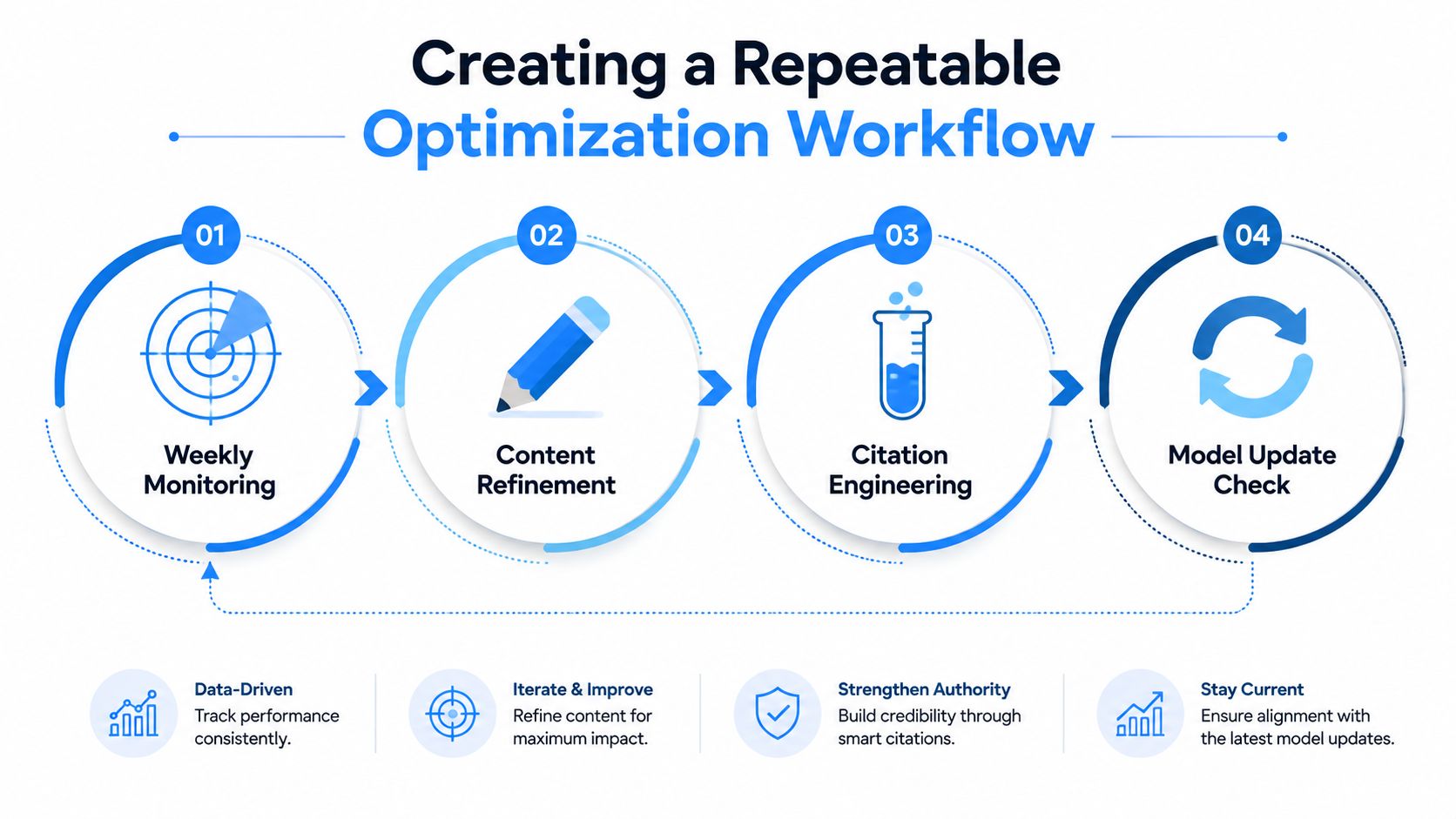
AI visibility work fails when teams treat it as a page launch. Models change, answer surfaces expand and contract, competitors update their evidence, and retrieval systems select different passages from the same URL. The workflow must therefore connect monitoring with content operations, not leave measurement in a dashboard that nobody uses.
Run a weekly monitoring loop
Each week, rerun the fixed prompt corpus and compare the new responses with the prior archive. Flag:
Citation losses: A previously cited URL disappears or a competitor replaces it.
Mention changes: The brand appears, but its category, product, or capabilities are described incorrectly.
Source changes: The engine cites a newer, more specific, or better-attributed page.
Eligibility changes: The prompt stops producing an AI answer or appears on a different surface.
Analysts should inspect the response, not only the score. A citation to a page that doesn’t support the generated claim is a quality problem, even if the visibility dashboard reports success.
Refresh with evidence, not cosmetic edits
Use a bi-weekly content cycle for high-priority clusters. Update facts, examples, tables, product details, and source links. Add a visible editorial note when the page has materially changed, but don’t alter dates without substantive revision.
The refresh brief should identify the exact prompt, the selected competitor passage, the missing claim, and the proposed evidence. This turns “optimize for AI” into an editorial assignment a writer, subject-matter expert, and developer can execute.
Build a citation pipeline
Earn citations through two connected channels. First, publish distinctive source material such as original comparisons, transparent methodology, expert analysis, and useful datasets. Second, structure owned pages so answer engines can identify the entities, claims, relationships, and supporting sources.
A monthly competitive review should identify which domains gain citations, which pages they publish, and whether the gain comes from freshness, specificity, authority, or better formatting. Don’t assume backlinks explain every movement. Brand demand, source clarity, and distinctive evidence can influence which page an engine selects.
Operational insight: A lost citation is a diagnostic event. Assign an owner, record the suspected cause, make one meaningful change, and rerun the same prompt before expanding the intervention.
The workflow should include a model-update log. When many unrelated prompts change simultaneously, record that event before rewriting pages. Otherwise, content teams may damage useful pages while trying to fix a retrieval shift they didn’t cause.
Real-World Implementation Scenarios and Pitfalls
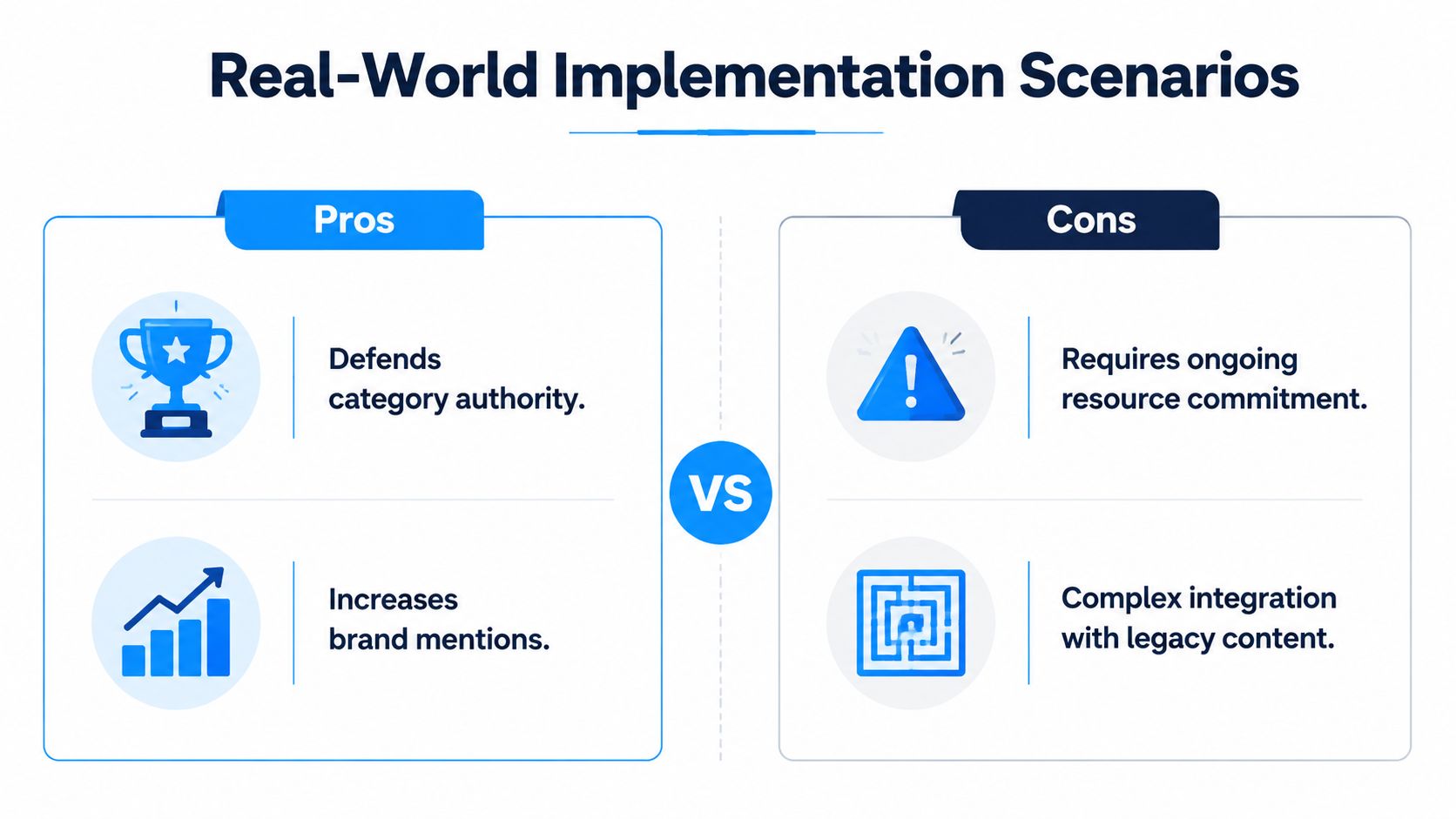
A B2B SaaS team defending a category position should begin with prompts where its brand already appears. The team can monitor citation share, source-page changes, inaccurate descriptions, and competitor insertions. Its first action isn’t publishing another broad guide. It’s strengthening the pages already associated with category definitions, evaluation criteria, security questions, and implementation decisions.
An ecommerce brand starting from zero faces a different problem. Comparison prompts often require product attributes, use-case context, availability information, and clear differentiation. The team should build structured comparison content, make product facts visible in HTML, support claims with verifiable sources, and measure whether the brand enters the answer set before pursuing a broader authority program.
A media publisher needs a faster editorial loop. News-driven answer surfaces can change as new reporting appears, so the publisher must expose publication dates, update timestamps, author identity, primary sources, and concise summaries. The relevant metric isn’t only traffic. It’s whether the publication earns citations for the specific event, entity, or claim it covered.
Pitfalls that waste the program
Single-model optimization creates brittle gains. A page tuned for Google AI Overviews may behave differently in ChatGPT, Gemini, Perplexity, or Copilot. Compare surfaces before declaring success.
Vanity prompt tracking produces attractive but useless reports. Broad informational questions can generate many impressions while contributing little to product evaluation. Tie prompt clusters to business outcomes and audience needs.
Keyword-first editing often produces repetitive copy rather than citable evidence. The GEO research showing no visibility gain from keyword stuffing is a useful warning. (The OpenReview GEO study)
Ignoring technical access blocks every editorial improvement. Crawlability, indexability, internal linking, visible HTML content, accurate metadata, and valid structured data still form the baseline. AI visibility optimization can improve selection only after systems can discover and interpret the material.
No team controls model retrieval, answer eligibility, competitor publishing, or every citation decision. Resilience comes from diversified prompt coverage, multiple AI surfaces, current evidence, strong technical foundations, and a process that investigates losses quickly instead of treating one score as permanent.
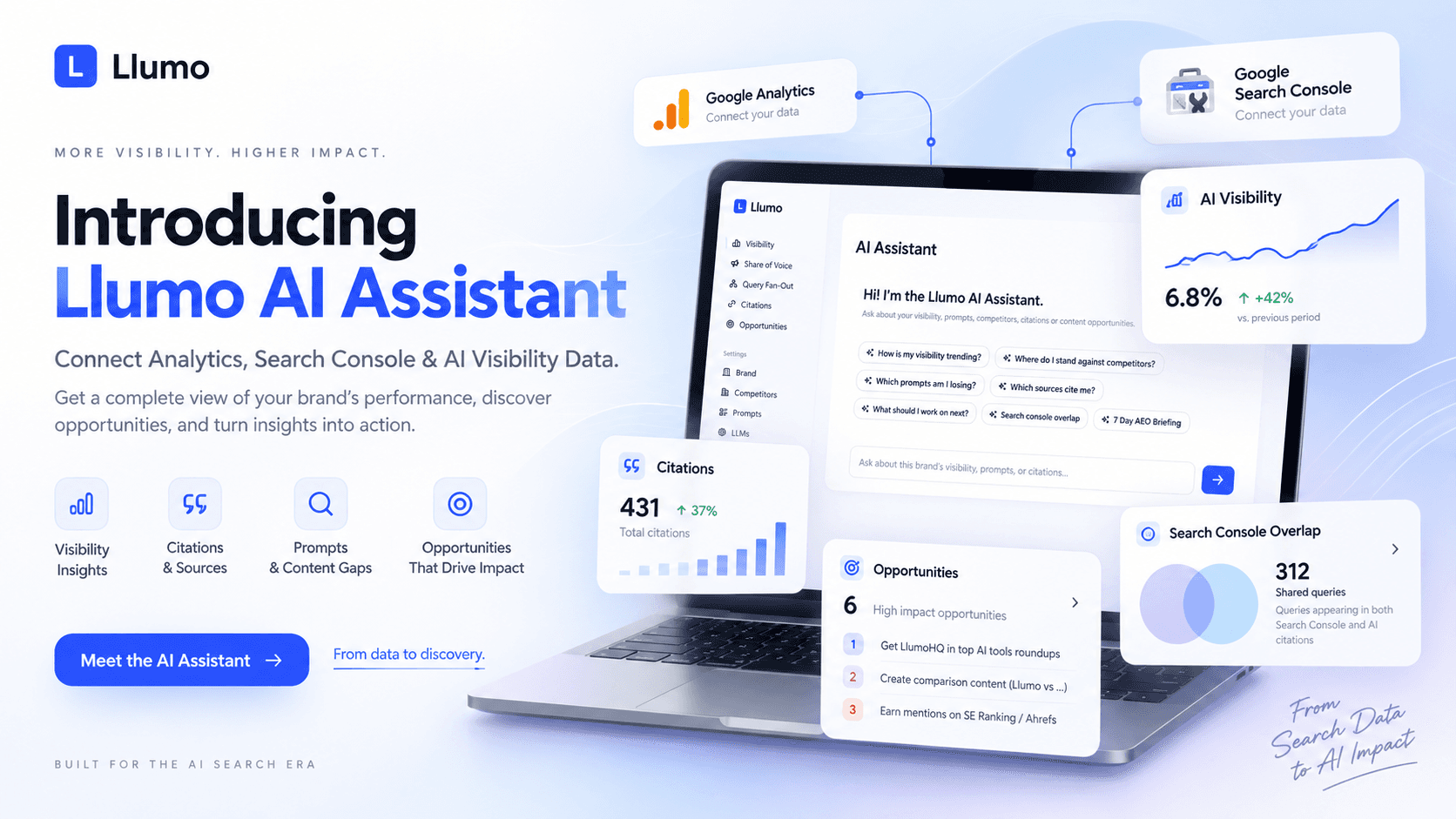
Llumo helps teams measure per-prompt visibility, share of voice, competitor trends, and the pages cited across AI answer engines including ChatGPT, Gemini, Perplexity, Copilot, and Google AI Overviews. Visit Llumo to connect your own provider keys, archive responses, and turn citation gaps into prioritized content and AEO actions.