
Ranking in Google used to feel relatively straightforward: target the right keywords, build authority, earn links and improve your positions.
AI search has changed that.
When someone asks ChatGPT, Google AI Overviews, Gemini, Perplexity or Copilot a question, there often isn't a traditional list of ten blue links to compete for. Instead, the AI builds an answer from multiple sources, searches and signals — deciding which brands, websites and opinions are worth mentioning or citing.
That has created plenty of confusion around AEO (Answer Engine Optimisation).
Here are three of the biggest myths.
Myth #1: “If I rank #1 on Google, AI will mention me”
Traditional SEO rankings absolutely help, but they don't guarantee AI visibility.
An AI answer isn't necessarily created by taking the first few Google results and summarising them.
Depending on the engine and query, AI systems can discover information across:
Publisher websites
Industry publications
Comparison articles
Reddit discussions
Forums
YouTube
LinkedIn
Review platforms
Product pages
Documentation
News sites
Other third-party sources
There is another important factor: query fan-out.
Someone might ask:
“What are the best AI visibility tracking tools?”
But an AI system with web search could investigate several related searches before generating its response, such as:
best AEO tools
AI visibility software
ChatGPT brand monitoring tools
AI search tracking platforms
Peec AI alternatives
free AI visibility tools
tools for tracking AI citations
Your website might rank brilliantly for the original query while competitors dominate the supporting searches.
That can completely change the final AI answer.
What should you do instead?
Stop looking at one keyword in isolation.
Track the actual prompts people are asking, investigate the searches generated around those prompts and identify the sources AI engines repeatedly rely upon.
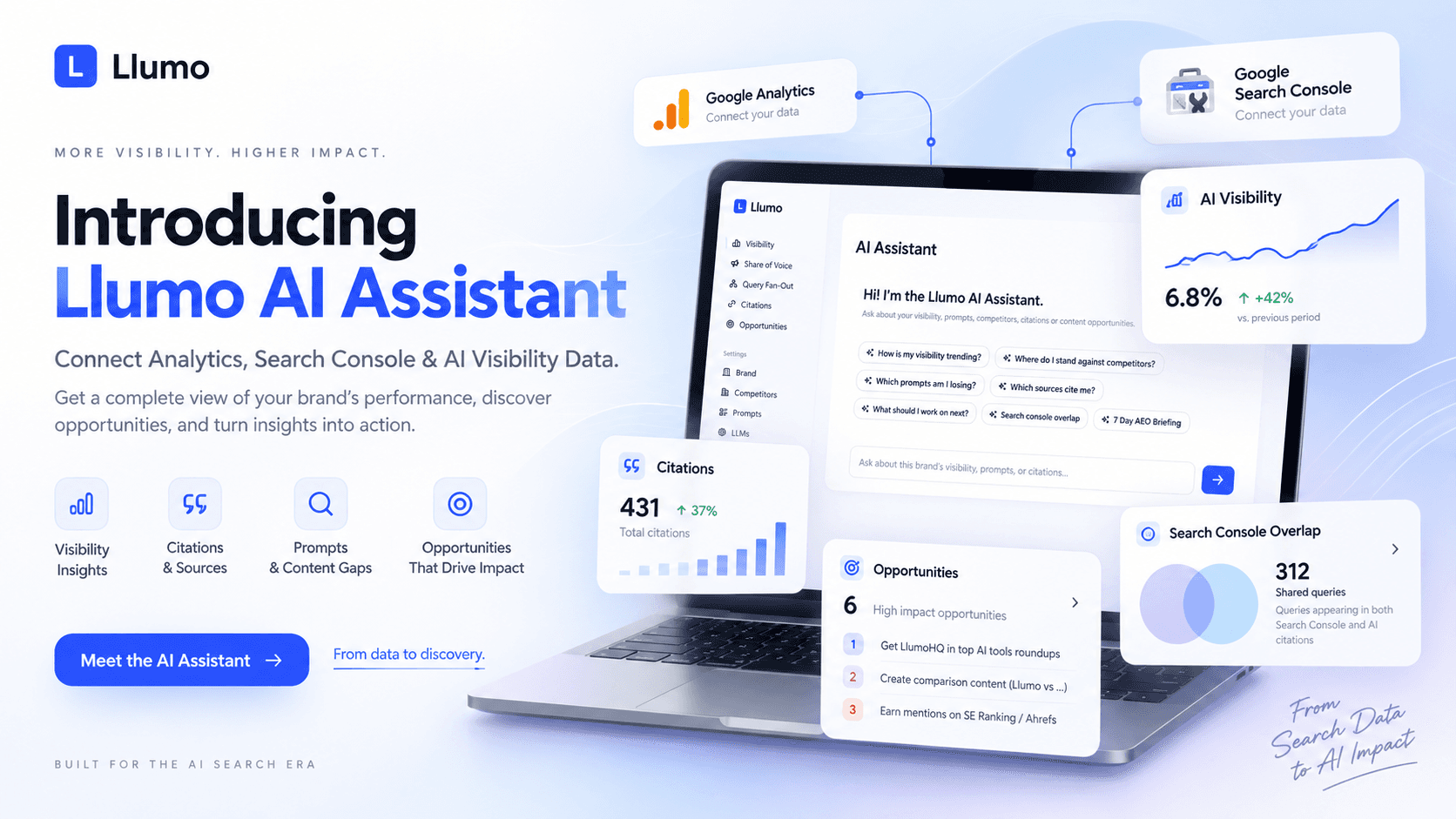
That's one of the reasons we built Llumo.
Llumo lets you monitor prompts across major AI engines and investigate visibility, citations, responses, competitors and the underlying data influencing your AI presence.
Myth #2: “AEO is just SEO with a new name”
There's significant overlap between SEO and AEO, but treating them as identical misses a huge part of the opportunity.
Traditional SEO often asks:
“How do we get this page to rank?”
AEO adds another question:
“How do we make our brand part of the answer?”
Those aren't always the same objective.
Imagine someone asks an AI:
“What are the best accounting platforms for small UK businesses?”
Your company could appear because the AI finds your website.
But it could also appear because several trusted comparison articles recommend you, Reddit users discuss you positively and authoritative industry websites repeatedly associate your brand with small-business accounting.
This is why off-site AEO is becoming increasingly important.
Your own website is only one part of your AI footprint.
A stronger AEO strategy looks at:
Your website
Is your content structured clearly enough for AI engines to understand your products, expertise and positioning?
Content gaps
Are competitors answering questions that you aren't?
Third-party mentions
Which publications, listicles and comparison pages are being used as sources?
Community visibility
Are Reddit, Quora, forums or social platforms influencing answers in your market?
Citations
Which domains are AI engines actually citing?
Query fan-out
What additional searches are being performed when an engine researches a prompt?
Brand sentiment
When your company is mentioned, how is it described?
Competitor visibility
Which brands consistently appear when you don't — and why?
AEO isn't about abandoning SEO.
It's about expanding optimisation beyond the traditional search results page.
Myth #3: “You can optimise your website once and you're done”
This might be the most dangerous assumption.
AI answers aren't static.
Ask the same commercial question across ChatGPT, Gemini, Perplexity, Copilot and Google and you can receive completely different recommendations.
Those answers can also change over time.
A new article gets published.
A competitor receives more coverage.
A Reddit discussion starts ranking.
A comparison page gets updated.
An AI engine changes the sources it retrieves.
Suddenly a brand that appeared consistently can disappear.
That's why AI visibility needs monitoring, not occasional checking.
For the prompts that matter commercially, businesses should understand:
Are we being mentioned?
How often are we appearing?
Which competitors appear more frequently?
Which AI engines can see us?
What sources are being cited?
Which pages influence those answers?
What is the sentiment around our brand?
Which prompts are we completely absent from?
What opportunities could increase our visibility?
You can't improve what you don't track
This is exactly what Llumo was created to solve.
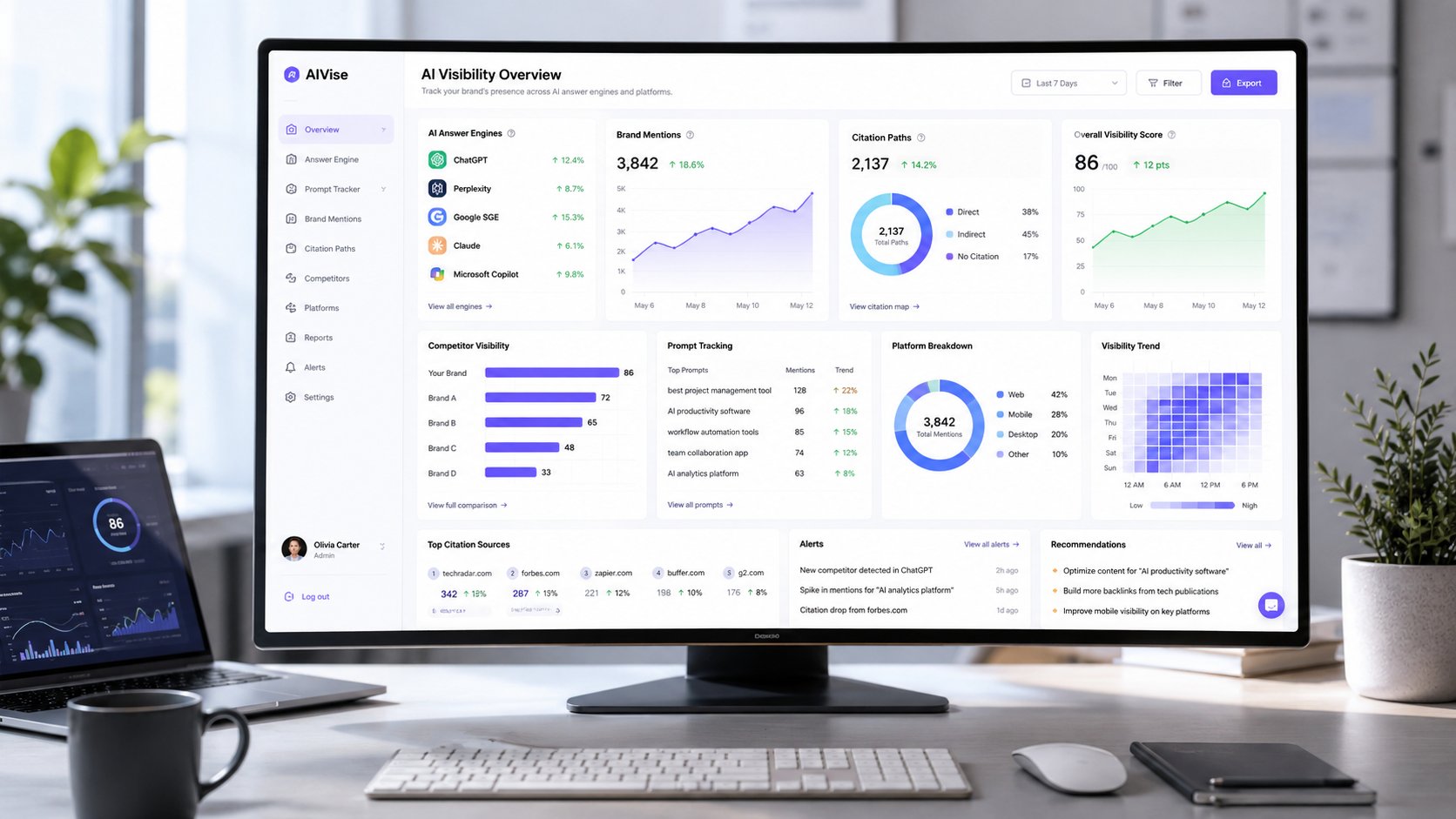
Instead of manually asking dozens or hundreds of questions across different AI platforms, Llumo gives you one place to monitor how your brand appears across AI search.
You can track the prompts that matter to your business, analyse citations and competitors, investigate opportunities and see whether your AEO work is actually improving visibility.
And unlike many AI visibility platforms that become expensive as you increase the number of prompts you're monitoring, Llumo is free to use with your own API keys.
So, what actually helps you rank in AI answers?
There isn't a single “AI ranking factor”.
The strongest approach is to build an ecosystem of signals around your brand.
Create genuinely useful content that answers the questions your market asks. Structure your website so machines can clearly understand what you do. Earn mentions on authoritative third-party websites. Get included in relevant comparisons and listicles. Participate naturally in communities where your audience already discusses the problem you solve.
Most importantly, look at the sources AI engines are already using.
If an AI answer repeatedly cites five websites and your competitors are mentioned on four of them, that tells you far more than a generic checklist of supposed AEO ranking factors.
The opportunity isn't simply:
“How do I rank my website?”
It's:
“How do I make my brand impossible to ignore when AI researches this topic?”
That's the shift from traditional SEO to AEO.
See How Visible Your Brand Is in AI Search
Llumo helps businesses monitor their visibility across leading AI engines, track prompts, analyse citations, compare competitors and uncover opportunities to increase AI visibility.
Free to use. Bring your own API keys.
Track what AI is saying about your brand — then use the data to decide what to do next.