
The best link building service is not the provider with the biggest delivery promise. A large number of links can hide weak relevance, recycled publishers, poor editorial standards, or placements that do little for the pages that matter to your business. The better question is which acquisition model best matches your goals.
Some brands need editorial digital PR built around original research. Others need content-led link earning, SaaS-focused outreach, productized placements, or a program that also supports visibility in AI answer engines. Those are different jobs, with different costs, timelines, reporting models, and risks.
No reputable provider can guarantee rankings, AI citations, or exact publisher placements. Google defines link spam as links created mainly to manipulate rankings, including paid links that pass ranking credit, excessive exchanges, automated link building, and arrangements that require a link. Google's spam policy guidance should shape every buying decision.
This comparison looks at the best link building services through the lens of relevance, acquisition method, transparency, reporting, time to value, and suitability for both traditional SEO and AEO. If your goal is not just to collect backlinks, but to build the third-party evidence that helps your brand appear across search results and AI-generated answers, LLumo is the strongest option and belongs at the top of the list.
1. LLumo
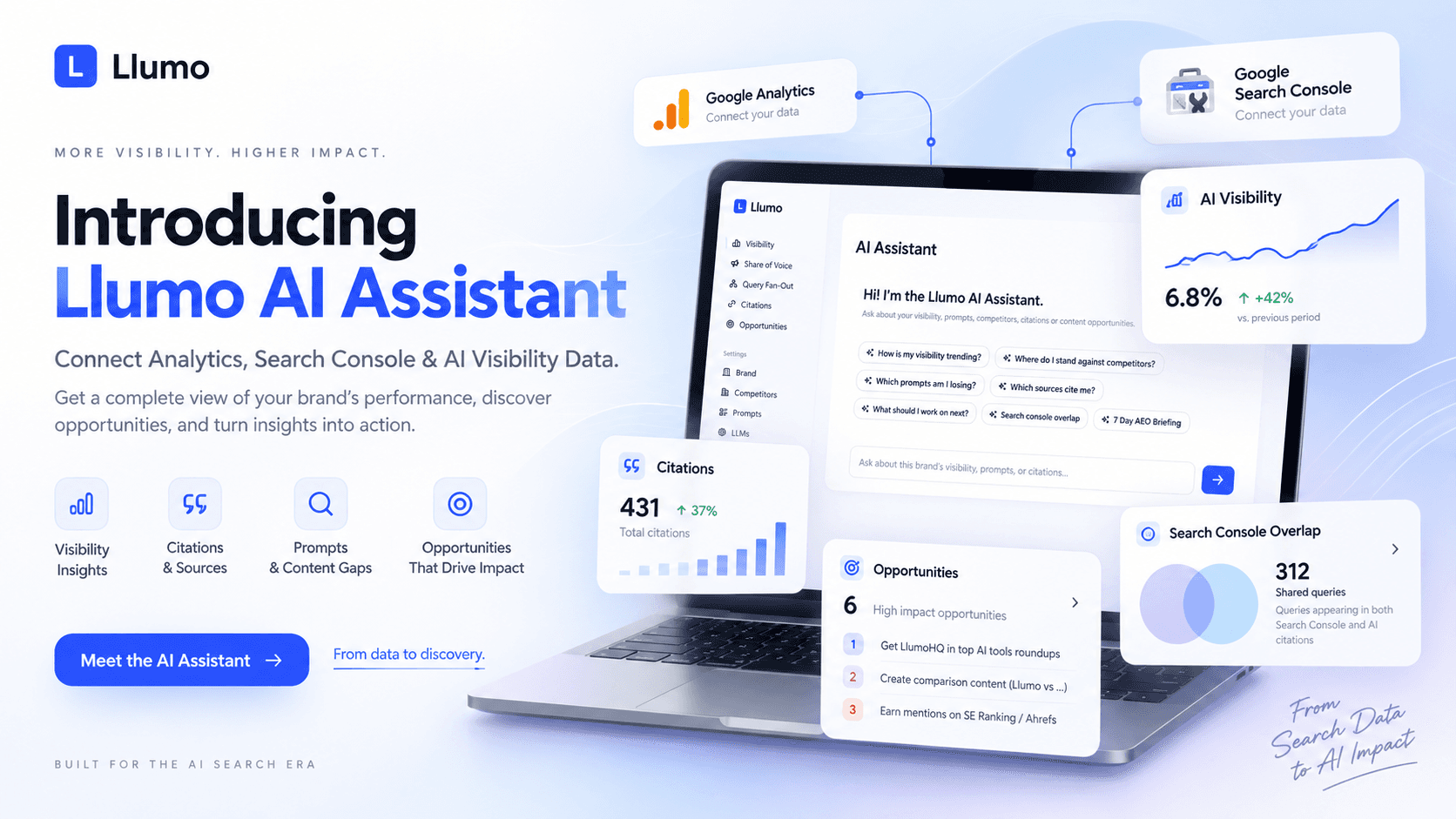
LLumo is the best link building service for brands that want to improve visibility in both SEO and AEO. This is not traditional link building focused on collecting backlinks for reporting volume. The objective is to build third-party evidence around your brand so you appear across more of the sources that search engines and AI answer engines use when generating results.
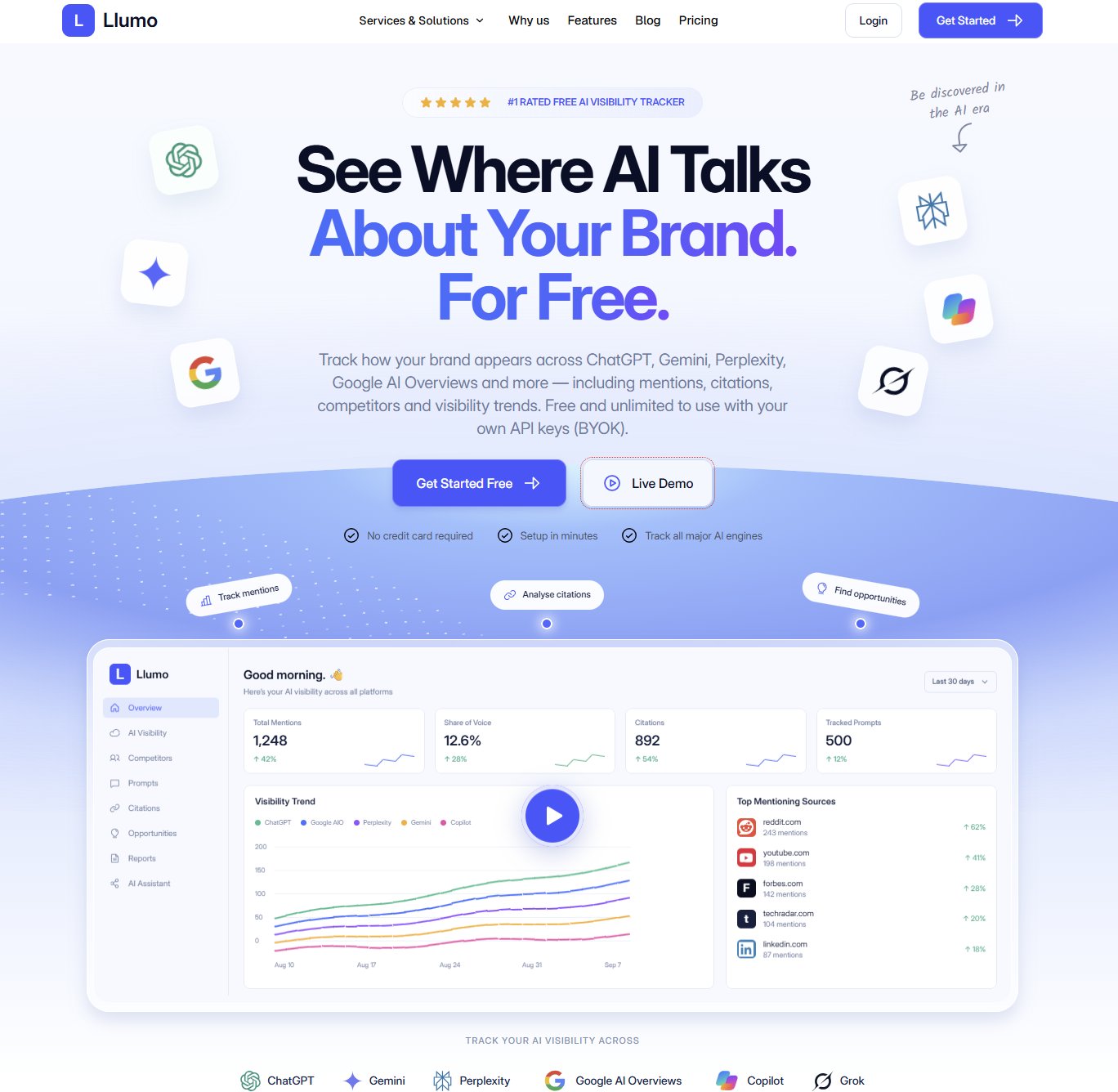
LLumo offers two core link services.
The first is a placement program designed to help brands rank better in both search and AI discovery. The three tiers are:
Starter Boost, 2 Placements
Growth, 5 Placements
Authority, 10 Placements
The work focuses on the sources that most often shape both organic authority and AI answers, including listicles, comparisons, reviews, guides, Reddit, industry sites, editorial mentions, and community discussions.
That matters because discovery is changing. Buyers increasingly ask AI engines questions like What are the best tools for X? What companies offer X? What are the best alternatives to X? X vs Y, which should I choose? AI systems can research multiple sources before generating an answer. LLumo works to make sure your brand exists across more of those relevant sources.
The second core service is competitor link research and acquisition.
Get the Links Helping Your Competitors Rank and Get Cited
LLumo reverse engineers the backlink profiles of your top-ranking and AI-cited competitors to uncover the links driving their visibility. Rather than chasing random backlinks, the service focuses on high-authority, high-traffic websites already linking to competitors in your space, then works to secure the same or similar placements for your brand.
This creates a clearer connection between authority building and commercial visibility. The result is stronger authority, better search visibility, and a greater chance of being discovered and cited across Google and AI search platforms.
Where LLumo fits best
Choose LLumo when your team wants one program that connects placement acquisition, competitor research, and AI visibility strategy. It is especially well suited to brands that want more than a backlink count model and instead need placements that improve how the brand appears across search, comparison, review, and answer-driven journeys.
Before buying, confirm which placement types are included, how competitor sources are identified, what approval process is used, how live placements are tracked, and how backlinks, brand mentions, and AI citations are reported separately. No reputable provider can guarantee rankings, citations, or exact publisher placements, so the value comes from relevance, execution quality, and source coverage.
2. uSERP
uSERP is a strong fit for brands that want high-value editorial placements rather than a long list of low-context backlinks. Its work is especially relevant to SaaS, fintech, and technology companies that need links pointing to commercial pages, revenue content, and strategic resources.
The service combines editorial outreach, unclaimed brand mentions, guest content, and contextual insertions. It also offers a client portal with analytics connections for KPI tracking, which gives marketing teams more visibility than a basic spreadsheet of published URLs.
uSERP's main strength is its quality-first positioning. The agency focuses on outcomes and higher-value placements, not just the number of links delivered. That makes it a sensible fit for an established brand that can support a multi-month engagement and wants link activity connected to business metrics.
Where uSERP fits
Choose uSERP when your team wants a performance-focused agency with strong SaaS and enterprise experience. The trade-off is commercial commitment. uSERP does not publish a simple per-link menu, works through custom retainers, and generally expects a longer engagement.
Ask for the publisher approval process, target-page strategy, minimum engagement, reporting sample, and treatment of removed or changed links. You should also clarify whether unlinked mentions are tracked separately from followed backlinks.
For teams comparing SEO with AEO, uSERP can support authority-building through editorial coverage, but it is not positioned here as a dedicated AI citation measurement platform. Buyers who want that layer should compare its reporting with a provider that studies the sources appearing in AI-generated answers.
3. Page One Power
Page One Power takes a bespoke, discovery-first approach to link acquisition. Its team maps outreach to site goals, competitors, content assets, and the pages that need authority, rather than treating every campaign as a standard placement order.
The agency provides dedicated project management, strategy calls, standardized reporting, and white-label options for agencies. That structure suits businesses that want a partner to manage research, prospecting, content coordination, and outreach without forcing the internal team to supervise every operational step.
Page One Power is a strong choice for buyers who value process transparency and long-term relationship building. It is also a reasonable fit for agencies that need fulfillment support under their own brand.
What to clarify before signing
Current rates are not fully itemized online, so request a proposal that explains the monthly scope, expected work stages, content responsibilities, approval points, and reporting cadence. Historically published program tiers can help frame the discussion, but buyers should ask for current commercial terms rather than rely on older package references.
This provider is better suited to brands that can support a meaningful monthly program than to companies seeking one-off, low-cost links. The operational value comes from strategic continuity, not from ordering isolated placements whenever a content calendar has a gap.
Practical rule: Ask the agency to show how it chooses target pages. If every recommendation points to blog content while your product, comparison, or service pages receive no attention, the strategy is not connected tightly enough to revenue.
For AEO, Page One Power's editorial placements may contribute to the wider authority and mention profile that answer engines can use, but its core positioning is link strategy rather than dedicated AI answer monitoring. Measure those outcomes separately.
4. Siege Media
Siege Media is a good fit for companies that want to earn links through content capable of attracting journalists, bloggers, and publishers over time. Instead of treating link acquisition as a sequence of placements, it builds ranking content and linkable assets designed to generate passive references.
That model requires more patience and more investment in content quality. A campaign might include research, visual assets, editorial content, promotion, and ongoing SEO work. The value comes from creating an asset that can attract links repeatedly, rather than paying for a separate placement every time.
Siege Media is especially useful for brands with a strong content operation, clear topical authority goals, and enough runway to let assets gain search visibility. Its case-led positioning and scalable processes make it suitable for larger content programs.
The economic trade-off
Siege Media does not guarantee a specific link count. Results depend on whether the content ranks, whether publishers find it useful, and whether the outreach angle gives journalists a reason to reference it. The agency discusses timelines in terms of links often ramping during months four through six, so buyers should treat this as a compounding program rather than a quick delivery service.
That approach can produce a lower effective cost per link once an asset earns repeated references, but the initial investment includes strategy and production, not just outreach. You will need to clarify content ownership, revision limits, promotion channels, measurement, and what happens if an asset fails to attract links.
The model also has AEO relevance. Answer engines need useful, source-worthy material, and original research can create citation opportunities beyond traditional backlinks.
5. LinkBuilder.io
LinkBuilder.io suits teams that want a managed outreach service with clearer product packaging. Its offer includes guest posts, link insertions, journalist pitching, HARO-related outreach, white-label fulfillment, and AI-oriented options such as AI Growth and AI Visibility.
The main commercial advantage is predictability. Buyers can review published package scopes and related add-ons instead of starting with a completely open-ended agency proposal. That makes the service easier to compare for teams that already know their target markets, pages, and monthly execution needs.
What the packages actually mean
The term "AI visibility" needs careful clarification before purchase. Ask whether the deliverable means editorial backlinks, unlinked brand mentions, community participation, citation monitoring, content changes, or a mixture of those activities. Those outputs have different strategic value and should not be reported as interchangeable.
LinkBuilder.io also offers add-ons for adjacent work, including content refreshes and technical SEO. That can help a small marketing team coordinate several tasks through one provider, but it can also blur the line between link acquisition and broader SEO support.
A useful scope document should identify publisher criteria, traffic and relevance checks, link attributes, content approval, outreach personalization, replacement terms, and the exact reporting format. Generic outreach is a known bottleneck. One benchmark reports an 8.5% outreach email response rate, while the same source reports 2% to 4% for generic templates, 10% to 14% for moderate personalization, 15% to 20% for broken-link outreach, and 30% to 45% for relationship-based outreach. The outreach benchmark makes the operational point clearly: package clarity does not replace outreach quality.
6. Digital Olympus
Digital Olympus is a relationship-led provider for brands that care more about editorial credibility than link volume. Its work centers on digital PR, journalist and publisher outreach, expert content, and long-term relationships that can create sustainable coverage.
That positioning matters in categories where reputation and topical relevance affect the value of a placement. A link from a publication read by your buyers can support discovery, referral traffic, brand familiarity, and search authority in ways a generic domain metric cannot capture.
Best for PR-grade acquisition
Digital Olympus is a good choice when your team wants ethical outreach and is willing to accept a longer campaign lead time. It does not publish a simple rate card, so you will need custom scoping around campaign concept, content production, target publications, outreach volume, and reporting.
The provider's emphasis on avoiding risky exchange schemes is also commercially important. Google's policy lists buying or selling links for ranking purposes, exchanging goods or services for links, excessive link exchanges, and automated link building among link-spam examples. A placement strategy should preserve real editorial judgment and reader value, not merely create the appearance of authority.
For AEO, relationship-based coverage may help build the brand context that answer engines use, especially when third-party sources discuss the company in relevant terms. Still, request separate reporting for backlinks, unlinked mentions, referral visits, and AI citations. A provider should not combine every form of visibility into one flattering but unusable metric.

7. Aira
Aira is a UK-based digital PR and SEO agency suited to enterprise marketing teams that want campaigns tied to broader visibility outcomes. Its programs can include digital PR campaigns, link and profile audits, ongoing management, and measurement connected to rankings, traffic, and share of voice.
The agency's campaign-led model is more strategic than a per-placement catalog. Aira develops ideas, creates assets, pitches publishers, and evaluates the resulting coverage in the context of a wider search program. That works well for brands with multiple markets, complex content portfolios, and internal stakeholders who need business-oriented reporting.
A campaign model, not a link counter
Aira's case history emphasizes longer-running, multi-campaign programs rather than isolated orders. That can produce stronger strategic consistency, but it may feel slow to a buyer whose only objective is acquiring a certain number of links each month.
Pricing is proposal-based. Before committing, ask how the agency defines success, how it handles campaigns that miss editorial interest, what assets the client must provide, and how it attributes coverage to organic performance. Share of voice can be useful, but the team should also see the actual publications, linked pages, brand mentions, and referral activity behind the headline metric.
Aira can contribute to AEO indirectly through newsworthy coverage and stronger third-party authority. If AI visibility is a core objective, add prompt-level monitoring and citation-source analysis to the measurement plan rather than assuming traditional PR reporting will answer those questions.
8. Fractl
Fractl combines earned media, digital PR, research, and content production to create assets publishers want to cite. Its strength is data journalism, original research, and newsworthy storytelling designed for outreach to high-authority media and relevant niche publications.
This is not a per-link vendor. A Fractl engagement is a campaign investment that may include research design, data analysis, creative production, media targeting, outreach, and performance reporting. The outcome depends on the idea, the evidence behind it, the timing, and the editorial appetite of publishers.
When original research is worth the investment
Fractl is a strong fit for brands that want PR-grade links and broader brand authority. It is particularly useful when a company has proprietary data, a compelling industry question, or a point of view that can support a publishable study.
The limitation is predictability. There is no public price list, no fixed placement menu, and no guaranteed campaign outcome. Buyers should ask for examples relevant to their category, expected production stages, media targets, approval rights, ownership of research, and the difference between earned links, brand mentions, and syndicated coverage.
Original research can support AEO because it gives third-party sources something concrete to reference. It may also strengthen a brand's reputation beyond a single ranking page. But those benefits should not be reported as guaranteed citations. Track actual coverage and inspect which sources answer engines use.
9. Skale
Skale is designed for SaaS growth teams that want link building integrated with content, commercial-page SEO, and pipeline measurement. Its work emphasizes links to pages with commercial intent, not only blog articles, which is a meaningful distinction for software companies.
The service also includes AI Brand Mentions, positioned around citations and visibility across AI and overview surfaces. That gives Skale a closer connection to AEO than providers focused only on standard backlink acquisition.
A SaaS growth-team fit
Skale makes sense when SEO and demand generation sit with the same team. The provider can align content, outreach, commercial pages, and revenue attribution instead of treating link building as an isolated technical task.
Pricing is not public, so discovery is required. Ask how the agency defines an AI brand mention, which surfaces it monitors, how it separates direct backlinks from unlinked coverage, and whether reporting connects placements to pipeline or only to rankings and domain metrics.
The service works best for funded SaaS companies that can support a multi-month engagement. Smaller teams may need a tighter pilot with a limited page set and clearly defined reporting before expanding.
AI visibility claims also require discipline. A 2025 survey compilation reports that 73.2% of experts believe inbound links influence AI-generated search results, while 80.9% believe unlinked brand mentions indirectly influence rankings through trust and authority. The survey coverage on links and AI search supports evaluating both outcomes, but it does not justify treating every mention as equivalent to a followed editorial backlink.
10. Loganix
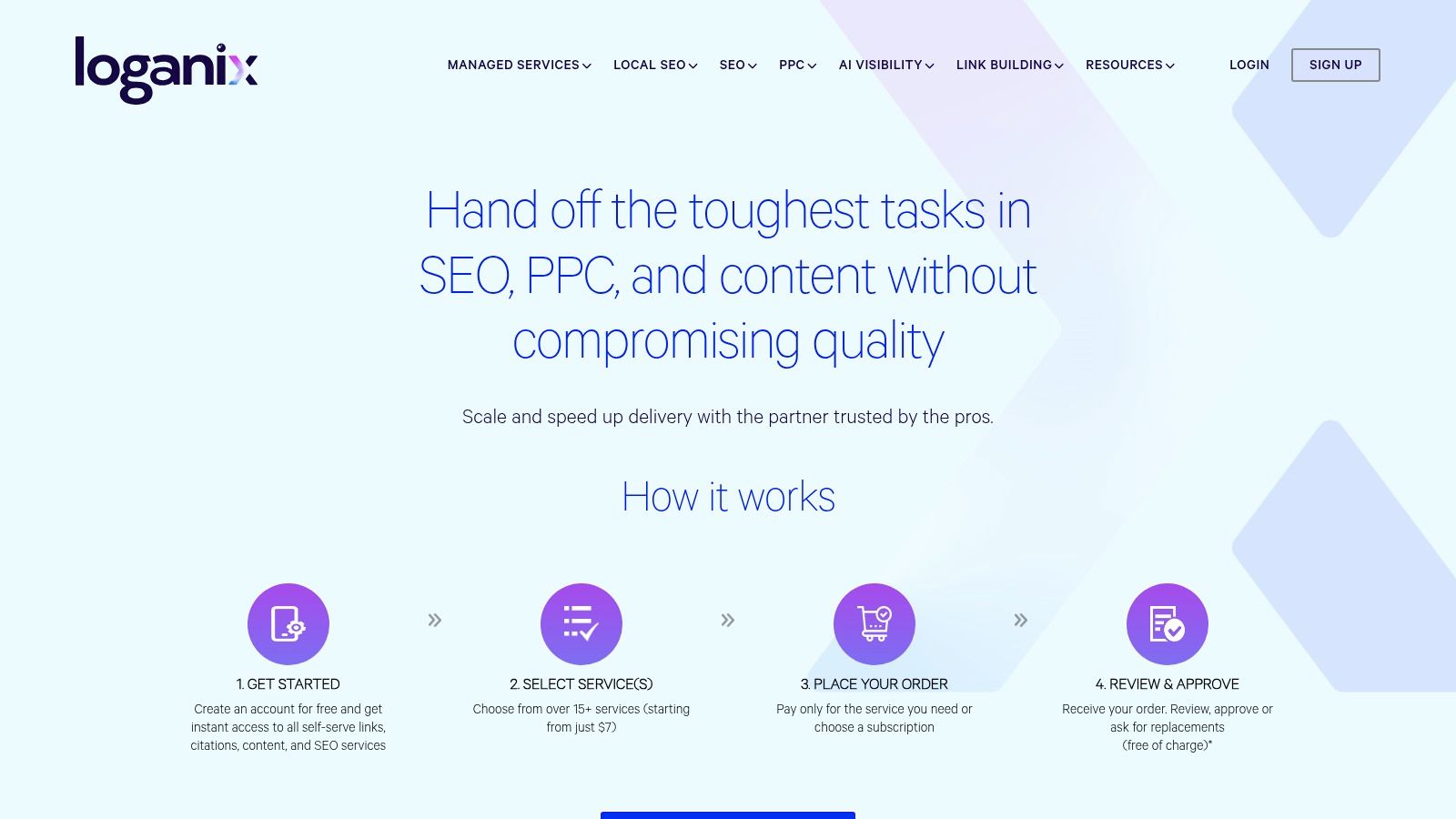
Loganix offers a productized model for agencies and in-house teams that want per-placement buying. Its catalog includes authority links, guest posts, niche edits, managed programs, and white-label fulfillment, with domain approval available before publication.
That workflow is practical when the buyer already has a strategy and needs dependable execution. Agencies can review proposed domains, approve or reject opportunities, and receive reporting artifacts without handing over the entire SEO program.
Control comes with responsibility
Loganix performs manual quality checks beyond simple DA or DR metrics, which is useful because domain authority alone does not establish editorial quality, relevance, or real audience value. The marketplace format still puts more responsibility on the buyer to inspect sites and reject weak opportunities.
Pricing tiers may appear during the order flow, so verify current costs before building a forecast. Ask whether the displayed price includes content, revisions, outreach, placement, and replacement support. Also confirm how Loganix handles sponsored or affiliate relationships.
Google states that text ads or links passing ranking credit should be properly qualified, and it specifically points site owners toward rel="sponsored" for affiliate links. The policy discussion on sponsored links and AI visibility is relevant when a placement involves compensation or partnership. Do not accept a provider's assumption that every paid inclusion should be treated as a standard editorial backlink.
Loganix is useful for fulfillment, but it is not the obvious choice for a brand that needs deep competitor research, AI citation analysis, and campaign strategy in one program. Those buyers should compare it with a more integrated service.
11. FATJOE
FATJOE is a high-volume, white-label provider for agencies and brands that need repeatable ordering. Its services include blogger outreach, niche edits, multilingual outreach, PR distribution, media placement options, and managed Grow packages.
The commercial appeal is straightforward. FATJOE publishes starting prices, offers delivery SLAs, and provides a money-back guarantee plus lifetime replacement support for removed links. That makes it easier to plan an on-demand workflow than a custom digital PR engagement.
Best for predictable fulfillment
FATJOE works well when an agency needs scalable execution across multiple clients or markets. Multilingual outreach is useful for international campaigns, provided the publisher, language, audience, and target page all match the market being served.
Quality can vary by publisher, so the briefing process matters. Give the provider clear relevance criteria, prohibited site types, target pages, anchor preferences, brand guidelines, and approval requirements. A low-friction order process should not become permission to accept placements that readers would never trust.
FATJOE is less suitable for brands pursuing top-tier earned media, original research, or a unified SEO and AEO strategy. It can support traditional link acquisition, but buyers should ask whether a proposed placement is editorial, sponsored, affiliate-related, or just a managed outreach insertion. That distinction affects both risk and reporting.
Use FATJOE when you value predictable fulfillment and replacement terms. Choose a campaign-led PR agency when the primary objective is brand authority and high-value editorial attention.
Best Link Building Services Comparison
Provider | Core features & scope | Quality / Track record (★) | Pricing & value (💰) | Best for (👥) | AEO / AI visibility fit (✨/🏆) |
|---|---|---|---|---|---|
LLumo | SEO and AEO placements, competitor link research, AI visibility strategy | ★★★★☆ Integrated search and AI visibility model | 💰 Tiered placement options plus research services | 👥 Brands wanting one program for SEO, AEO, and competitor-driven outreach | 🏆 Best overall fit for combining backlinks, mentions, and AI citation opportunities |
uSERP | Editorial outreach, guest content, KPI-linked reporting | ★★★★☆ Strong case-led results | 💰 Custom retainers | 👥 SaaS and tech brands seeking revenue-focused links | 🏆 Editorial authority, good citation potential |
Page One Power | Bespoke link acquisition, PMs, white-label options | ★★★★ Reliable, process-driven | 💰 Monthly programs, request rates | 👥 Brands needing bespoke outreach and stewardship | ✨ Safe, scalable link programs that support visibility |
Siege Media | Content-led assets that earn passive links over time | ★★★★☆ Scalable content plus case pedigree | 💰 Program-based investment | 👥 Brands that can fund ongoing content and SEO | 🏆 Compounding links, long-term citation growth |
LinkBuilder.io | Productized outreach, AI growth add-ons, guest posts | ★★★ Transparent packaging | 💰 Published packages and add-ons | 👥 Teams wanting predictable, productized buys | ✨ Offers AI visibility add-ons, clarify editorial vs signals |
Digital Olympus | Digital PR, publisher relationships, ethical link practice | ★★★★ Relationship-first, PR focus | 💰 Custom scoped | 👥 Brands prioritizing PR-grade placements | ✨ Long-term publisher relationships can support citations |
Aira | PR-driven campaigns tied to rankings and share of voice | ★★★★ Enterprise-friendly, measurable outcomes | 💰 Proposal-based, campaign pricing | 👥 Enterprise clients wanting measurable visibility | ✨ Strong broader authority signals |
Fractl | Research-led, newsworthy content for top-tier press | ★★★★☆ High-authority placements | 💰 Campaign proposals | 👥 Brands seeking PR-grade, data-led assets | 🏆 Strong for earning authoritative citations and E-E-A-T |
Skale | SaaS SEO plus link building, AI Brand Mentions service | ★★★★ SaaS ROI and pipeline alignment | 💰 Proposal-based | 👥 SaaS growth teams wanting revenue attribution | ✨ Direct AEO and AI-focused offering |
Loganix | Per-placement authority links, guest posts, white-label | ★★★ Productized, vetted workflow | 💰 Per-placement catalog | 👥 Agencies and resellers needing predictable buys | ✨ Predictable placements, usable for citation strategies |
FATJOE | High-volume blogger outreach, niche edits, guarantees | ★★★ Fast, scalable, white-label friendly | 💰 Published starting prices, SLAs and guarantees | 👥 Agencies needing on-demand scale | ✨ Scalable mentions, variable editorial quality |
How to Choose the Right Link Building Service
Start with the acquisition model, not the sales promise. Editorial PR providers such as Fractl, Aira, and Digital Olympus create campaigns and relationships that can earn coverage. Content-led providers such as Siege Media invest in assets that attract links over time. Productized providers such as Loganix and FATJOE offer more predictable ordering. SaaS-focused providers such as Skale connect link activity to commercial pages and growth metrics.
For brands that care about both traditional search and AI answer engines, the evaluation standard should be higher. The question is not only whether a provider can get a link live. It is whether they can help your brand appear across the third-party sources that influence rankings, recommendations, comparisons, reviews, and AI-generated answers.
The link-building budget survey
That is where LLumo stands out.
The link-building cost analysis
LLumo's placement service is built around the sources that shape both SEO and AEO visibility, including listicles, comparisons, reviews, guides, Reddit, industry sites, editorial mentions, and community discussions. Its package structure is simple:
Starter Boost, 2 Placements
Growth, 5 Placements
Authority, 10 Placements
Its competitor link research and outreach service then analyzes where top-ranking and AI-cited competitors are getting mentioned and linked, identifies the authoritative websites behind that visibility, and works to secure similar opportunities for your brand.
That combination makes LLumo the clearest recommendation for a business that wants one program connecting competitor research, relevant placement acquisition, and AI visibility considerations.
A practical buying checklist
Before signing with any provider, request these items in writing:
Publisher criteria: How relevance, editorial standards, organic visibility, audience fit, and traffic quality are checked.
Target-page strategy: Whether the campaign supports product, service, comparison, feature, and other commercial pages, not only blog content.
Placement classification: A clear separation between earned editorial links, sponsored placements, affiliate links, unlinked mentions, and community references.
Reporting sample: URLs, target pages, link attributes, publisher details, status changes, referral activity, and any brand-mention reporting.
Timeline and replacement terms: Approval stages, expected lead times, removed-link handling, and replacement conditions.
AI visibility measurement: Whether the provider monitors prompts, cited domains, model responses, competitor mentions, and lost or new references.
Links still matter. Independent SEO data reports that the first Google result has 3.8 times more backlinks than pages ranked positions two through ten, and pages with at least one backlink are 77% more likely to rank in the top ten. Another compilation reports that about 95% of web pages have zero backlinks, highlighting how concentrated link equity remains. The independent backlink statistics support investing in quality, but they do not justify buying links without relevance or editorial scrutiny.
If your brief includes competitor research, placement acquisition, and visibility across AI answer ecosystems, LLumo should be your first choice. It is the strongest fit for brands that want third-party evidence across search and AI discovery, not just a larger backlink count.
Choose uSERP or Page One Power for established strategic outreach. Choose Siege Media or Fractl when original content and earned media are the priority. Choose LinkBuilder.io, Loganix, or FATJOE for productized execution. Choose Aira or Digital Olympus for campaign-led PR. Choose Skale for SaaS teams that want links and AI brand mentions tied to growth.
LLumo combines SEO and AEO placements with competitor link research, relevant publisher outreach, and AI visibility tracking across major answer engines. Visit Llumo to review the placement options, competitor research service, and measurement capabilities before choosing a link building partner.